Why does a shed need a gravel pad?
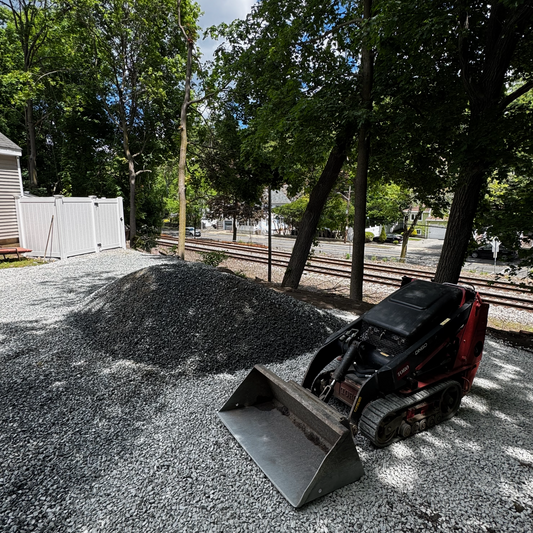
Because the alternative is a shed that racks. On bare soil, water sits under the floor and rots it from below, and the ground heaves unevenly over the winter until the doors stop closing. A compacted pad drains, and it spreads the load evenly enough that frost moves the whole shed instead of one corner.
What makes Randolph backyards particular?
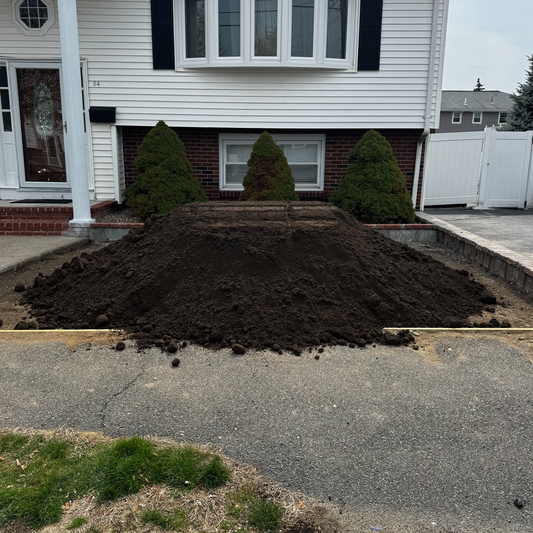
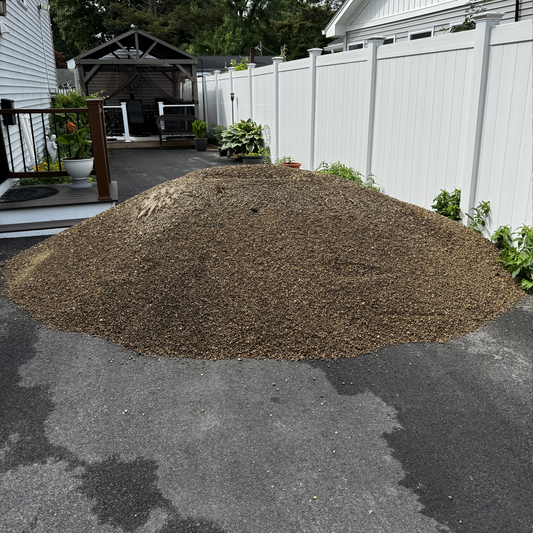
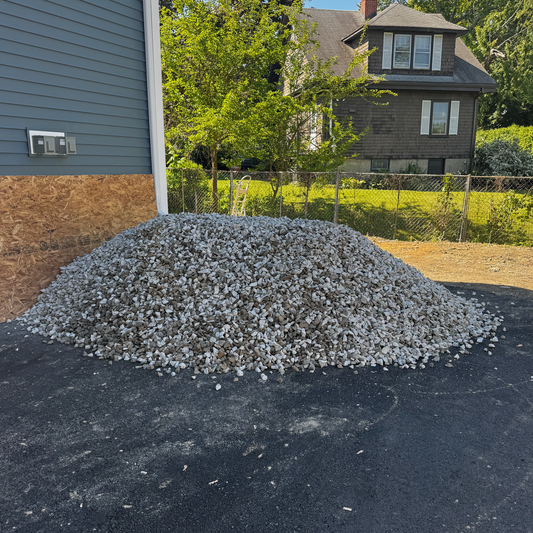
Randolph is mostly modest lots — mid-century single-families on quarter-acre parcels with tight side yards and a back garden you reach through a gate. So the truck drops at the curb and you're wheelbarrowing: 3.5 yards is roughly 20 to 25 loaded trips. The subsoil is glacial till, dense and slow to drain, so water moves sideways rather than down. The pad has to sit slightly proud of the surrounding grade with the ground falling away, or you've built a bathtub.
How big should the pad be?
Extend it 12 inches beyond the shed on all four sides, so runoff lands on stone instead of undercutting the edge.
| Shed | Pad | Area | Base at 4" | Base at 6" |
|---|---|---|---|---|
| 8 × 8 | 10 × 10 | 100 sq ft | 1.2 yd | 1.9 yd |
| 8 × 12 | 10 × 14 | 140 sq ft | 1.7 yd | 2.6 yd |
| 10 × 12 | 12 × 14 | 168 sq ft | 2.1 yd | 3.1 yd |
That's cubic yards = (square feet × depth in inches) ÷ 324: 168 × 6 ÷ 324 = 3.11 yards. Six inches is the default; four is defensible on firm, well-drained subgrade under a small garden shed. On Randolph till, go six, and if the excavation looks soft go eight with geotextile at the bottom.
How do I build it?
- Lay out and square the pad. Stakes and string, and check the diagonals — they must match or the shed won't sit right.
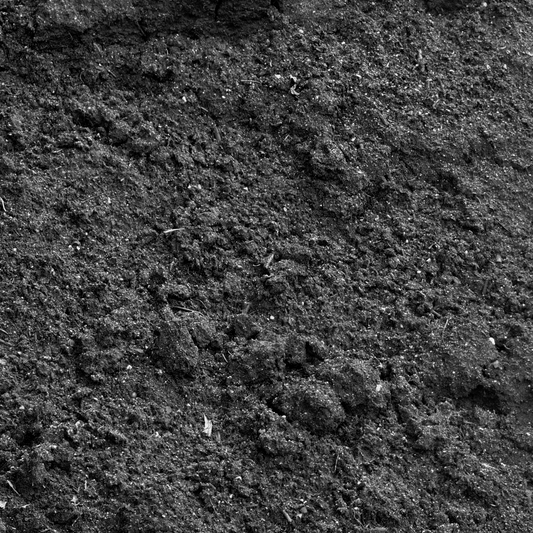
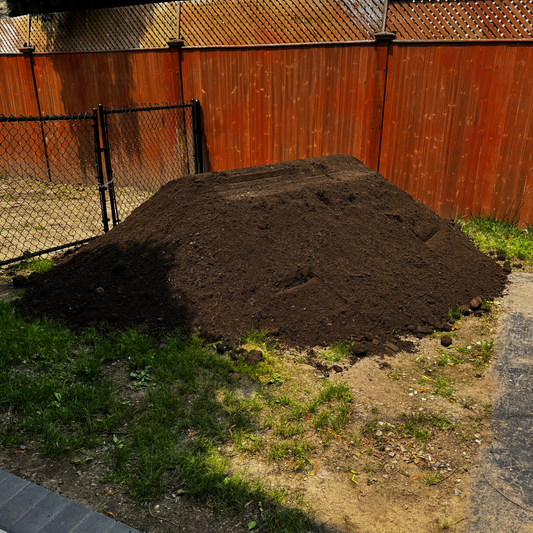
- Strip the organics. Sod and four to six inches of topsoil, down to firm mineral subsoil. Organic material compresses and decays; it can't stay under the pad.
- Compact the subgrade before any stone goes in. Skipping this is the most common shortcut and the reason pads settle.
- Geotextile if needed — on soft or clay subgrade it stops the base punching into the soil.
- Place the base in lifts of two to three inches. Spread, mist until damp but not muddy, compact in overlapping passes, repeat to full depth.
- Screed level. The pad should be dead flat — a shed floor isn't a driveway and doesn't want pitch. Then confirm the surrounding soil falls away on all sides.
- Edge it with treated timber, steel edging or a row of pavers to stop the base spreading.
Which material, and what does it cost?
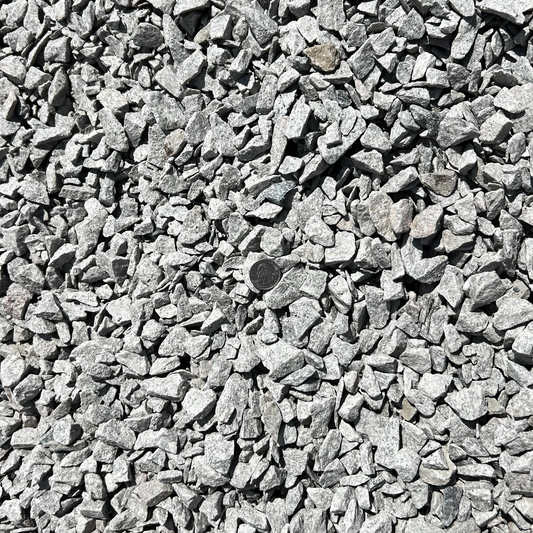
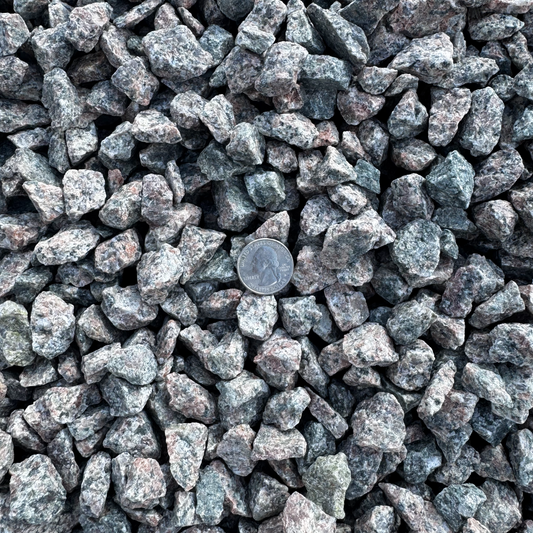
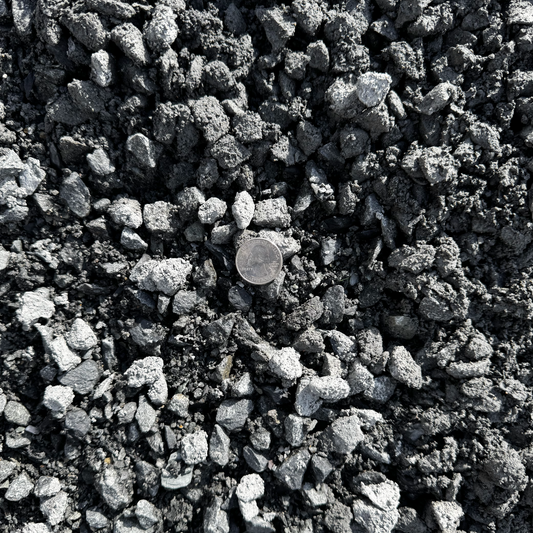
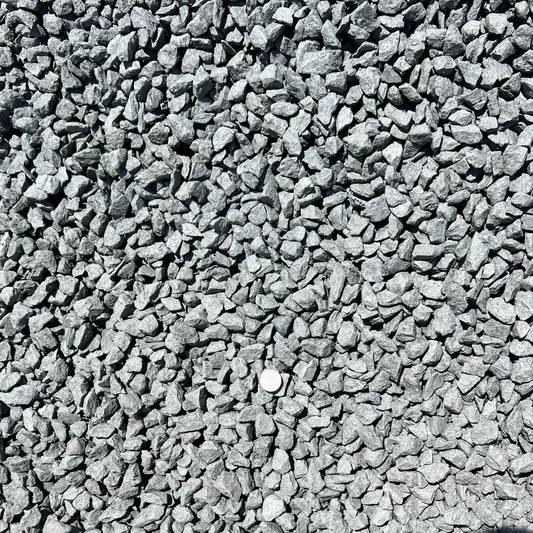
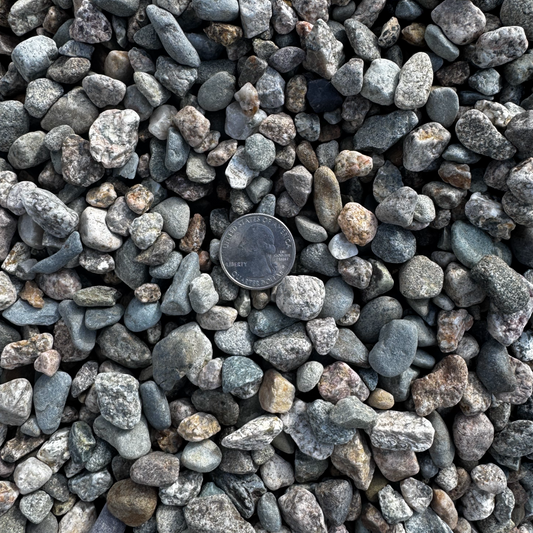
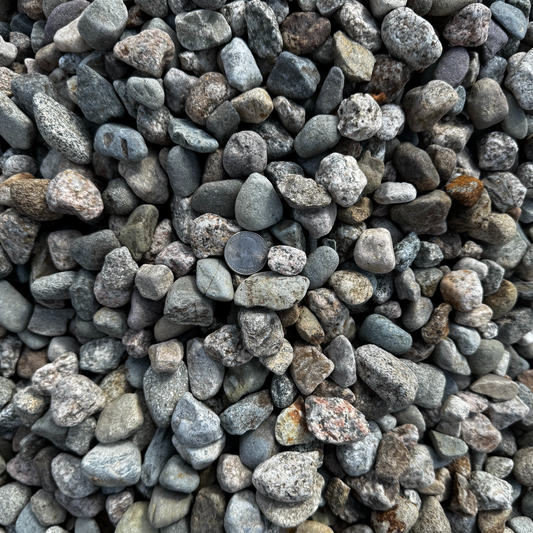
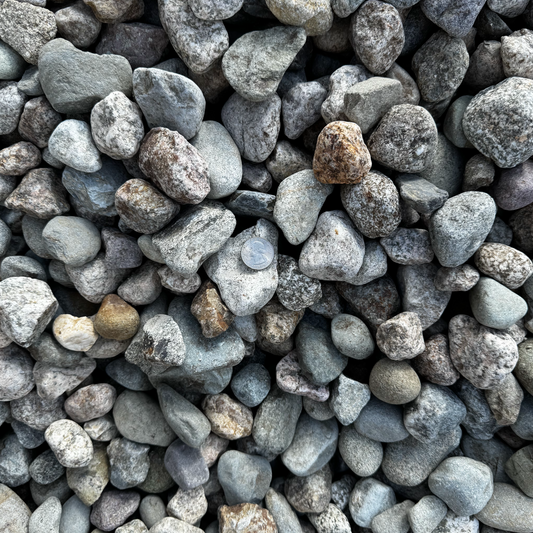
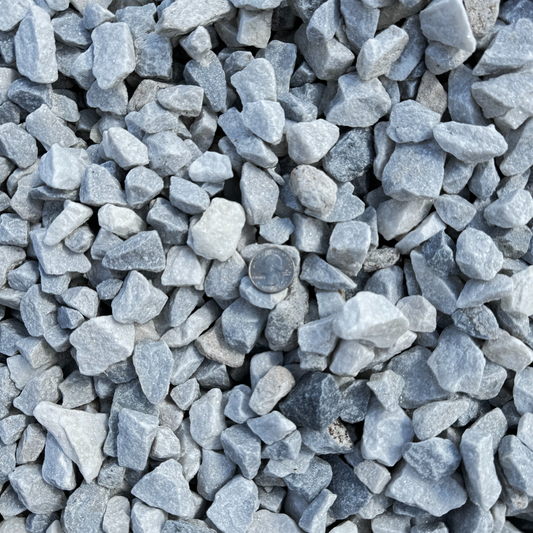
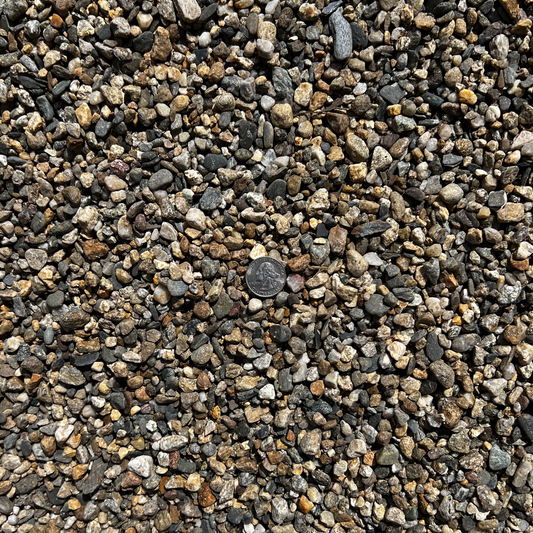
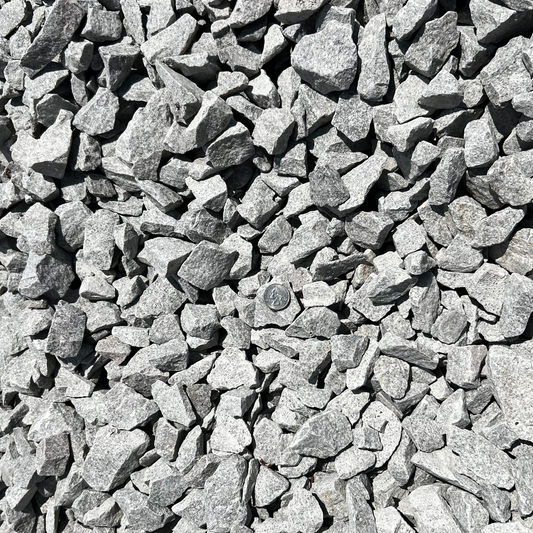
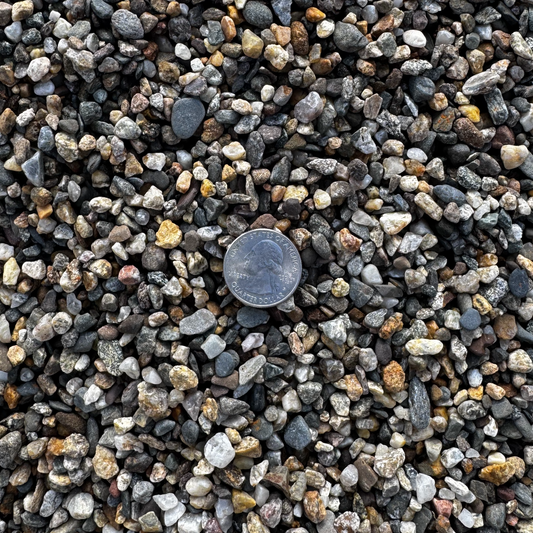
Dense Pack ¾" to minus at $76 a yard is right for almost every shed pad — dense-graded from ¾-inch stone down to fines, so it locks hard under a compactor. Clean single-size stone never will. On a budget, Crushed Concrete 1" to minus at $50 compacts well and is buried anyway. ICPI and MassDOT are the references for dense-graded base.
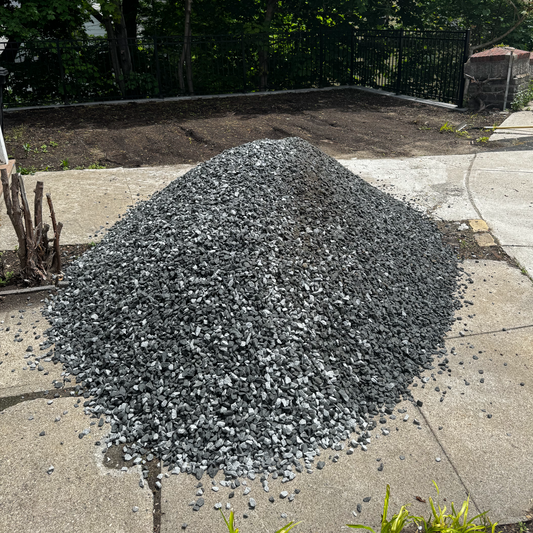
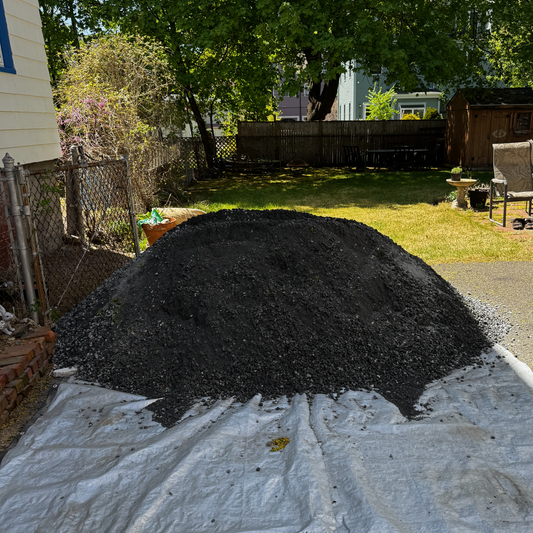
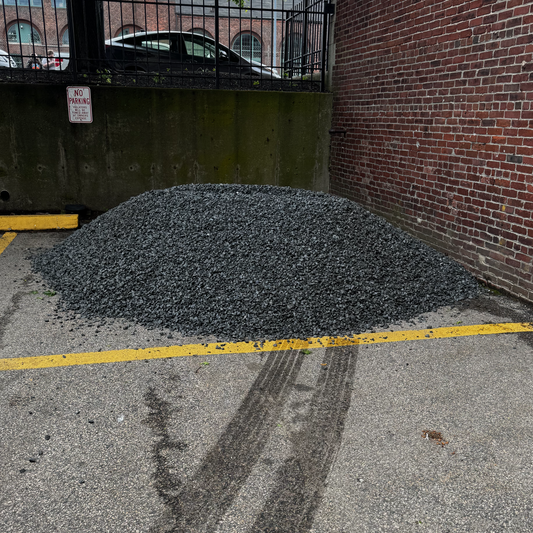
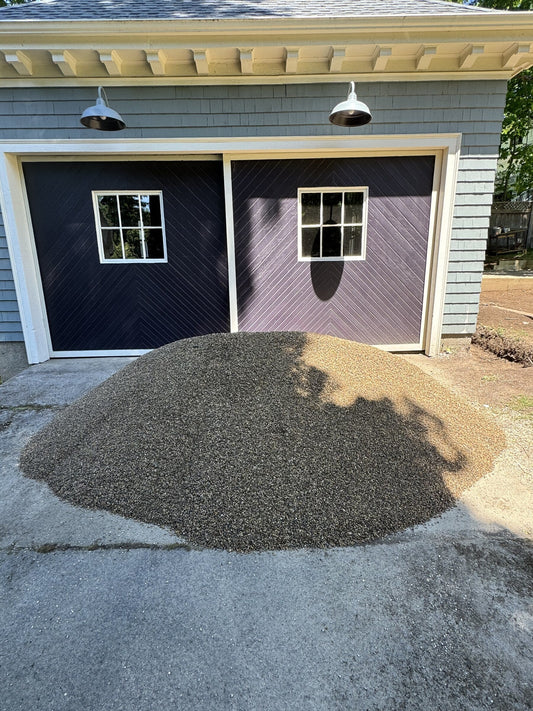
Randolph is about 13.5 driving miles from our Dispatch Office in Dorchester, inside the 30-mile zone, so $100 flat per load. Stone ships 6 yards to a trip, so a 10-by-12 pad is one load: 3.5 yards at $76 is $266, plus $100 — $366 delivered.
Frequently asked questions
Can I put the shed straight on the gravel?
Yes, on a compacted dense-graded pad — standard for a shed with a treated skid frame. Many people still set 4×4 treated runners on top for airflow.
Can I compact it with a hand tamper?
On 100 square feet, with patience. On a full 168-square-foot pad, rent the plate compactor.
Why not just use sand?
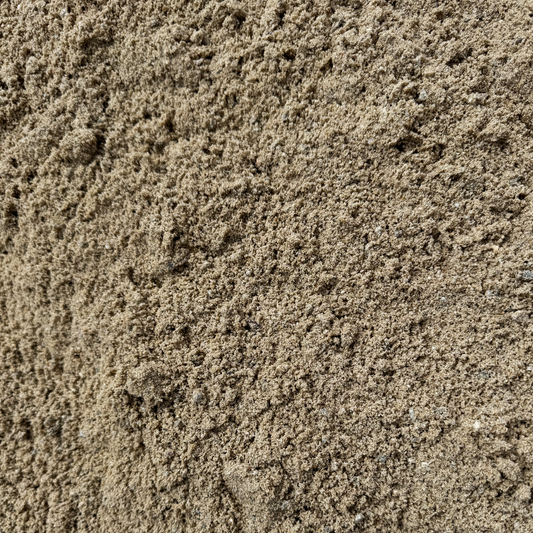
Sand doesn't lock. It moves under point loads and washes out from the edges. Sand belongs under pavers as a thin bedding course, not as a structural base.
Order from site prep materials or the driveway range, stocked for next-day delivery to the Randolph service area.
Related reading: Keeping a Dennis Raised Bed Watered Through a Cape Summer and 5 Stone Choices That Hold Up in Salem's Coastal Wind and Sun.