Quick Answer
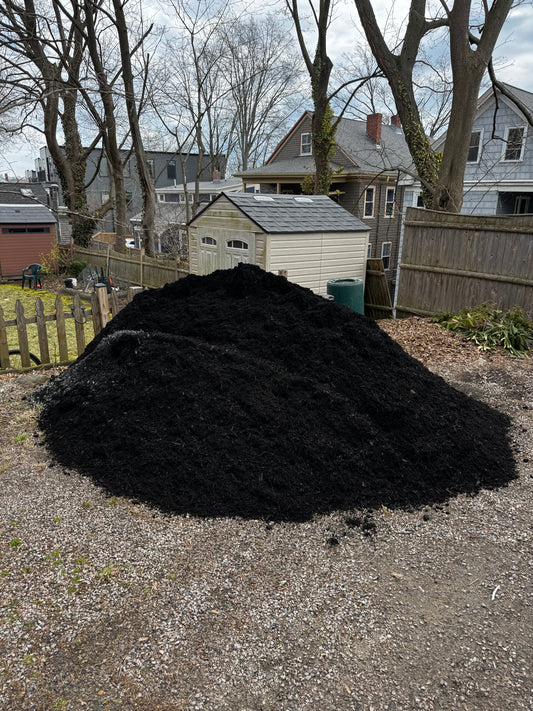
Verdict: Ottr Hardwood Mulch holds color and structure well for 12–14 months in a Hanover bed, with annual refresh recommended at the 12-month mark. Color faded from rich medium brown to grayed brown by month 8; structural integrity (chunk size, depth) held to month 12 before settling roughly 30%. Weed suppression remained strong throughout. Rating: 4.5 / 5 — would buy again, with a routine spring refresh schedule.
What We Tested
The test, run on a 200 sq ft mixed perennial bed in a Hanover front yard from April 2024 through March 2025:
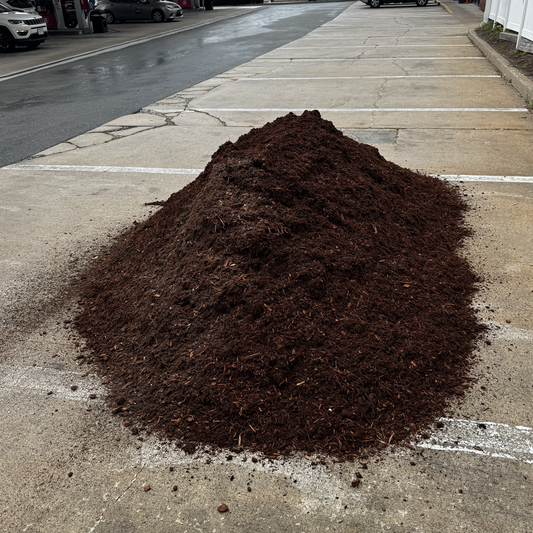
- Material: Ottr Hardwood Mulch, bulk delivered, 1.5 cubic yards
- Application: 3-inch fresh depth across 200 sq ft of clean bed
- Site: Mixed perennial bed (hosta, daylily, hydrangea, knockout rose) with afternoon sun
- Photographed monthly for 12 months to track color, structure, and bed condition
Hanover sits in Plymouth County's interior, USDA Zone 6b — a typical southeastern MA residential climate.
Month-by-Month Notes
Month 1 (April 2024)
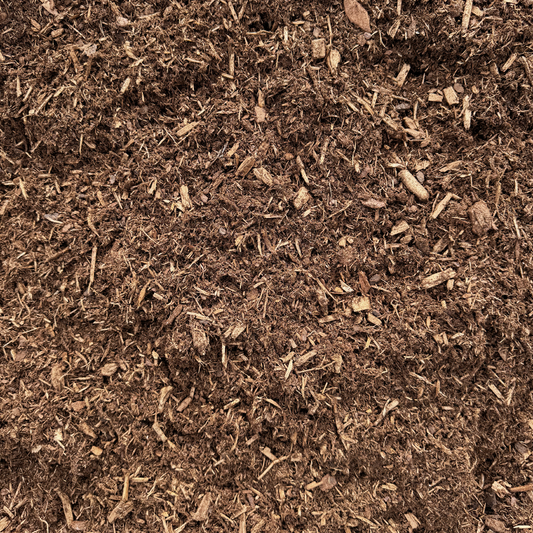
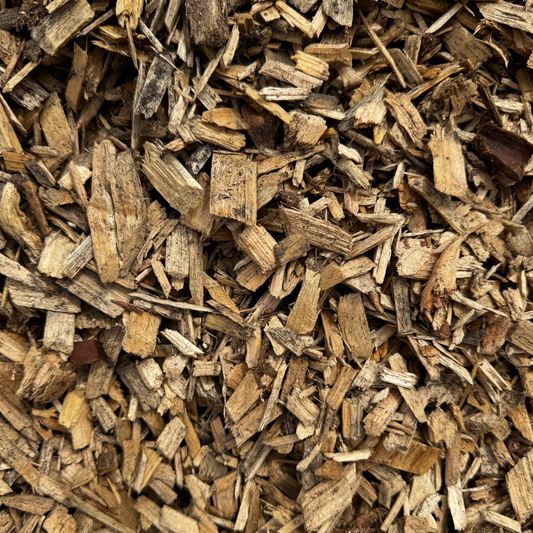
Fresh-spread color rich medium brown. Texture coarse with mixed chunk sizes from ¼ inch to 1 inch. Bed condition: pristine.
Month 3 (June 2024)
Color slightly settled to a medium brown without the initial vibrancy. Top ½ inch dried light brown by month-end after a dry stretch. Weed suppression: 100% — no weeds penetrating.
Month 6 (September 2024)
Color faded to grayed brown across the surface. Structure largely intact; mulch depth reduced from 3" to 2.5". Some surface decomposition visible at the soil interface. Weed suppression: 95% — two small weed patches at bed edges.
Month 9 (December 2024)
Color essentially gray-brown. Top ½ inch crumbly; underlying material still structural. Mulch depth roughly 2".
Month 12 (March 2025)
End-of-test condition: faded gray-brown surface, depth roughly 2", visible decomposition at the soil interface. Weed suppression still ~90%. Bed ready for spring refresh.
Color Hold
| Time | Color State |
|---|---|
| Month 1 | Rich medium brown |
| Month 3 | Medium brown |
| Month 6 | Grayed brown |
| Month 9 | Gray-brown |
| Month 12 | Faded gray-brown |
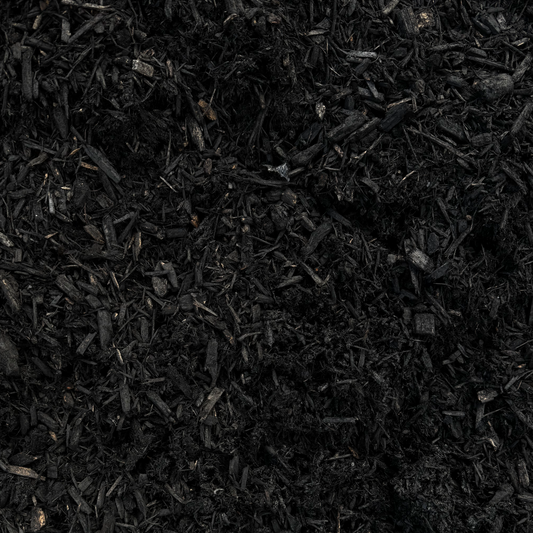
For homeowners who want long-term color hold, dyed mulches (Black Mulch) hold color longer than natural Hardwood. Untreated Hardwood is honest mulch — it fades but adds organic matter to the soil as it decomposes.
Structural Integrity
The 3-inch fresh layer settled to ~2 inches by month 12 (roughly 30% volume loss). This is normal for hardwood mulch in MA conditions — decomposition is what builds soil organic matter over time.
For perennial beds, the annual refresh model works well:
- Year 1 spring: 3-inch fresh
- Year 2 spring: 1-inch refresh on top of remaining 2 inches
- Year 3 spring: 1-inch refresh again
This keeps mulch depth at 2–3 inches indefinitely with about 0.4 yards per 200 sq ft per year after year 1. For new beds, the first-year volume is ~1.5 yards per 200 sq ft.
For the parallel mulch-yardage math, see How to Calculate Hardwood Mulch Yardage for a Plymouth County Bed. For the bulk-loam comparison that often pairs with mulch orders, see Ottr Screened Loam vs Big-Box Topsoil: A MA Side-by-Side.
Weed Suppression
Hardwood Mulch at 3-inch fresh depth produced 100% weed suppression for the first 90 days, dropping to ~90% by end of test. Weeds that did emerge were edge invasions from neighboring lawn, not penetration through the mulch layer.
For maximum weed suppression on heavy-pressure sites:
- Lay landscape fabric under the first mulch application (4-oz weed fabric, overlap seams 6 inches)
- Edge crisply to prevent lawn-grass invasion (3-inch V-trench at the perimeter)
- Refresh annually so the surface layer stays dense
Decomposition and Soil Benefit
By month 12, the bottom ¼ inch of the original layer had decomposed into a dark organic matter at the soil surface. This is the long-term benefit of hardwood mulch — it builds soil structure and microbial life year after year.
Soil pH at the bed edges remained stable at 6.4–6.6 throughout the test (pre-test reading: 6.5 from a UMass Soil and Plant Nutrient Testing Lab sample). No measurable acidification from the mulch.
What Worked
- Color depth at install — strong fresh appearance
- Structural hold through summer — no major settling for the first 6 months
- Weed suppression — excellent throughout
- Pricing per yard — bulk delivery cost-effective vs. bagged
- Organic matter contribution — genuine soil improvement at month 12
What Didn't
- Color longevity — faded to gray-brown by month 6; expected behavior for natural hardwood
- Volume retention — 30% loss over 12 months requires annual refresh
Both are inherent to natural hardwood mulch. For dyed long-color-hold mulches, see 5 Mulch Color Choices Compared for Cambridge Front Yards once it publishes.
For neighbor context on the bulk-loam vs big-box comparison happening the same week, see Ottr Screened Loam vs Big-Box Topsoil. For the next-week West Roxbury bed-edging tips, see 5 Bed Edging Techniques for West Roxbury Yards. The 2026 follow-up on Bridgewater stone tonnage sits at Stone Tonnage in Bridgewater for the parallel late-winter material work.
Recommendation
For Hanover and similar Plymouth County yards: Ottr Hardwood Mulch is the right pick for general residential mulching. Annual spring refresh at 1 inch on top of the previous year's remaining 2 inches keeps beds looking good with minimal annual cost.
Browse the mulch collection for current per-yard rates and the Hanover landscape supply page for delivery scheduling.
For region-specific mulch and soil guidance, the UMass Extension Landscape, Nursery & Urban Forestry program is the authoritative source for Hanover-zone application rates and species-specific notes.
Final Score
4.5 / 5 — would buy again. Honest natural hardwood mulch performs as expected over a 12-month cycle, builds soil long-term, and provides reliable weed suppression. The color fade is a feature of the natural product, not a flaw.