What does mulch actually do to soil temperature?
It insulates, and insulation cuts both ways. Sunlight that would have struck bare soil hits the mulch instead, and heat moves slowly through a loose layer of wood, so mulched soil runs cooler than bare ground through the hot part of the afternoon and slightly warmer overnight. Two qualifications, because this gets oversold: the effect is largest in the top inch or two, where the feeder roots of shrubs and young trees live, and it is a few degrees, not a transformation.
The moisture effect is usually bigger: bare soil loses water to evaporation, and mulch breaks that path. When a heat headline goes up on the National Weather Service Boston page, mulched beds are the ones that will not need daily attention.
How much depth do I need?
| Depth | Temperature effect | Moisture effect | Risk |
|---|---|---|---|
| Under 1 inch | Negligible | Minor | Little benefit |
| 2 to 3 inches | Most of the benefit | Substantial | Low — the target |
| 4 to 5 inches | No added benefit | Reduces infiltration | Matting, water repellency |
| 6 inches or more | None | Actively harmful | Root rot, stem decay, voles |
Two to three inches, tapering to nothing at stems and trunk flares.
When does mulch work against you?
- Volcano mulching. Mulch mounded against a trunk keeps bark permanently damp, inviting decay, borers and vole damage, and encourages roots that girdle the trunk later. Pull it back until the flare shows.
- Too thick. Fine wood laid deep mats into a crust that turns hydrophobic when dry, so light rain runs off and the soil below dries while the mulch looks fresh. Rake it open first.
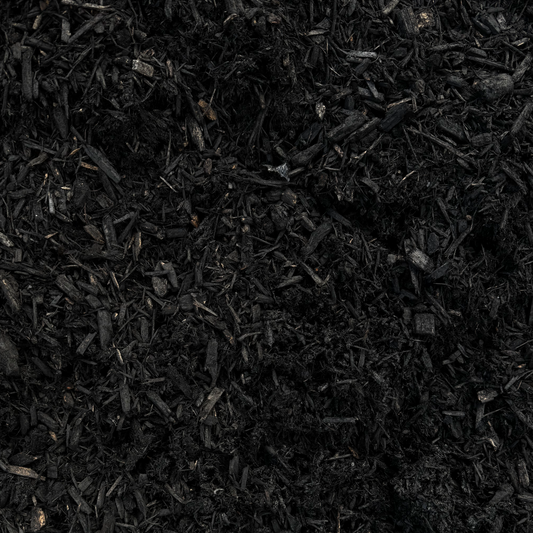
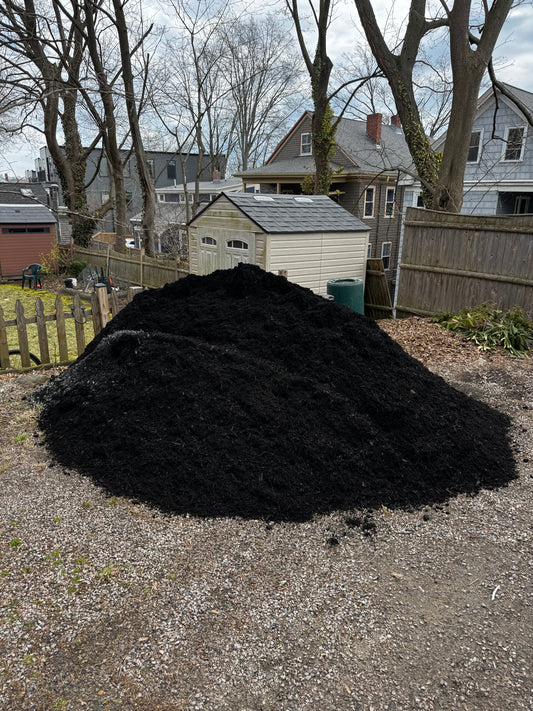
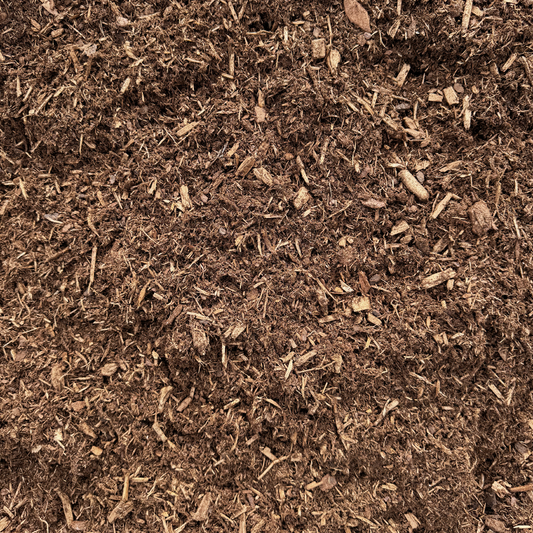
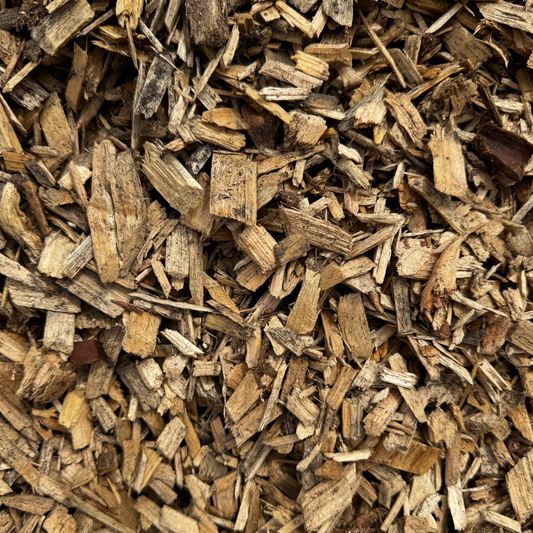
- Wrong texture. Dyed double-ground hardwood mats faster than coarse bark. Pine Bark Mulch at $55 a yard stays open and resists washout on slopes.
- Wrong season or bed. Insulation that cools soil in July delays warming in April, so pull mulch back on spring vegetable beds. Dark stone mulch does the reverse — it radiates heat into nearby plants.
UMass Extension Landscape helps tell a mulch problem from a disease.
What does this look like on a Norfolk County property?
Norfolk County is mostly glacial till uplands — the ground rising into the Blue Hills across Milton, Quincy, Braintree and Randolph, and till shoulders through the Neponset valley. Till is dense, and many of these properties have a compacted layer a foot or two down. That is where over-thick mulch is riskiest: five inches of moisture-holding wood over already-slow soil keeps the root zone wetter than the plant wants.
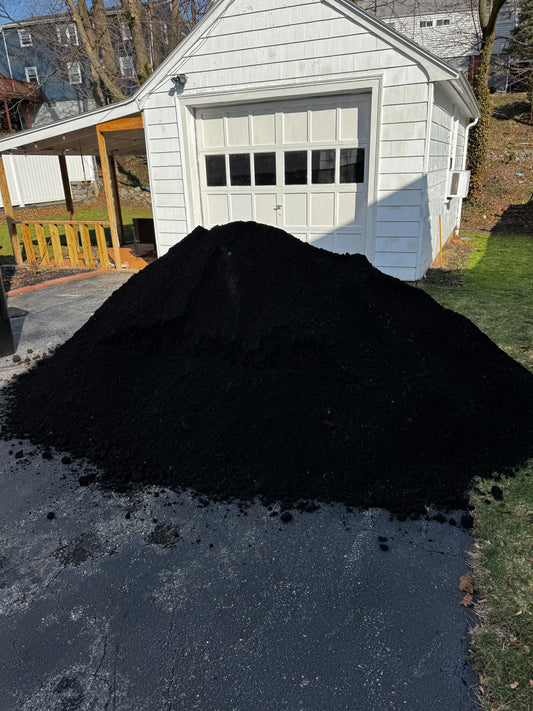
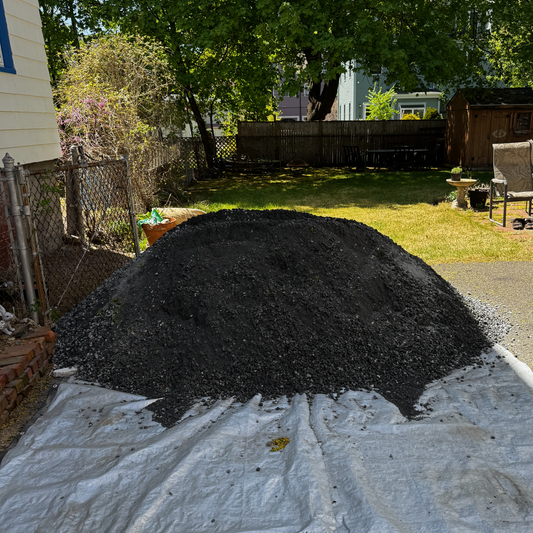
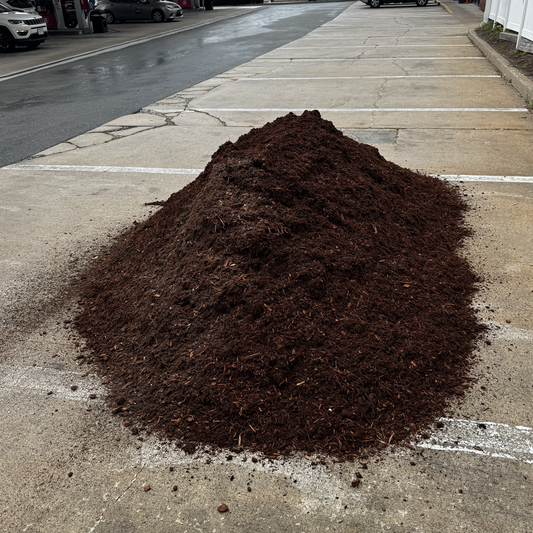
For yardage, cubic yards = (square feet × depth in inches) ÷ 324 — 400 sq ft of beds at 2 inches is 2.47 yards, an 800-sq-ft refresh 4.94. Mulch loads out at 10 yards per trip and the fee is per load, so a whole property is one load. Most of Norfolk County is inside 30 driving miles of our Dispatch Office in Dorchester, putting delivery at $100 per load; the ZIP checker gives your exact figure. Two mulches are two line items, so two loads. Shop mulch bed refresh materials, bulk mulch, or plant establishment materials.
Should I water more or less once the beds are mulched?
Less often, deeper. Frequent light watering mostly wets the mulch.
Is my existing mulch too thick?
Push a trowel through to soil and read the depth. Over three inches, or a crust you can lift as a sheet, means rake it out and thin it rather than adding.
Can I mulch during a heat wave?
Yes, but water the beds thoroughly first. Over dry soil, mulch holds in the dryness.
Two to three inches, off the stems, over soil that is already moist. Order mulch by the cubic yard and the ZIP checker will confirm your total, or text (617) 286-2740. If the gravel drive beside those beds is washing out, the regrade guide covers it.