Why does a Framingham gravel driveway wash out?
Two reasons, and neither is the stone running out. The crown is gone: a gravel drive sits higher down the middle so water sheds sideways, and tyres push material outward until the centre is dished. Once dished, rainfall runs the length of the drive instead of across it, carrying stone with it. The water has nowhere to leave: even a good crown fails if the shoulders sit higher than the driving surface. Framingham serves up both — the hilly north side toward Nobscot and Saxonville produces long sloped drives that act as channels, while flatter ground toward Cochituate barely sheds water.
What stone should I use to fix it?
| Material | Price/yd | Driving surface? | Behaviour |
|---|---|---|---|
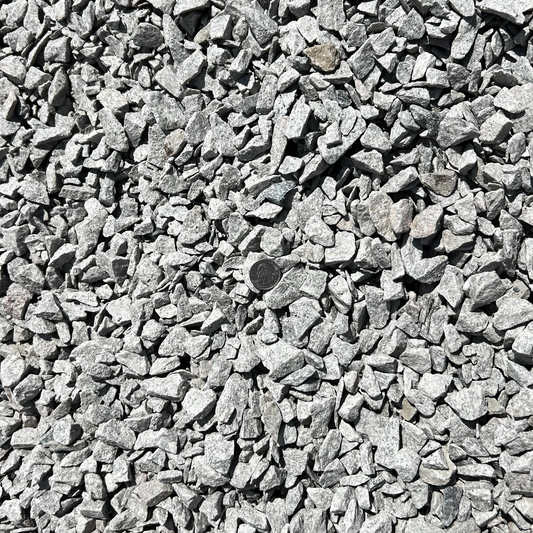
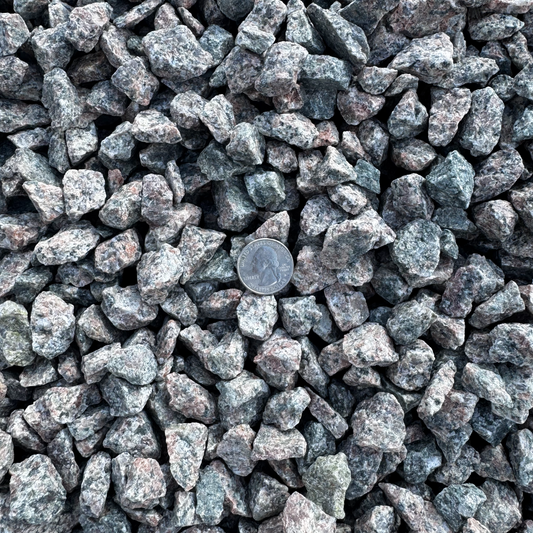
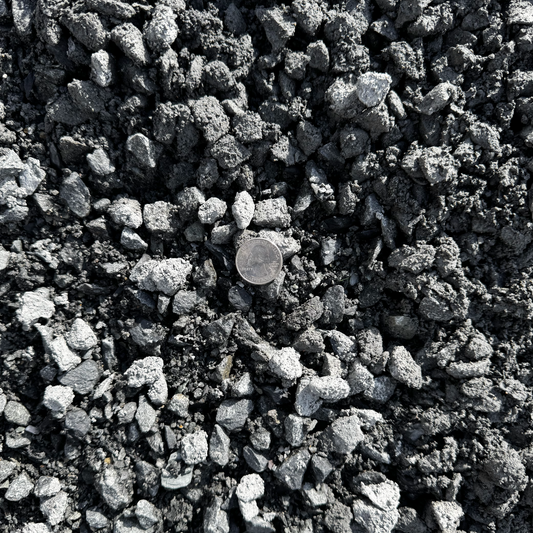
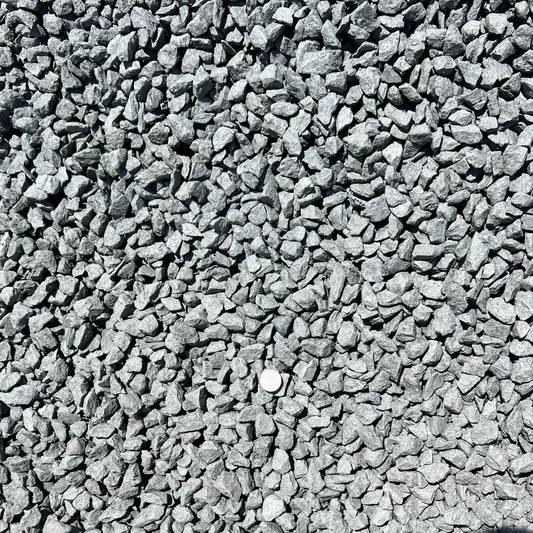
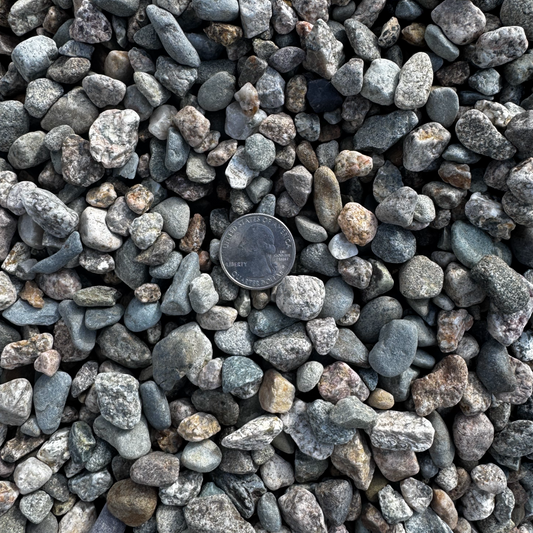
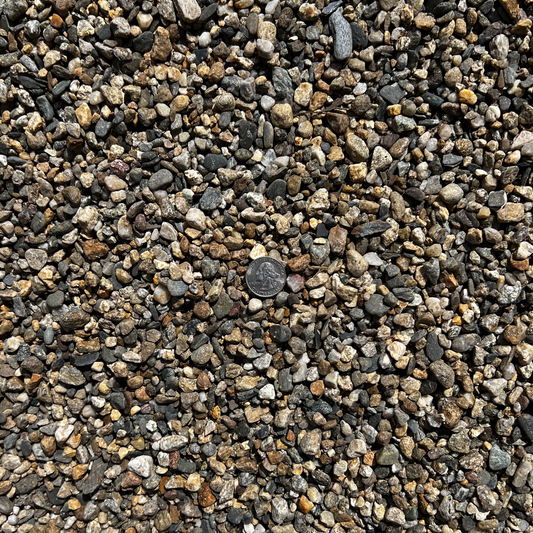
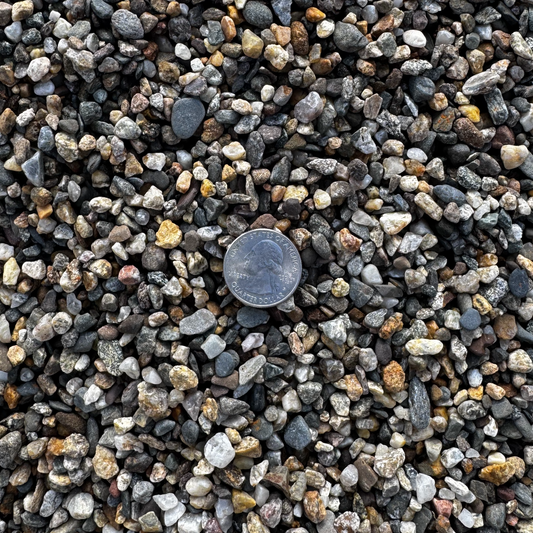
| Dense Pack 3/4 in to minus | $76 | Yes — the default | Crushed granite with fines. Locks up, holds a crown. |
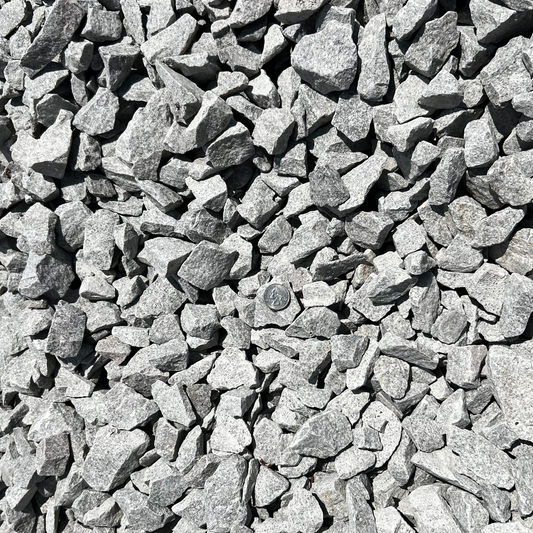
| Crushed Concrete 1 in to minus | $50 | Yes — budget | Binds well; greyer, less consistent. |
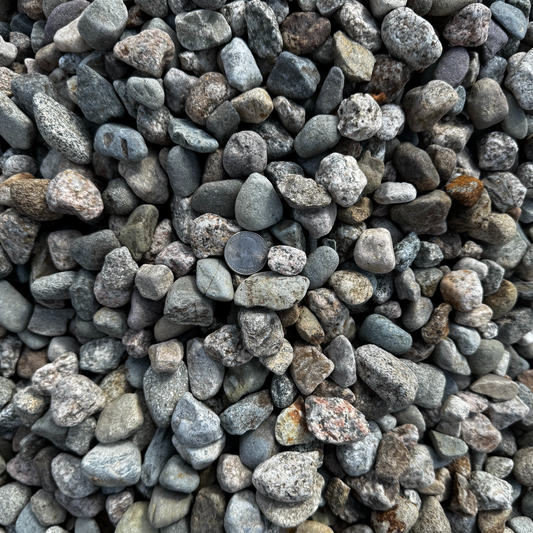
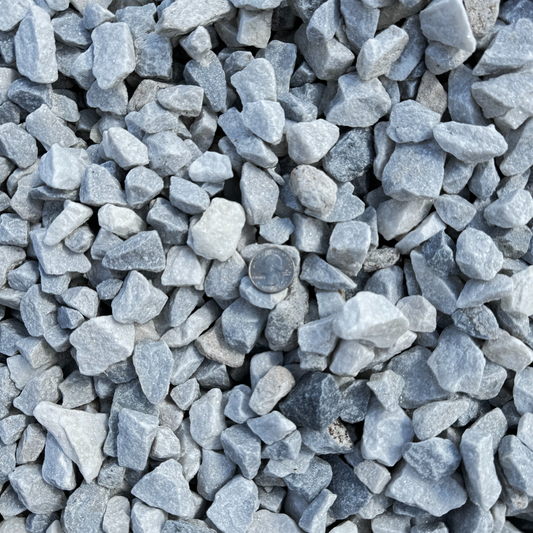
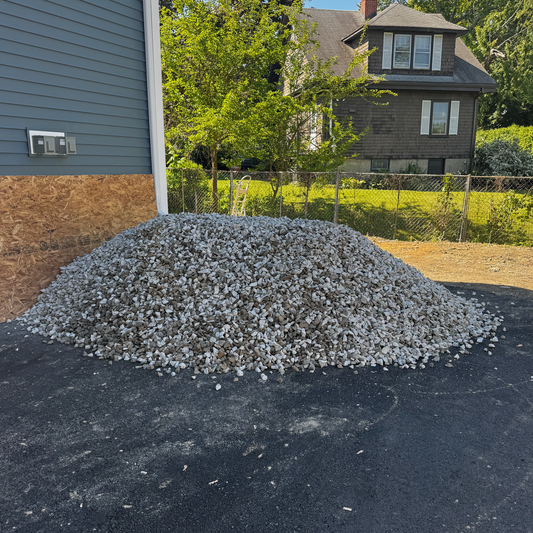
| #57 Stone | $79.50 | No | Clean, open-graded. Never stops moving. |
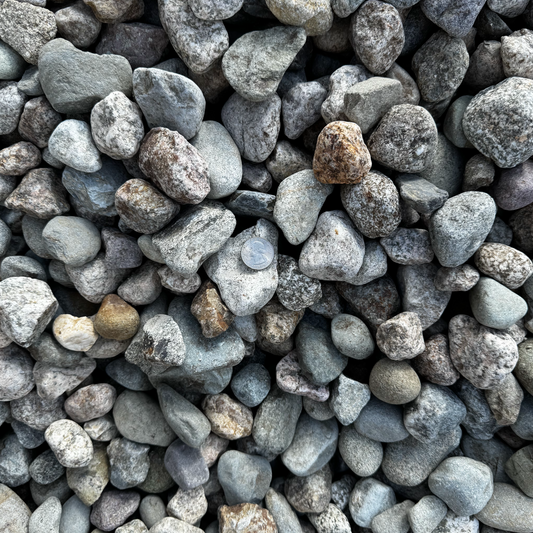
The common mistake is buying clean round stone because it photographs well — no fines means nothing binds it. Browse driveway construction and repair, driveway gravel, or Framingham landscape supply; for a rebuild to depth, see the MassDOT specifications.
How do I rebuild the crown?
Target 1/2 inch of rise per foot of half-width — on a 10-foot drive, the centreline sits about 2 1/2 inches above the edges.
- Scarify first. Rip or rake the surface 2 to 3 inches deep. New stone dumped on a smooth old surface never bonds — it slides off.
- Pull existing material back to the middle. Most washed-out drives have three or four yards of good stone in the shoulders.
- Fill and compact the ruts before the new course.
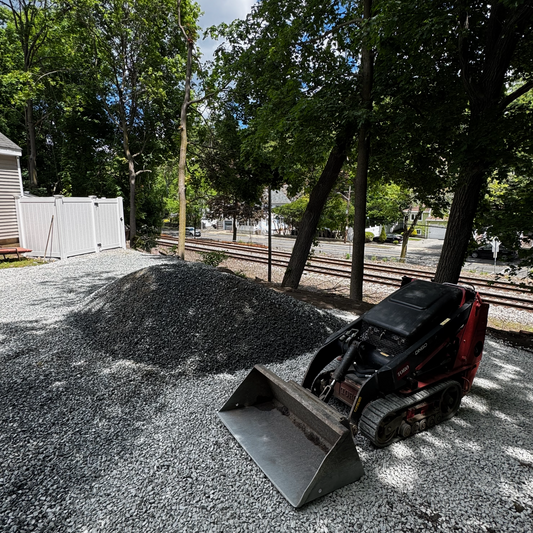
- Spread new dense pack 2 to 3 inches, high at the centreline, feathering to the edges. Check with a string line.
- Compact it damp. Moist material knits; dry material moves and saturated material pumps.
- Cut the outlets. Keep shoulders lower than the driving surface and give water somewhere to leave every 30 to 50 feet — a swale or stone trench on your own property, not the street, since sediment is what municipalities track under the EPA stormwater program. Check with Framingham DPW before touching the apron.
How many yards, and how do I keep it to one load?
cubic yards = (square feet × depth in inches) ÷ 324
| Driveway | Square feet | New surface | Cubic yards | Loads |
|---|---|---|---|---|
| 10 ft × 40 ft | 400 | 2 inches | 2.5 | 1 |
| 10 ft × 60 ft | 600 | 2 inches | 3.7 | 1 |
| 10 ft × 60 ft | 600 | 3 inches | 5.6 | 1 |
| 12 ft × 100 ft | 1,200 | 2 inches | 7.4 | 2 |
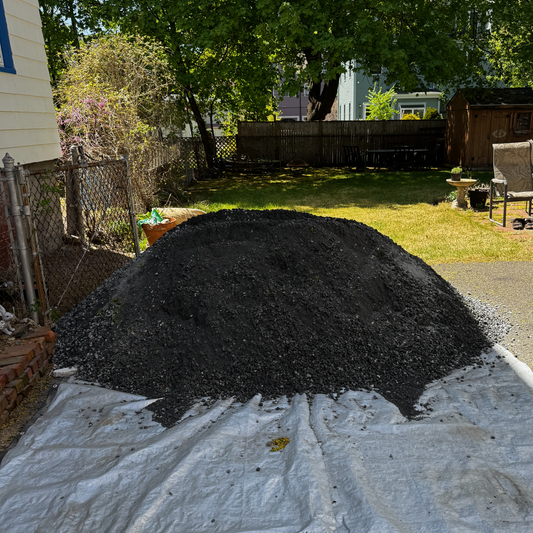
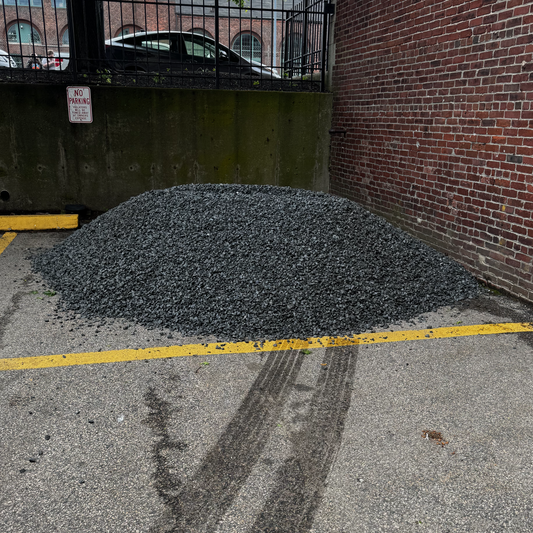
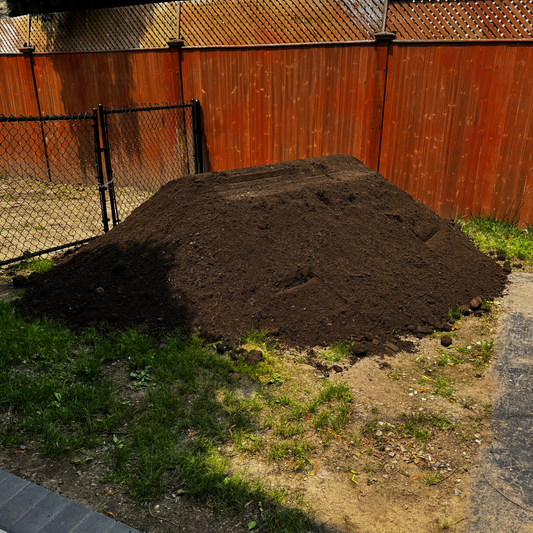
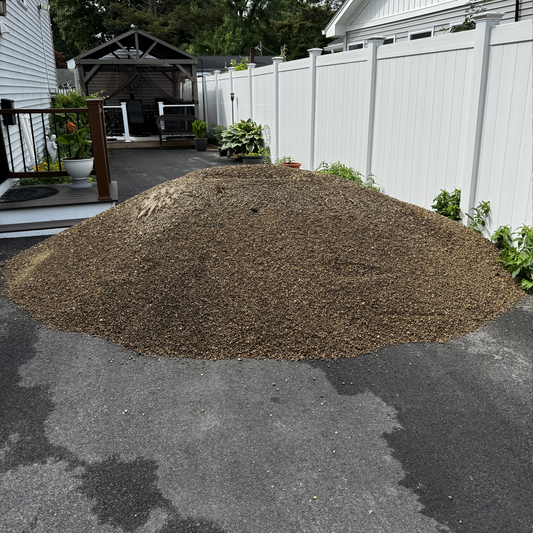
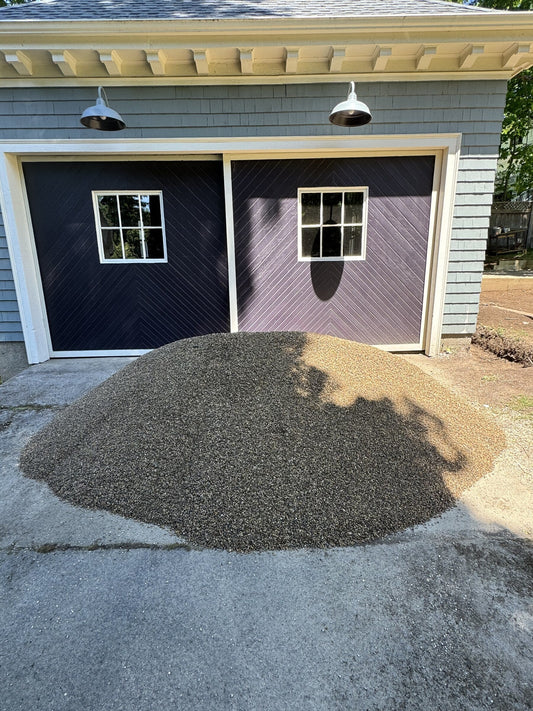
Framingham runs 22.8 to 24.5 driving miles from our Dispatch Office in Dorchester, inside the 30-mile flat zone, so delivery is $100 per load. The cap matters: stone loads out at 6 cubic yards per trip, and the fee is per load. Six yards is one trip at $100; seven is two trips at $200.
Can I just fill the ruts and skip the regrade?
You can, and you will be doing it again after the next heavy rain. Ruts are the symptom; the lost crown is the cause.
Do I need to rent a compactor?
It gives a better wearing course. On a short drive, thin lifts and slow driving gets you most of the way.
How often will I need to top it up?
With a real crown and working outlets, a 1-inch refresh every three to five years. Without them, every year.
Measure length by width, pick a depth, add 20 percent, and order driveway gravel by the cubic yard. Keep it at six yards where you can — one load, $100. Text (617) 286-2740, and read what mulch does for soil temperature before refreshing the beds alongside.