Is fall really a better planting window than spring?
For trees, shrubs, perennials and cool-season grass, yes — and it is not close. In September the soil still carries summer heat while the air has cooled. Top growth slows, so the plant is not pushing leaves and roots at once, and root growth continues until soil temperature falls near 40°F. On the Cape that point arrives later than inland, because the surrounding water holds the ground warm into the autumn.
Spring plantings get the opposite deal: cold soil, a short root window, and then July.
| Fall planting | Spring planting | |
|---|---|---|
| Soil temperature at planting | Warm, cooling slowly | Cold, warming slowly |
| Root growth before the next stress | Weeks to months before hard frost | Weeks before summer heat |
| Watering burden | Moderate, then tapering | Rising straight into July |
| Weed competition | Falling off | Climbing |
| Nursery selection | Narrower, often discounted | Widest |
| The way it fails on Cape sand | A dry autumn with no hose | A dry July with no hose |
What is the catch on Cape Cod specifically?
Barnstable County sits on glacial outwash — sorted sand and gravel with little clay and little organic matter. It drains faster than almost anything on the mainland. The usual argument for fall planting leans on autumn being wetter, and it often is, but rain that lands on outwash is past the root ball in a couple of hours. A half inch of rain does not excuse you from watering a September-planted shrub.
So the caveat is not a footnote. Water new plantings deeply once or twice a week until the ground freezes, and give evergreens a long soak in late November — they lose moisture all winter and are the most common Cape casualty. The ISA has general establishment guidance, and the Cape Cod Commission covers the aquifer underneath.
What should go in the ground, and when?
| What | Cape window | Note |
|---|---|---|
| Cool-season grass seed | Mid-August to mid-September | Warm soil, weeds fading |
| Evergreens | Early September to mid-October | Earlier than deciduous; they transpire all winter |
| Deciduous trees and shrubs | September through late October | Container and balled stock both fine |
| Perennials | September to early October | Wants about six weeks before a hard freeze |
| Spring bulbs | Mid-October to late November | Plant after the soil cools |
Should I fill the planting hole with loam?
No, and this is the part we would make more money not saying. Backfill a tree or shrub with the soil that came out of the hole. A pocket of rich loam inside a sand lot creates a container effect — roots circle inside the good stuff instead of pushing out into the ground they have to live in.
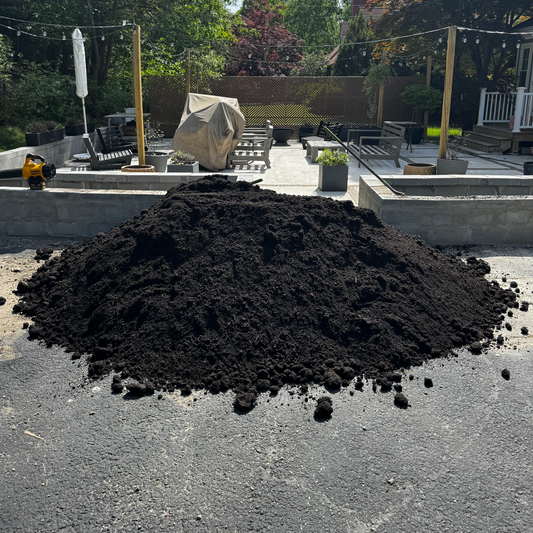
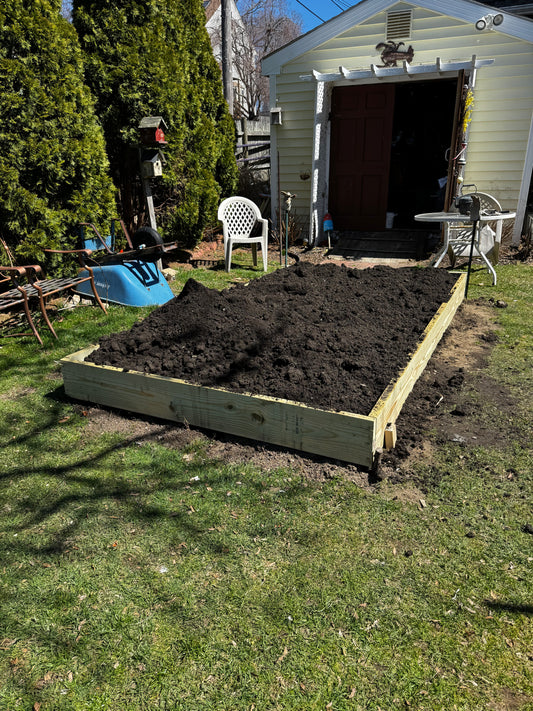
Amend the bed, not the hole. Work compost into the top six to eight inches across the whole planting area, out past where roots will reach in three years. On outwash that is the one soil spend that changes survival. Our Orleans soil-building walkthrough covers depth targets and yardage, and the plant establishment and tree planting collection lists what we send out for this work.
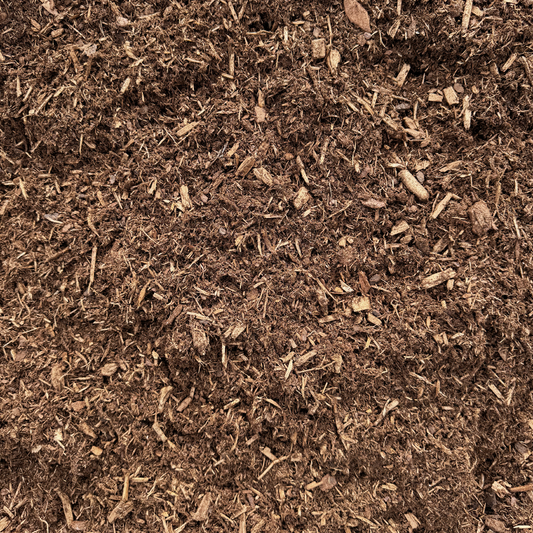
Then mulch. Two to three inches of bark from the mulch range, spread as a flat ring and pulled back a few inches from the trunk, does more for autumn root growth than anything else you can buy. Never pile it against the trunk.
What does material delivery cost out here?
Delivery is $100 per load inside 30 driving miles of our Dispatch Office in Dorchester, plus $4 for every mile beyond 30. No town in Barnstable County is inside that flat zone — the fee climbs steadily from the canal out toward the tip. Three verified examples:
| Town | Delivery per load | By village |
|---|---|---|
| Yarmouth | $266 – $269 | West Yarmouth and Yarmouth Port $266; South Yarmouth $269 |
| Harwich | $288 – $308 | West Harwich $288; Harwich $297; South Harwich $308 |
| Orleans | $320 – $329 | South Orleans $320; Orleans $326; East Orleans $329 |
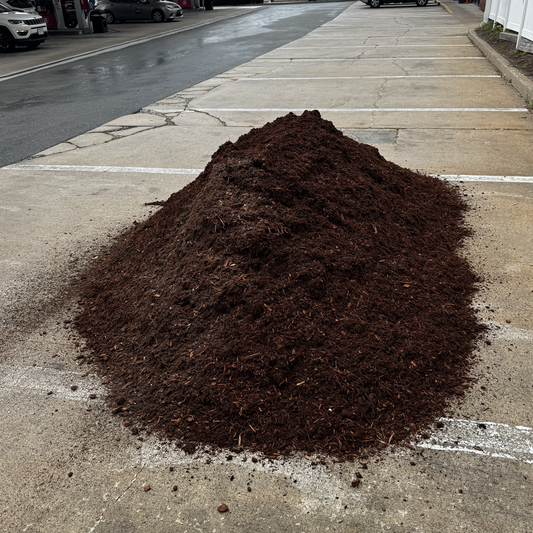
The ZIP checker on any product page returns the exact figure for your street, including towns not listed above. Two things to know before you build a cart: the fee is charged per load, and loads are counted per line item. Mulch caps at 10 cubic yards a trip; stone, sand and soil cap at 6. Ordering one material to its cap is the largest saving available to a Cape customer — our Yarmouth cost breakdown runs the numbers, and the Barnstable County page carries the local range.
Cape Cod fall planting FAQ
How late can I plant a tree on the Cape?
Late October for deciduous stock, mid-October for evergreens. The ground here often stays workable past that, but roots need weeks of warm soil to be worth the planting.
Do I still need to water if autumn is rainy?
Yes. Outwash sand sheds rain past the root ball quickly. Water deeply once or twice a week until the ground freezes regardless of what the gauge says.
Should I fertilise a fall planting?
Skip the nitrogen. It pushes soft top growth that will not harden before frost. Compost worked into the bed is the better autumn input.
Is fall a good time to seed a Cape lawn?
Mid-August to mid-September is the strongest seeding window of the year. Later than that and germination slows enough that seedlings go into winter undersized.
Ready to order material for autumn planting? Enter your Cape ZIP on any product page for exact delivery, or text (617) 286-2740 with your bed dimensions and we will size the load.