Late August into October is the best patio-building stretch of the year. Once the autumn rain sets in, subgrade turns to pudding, and a base built on pudding never sits flat again.
Why does the base decide whether a patio heaves?
A residential patio floats — nobody excavates four feet to get below the frost line. You are building a layer water passes through rather than sits in. Water that sits, freezes; the patio lifts, and in spring it does not go back.
So two things matter: depth of compacted base, and drainage out of it. Foxborough is mixed on both — rocky till with ledge near the surface out toward F. Gilbert Hills, wet silty pockets toward the Neponset Reservoir. Hit grey, sticky subgrade and you need fabric plus an exit for water. The USDA NRCS Web Soil Survey tells you what is under your address.
How deep does the base need to be?
| Application | Compacted base | Material | 192 sq ft (12 × 16) |
|---|---|---|---|
| Walkway, foot traffic | 4 inches | Dense Pack ¾"– | 2.4 yd → order 3 |
| Patio, sand subgrade | 6 inches | Dense Pack ¾"– | 3.6 yd → order 4 |
| Patio, clay or till | 8 inches | Dense Pack ¾"– or #610 | 4.7 yd → order 5 |
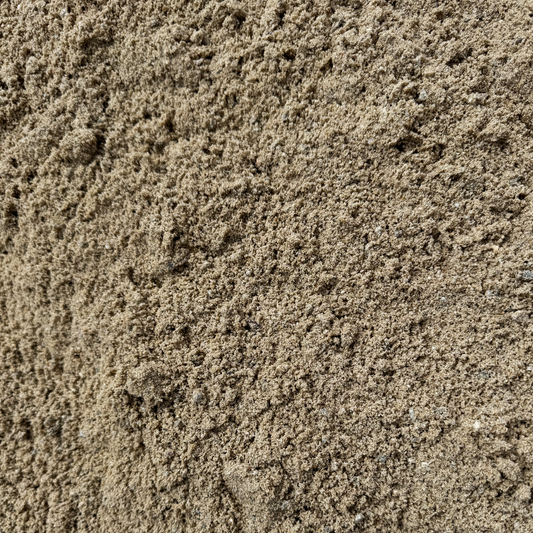
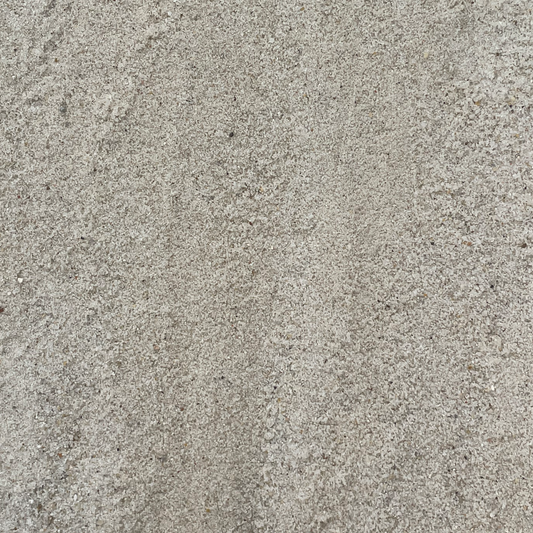
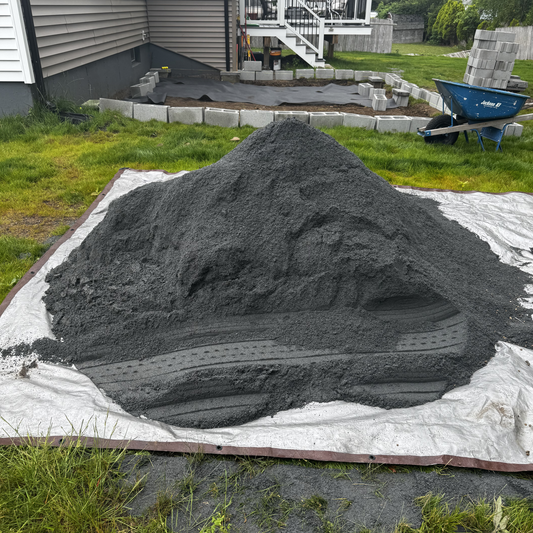
| Setting bed | 1 inch | Paver Sand | 0.6 yd → order 1 |
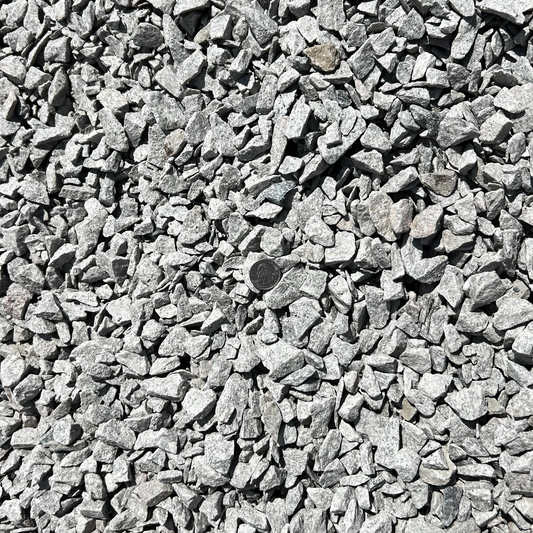
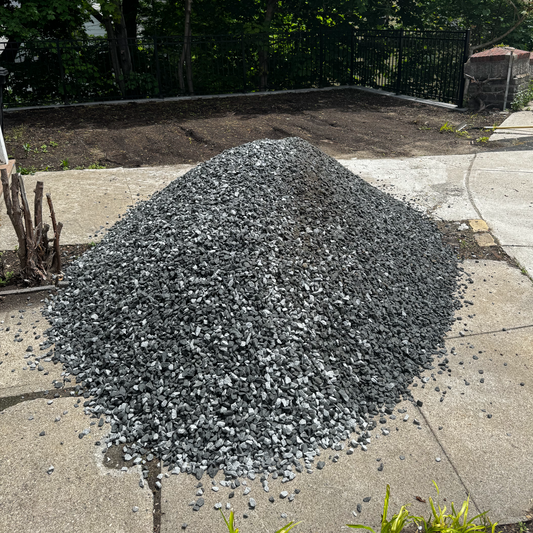
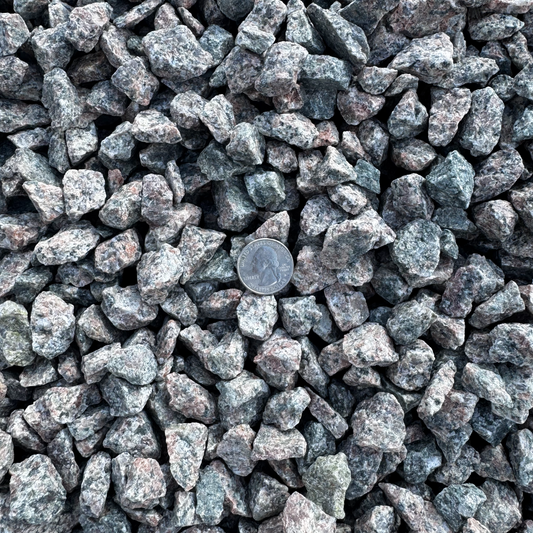
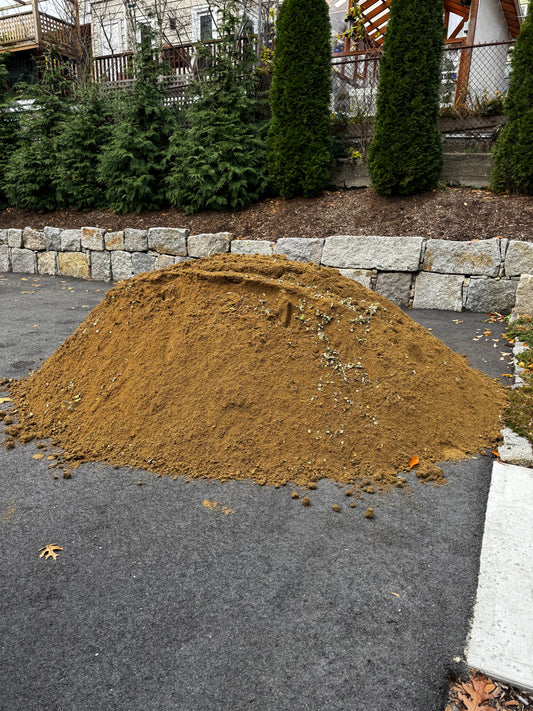
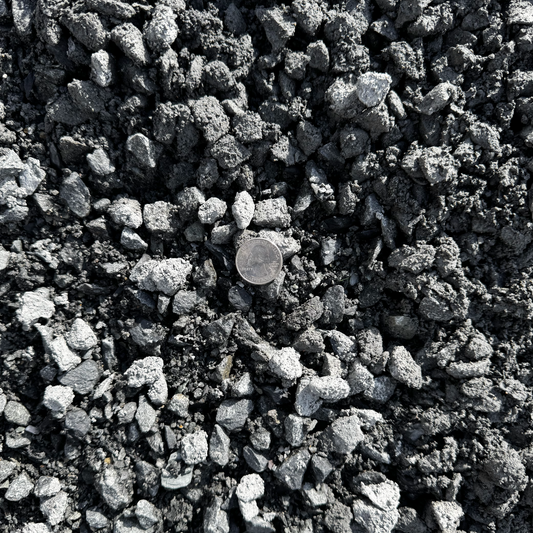
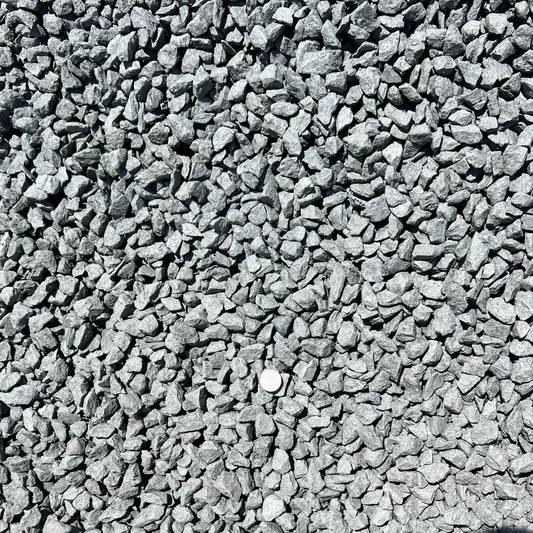
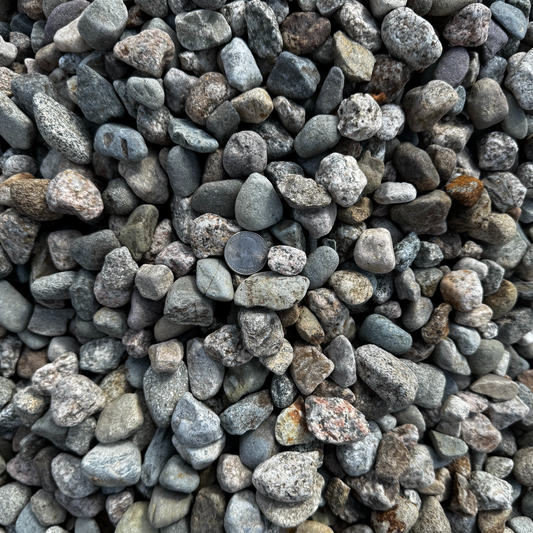
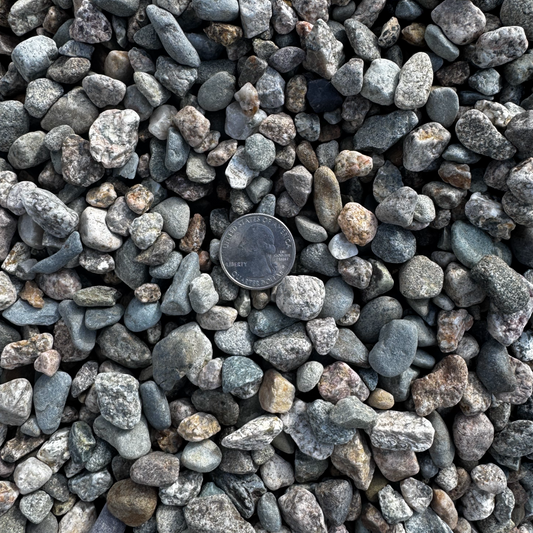
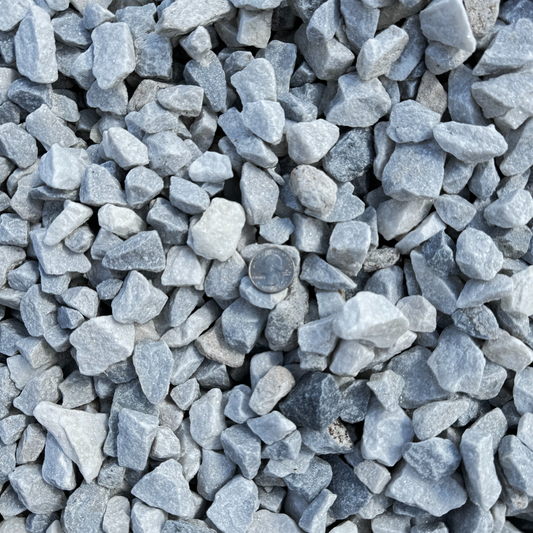
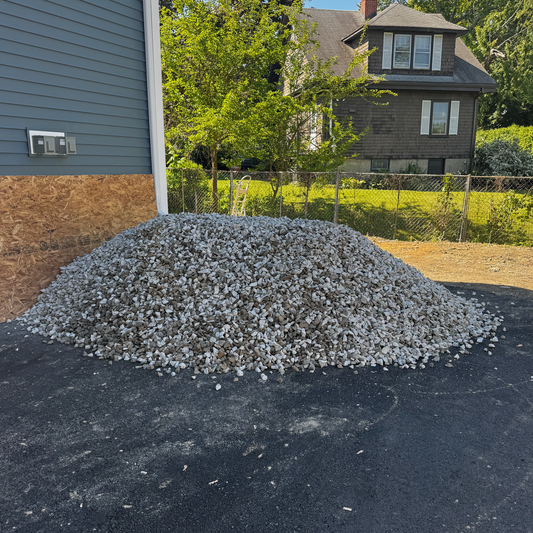
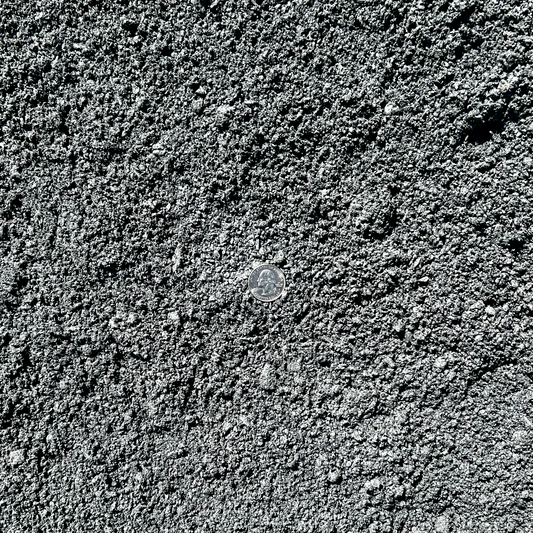
The arithmetic is cubic yards = (square feet × depth in inches) ÷ 324, plus about fifteen percent for compaction — already in the order column. Dense Pack ¾"– at $76 a yard is the standard, a graded mix of stone and fines that locks up hard. Stone dust is a setting material, not a base. The range is in crushed stone.
What are the steps?
- Set the fall. String a line with at least one inch of drop for every eight feet, running away from the house.
- Excavate. Base depth plus one inch of sand plus paver thickness — about ten inches for a six-inch base. Dig six inches past the finished edge.
- Compact the subgrade and lay fabric. On silt, clay or heavy till, roll geotextile so the base cannot sink into the soil.
- Build in lifts. Three inches at a time, lightly dampened, compacted in two directions. One thick lift compacts on top and stays loose underneath — this is where most DIY patios fail.
- Screed one inch of paver sand. Exactly one inch, off rails, never walked on after. Thick sand beds rut and telegraph every footstep.
- Give water somewhere to go. Daylight the low edge to open ground, or tie a perforated pipe in stone into the low corner.
What does delivery to Foxborough cost?
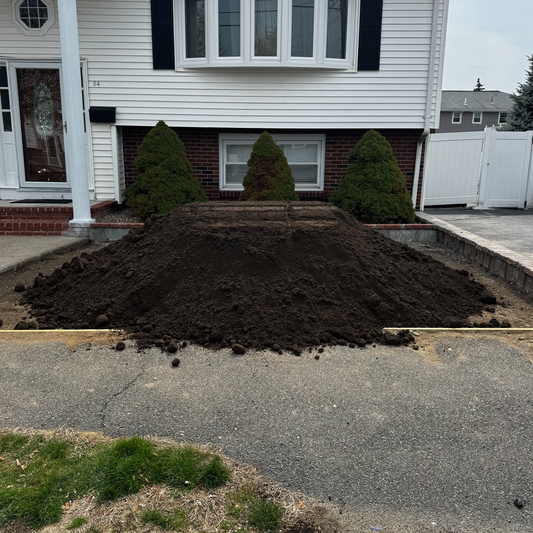
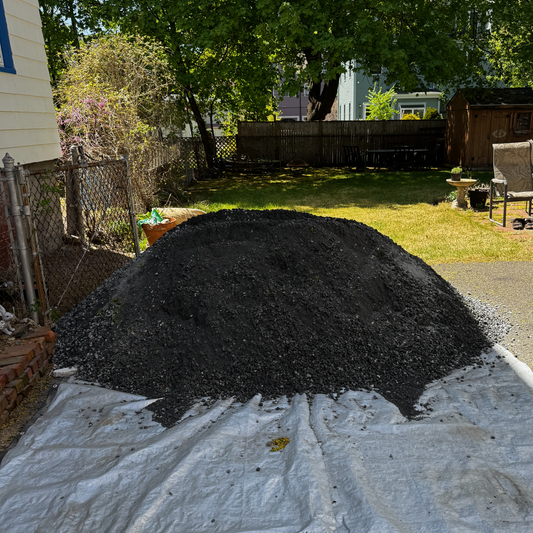
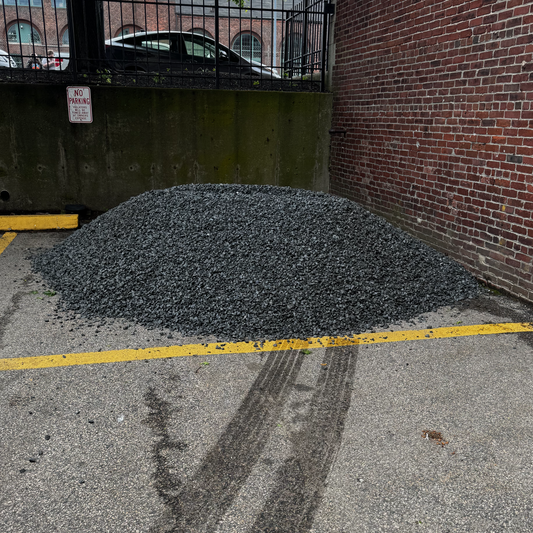
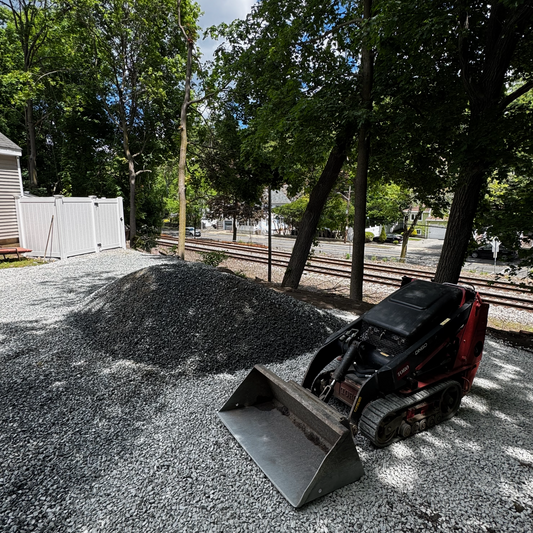
Foxborough is 26.9 driving miles from our Dispatch Office in Dorchester, inside the 30-mile band, so delivery is $100 per load. Plan for two fees: loads are counted per line item, so dense pack and paver sand are two trucks. Materials are in patio and walkway base and on the Foxborough landscape supply page; a small base order in practice is in this Bellingham shed pad delivery.
Common questions
Can I build a patio base in October?
Yes, and it is good working weather. Avoid compacting saturated subgrade after a long rain, or building on ground already freezing at night.
Do I really need to compact in lifts?
Yes. A plate compactor only densifies the top few inches, so six inches dumped and compacted once leaves a soft layer under a hard crust.
How much paver sand for a 12 by 16 patio?
One yard covers it at one inch with a little spare. Paver Sand is $60 a yard.
Is more sand better if the base is uneven?
No. Fix the base. Extra sand is the most common cause of a patio going wavy in year two. ICPI publishes the guidance on bedding thickness.
Measure the patio, pick your base depth off the table, and order. Text (617) 286-2740 to have the yardage checked first.