What actually needs cutting back in late August?
Less than most people take out. The work worth doing now is sanitation and clearing what has finished.
- Diseased foliage. Phlox and monarda gone grey with mildew, peony leaves that showed botrytis. Cut it and bin it, do not compost it.
- Bearded iris fans. Trim them and clear the debris around the rhizomes — simple borer sanitation.
- Anything collapsed onto its neighbours.
- Spent annuals, as they finish.
- A light shear of catmint, salvia or hardy geranium, which often gives a second flush.
Deadheading is optional: cutting seed heads stops the self-sowing, leaving them feeds birds. Neither is urgent.
What should be left standing until spring?
The common mistake in a coastal border is tidying it flat in September. A bed cut to the ground has nothing to hold snow, nothing to slow wind across bare soil, and nothing for the insects that overwinter in stems. On this peninsula that matters.
| Cut now | Leave until spring |
|---|---|
| Mildewed phlox and monarda | Coneflower and rudbeckia seed heads |
| Bearded iris fans | Ornamental grasses, the best winter structure you have |
| Diseased peony foliage | Sedum heads, which hold snow well |
| Stems smothering neighbours | Hollow native stems where solitary bees overwinter |
| Finished annuals | Asters and goldenrod, still working into October |
Two things not to do now: do not fertilise, and do not hard-prune shrubs. Both push soft growth that will not harden before frost. The UMass Extension Landscape program and the Native Plant Trust make the case for standing material.
What do ledge and salt wind change here?
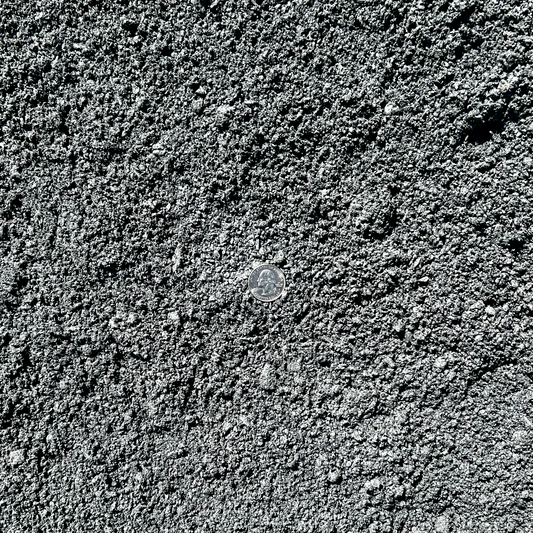
Granite sits close to the surface across much of the peninsula, so beds are shallower than they look. Keep mulch even rather than deep. Out on the Neck and along the harbour side, winter storms carry salt spray well past the shoreline, and a fine-textured bark stays put better than a coarse one. In Old Town, delivery is curbside and the truck needs somewhere it can tip safely, so mention parking when you order.
How much mulch does a top-up take?
Measure what is there first. If the bed still holds 2–3 inches, skip it and spend the money in spring. Mulch deeper than three inches, or pushed against crowns, kills more perennials than winter does.
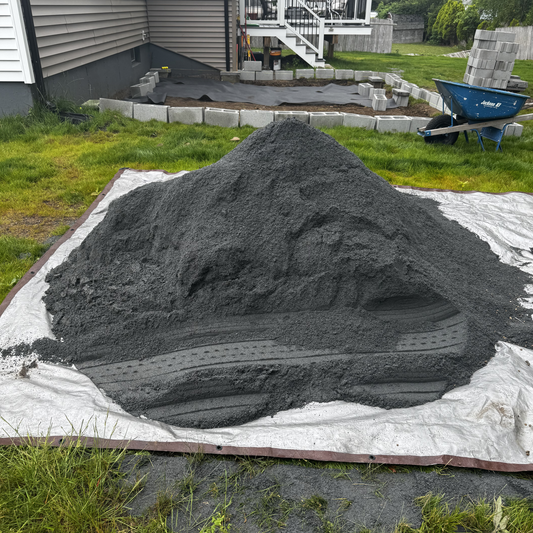
If it has thinned: cubic yards = (square feet × depth in inches) ÷ 324. A 300 sq ft border topped up an inch is 0.93 yards, and half a yard covers about 160 sq ft. Prices are in bed refresh and the mulch range; pine bark at $55 a yard behaves best in wind. If the soil is worn out rather than the mulch, an inch of compost underneath does more.
What does delivery to Marblehead cost?
Marblehead is 18.6 driving miles from our Dispatch Office in Dorchester, well inside the 30-mile flat zone, so it is $100 per load with no mileage added. Most of Essex County is in the same position.
The fee is per load and loads count per line item, so half a yard of mulch and half a yard of compost are two loads and two fees. There is no minimum order, but a half-yard drop costs the same $100 as a full one — if a neighbour needs the same material, order together and split the pile.
What else comes up in late August?
Can I divide perennials now?
Yes for most spring and early-summer bloomers — early September is the window. Hold off on anything in flower.
Should I cut hydrangeas back?
Not now, and for bigleaf types not in spring either beyond dead wood. Next year's buds are already on the stems.
Is late August a good time to plant?
For shrubs and trees, yes — see this piece on Ipswich fall planting.
Order mulch and compost by the cubic yard for Marblehead delivery, check your fee with the ZIP checker, or text (617) 286-2740.