Why is autumn a better planting season than spring here?
Because the two halves of the plant come apart in your favour. Air temperature drops through September, so leaves stop demanding water, while the soil holds summer heat into November and roots keep growing. A tree planted in late September gets six or eight weeks of root growth before the ground cools; one planted in May gets a few weeks and then July.
| Factor | Fall planting | Spring planting |
|---|---|---|
| Soil temperature | Warm into November | Cold in April |
| Demand from leaves | Falling, then gone | Rising into summer |
| Watering burden | Weeks, then rain | The whole first summer |
| Main risk | Winter wind and salt | Summer heat and drought |
| Best for | Deciduous trees, shrubs, conifers, perennials, bulbs | Broadleaf evergreens, birch, magnolia, oak |
That last row is the caveat: fall is not universally better. Broadleaf evergreens and slow-rooting species do better in spring. The ISA and the Native Plant Trust are better guides on species than a nursery tag.
What does Ipswich ground actually do?
It varies more across one town than most. Out toward Castle Neck and the beaches, dune sand drains faster than a new plant can use it. Along the Ipswich River and the Argilla Road side the ground is heavier, and a hole dug after a wet week holds water like a bucket. Anywhere facing the Great Marsh or open water off Great Neck takes winter wind carrying salt, and desiccation kills more new evergreens here than cold does.
How wide should the hole be, and what goes back in?
Wide and shallow. Loosen an area two to three times the width of the root ball and dig no deeper than the ball is tall — the flare where the trunk widens into roots sits at or just above finished grade. Planting too deep is why trees fail three years later.
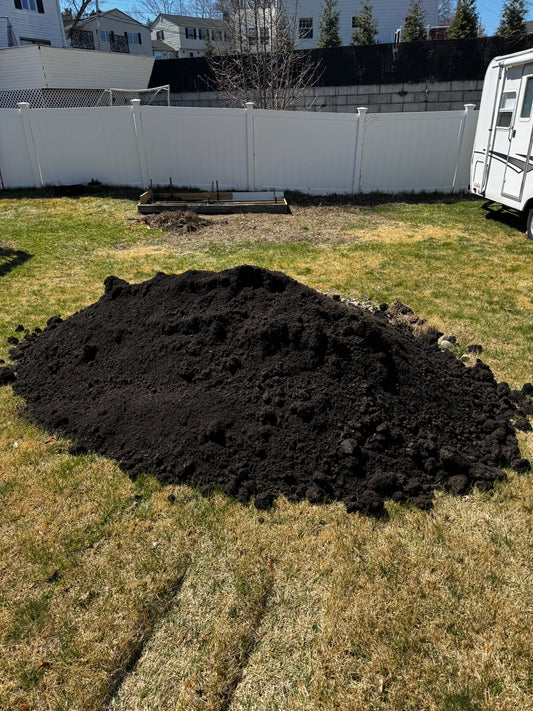
Then the part people do not expect: backfill with the soil you dug out. A rich pocket of imported soil in a heavy native hole becomes a sump, and roots circle in it instead of leaving. Break up the clods, pull the rocks, put it back.
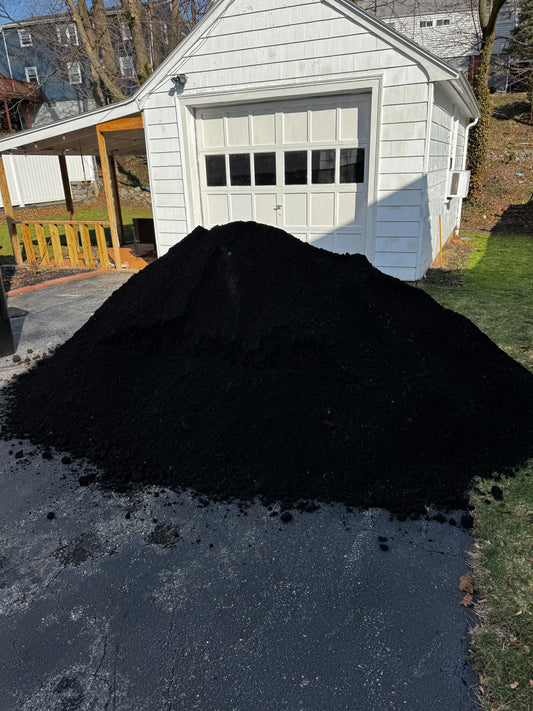
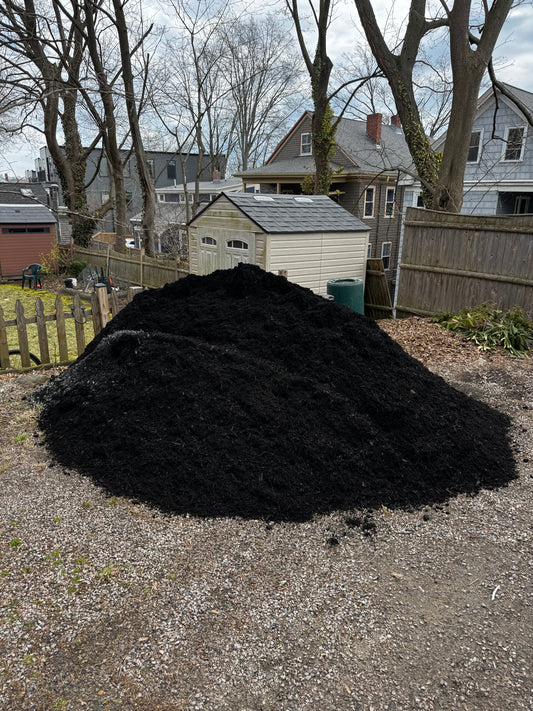
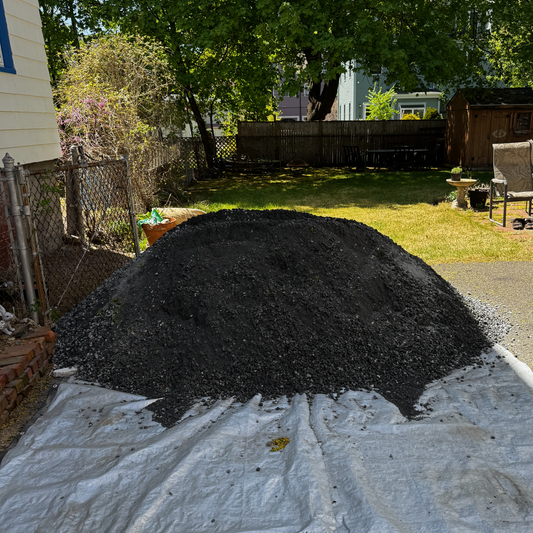
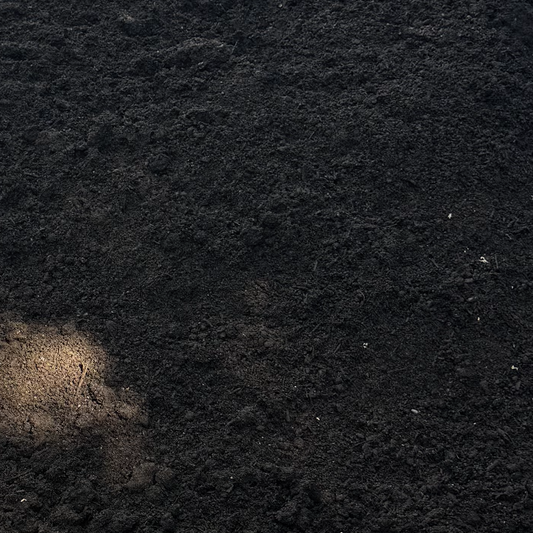
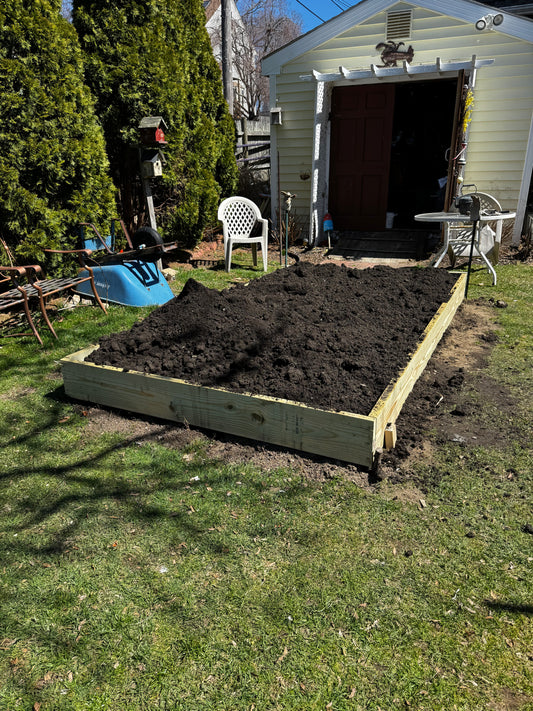
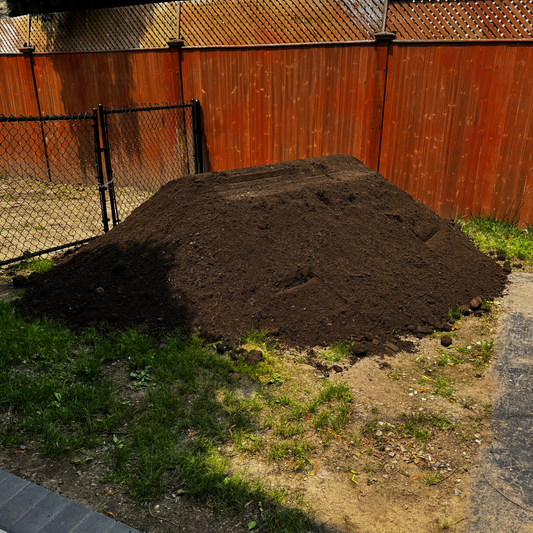
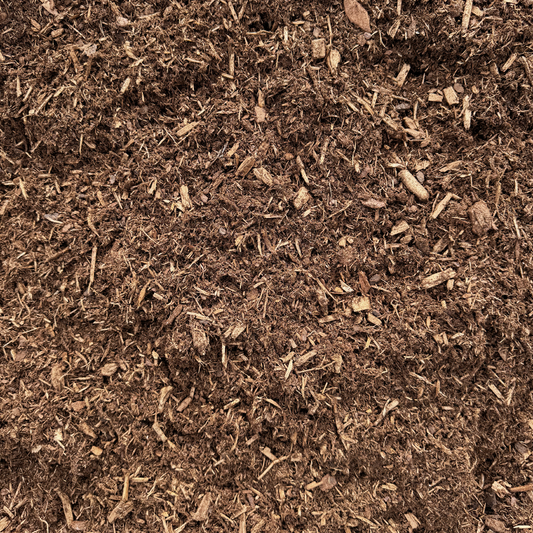
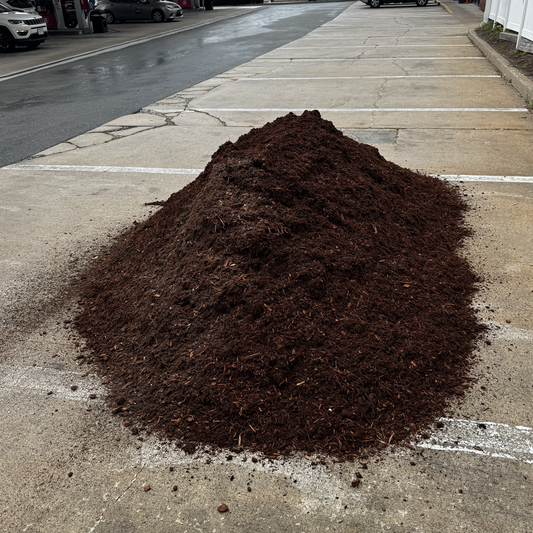
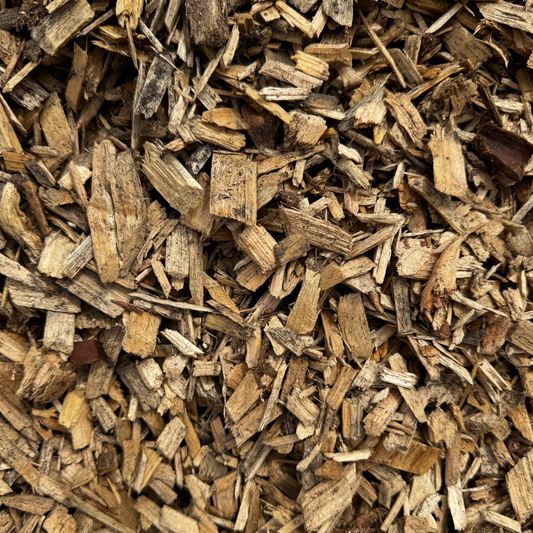
Compost belongs on top. Spread an inch or two across the area, then mulch 2–3 inches over that, pulled back from the trunk. Cubic yards = (square feet × depth in inches) ÷ 324, so 400 sq ft takes 1.2 yards of compost at an inch and 3.7 yards of mulch at three. The rest is in plant establishment and soil.
What does a load cost to Ipswich?
Ipswich is 32.3 driving miles from our Dispatch Office in Dorchester — 2.3 past the 30-mile flat zone. The fee is $100 plus $4 for every mile beyond 30: $100 + (4 × 2.3) = $109.20, rounded to $109 per load.
Most of Essex County sits inside that flat zone at $100; Ipswich misses it by two miles, and the difference is nine dollars. The fee is per load and loads count per line item, so 3 yards of compost and 4 of mulch are two loads and two fees. Soil caps at 6 yards a trip, mulch at 10.
What else comes up about fall planting in Ipswich?
How late can I plant a tree here?
Until the ground stops taking a shovel easily, usually late November. Earlier is better: give roots six weeks of warm soil.
Do I fertilise at planting?
No. Water and root contact matter far more in year one, and pushing top growth in October works against hardening off.
What if the lawn is the real project?
Same window for seeding, but diagnosis matters more than material — the five usual causes are in this piece on August lawn failure.
Order compost and mulch by the cubic yard for Ipswich delivery, check your fee with the ZIP checker, or text (617) 286-2740.