Why does an Andover lawn look worst in mid-August?
Because this is the end of the run. Cool-season grass slows in heat and picks up when nights cool; by now it has coasted ten weeks, and whatever was weak underneath shows.
Before buying anything, work out whether the brown is dormant or dead. On most lawns we see in August the majority is dormant, and it greens up once rain returns.
| Test | Dormant | Dead |
|---|---|---|
| Tug on the turf | Holds fast | Lifts as a mat |
| Crown at the base | Pale and firm | Brown and dry |
| After a week of rain | Greens up | Stays brown |
| What to buy | Nothing | Seed and loam |
Ground varies across town. Lawns in the Shawsheen valley and the flats near Ballardvale sit on deeper, damper soil and hold colour. Upland lots toward Harold Parker, and older properties around the Shawsheen Village mill core, sit on glacial till under a thin cap of soil, and go crisp first.
What are the five things going wrong?
1. Compaction over glacial till
Push a screwdriver into the lawn. In decent soil it slides six inches under hand pressure; if it stops at two, roots stopped there too. Fix: core aerate in late August or early September, leave the cores, and seed the same day.
2. Thatch over half an inch
Cut a wedge with a spade and look at the layer between blades and soil. Spongy brown fibre thicker than half an inch holds water at the surface and hides grubs. Fix: dethatch, then rake in a quarter inch of screened loam.
3. Grubs under the turf
Fold back a one-foot square of sod and count. UMass Extension Turf puts the home-lawn threshold near ten grubs per square foot. Fix: the feeding is mostly done by late August, so repair with seed and soil and set preventive timing for next season.
4. Shallow roots from light watering
Ten minutes every evening wets the thatch and nothing below, so grass roots in the top inch — the first to dry out. Fix: water deeply and less often, early morning, long enough to wet six inches down. Nothing to buy here.
5. Not enough soil under the grass
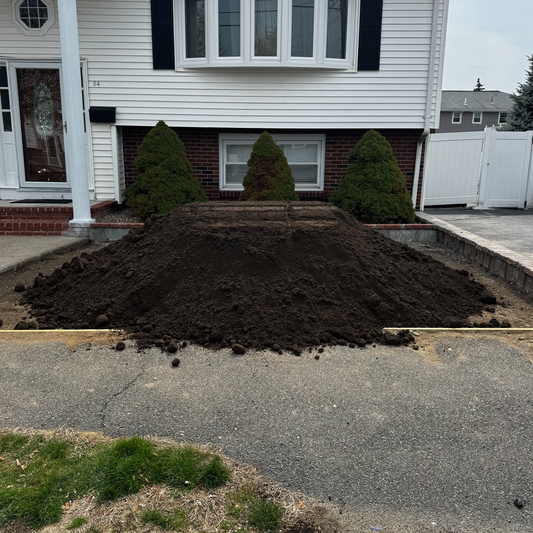
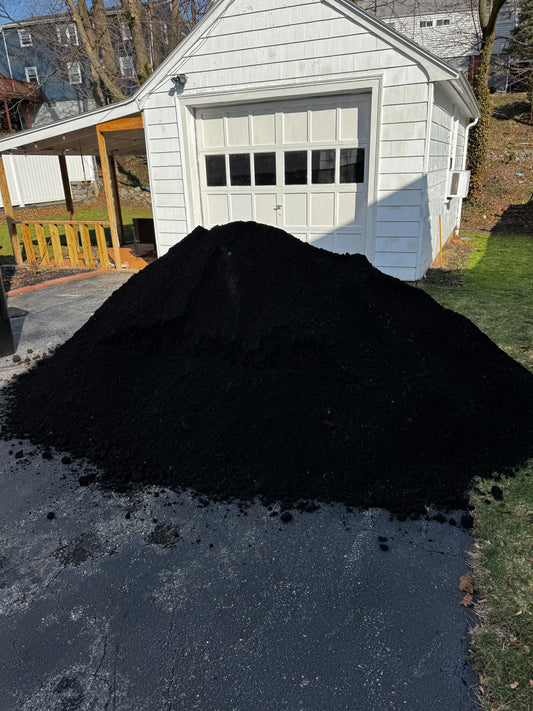
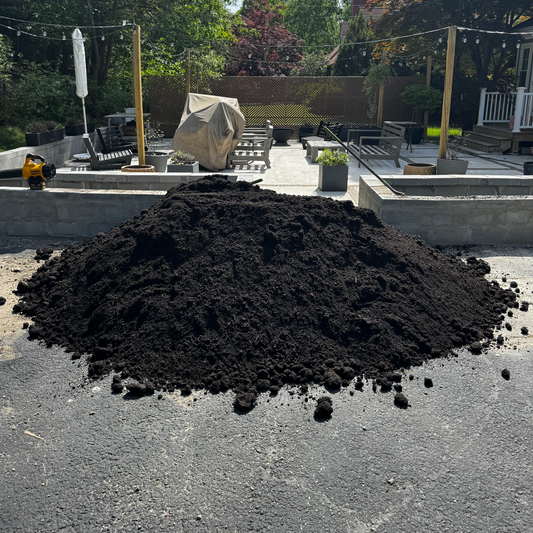
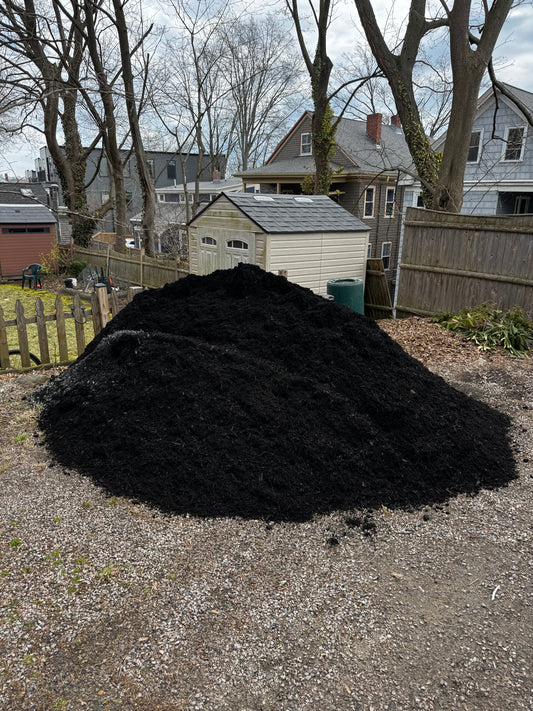
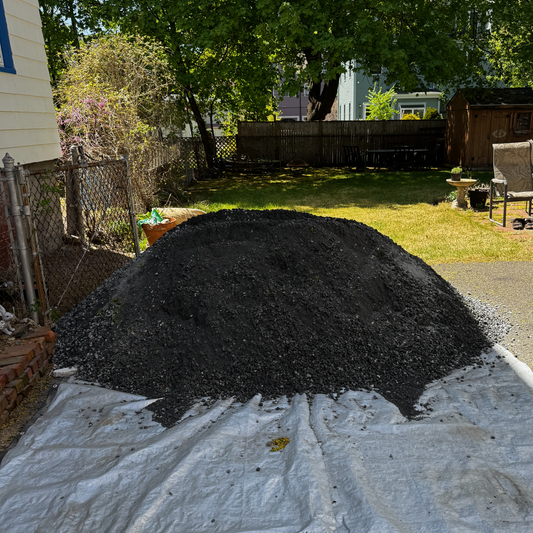
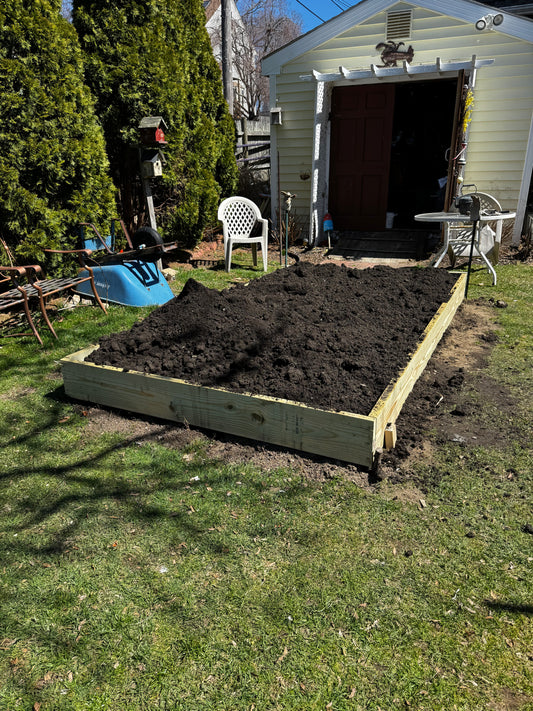
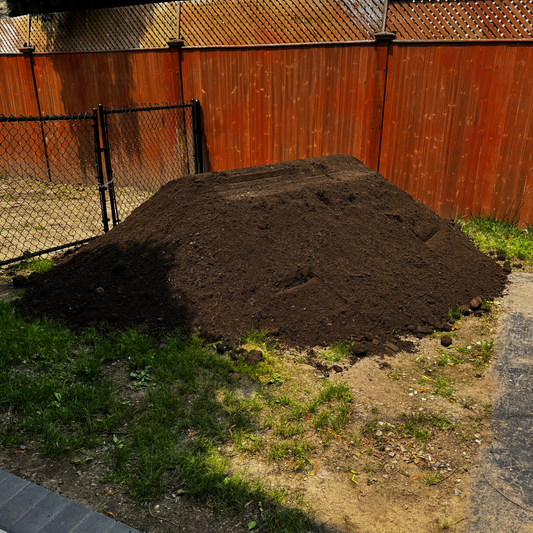
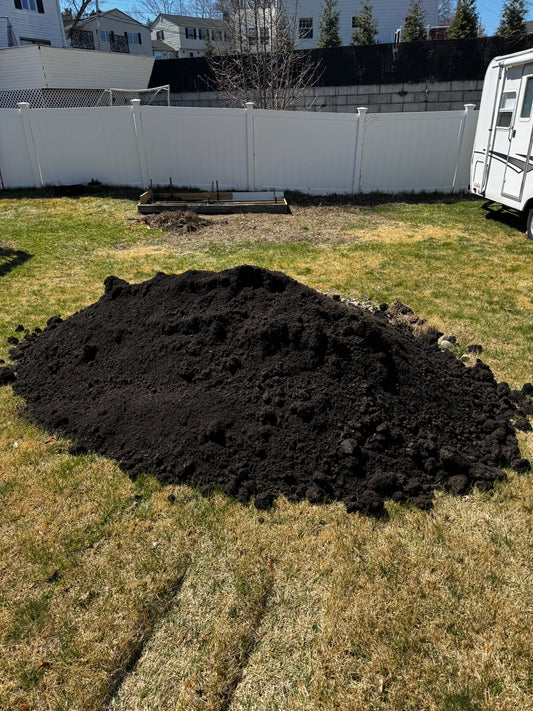
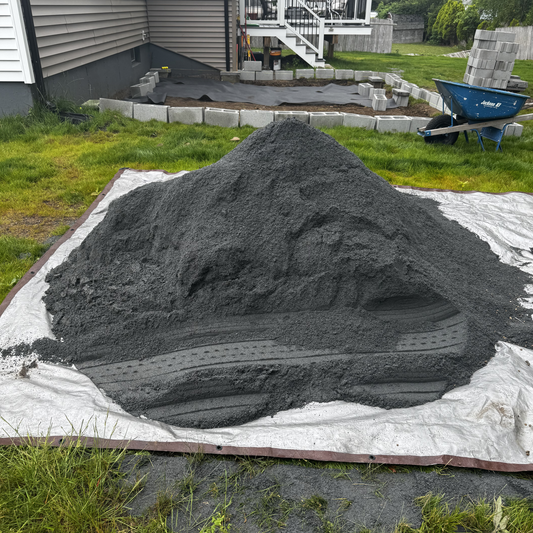
Plenty of Andover lawns sit on two or three inches of loam over subsoil, where the good soil left with the excavator. Fix: topdress with screened loam over several seasons, hollows first. Cubic yards = (square feet × depth in inches) ÷ 324, so 4,000 sq ft at a quarter inch is 3.1 yards — one yard covers about 1,300 sq ft that thin. See lawn levelling and repair, and a recent Cohasset job for what a 6-yard load looks like.
What does delivery to Andover cost?
Andover is 25.6 driving miles from our Dispatch Office in Dorchester, inside the 30-mile flat zone: $100 per load, no mileage on top. Towns further up the Merrimack pay $4 a mile past 30; Andover never reaches that line.
The fee is per load, and loads count per line item: 4 yards of loam and 3 of compost are two loads and two fees. Soil caps at 6 yards a trip, mulch at 10. Loam is $55 a yard, compost $50; more in soil.
What else do people ask?
Is it too late to seed in August?
No. Mid-August to mid-September is the window here — soil still warm, weed pressure falling.
Should I fertilise the brown patches?
Not while they are dormant. Feeding turf that is not growing does nothing and can scorch it.
Loam or compost?
Loam to level or build depth, compost when the soil is there but lifeless. If a patch fails twice, test it through the UMass Soil and Plant Nutrient Testing Laboratory.
Order by the cubic yard for Andover delivery, check your fee with the ZIP checker on any product page, or text (617) 286-2740.