Quick Answer
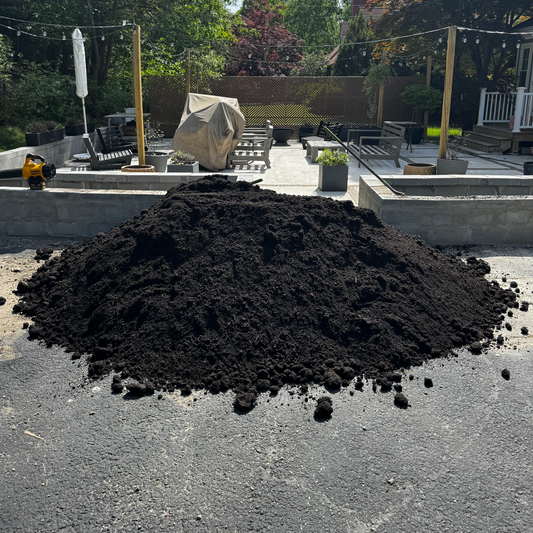
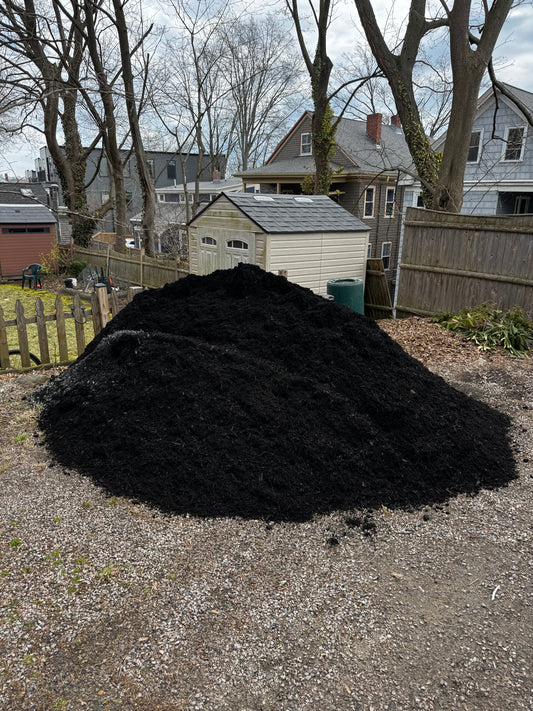
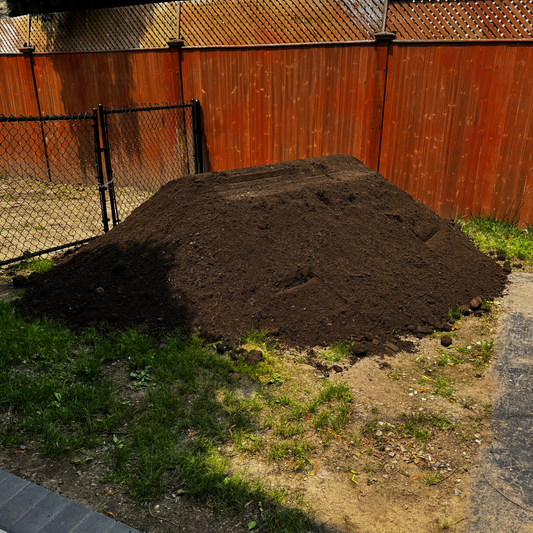
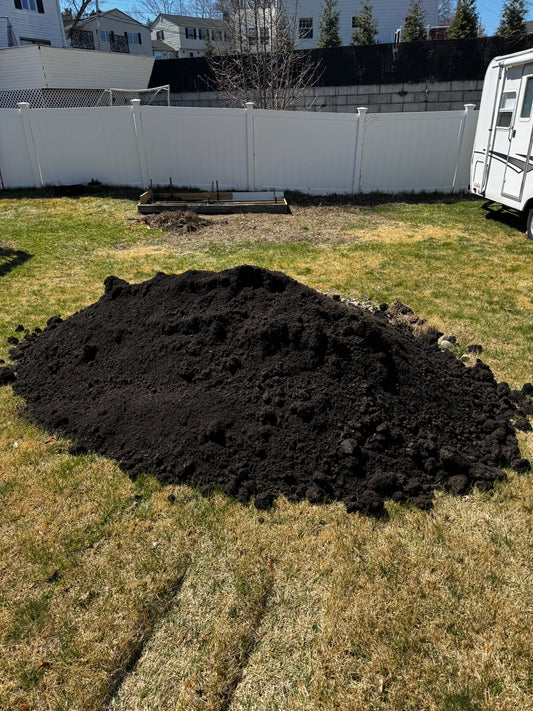
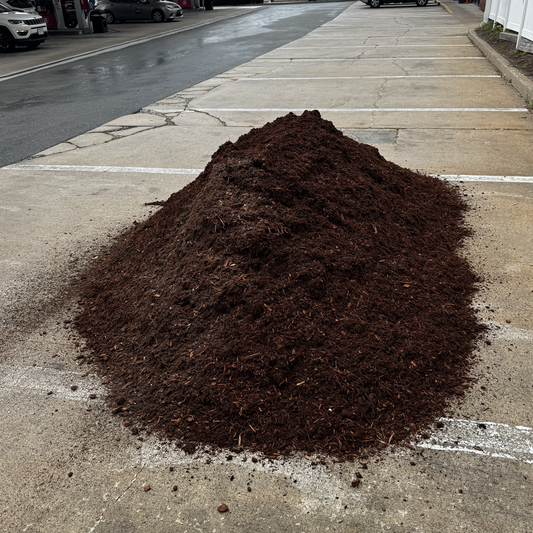
For an established Cambridge vegetable bed, spread 2 inches of finished compost annually — that's 1 cubic yard per 160 square feet. For a new bed being built up, 4 inches mixed into the top 8 inches. For a 4x8 raised bed, the math: 0.2 cubic yards for the annual top-up, 0.4 cubic yards for a new build. Order by the cubic yard, not the bag — bagged compost is 4x the cost.
The Cambridge Vegetable Math
Cambridge backyards run small — a typical Cambridgeport, Mid-Cambridge, or North Cambridge lot leaves you with maybe 200–400 square feet of plantable ground after subtracting the house, the driveway, and the garage. That changes how you think about compost orders. You're not ordering by the truckload — you're ordering by the half-yard, and you want the math right so you don't double-pay on delivery.
This Q&A walks through the questions Cambridge gardeners ask in March about compost depth, yardage, and timing.
Q: How deep should compost go on an established bed?
A: Two inches, top-dressed in early spring. Two inches is the sweet spot — enough to add meaningful organic matter and slow-release fertility, not so much you smother emerging perennials or fertilize your way into nitrogen excess.
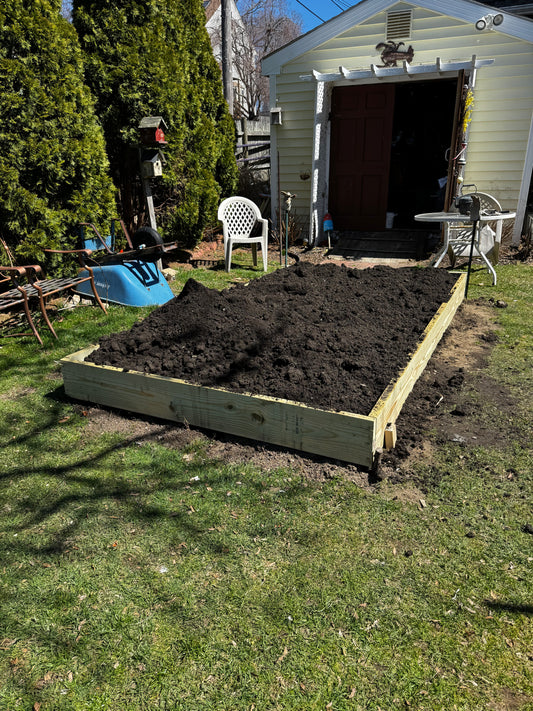
Conversion math: 2 inches deep across 160 square feet = 1 cubic yard. For a 4x8 raised bed (32 sq ft), that's 0.2 cubic yards or about 5 cubic feet.
Q: How much for a brand-new bed?
A: Four inches, mixed into the top 8 inches of soil — or 30% by volume in the soil mix. A new bed needs a heavier shot to establish soil biology and water-holding capacity from the start. Either fork in a 4-inch layer to the existing soil, or order a pre-blended 70/30 loam-compost mix through the raised garden bed materials collection.
For the side-by-side on blended vs. straight loam, see compost-topsoil blend vs straight topsoil tested in Middlesex County beds.
Q: How do I convert square feet to cubic yards?
A: Square feet × inches deep ÷ 324 = cubic yards. Memorize that formula. A 4x8 bed at 2" deep: 32 × 2 ÷ 324 = 0.2 cubic yards. A 200 sq ft border at 2" deep: 200 × 2 ÷ 324 = 1.23 cubic yards.
Round up 5–10% — compost compresses during delivery and the volume on a flatbed always reads slightly less than what hits your driveway.
Q: When in spring should I apply?
A: Three weeks before transplant. In Cambridge that means late March for cool-season crops (peas, lettuce, spinach) and late April for warm-season (tomatoes, peppers). The three-week buffer lets compost integrate and soil biology activate before plants demand nutrients.
Skip applying to frozen ground — it just sits there. Wait until you can stick a digging fork 6 inches in without leverage.
Q: Do I need a different compost for vegetables vs. ornamentals?
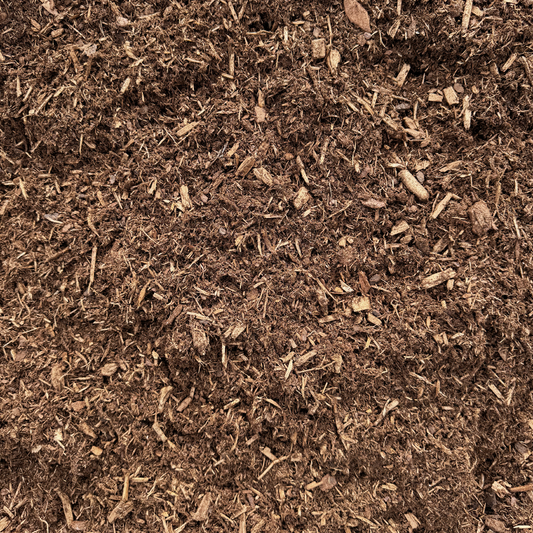
A: Quality matters more than category. STA-certified compost from the US Composting Council program tests for pathogens, weed seeds, salinity, and stability — that's the standard you want for vegetables. Ornamental beds tolerate lower-grade compost. Ask the dispatcher for the source — leaf compost, mushroom compost, and dairy-based all behave differently. Three Plymouth County sources are compared in three bulk compost sources compared for Plymouth County vegetable gardens.
Q: Should I till it in or top-dress?
A: Top-dress on established beds. Fork it in for new builds. Tilling pulverizes soil structure, breaks up mycelial networks, and brings buried weed seeds to the surface. On an established bed, just lay 2 inches across the top — earthworms and freeze-thaw cycles integrate it into the top 4 inches by June.
For a new build, you're starting from scratch anyway. Use a digging fork to fold the compost into the top 8 inches. Skip the rototiller.
Q: How much for the entire Cambridge backyard?
A: Add up your bed square footage and divide by 160. A typical Cambridge plant-up: two 4x8 raised beds (64 sq ft) plus a 6x20 perennial border (120 sq ft) plus a 4x10 herb bed (40 sq ft) = 224 sq ft total. At 2" deep, that's 1.4 cubic yards.
Order 1.5 yards to allow for shrinkage and a small reserve. The fixed delivery cost makes it cheaper to order a half-yard extra than to get a second drop in May.
Q: Can I make my own?
A: Yes — and Cambridge actively supports it. The City of Cambridge offers backyard composting bins at subsidized cost, and curbside food-waste collection feeds municipal composting. Home compost is fine for ornamentals; for vegetables, supplement with bulk STA-certified product because home piles rarely hit the temperatures that kill weed seeds and pathogens.
For how to get a UMass Extension soil test done from Worcester County — same protocol works from Cambridge — to dial in your fertility math before you order.
Q: What about delivery to a Cambridge address?
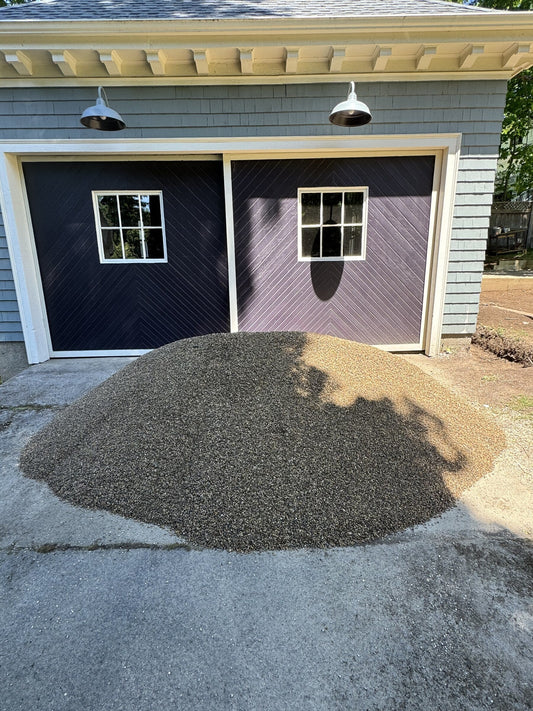
A: Ottr delivers across Cambridge — most residential streets fit a 14-yard truck or smaller. For tight Mid-Cambridge or Cambridgeport lots with no driveway access, the dispatcher will spot the load curbside, tarped. Order through the raised garden bed materials collection and note tight-access on the order form.
The Cambridge Spring Calendar
- Mid-March: Order soil test, plan amendments. See 5 soil amendments every Newton vegetable garden should see in March — same playbook works in Cambridge.
- Late March: Compost delivery and top-dress.
- Early April: Direct-sow cool-season crops once soil hits 50°F.
- Mid-May: Transplant warm-season crops after last frost.
For broader vegetable-specific fertility recommendations, the UMass Vegetable Program publishes the most authoritative MA-tuned guidance.
The short version: 2 inches annually, 4 inches for a new bed, divide square feet by 160 to get yardage. Order bulk, top-dress on established beds, fork into new ones.