Quick Answer
Yes, Westwood boxwoods are browning — and three causes explain 95% of cases this April: winter desiccation, road-salt drift, and boxwood blight. Desiccation looks like uniform bronze across the south or west face and recovers by June. Salt damage shows along the curb edge and recovers by next spring. Blight has dark concentric rings on individual leaves and progresses through summer; remove the plant. Diagnose first, then act — most Westwood boxwoods don't need replacement.
Why Westwood Boxwoods Get Hit
Westwood's mature foundation plantings — many installed in the 1960s and 70s — sit in front of brick colonials with full afternoon sun on the south face and exposed corners on the west. Add the road-salt drift from Route 109 and the High Street corridors and the average Westwood boxwood faces three stressors that didn't exist when it was planted. The browning isn't bad luck. It's the cumulative load.
For more on the road-salt side of this, the calcium chloride concrete Newton article covers what spreads onto front-yard plantings in a Garden City winter. The same chemistry hits Westwood front yards along Route 109.
Q: Why are my Westwood boxwoods turning brown in April?
A: Three causes account for almost everything you'll see. Winter desiccation (the most common in Westwood) is the bronze cast across the sun-facing leaves. Road-salt drift is the brown stripe at the curb edge of a foundation hedge. Boxwood blight (Calonectria pseudonaviculata) is the leaf spotting and stem dieback that progresses through summer. Diagnose before you treat.
Q: How can I tell winter desiccation from boxwood blight?
A: Look at the leaves and stems separately. Desiccation browning is uniform across the leaf surface — the whole leaf bronzes at once and the stem stays green underneath. Blight produces dark concentric rings on individual leaves and black streaks running up the stems. The Arnold Arboretum has photo references on its plant health portal.
Q: Can browning boxwoods recover on their own?
A: Light desiccation yes; heavy damage takes a season; blight does not recover. A boxwood with bronze top growth and green wood at the stem will green back up by mid-June with normal spring rain. Blight requires removal of the entire plant — including 6 inches of root-zone soil — to prevent reinfection.
Q: Should I prune browning boxwoods now?
A: Wait until mid-May. Once the plant has pushed new growth, you can see what's alive and what's dead. Pruning in early April means cutting viable buds along with brown tips. The How to Mulch Properly Around a Newly Planted Watertown Tree covers the year-one care that prevents this damage on replacement plantings.
Q: What's the best mulch for Westwood boxwoods?
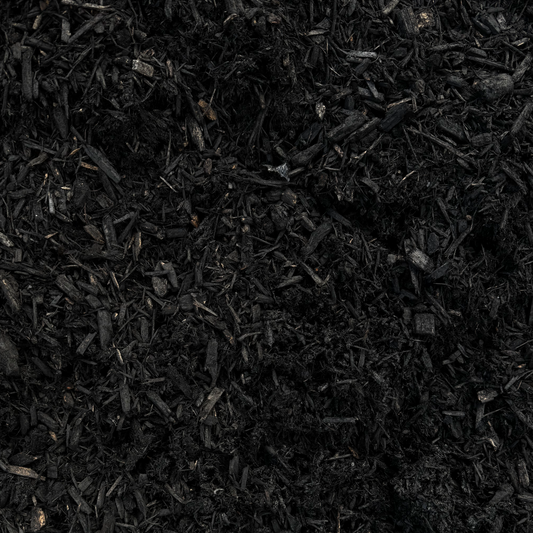
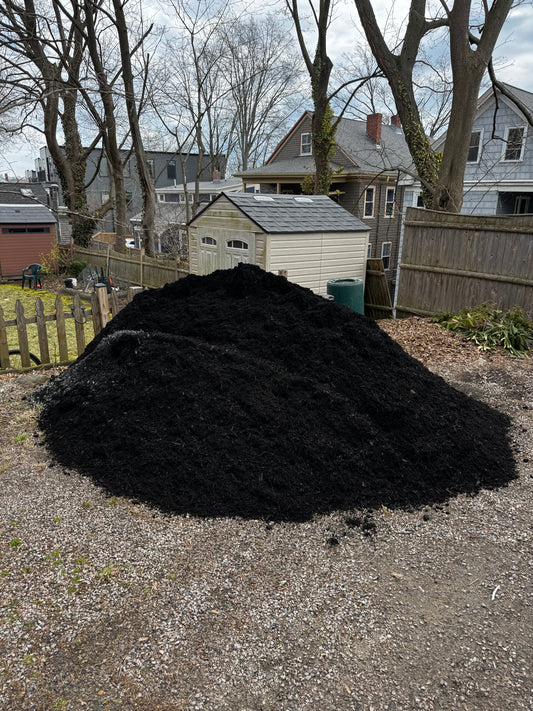
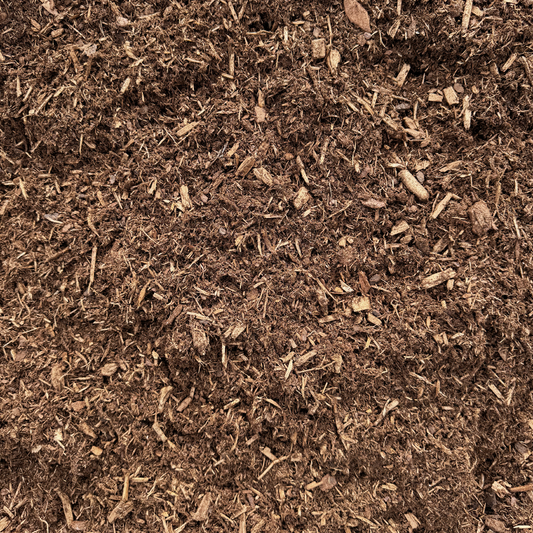
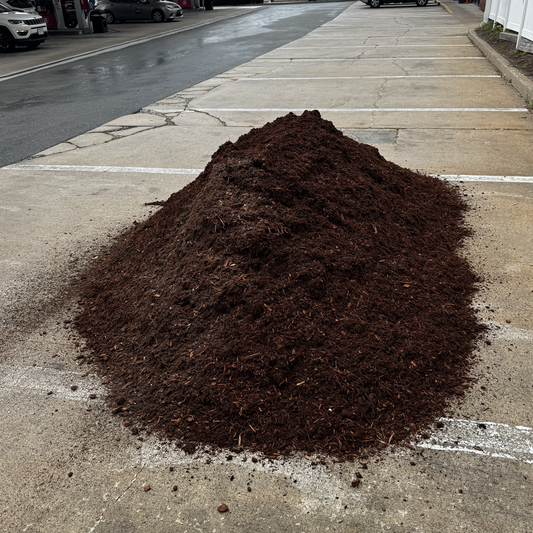
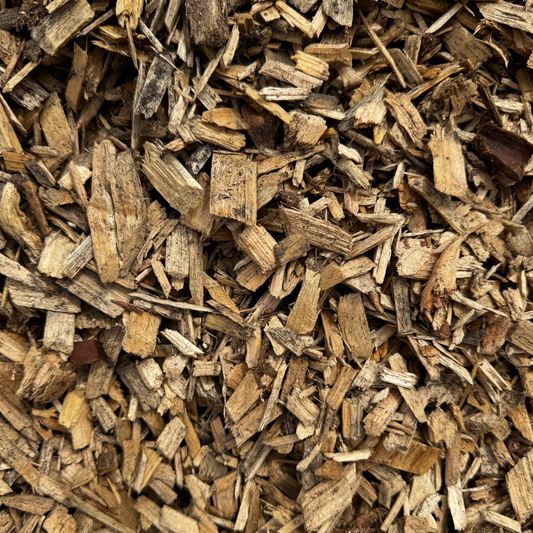
A: Hemlock Mulch at 3 inches deep. Keep it 3 inches off the stems. The mulch collection has Hemlock priced by the cubic yard. Avoid dyed black mulch — the heat retention stresses already-damaged plants. Skip the mulch volcano against the trunk; it's the second-most-common cause of foundation-shrub death after winter desiccation.
Q: What native plant should I swap a dead boxwood for?
A: Inkberry Holly (Ilex glabra). The closest native swap — same evergreen form, 3 to 4 feet tall, no blight susceptibility, tolerates the Westwood road-salt drift. Plant from the plant establishment & tree planting collection and review the 5 Native MA Plants for a Middlesex County Front Yard read for the full lineup.
Q: Will my whole hedge get blight if one plant has it?
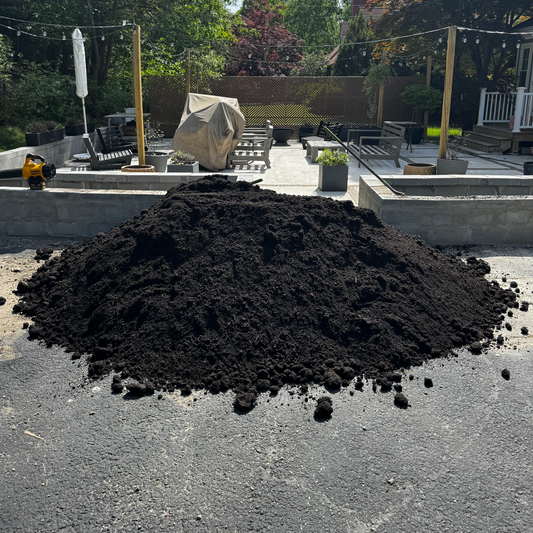
A: Likely yes within 2 years if you do nothing. Remove the affected plants immediately, bag (don't compost) the debris, and replace the soil in the planting hole with fresh Compost from the raised garden bed materials collection. Replant with a resistant cultivar (Buxus 'Green Velvet' tolerates blight better than 'Green Mountain') or swap to Inkberry.
Q: Should I fertilize browning boxwoods to "boost" recovery?
A: No, not in April. Stressed plants don't use fertilizer well, and high-nitrogen feed pushes weak top growth that gets winter-burned next year. Wait until June, then top-dress with 1 inch of compost. The plant will pull what it needs.
The Westwood Boxwood Recovery Playbook
- Now (April): Diagnose by inspection. Mark plants with green flags (recoverable) or red flags (blight, remove).
- Mid-May: Prune dead tips back to green wood. Don't shape — just remove what's dead.
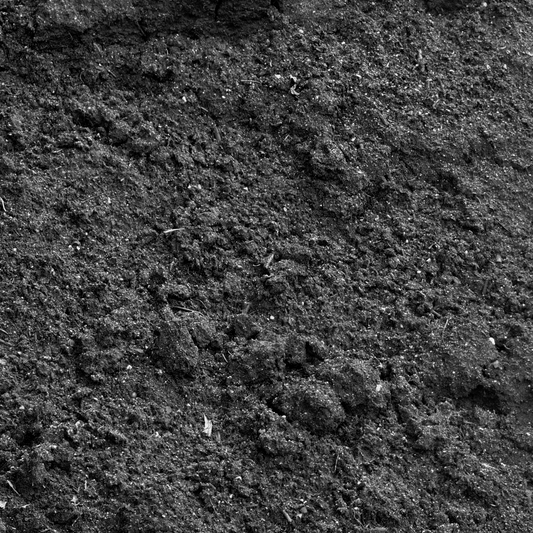
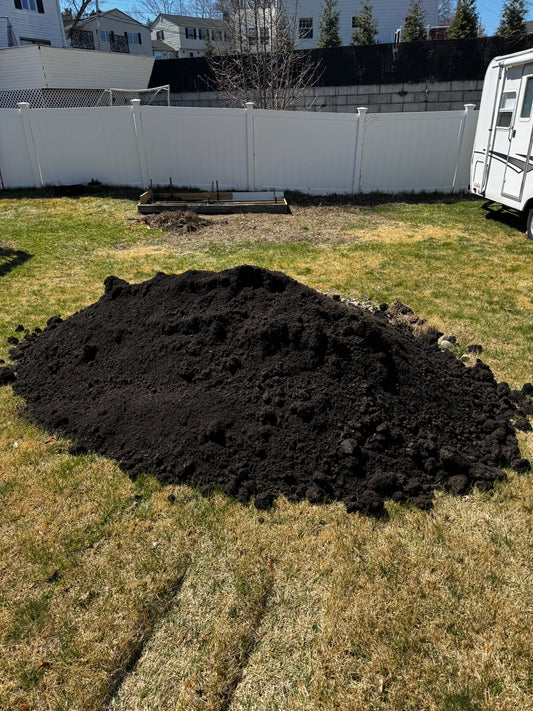
- Late May: Top-dress with 1 inch of Compost and refresh the Hemlock Mulch ring to 3 inches.
- June 15: Re-evaluate. Plants still bronze are likely lost; plants pushing green growth are recovering.
- September: Replace any losses with Inkberry Holly or a resistant boxwood cultivar.
For the Westwood landscape supply routes, both Hemlock Mulch and Compost deliver same-week. The 2026 follow-up on the spring cleanup tools that pair with this diagnostic is in the 2026 spring cleanup tools read.
The short version: most Westwood boxwoods in April are bronzed, not dead. Diagnose, mulch, wait until mid-May, then prune. The plants that recover this year will be the same plants that are stressed again next April unless you swap to natives.