Winter in Hyannis looks different from summer. Many units sit empty from October to May, owners check in from off-Cape, and a property manager or a small board is responsible for walkways that still have to be safe for the residents who stay year-round, for delivery drivers, and for anyone checking on a unit. Coastal storms here often swing between rain, sleet, and snow in the same night, so one material rarely handles every event. Assigning each material one clear job makes ordering simple and keeps crews from guessing.
1. Rock Salt (Untreated): the everyday melt for mild storms
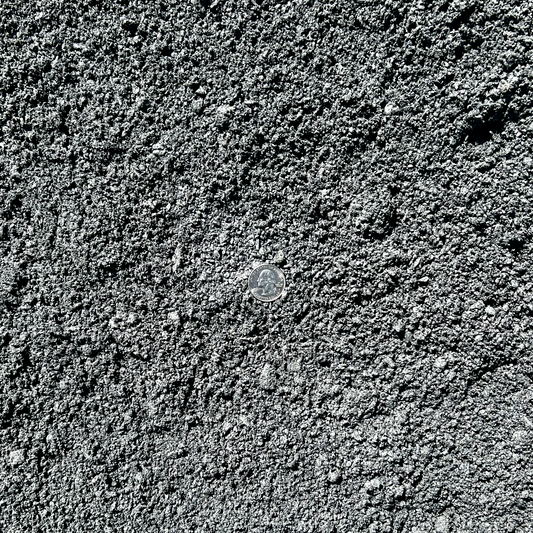
Straight sodium chloride with no additives. It works well above roughly 20°F, which covers many Cape storms, and it stores indefinitely if kept dry. Use it on main drives and parking aisles when temperatures are near freezing. A small commercial lot around 5,000 sq ft uses about 0.16 tons per application. If it clumps in storage, break it up and it still works.
2. Rock Salt (Treated): the cold-snap and entrance material
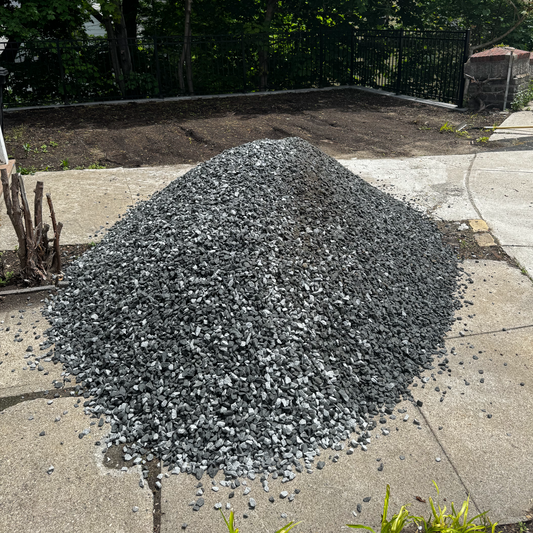
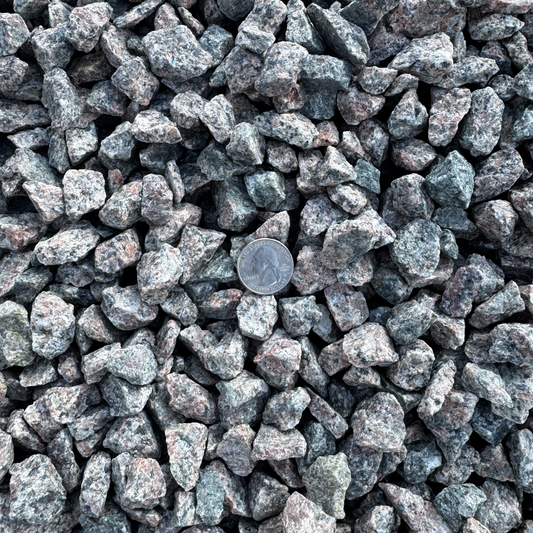
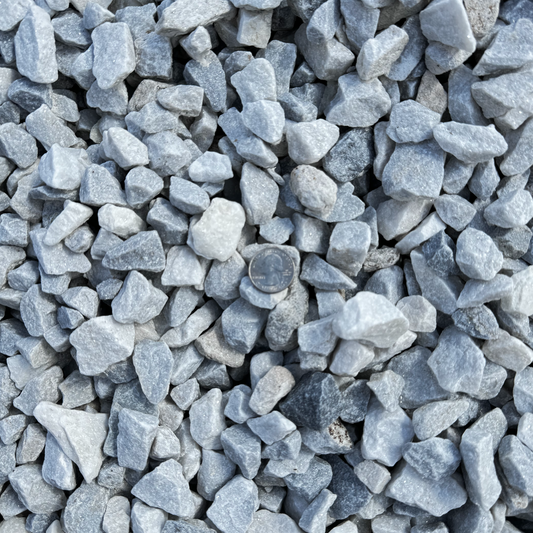
Rock Salt (Treated) is pre-coated with magnesium chloride and keeps melting down to roughly -15°F. The blue-green tint shows staff where it has already been spread. Save it for building entrances, ramps, mailbox areas, and the nights when untreated salt stalls. A 10,000 sq ft area uses about 0.3 tons per application, and a season commonly runs 3–6 tons depending on storms. Treated salt tends to sell out first in deep-cold years, so it is the one to stockpile early.
3. Salt & Sand 50/50: one bin for most storms
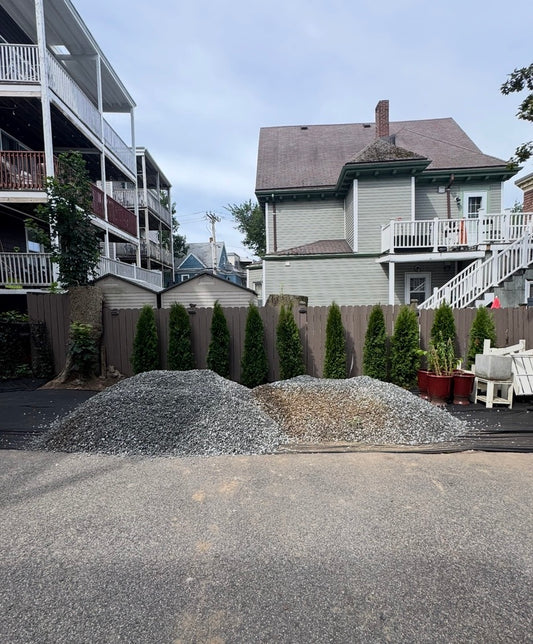
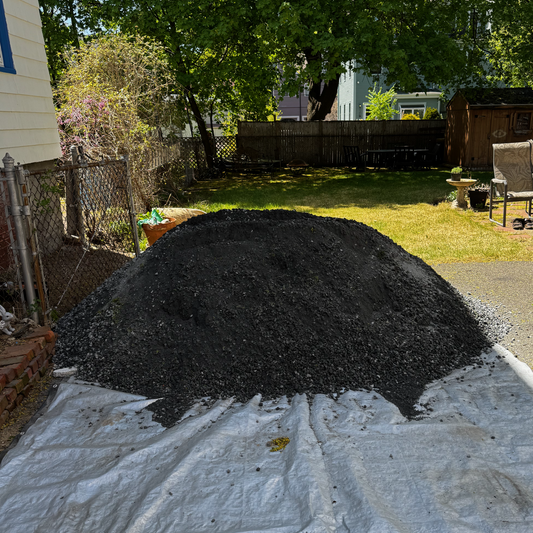
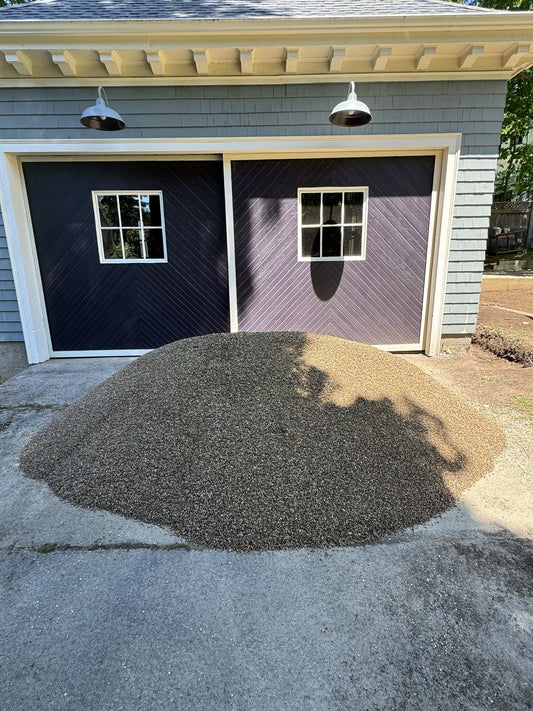
Half rock salt, half coarse sand by volume, about 2,600 lbs per cubic yard. It gives balanced melt plus traction, which is why many associations treat it as the default for parking lots and internal roads. A 10,000 sq ft lot uses about 1–1.5 cubic yards per storm, and a season commonly runs 6–12 yards. The salt portion slows below 20°F, the same as untreated salt.
4. Salt & Sand 20/80: traction for slopes and ramps
About 500 lbs of salt and 2,000 lbs of sand per cubic yard. This is traction-first with a light melt, made for sloped entries, accessible ramps and paths, long walkways between buildings, and any gravel or shell drives. Plan roughly 1.5–2 cubic yards per application on a 10,000 sq ft area and 5–10 yards stockpiled for a typical small property. Sand stays on the surface, so schedule a spring sweep.
5. Coarse Sand: pure grip near lawns and new concrete
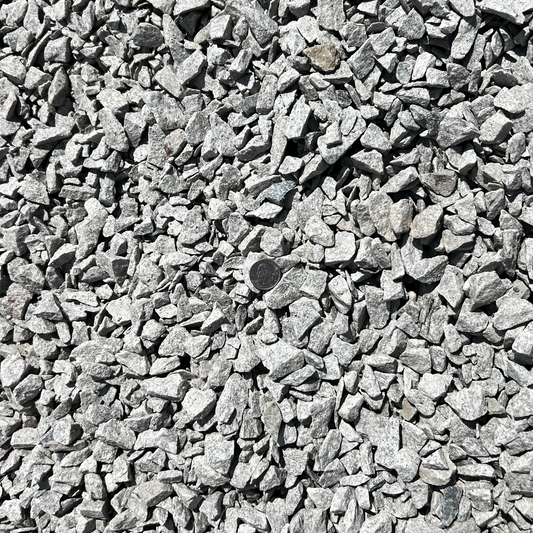
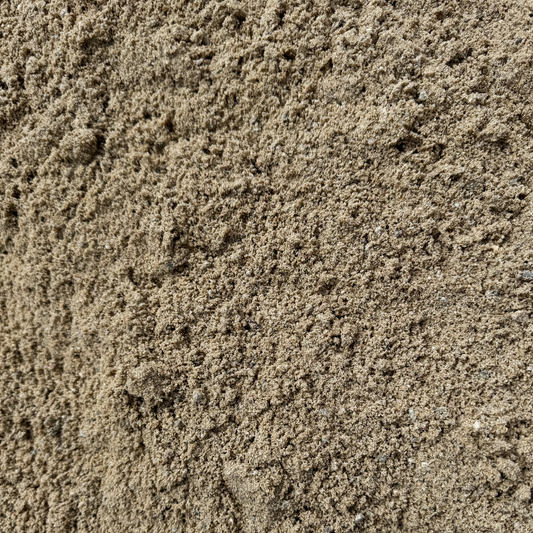
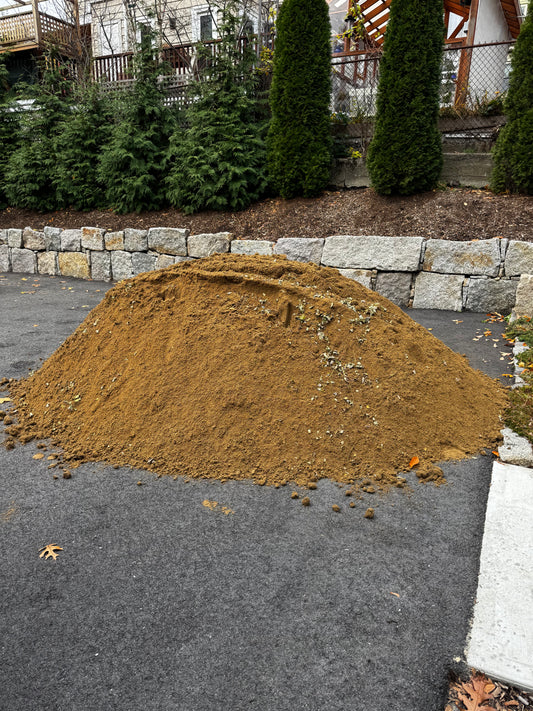
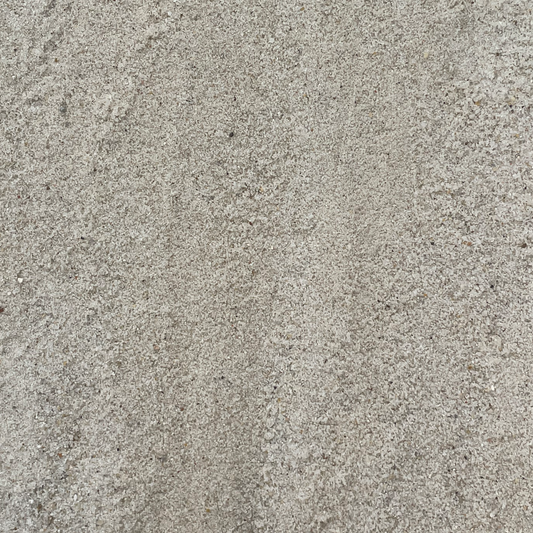
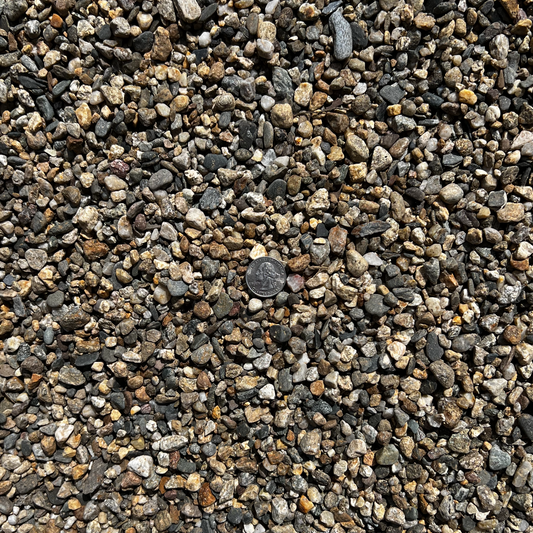
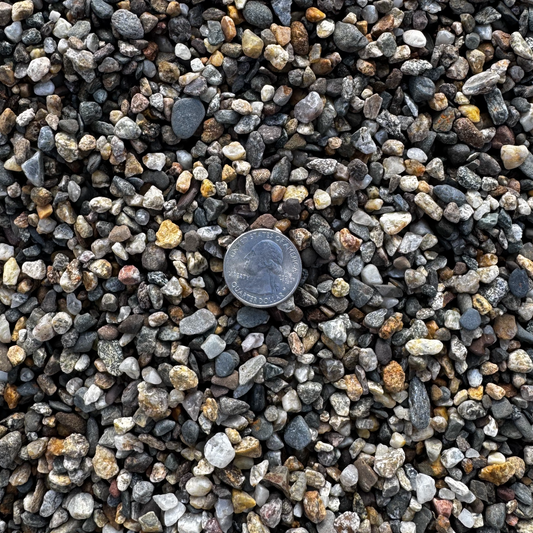
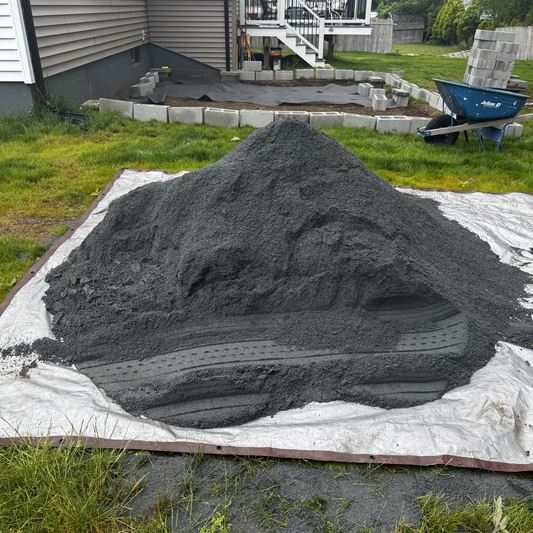
Coarse Sand is washed, coarse-grain sand that gives traction at any temperature with no salt at all. Use it near turf, ornamental beds, and on concrete poured within the last year, where chloride salt should be avoided. It also blends with rock salt if a crew wants to mix its own.
How much should a Hyannis association stock before November?
| Material | Job | Planning figure |
|---|---|---|
| Rock Salt (Untreated) | Mild-storm melt | About 0.16 tons per application per 5,000 sq ft |
| Rock Salt (Treated) | Cold snaps, entrances | 3–6 tons per season for a 10,000 sq ft lot |
| Salt & Sand 50/50 | Main lot | 6–12 yards per season for a 10,000 sq ft lot |
| Salt & Sand 20/80 | Ramps, slopes | 5–10 yards stockpiled pre-season |
| Coarse Sand | Traction near turf and new concrete | 1–2 yards per driveway-sized area |
Salt and salt-sand loads carry up to 6 cubic yards, and each material is its own load with its own delivery fee. Pricing is on each product page, and the delivery fee for your ZIP shows at checkout. Contractor and property accounts can set up recurring winter orders through sales@ottrsupply.com.
Where should the association store it?
Keep salt dry, covered, and off the ground on a pad, away from storm drains and plantings. That matters on the Cape, where runoff reaches ponds and harbors quickly; the EPA Southeast New England Program tracks road salt effects on local water. Read our bulk salt storage guide and salt timing for property managers. See the full salt and ice melt collection and our Barnstable delivery page.
Frequently asked questions
Do we really need all five?
Smaller associations often run on 50/50 plus treated salt for entrances. Five gives the most control.
When should we order?
September or October, ahead of the first-storm rush. Ottr delivers year-round.
Does Ottr spread the material?
No. Ottr delivers only. Your crew or plow contractor handles application.
Questions about an association order? Call or text (617) 645-0987.