Terrace a steep Fall River yard in tiers under three feet each. Every tier needs 6 inches of compacted Dense Pack base and 12 inches of clean ¾" stone behind the wall. A 20-foot tier takes about 0.75 yards of base and 2.25 yards of drainage stone. Delivery runs $168 to $180 per load.
Why does Fall River need terracing more than most cities?
Fall River is built on a hillside. It climbs hard from the Taunton River and Mount Hope Bay to the highlands, with granite ledge close to the surface across much of the city. Back lots frequently run at 15 to 30 percent grade, so grass will not hold and topsoil ends up against the fence after every hard rain.
Where ledge is shallow, water also does not soak away. It travels sideways on top of the rock and arrives at the base of whatever you build, which is why drainage is not optional here. Check depth to bedrock on your parcel with the USDA NRCS Web Soil Survey before you plan.
How do you read the grade first?
Stake the top and bottom of the slope, run a string between them and level it, then measure down from the string at the low stake. That drop is the rise, the stake spacing is the run, and rise ÷ run is your grade — a 3-foot drop over 12 feet is 25 percent. Divide total rise by wall height for the tier count: a 6-foot rise is three tiers of 2 feet, or two of 3 feet. Keep each wall at three feet or less; above that you need an engineered design with a proper footing.
How do you build each tier?
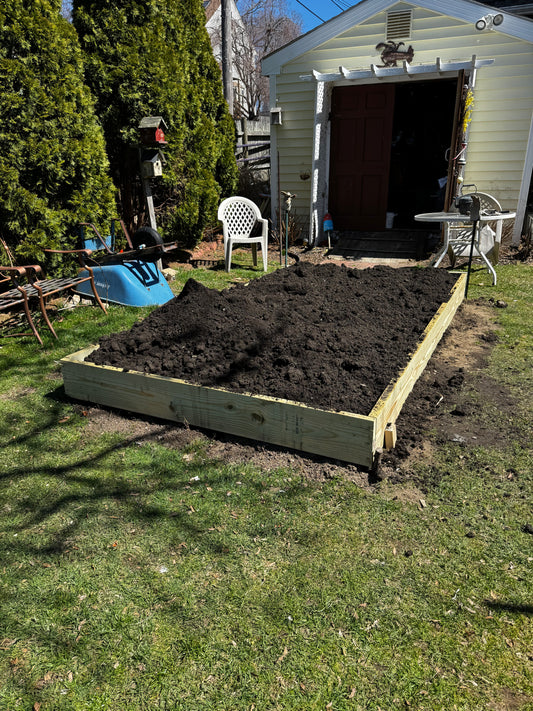
- Excavate the shelf level and cut a base trench 6 inches deep, 12 inches wider than the wall units.
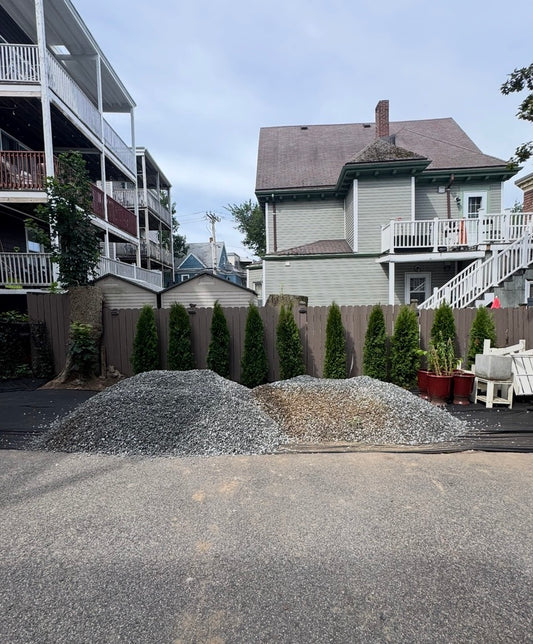
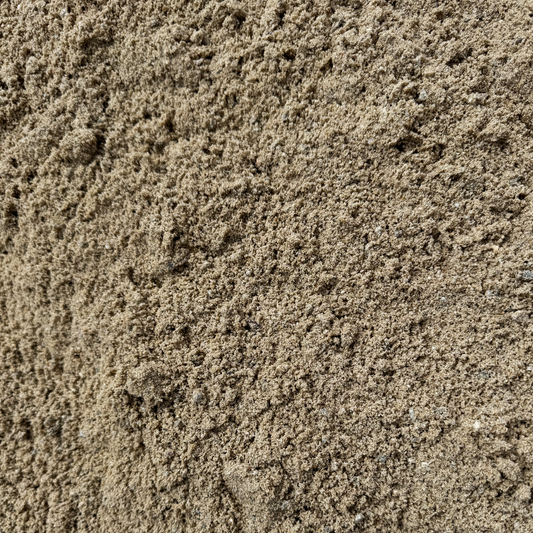
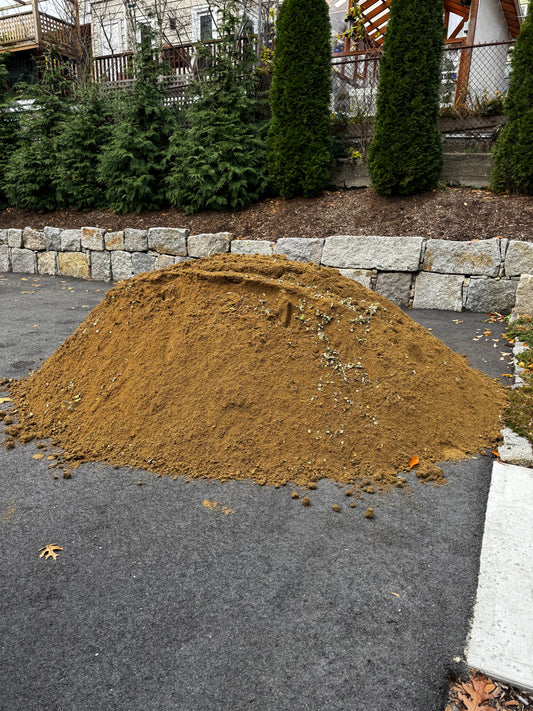
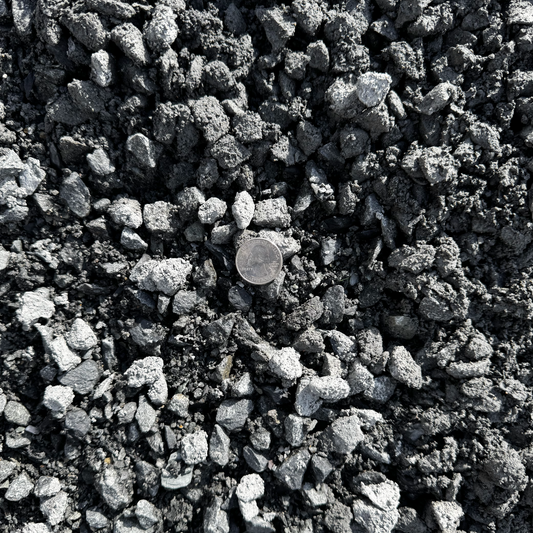
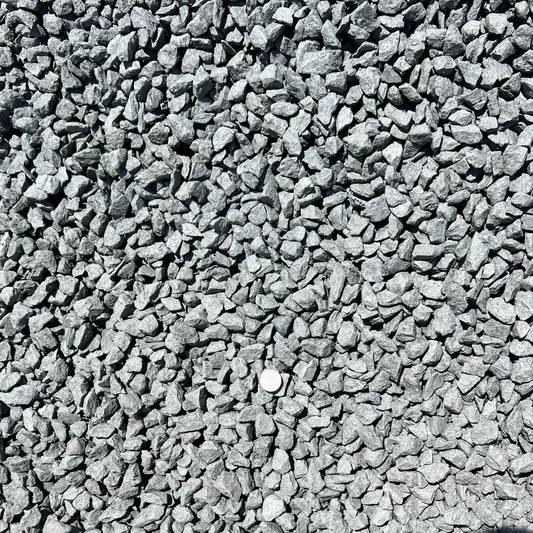
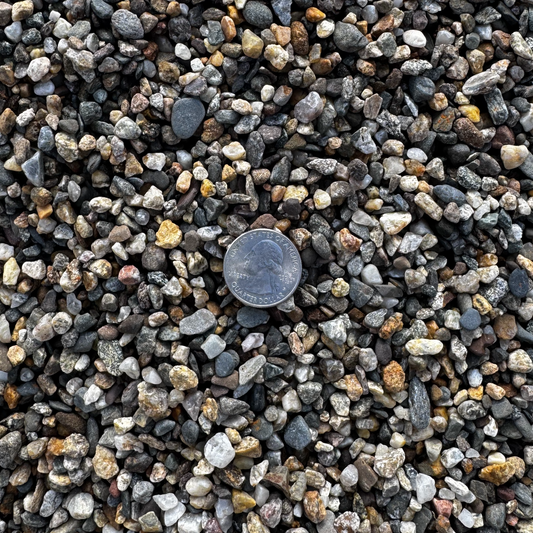
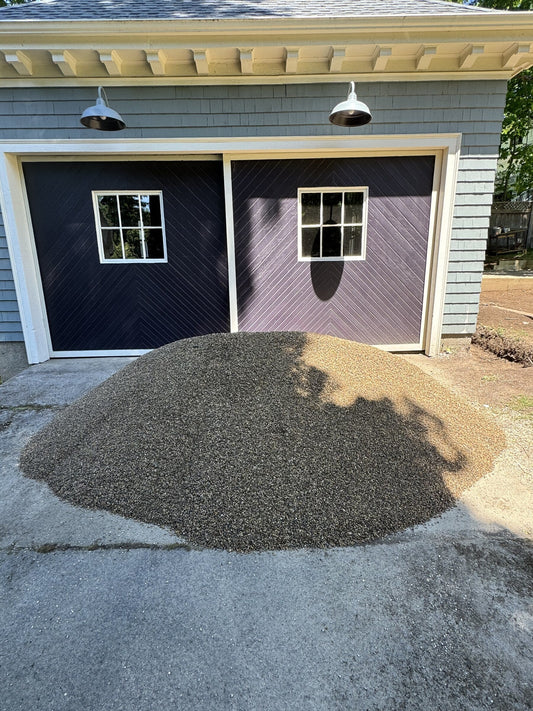
- Base: 6 inches of Dense Pack ¾"– in two 3-inch lifts, compacting each. Every course above copies the first, so get it level.
- Set the first course and step each course back into the hill.
- Drainage: perforated pipe at the back of the base, pitched to daylight at the low end. Never end it in a dead space.
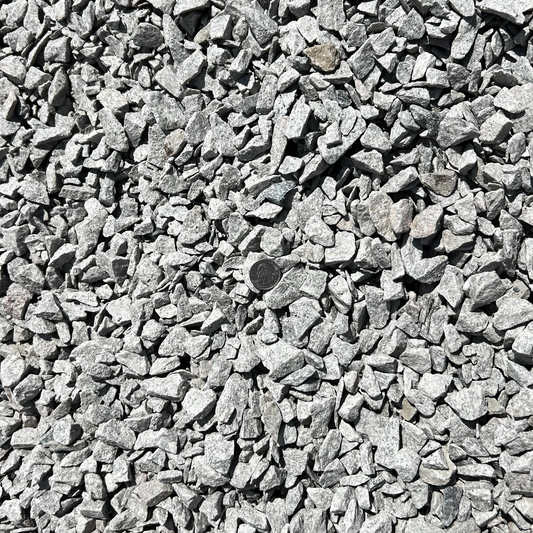
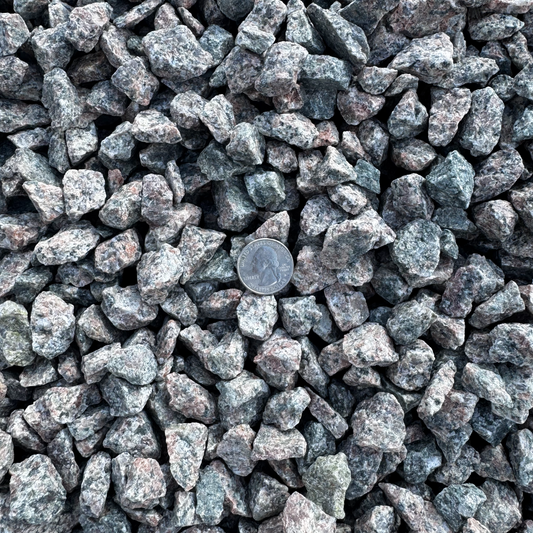
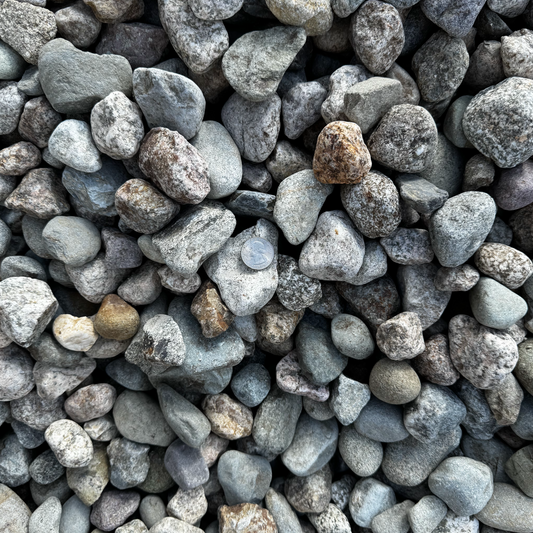
- Backfill 12 inches behind the wall with clean ¾" stone, full height, with geotextile between stone and native soil so silt cannot clog it.
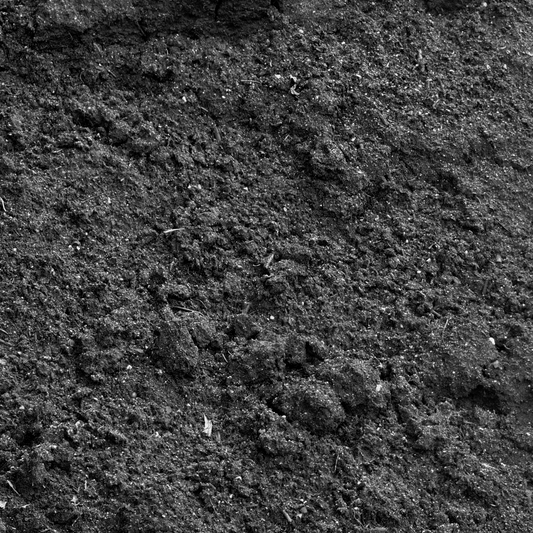
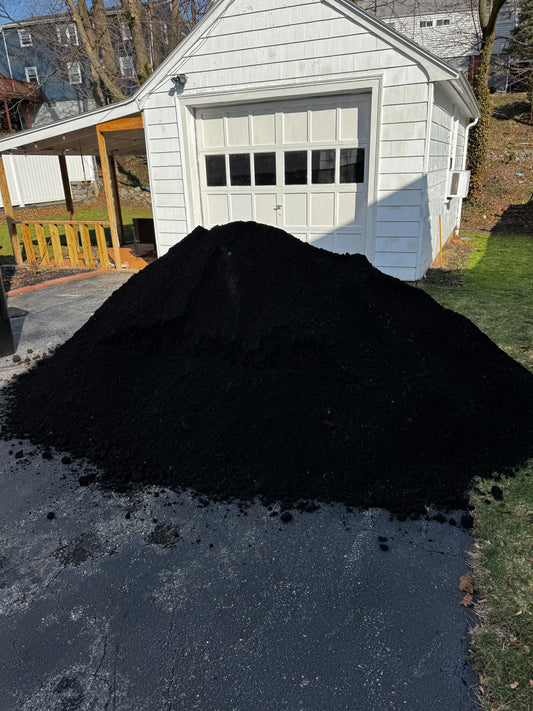
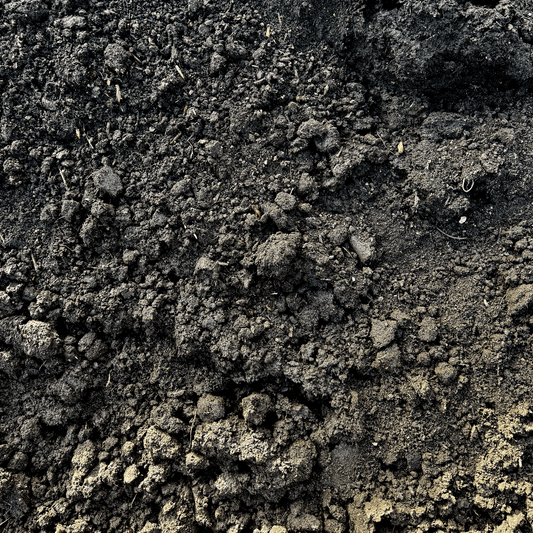
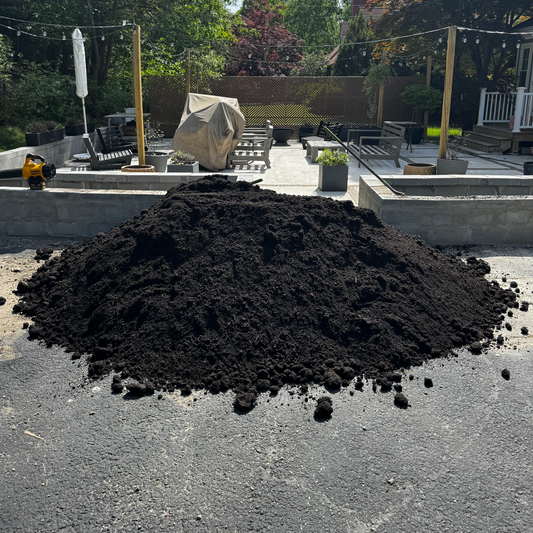
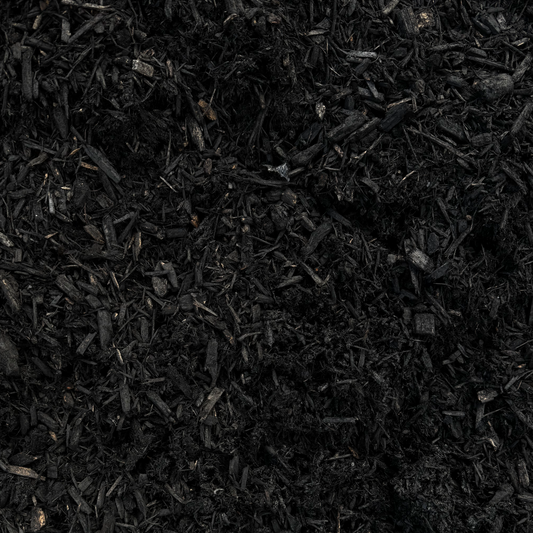
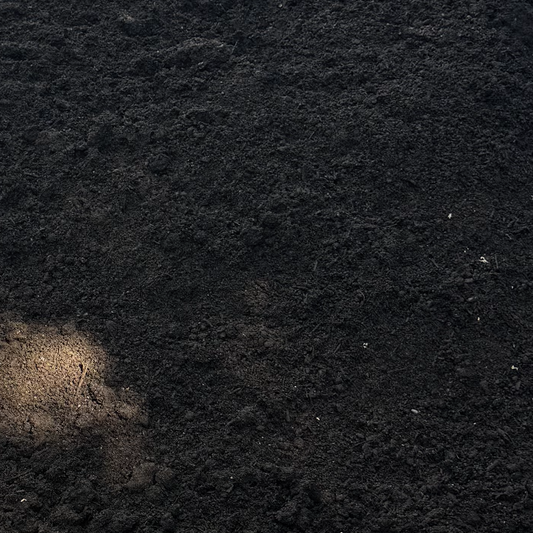
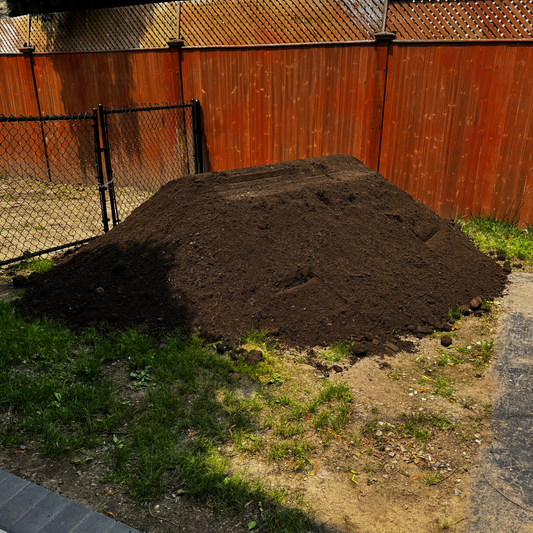
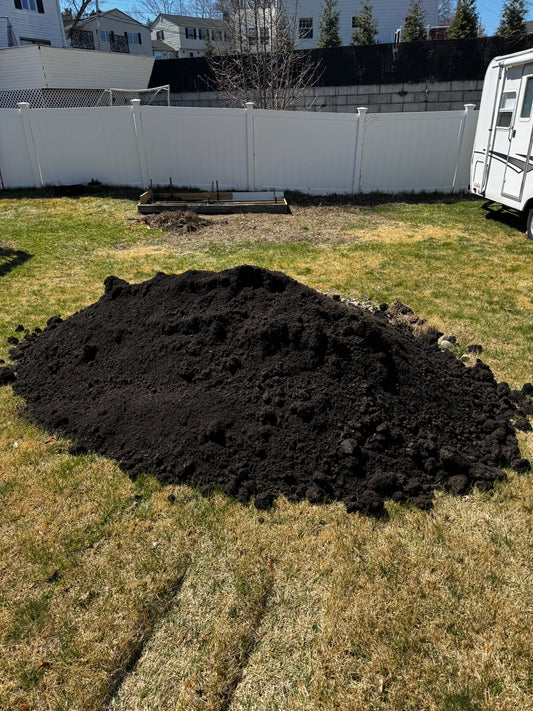
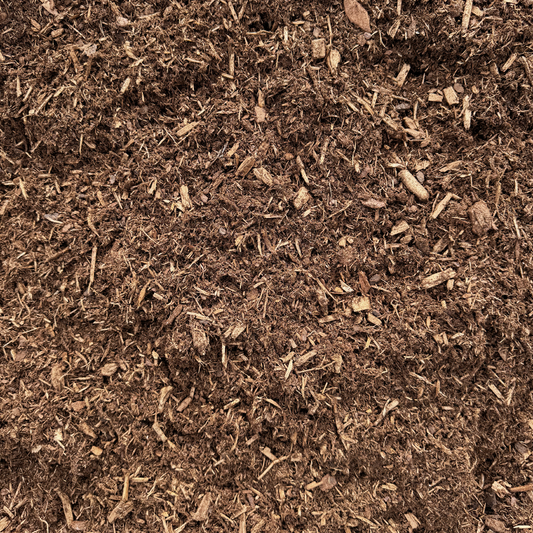
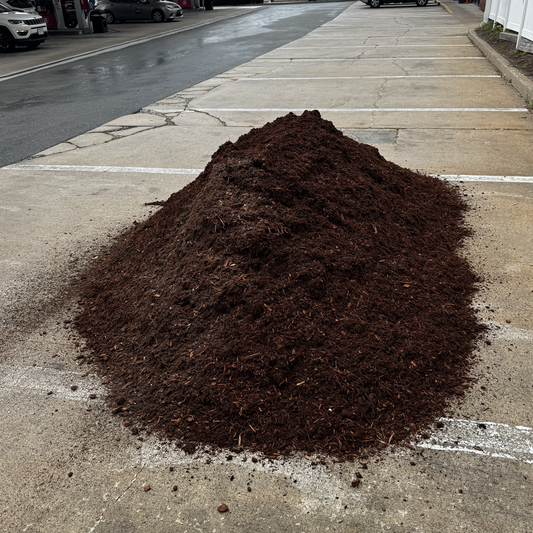
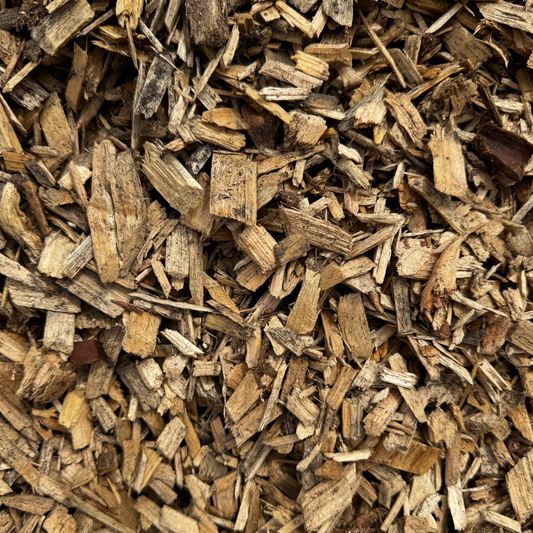
- Cap the shelf with 4 to 6 inches of screened loam and mulch it.
How much stone per tier, and what does it cost?
Use cubic yards = (square feet × depth in inches) ÷ 324. For a 20-foot tier with a 3-foot wall:
| Component | Dimensions | Yards | Material |
|---|---|---|---|
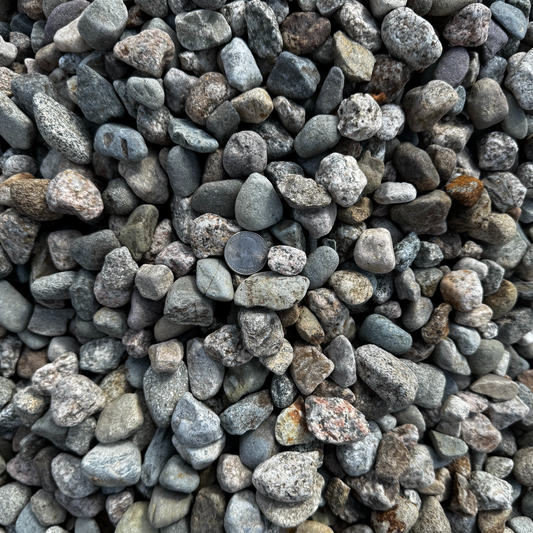
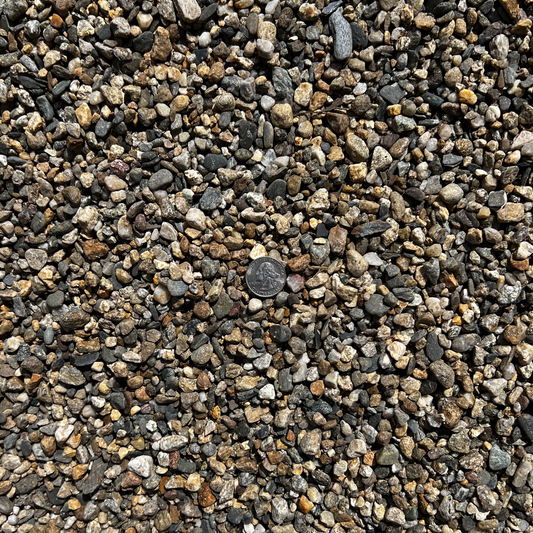
| Wall base | 20 ft × 2 ft at 6" | 0.74 | Dense Pack ¾"–, $76/yd |
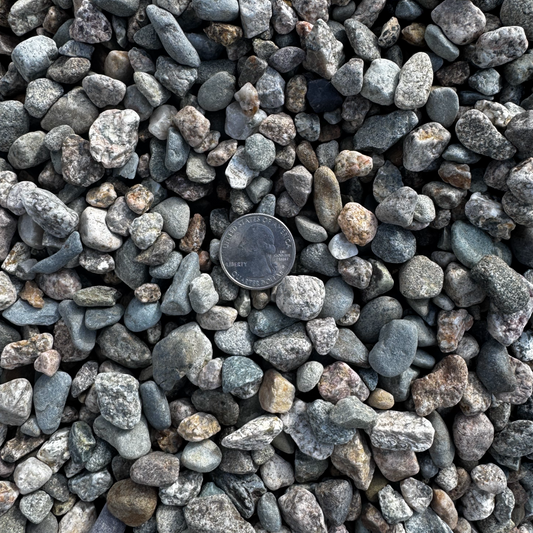
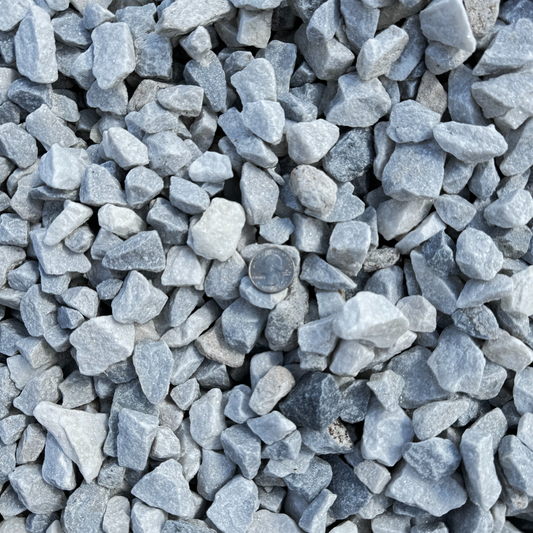
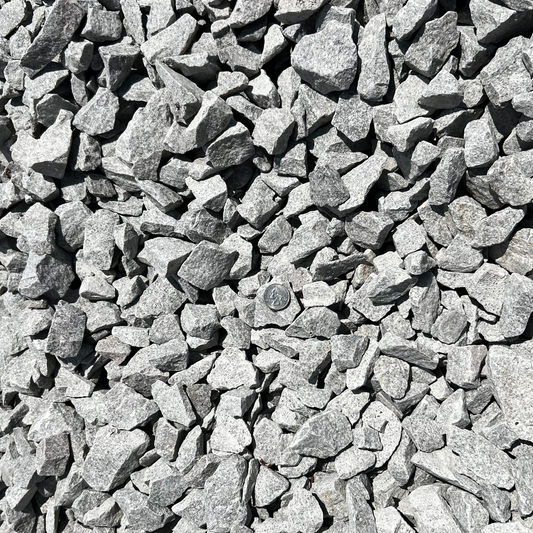
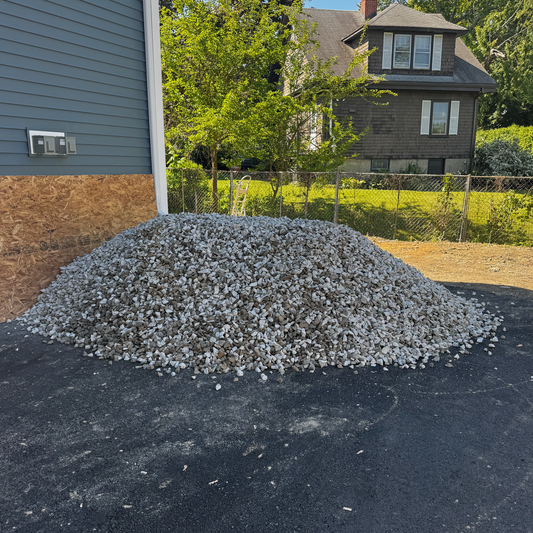
| Drainage backfill | 20 ft × 1 ft × 3 ft tall | 2.22 | #57 Gray Granite ¾", $79.50/yd |
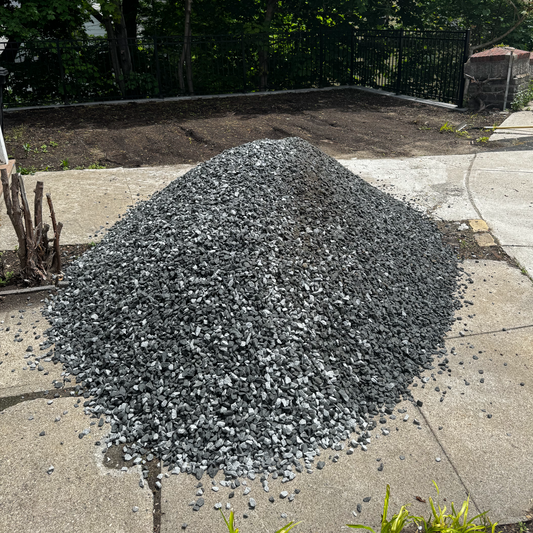
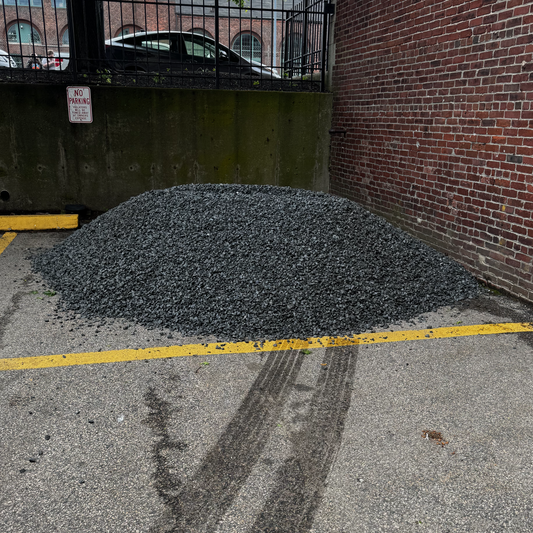
Three such tiers is roughly 2.25 yards of base and 6.75 yards of drainage stone. Stone caps at 6 yards per truck trip, the fee is per load, and loads are counted per line item — so 6.75 yards of #57 is two trips.
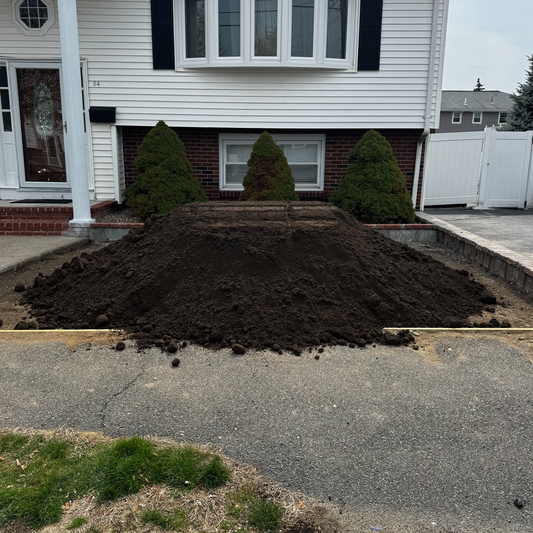
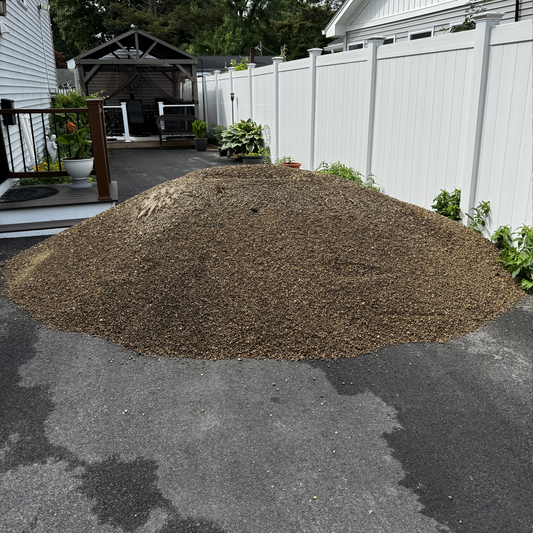
Fall River is $168 per load in 02720, rising to $180 in 02724, at 46.9 driving miles from our Dispatch Office in Dorchester, where the fee is $100 plus $4 per mile beyond 30. Trimming that order to 6 yards and hand-fitting the last stretch beats paying a second $180.
Frequently asked questions
Can I skip the drainage stone and backfill with soil?
No. Saturated soil pushes with roughly twice the force of drained soil, and with shallow ledge the water arrives fast.
What if I hit ledge digging the base?
Build off it — ledge is a better footing than anything you can compact. Level a bearing surface and keep the drainage path along the back.
Can the truck get up my street?
Steep, narrow streets are normal for us. Curbside is the default drop; on-property placement requires a signed liability waiver.
Shop crushed stone and drainage materials, price Dense Pack ¾"– by the yard, and see the Fall River landscape supply page. Capping a tier in pavers? The Interlocking Concrete Pavement Institute publishes base depths worth following. Text (617) 286-2740 for a yardage check.
Related reading: Does Ottr Deliver to Cape Cod? Barnstable County Delivery, Explained and Ordering Bulk Mulch in Hyannis Without Paying for Two Trips.