Quick Answer
A typical Brockton mulch crew with a single 14-yard hauling truck and a 3-person ground team realistically completes 3–4 jobs per day in peak spring, moving 35–50 cubic yards total. That math holds when the truck round-trips between Ottr's yard and three sites under 8 miles apart. Stretch the radius to 15+ miles and you drop to 2 jobs/day. The math everyone gets wrong: yard time, not jobsite time, is the constraint. A truck waiting for loadout costs more than a crew waiting for mulch.
Why Spring Throughput Math Is the Whole Game
A Brockton landscape contractor running 3 crews through April and May lives or dies on throughput. Underbid the yardage and you eat margin. Overbook the day and you push jobs into Saturday. The contractors who finish strong in early May are the ones who built the staging math right in February.
This article walks through the actual numbers — truck capacity, load times, jobsite times, and the constraint that controls everything else.
The Truck Capacity Constraint
A 14-cubic-yard hauling truck (Ottr's standard heavy unit) holds:
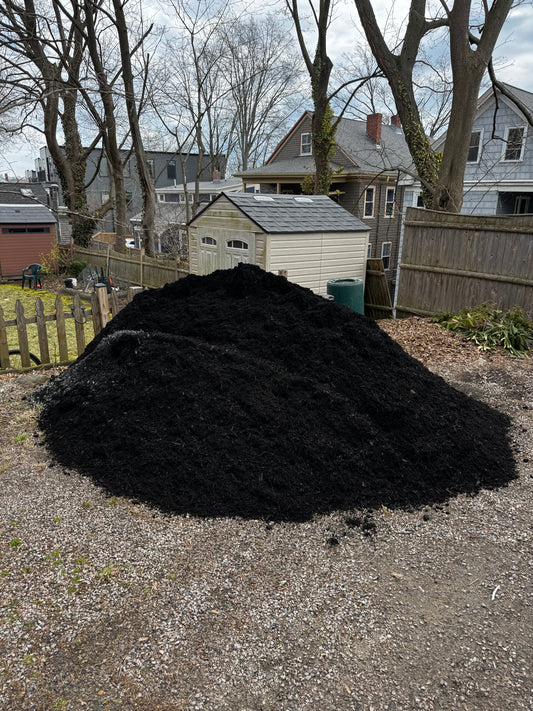
- 14 yd of mulch — typical maxed-out load by volume
- 12–13 yd of dense mulch (hardwood, screened) — denser fiber maxes weight before volume
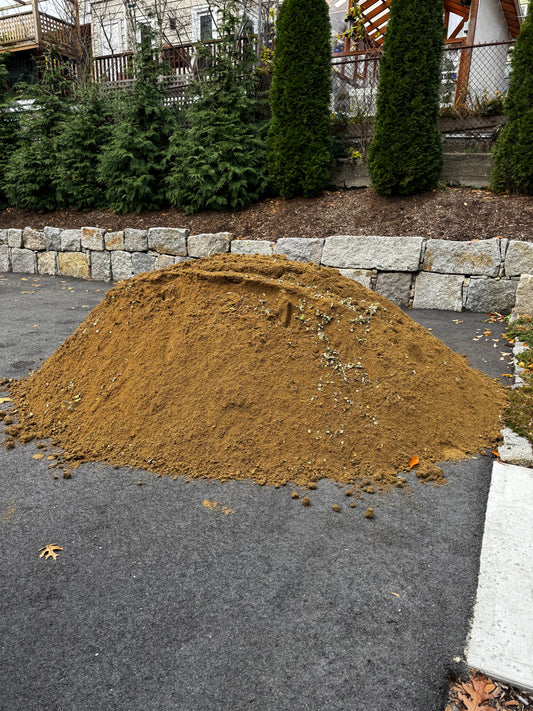
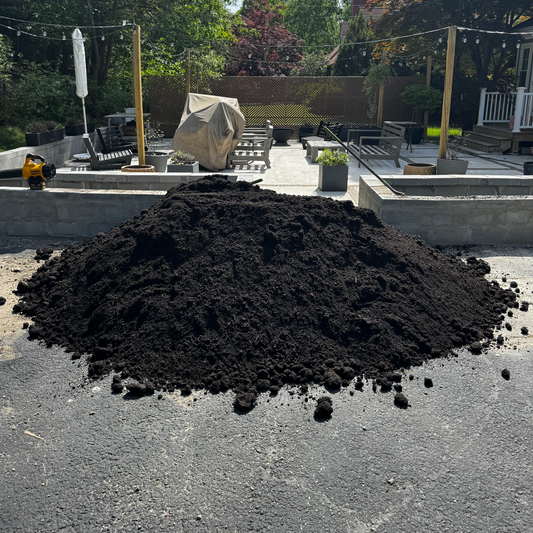
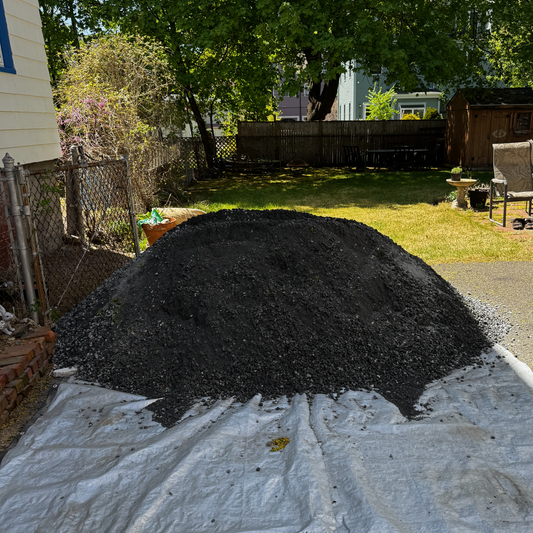
- 10 yd of loam or stone — weight-limited, not volume-limited
For a Brockton crew running mulch jobs, 12–14 yd per load is the realistic working number. Don't budget 14 across the board; some loads will be 12 because of weight or product density.
For broader contractor pre-booking pricing on these loads, see Pre-Booking Spring Mulch Loads: A Contractor's Pricing Playbook for Brockton Crews.
The Load-Time Constraint
This is the number most contractors underestimate. From "truck arrives at Ottr yard" to "truck departs with full load":
- Best case (off-peak, walk-in, product on hand): 20 minutes
- Average case (spring weekday, queue of 2-3 trucks ahead): 40 minutes
- Worst case (Saturday morning April 15, queue of 8+): 90 minutes
For a Brockton crew planning 4 loads in a day, that's between 80 and 360 minutes of yard time alone. The contractors who finish on schedule pre-book loadout windows by phone before the day starts — same logic as homeowner pre-booking, scaled up.
For Bridgewater driveway tonnage math (related load-planning logic for stone vs. mulch), see How to Calculate Crushed Stone Tonnage for a Bridgewater Driveway Base.
The Drive-Time Constraint
Brockton sits about 22 miles from our Dispatch Office. Once a truck is down there, most Brockton-region jobs cluster within an 8–12 mile radius of the city:
- Brockton city itself: 6–8 minutes drive
- Easton, West Bridgewater, Whitman: 10–15 minutes
- Stoughton, Avon, Holbrook: 12–18 minutes
- Quincy, Randolph (longer haul): 25–35 minutes
A round trip from the Dispatch Office to a Brockton-area job and back averages 60–80 minutes of pure drive time. Stretch to South Shore towns and that climbs to 70–90 minutes.
The Jobsite-Time Constraint
For a 3-person crew unloading and spreading 12 yards of mulch on a typical residential job:
- Truck dump and tarp removal: 10 minutes
- Wheelbarrow staging from drop spot to beds: 30–45 minutes
- Spreading and edging: 60–90 minutes
- Cleanup and tarp pickup: 15 minutes
Total: roughly 2 hours per job for 12 yards spread by a 3-person crew. Smaller jobs (4–6 yards) drop to 75–90 minutes. Larger jobs (20+ yards, multiple beds) climb to 3+ hours.
Putting the Math Together: A Realistic Day
A 3-person Brockton crew, 14-yard truck, peak spring weekday:
| Time | Activity | Cumulative |
|---|---|---|
| 6:30 AM | Crew arrives, truck loads at Ottr yard | 0:40 |
| 7:10 AM | Drive to Job 1 (Easton) | 0:50 |
| 7:25 AM | Job 1: 12 yd at residence | 2:00 |
| 9:25 AM | Drive back to yard, reload | 0:55 |
| 10:20 AM | Drive to Job 2 (West Bridgewater) | 0:15 |
| 10:35 AM | Job 2: 12 yd | 2:00 |
| 12:35 PM | Lunch + drive to yard | 0:45 |
| 1:20 PM | Reload | 0:40 |
| 2:00 PM | Drive to Job 3 (Brockton) | 0:10 |
| 2:10 PM | Job 3: 12 yd | 2:00 |
| 4:10 PM | Drive back to yard | 0:10 |
| 4:20 PM | End of day |
That's 3 jobs, 36 cubic yards, 10-hour day. A fourth job is possible if the radius tightens (under 5 miles for all three jobs) and loadout times stay under 30 minutes — pushing throughput to 48 yards.
Where the Math Breaks
Three things tank the numbers:
Yard wait time. A 60-minute reload kills the third job of the day. Pre-book your loadout windows.
Distant jobs. A single 25-mile round trip eats the equivalent of one Brockton-area reload cycle. Cluster jobs by geography on each day.
Underestimated yards on a job. A "10-yard" job that's actually 14 means the crew runs short and the truck has to make a 4th trip — which doesn't fit. Always measure twice; pad estimates 10–15%.
For Net 30 contractor terms and bulk-volume pricing on these loads, see Net 30 Terms and Bulk Pricing for Plymouth County Landscape Pros. Browse the Mulch collection for current per-yard contractor rates.
What Brockton Contractors Should Pre-Plan in February
- Loadout windows for 5 days/week through April-May
- Job geography clustering — group by town, not by client priority
- Truck capacity per product — know which jobs need the 14-yd truck vs. a 6-yd dump
- Crew staffing per job size — 3 vs. 4 ground crew based on yardage
For broader hardscape and contractor logistics standards, the ICPI covers paver and stone install timing that overlaps with mulch crew planning. For MA-specific commercial agriculture and landscape supply context, the MA Dept of Agricultural Resources has the regional regulatory and supply guidance.
The math doesn't lie. Spring throughput is fixed by the slowest constraint, not the longest workday. Brockton crews that plan around yard wait time and geography hit 3–4 jobs/day. The ones that don't hit 1–2 and lose the season.