Quick Answer
Fall is the better window for overseeding a Plymouth County lawn - September 1-25 beats spring for germination success, weed competition, and root establishment. But spring overseeding works when the goal is repairing winter damage (salt damage, plow damage, bare patches) that needs to look right by Memorial Day. The right Plymouth County calendar: spring (April 1-20) for repair, fall (September 1-25) for renovation. Both windows work; they're for different jobs.
Why This Question Comes Up Every March
Plymouth County lawns - across Plymouth, Halifax, Hanover, Duxbury, and Marshfield - take a beating from January through March. Plow damage, salt damage, vole runs, and matted dormant turf all show by late March. Homeowners want a green lawn for the first cookout. The question: do you fix it now or wait six months?
This Q&A walks through the decision points.
Q: Why is fall actually the better window?
A: Soil is warm, weeds are tired, and roots establish before winter. In September:
- Soil temperature: 60-68F at the root zone. Perfect for cool-season germination (5-10 days vs 14-21 days in spring).
- Weed competition: Crabgrass and warm-season annuals are dying back. New seedlings don't compete with established summer weeds.
- Root establishment: Seedlings have 6-8 weeks of cool, moist conditions to root deeply before winter. They wake up vigorous in spring.
- Watering: Cool weather and natural rainfall reduce manual watering needs.
The success rate on fall overseeding in Plymouth County is roughly 80-90% germination and establishment. Spring success rate is 50-70%. Fall wins on the numbers.
Q: When does spring overseeding actually make sense?
A: For repair, not renovation. Three cases where spring is right:
- Salt damage stripe at the curb - obvious, localized, needs to be green by May.
- Plow damage gouges - reseeding the disturbed soil before May lawn use.
- Vole-run damage - small bare patches across the lawn.
- Dog spots that grew over winter.
For these targeted repairs, spring overseeding works because the area is small and you're filling localized gaps - not establishing a full new lawn.
For full lawn renovation (more than 20% of the lawn area), wait for fall.
Q: Plymouth County specifically - what's the spring window?
A: April 1-20. Soil hits 50F by April 1 in most of Plymouth County (faster on the coast, slower inland). The window narrows fast - by April 25, crabgrass has germinated and competes with new seed. By May 5, soil is hot enough to stress new seedlings.
For coastal Plymouth County (Plymouth proper, Marshfield, Duxbury), April 1-15 is the sweet spot. For inland (Halifax, Hanover, Bridgewater), April 5-20.
For the broader Plymouth County repair walk-through, Top 5 Plow Damage Fixes for Plymouth County Lawns in Late January covers the winter damage diagnostic that pairs with spring repair.
Q: What seed mix works best for Plymouth County spring repair?
A: A 60/30/10 mix - 60% perennial ryegrass, 30% tall fescue, 10% Kentucky bluegrass. Why this ratio:
- Perennial ryegrass germinates fast (5-10 days) and gives you green color quickly. Critical for repair speed.
- Tall fescue establishes a deep root system that survives Plymouth County summers.
- Kentucky bluegrass spreads via rhizomes and fills in bare spots over time.
For full lawn renovation in fall, flip the ratio: 50/30/20 or 40/40/20 (more bluegrass, less ryegrass) for long-term durability.
For the broader regional seed mix reference, Top 5 Grass Seed Mixes for Somerville Spring Overseeding covers regional options that apply to Plymouth County.
Q: How much seed do I need for a Plymouth County repair?
A: 5-7 lb per 1,000 sq ft for repair (heavier than overseeding rate). For a 200 sq ft salt damage patch:
200 / 1,000 x 6 lb = 1.2 lb of seed
Round up to a full 2-lb bag.
For a full lawn overseeding (entire lawn):
5,000 sq ft / 1,000 x 4 lb = 20 lb of seed
Q: What about the soil prep before seeding?
A: Same logic as new lawn establishment, scaled to the patch. For each repair patch:
- Hand-rake or scrape the bare area to expose fresh soil.
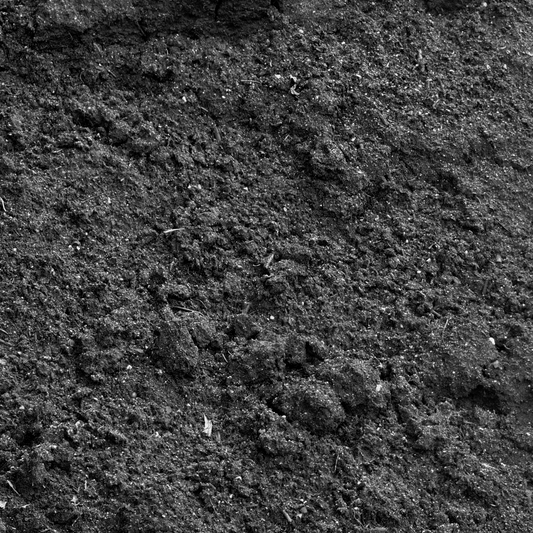
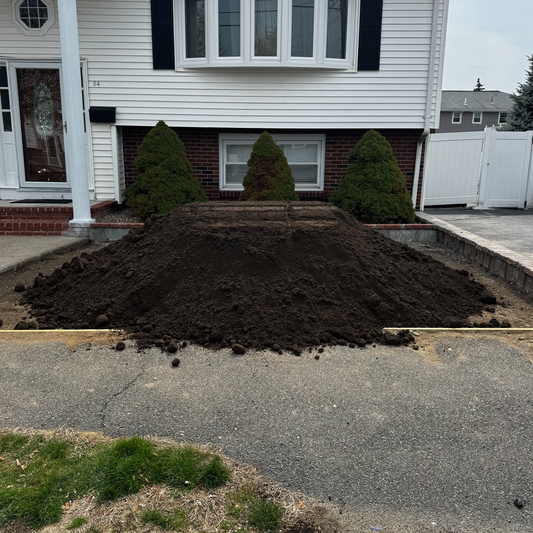
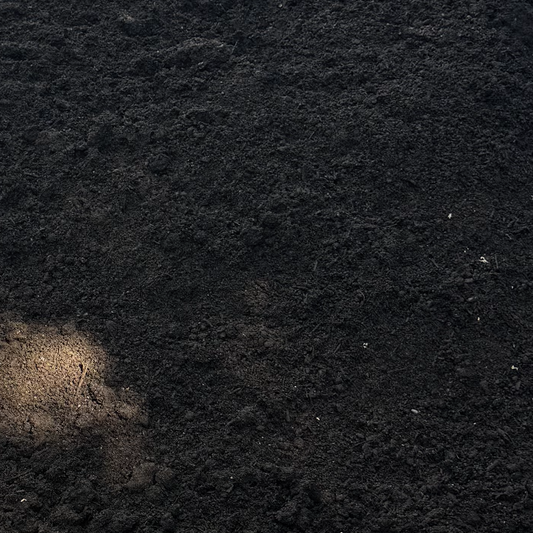
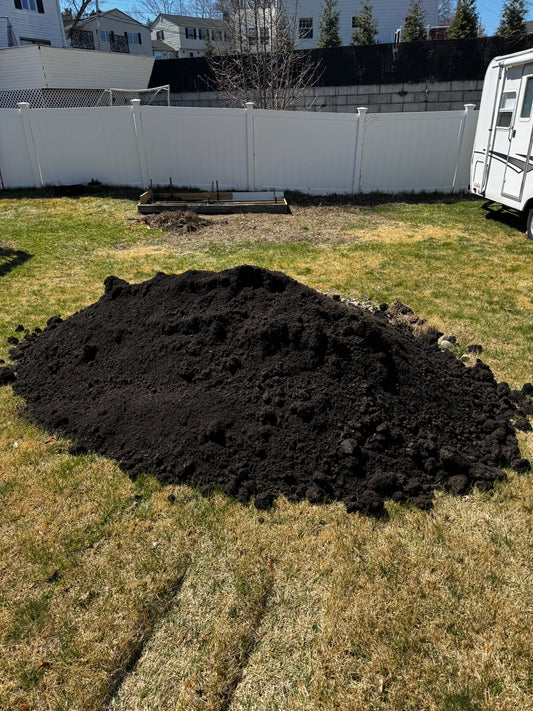
- Top-dress with 1/2 inch screened loam mixed 50/50 with compost.
- Broadcast seed at the repair rate.
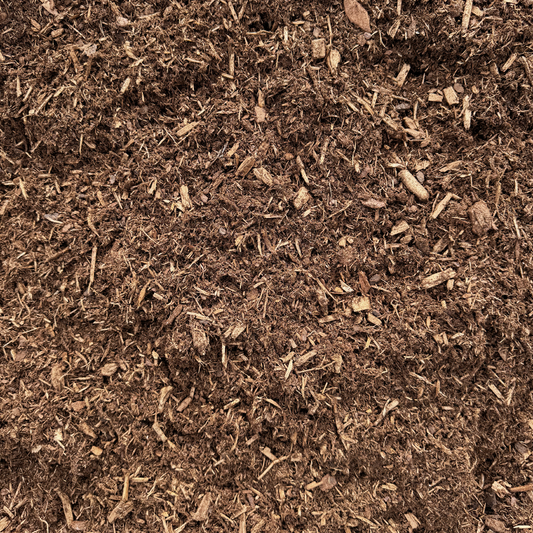
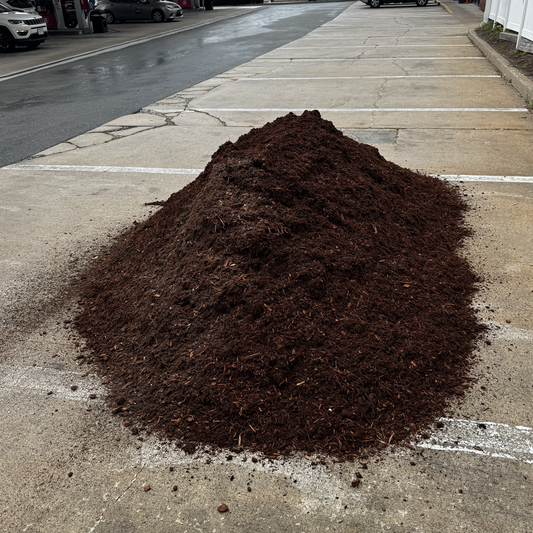
- Top-dress lightly with compost or peat to hold seed.
- Water 2x daily until germination.
Browse the lawn-leveling-repair collection for current pricing on Topsoil Loam and Compost.
Q: Can I apply pre-emergent herbicide and overseed at the same time?
A: No - pre-emergent kills grass seed too. This is the most common spring lawn mistake. If you're overseeding in spring, skip pre-emergent and accept some crabgrass for the season. You can apply pre-emergent in the unseeded portion of the lawn.
For the broader pre-emergent timing reference, How to Apply Pre-Emergent in a Brockton Lawn covers when each side is right.
Q: How long until the spring-seeded lawn looks finished?
A: 4-6 weeks to first mow, 8-10 weeks to mature density. Plymouth County timeline:
- Day 1: Seed.
- Days 7-14: Germination starts.
- Day 21: Most seedlings up.
- Day 28: First mow at 4-5 inches; cut to 3 inches.
- Day 56: Mature density. Lawn looks finished.
By Memorial Day weekend, an April 5 reseed should look acceptable for a backyard cookout.
Q: What about hot weather and spring-seeded lawns?
A: This is the spring overseeding risk. If MA hits an early heat wave in May, spring-seeded grass stresses fast. Tall fescue handles it; perennial ryegrass struggles; Kentucky bluegrass goes dormant. Mitigations:
- Water deep and less frequently after week 4.
- Mow tall (3-3.5 inches) to shade the soil.
- Skip fertilizer until September.
For the broader heat-stress reference, How to Diagnose Heat Stress on a Plymouth County Lawn covers what to watch for.
Q: Bottom line - spring or fall in Plymouth County?
A:
- Localized repair (salt damage, plow damage, dog spots): Spring, April 1-20.
- Full lawn renovation (over 20% of area): Fall, September 1-25.
- Both: Spring repair on the curb edge, fall renovation on the rest.
For the related Quincy mulch-bed planning that often pairs with lawn repair, the 2026 Quincy spots walk-through covers the bed-and-lawn coordination.
For the broader regional reference, the UMass Extension Turf Program is the authoritative source on cool-season lawn timing.
The short version: spring works for repair, fall is better for renovation. Plymouth County's April 1-20 window is the spring sweet spot. Match the season to the job.