Why is June a bad month to seed grass in Massachusetts?
Almost everything in a Middlesex County lawn is a cool-season grass — Kentucky bluegrass, perennial ryegrass, tall fescue, the fine fescues. They germinate best when soil temperature sits roughly between 50 and 65 degrees, and they do their real root growth in spring and fall, not summer.
Seed sown in June germinates into the wrong half of the year. A seedling needs weeks of consistent surface moisture, then several more weeks of unstressed growth before its roots can find water on their own — and when the first real heat arrives, that root system is still shallow. Grass in the ground since September shrugs that off; grass three weeks old often does not. Competition is the second problem: crabgrass germinates as soil warms, and you cannot use most pre-emergents on new seed, because what stops crabgrass seed stops grass seed. Seed in June and you give up weed control for the season. The UMass Extension Turf Program is worth reading first.
What will actually establish if I seed in June?
- Small bare patches you can water by hand. A three-by-four-foot spot beside a walkway, watered lightly twice a day, is a reasonable June job.
- Perennial ryegrass. Germinates in roughly five to ten days, faster than anything else in the group, so it spends less time as a vulnerable seedling.
- Turf-type tall fescue. Slower to start but deeper-rooted and the most heat-tolerant of the bunch once up.
- Anything under real irrigation. With short cycles two or three times a day, June seeding stops being a gamble and becomes merely inefficient.
What will not establish?
- Kentucky bluegrass from seed. Two to four weeks just to germinate, then slow to fill in. Money on the ground.
- A full renovation. Watering several thousand square feet daily through the hottest part of the year is not sustainable, and the people who can are paying for water to do in June what September does for free.
- Anything you cannot water twice a day — a rental, a second property, a stretch the hose will not reach.
- Dry shade under mature trees. Common in older Cambridge, Somerville and Arlington neighbourhoods, and the hardest seeding job in any month.
What is the better plan, and what do I do in June instead?
The window worth waiting for is late August through mid-September. Soil is still warm so seed germinates fast, air temperatures are falling so seedlings are not fighting heat, weed pressure has dropped, and autumn brings more usable rain than July. Seed then and the lawn gets fall plus the following spring to root before it ever sees real heat. Watch the National Weather Service Boston forecast office as the window opens and sow ahead of a wet stretch rather than a hot one.
June is not wasted. It is the month for everything that has to happen before seed goes down:
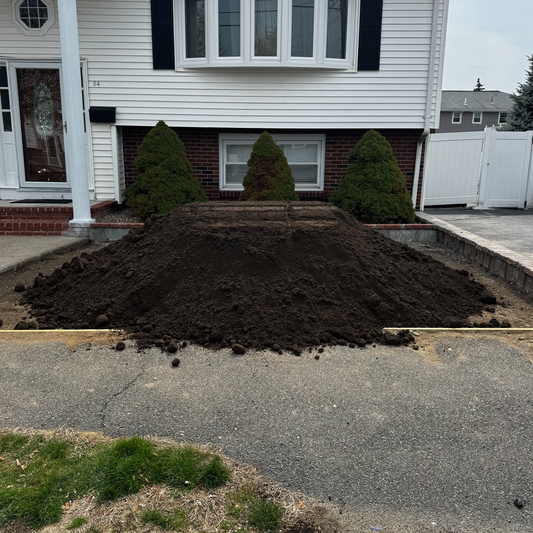
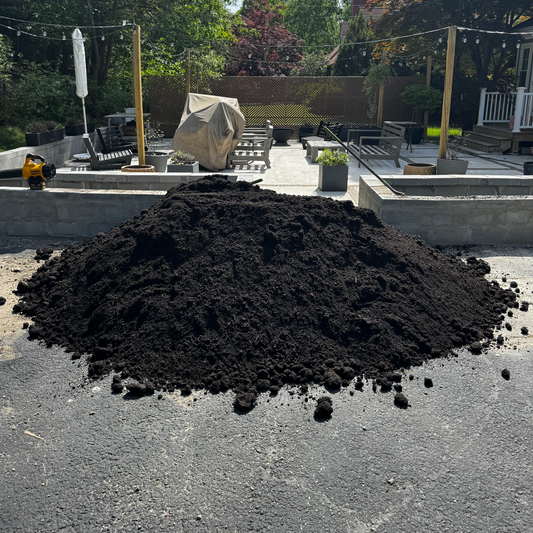
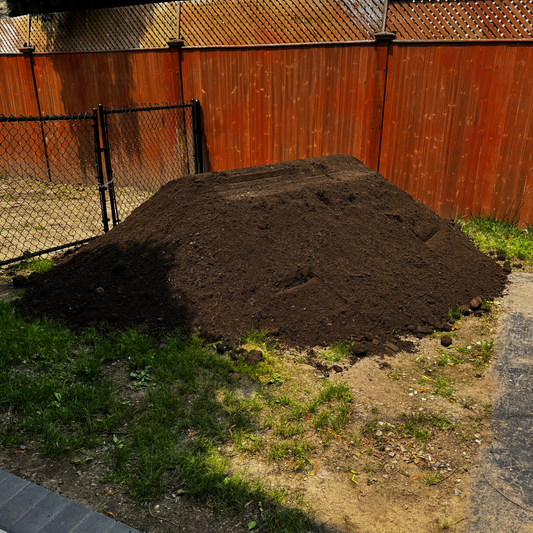
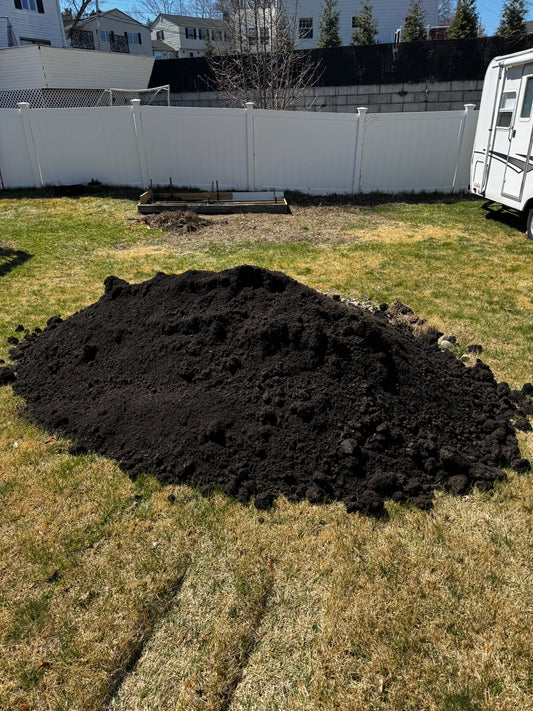
- Fix the grade now. Low spots, settled trenches and the sunken strip along a driveway get filled with screened loam in June, so the fill has ten or twelve weeks to settle. Loam spread in August is still moving when the seedlings come up.
- Get a soil test. Middlesex soils are mostly glacial till and run acidic often enough that pH is the first thing to check. June leaves time to act on a lime recommendation.
- Deal with the weeds now, while you are not protecting seedlings.
- Mow high and water deep. Three and a half inches of leaf keeps crowns cooler and shades the soil.
How much loam does a June grade repair take?
cubic yards = (square feet × depth in inches) ÷ 324
| Job | Square feet | Depth | Cubic yards |
|---|---|---|---|
| Settled trench, 2 ft × 40 ft | 80 | 4 inches | 0.99 |
| Low corner of a back lawn | 200 | 3 inches | 1.85 |
| Levelling a 1,000 sq ft lawn | 1,000 | 1 inch | 3.09 |
| Topdressing 2,000 sq ft | 2,000 | 1 inch | 6.17 |
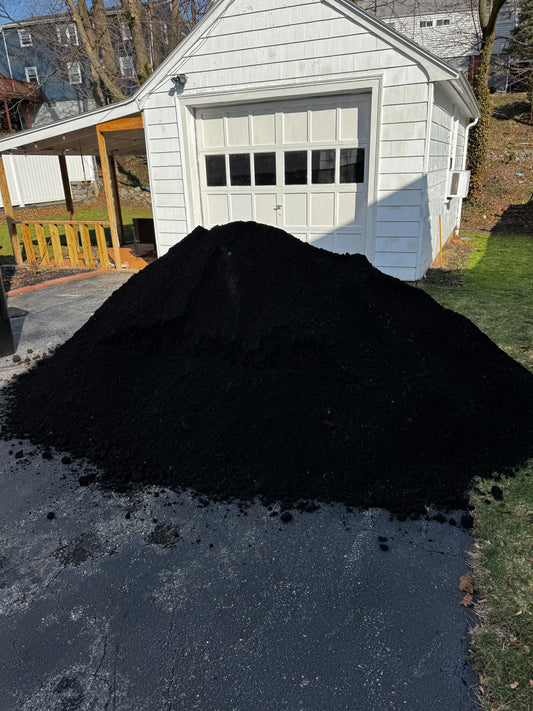
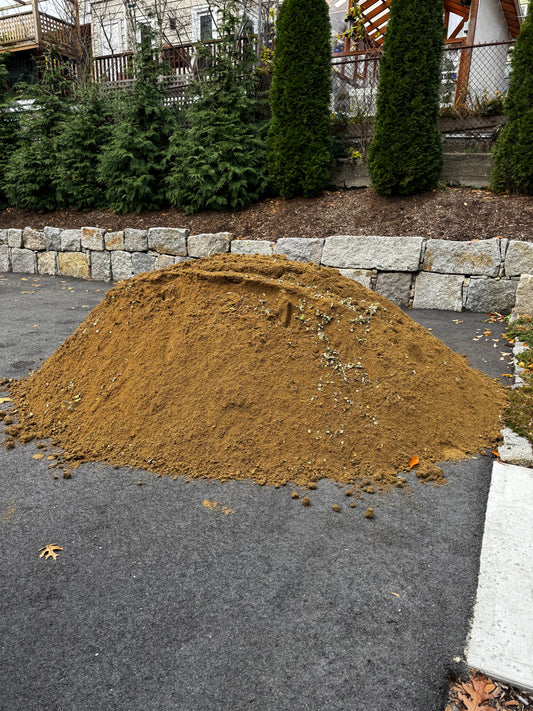
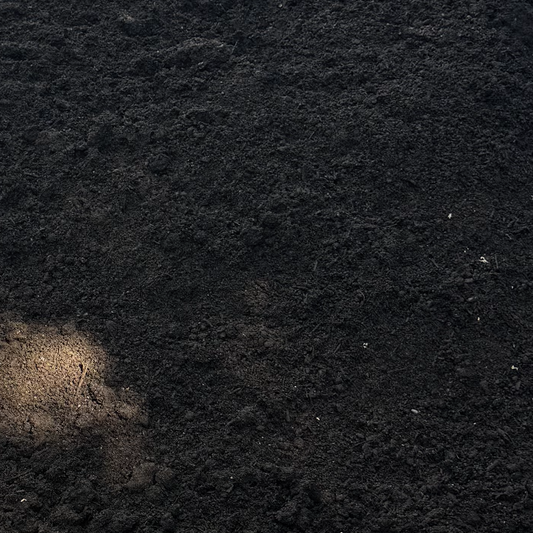
Loam (Screened) at $55 a yard is the workhorse for levelling and for a seedbed; add Compost at $50 if organic matter is thin. Both are in lawn levelling and repair materials and bulk soil and loam.
One thing to plan around: soil and loam load out at 6 cubic yards per truck trip, and the fee is charged per load, not per order. That 6.17-yard topdressing job is two trips; trimming it to six makes it one. Delivery into Middlesex County is $100 per load anywhere inside 30 driving miles of our Dispatch Office in Dorchester, which covers the great majority of the county — the ZIP checker returns your exact figure. No minimum order, so a single yard for one sunken trench is a normal delivery.
Can I overseed a thin lawn in June instead of a full reseed?
You can, with perennial ryegrass, and you should expect a partial result. Seedlings competing with established roots for water do far better in September.
How often do I water new June seed?
Light and frequent, not deep. Keep the top quarter inch of soil damp — two or three short cycles a day until germination, then taper toward less frequent, deeper watering.
Should I put loam down now and seed later?
Yes. Fill and grade in June, let it settle through the summer, then seed the firmed surface in late August. That sequence is the whole argument for ordering material this month.
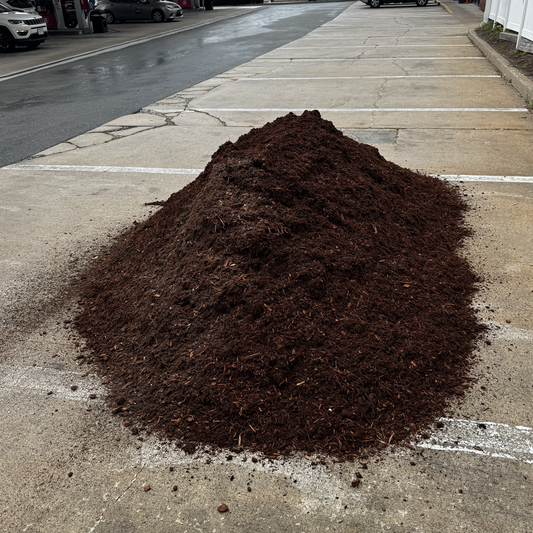
If your June job is grade rather than seed, order levelling loam by the cubic yard and let it settle before the August window. Text (617) 286-2740 for a quote. Meanwhile the mulch top-off guide covers the beds and the walkway base math covers the path.