Brockton's commercial property runs from strip plazas on the main corridors to church lots, medical offices, and small industrial yards on side streets. Much of that asphalt is older, with low spots that refreeze after a midday melt. A season estimate needs three numbers: square footage, a per-application rate, and a realistic count of salting events.
What should you measure before estimating salt?
- Paved area. Break the lot into rectangles, multiply length by width for each, and add them up. Include drive lanes, parking rows, and loading areas.
- Priority zones. Entrances, walkways, ramps, and dumpster pads get treated every event, even light ones.
- Problem spots. Slopes and shaded edges need traction as well as melt.
What are the per-application rates for each winter material?
These rates come from our product pages and assume a typical small commercial lot. Treat them as planning numbers, not fixed doses.
| Material | Per application | Typical season (10,000 sq ft) | Melting range |
|---|---|---|---|
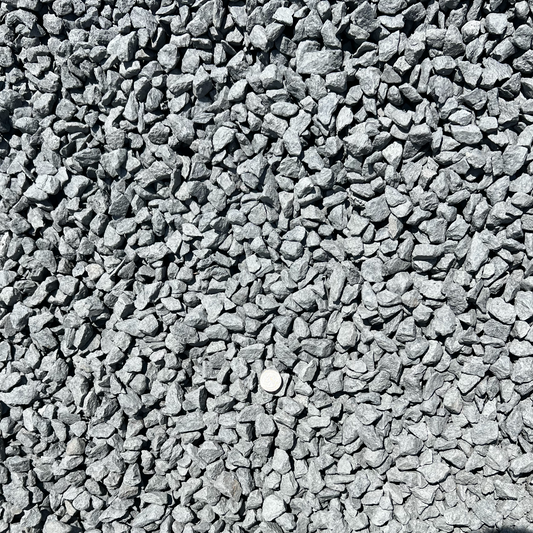
| Rock Salt (Untreated) | About 0.16 tons per 5,000 sq ft | Scale from your storm count | Works well above roughly 20°F |
| Rock Salt (Treated) | About 0.3 tons per 10,000 sq ft | 3–6 tons | Down to roughly -15°F |
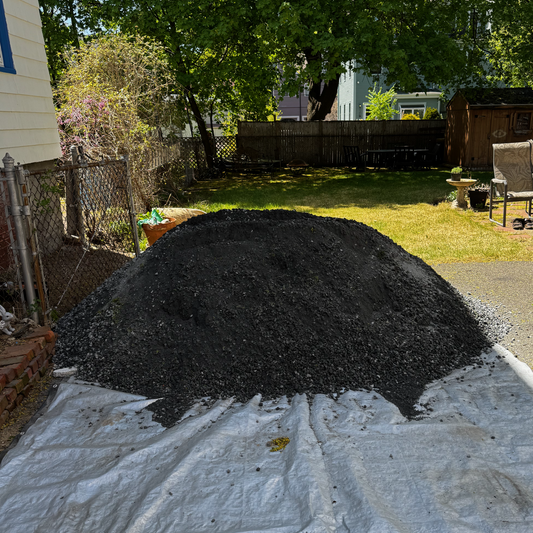
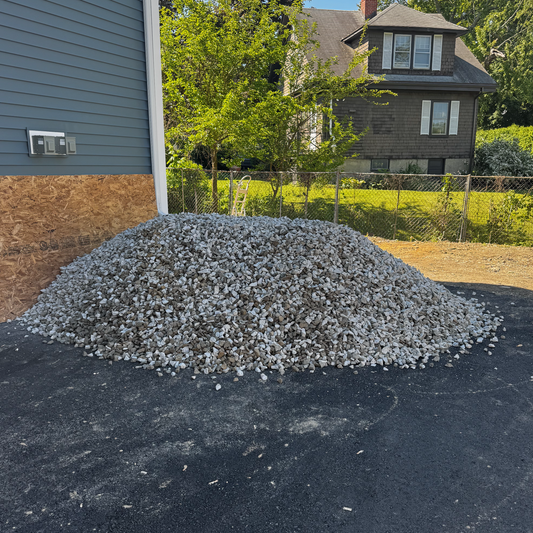
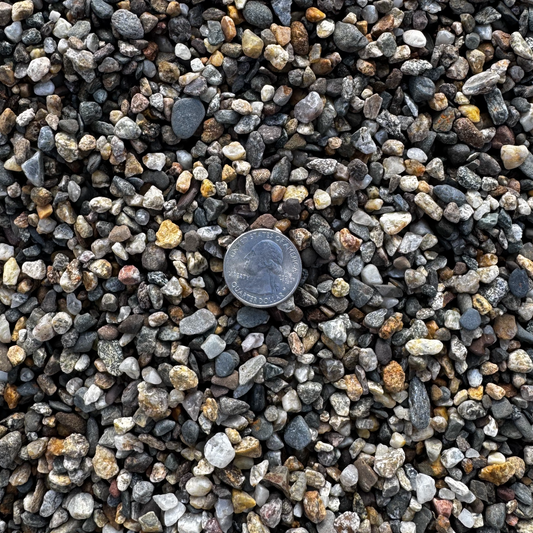
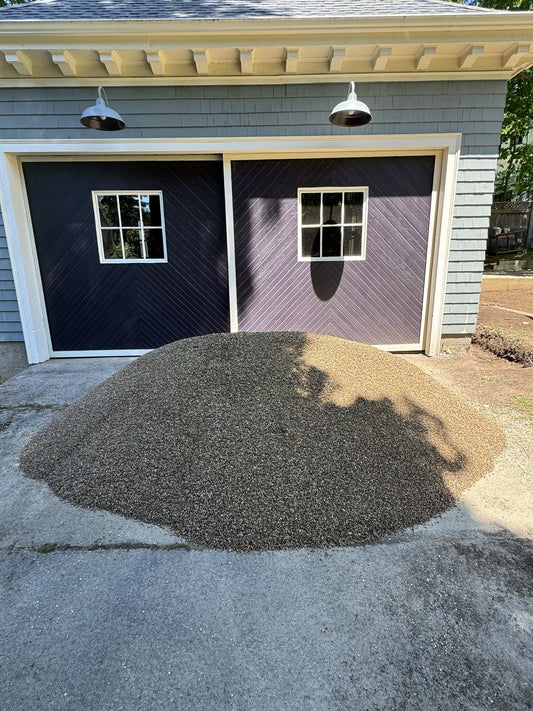
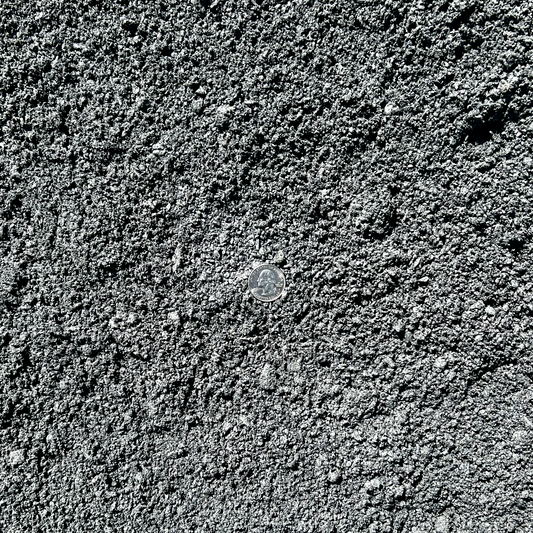
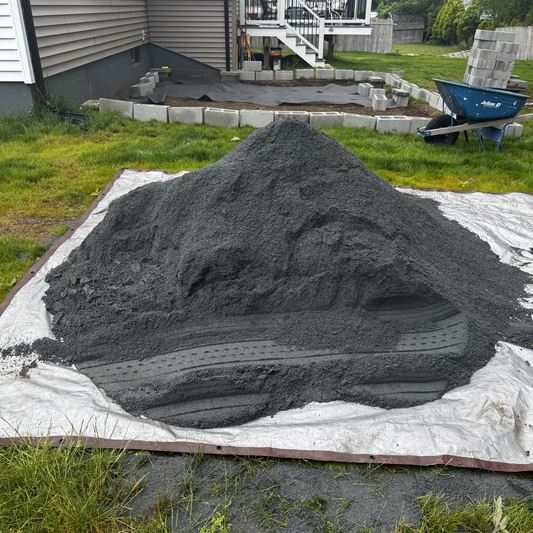
| Salt & Sand 50/50 | 1–1.5 cubic yards per 10,000 sq ft | 6–12 cubic yards | Salt portion struggles below 20°F |
| Salt & Sand 20/80 | 1.5–2 cubic yards per 10,000 sq ft | Stockpile 5–10 cubic yards | Traction first, light melt |
How do you work the math for a Brockton lot?
- Find your lot factor. Divide square footage by 10,000. A 20,000 sq ft lot has a factor of 2.
- Multiply by the rate. For treated rock salt, 2 × 0.3 tons = 0.6 tons per application.
- Multiply by events. Count every time the lot gets treated, not just named storms. Freezing rain and overnight refreeze count. At 10 to 20 events, 0.6 tons becomes 6 to 12 tons, which lines up with doubling the 3–6 ton season range above.
- Add a buffer. Keep one or two extra applications' worth on hand, here about 0.6 to 1.2 tons, so a late-season run of storms does not catch you empty.
- Cross-check with a blend. If you run Salt & Sand 50/50 instead, double the 6–12 yard season range to 12–24 cubic yards for the same lot.
Mild years land in the lower half of the range, icy ones in the upper half. Our Brookline salt calculation guide walks through a residential version of this math.
How should a Brockton salt order be split into loads?
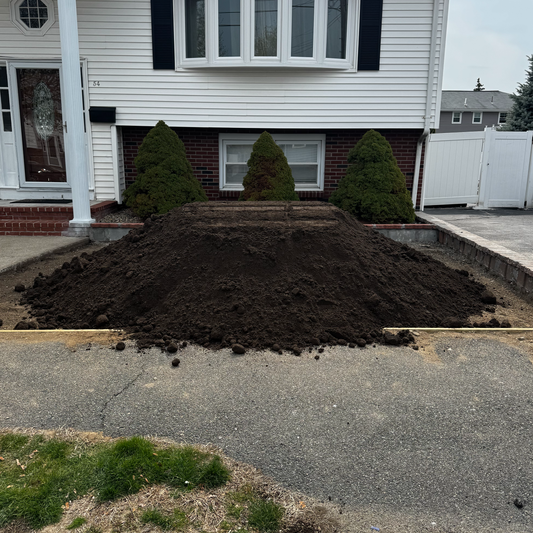
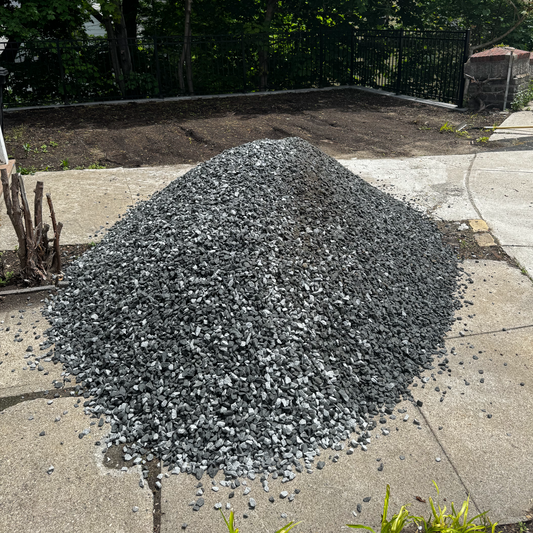
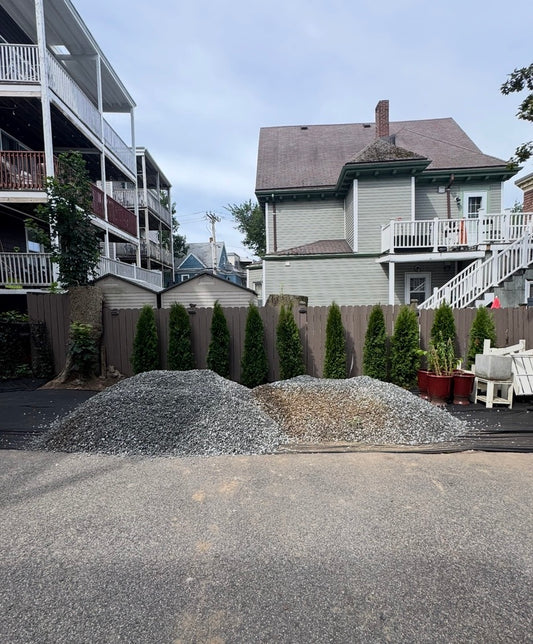
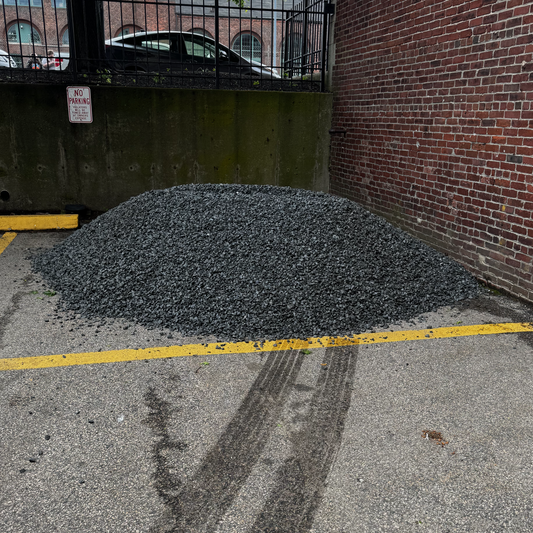
Winter salt and salt-sand mixes go out in loads of up to 6 cubic yards. Each material is its own load with its own delivery fee, so a program of treated salt at the entrances and 20/80 on a sloped drive lane is two loads. A 24-yard season of 50/50 is four loads. Pricing is listed on each product page in our salt and ice melt collection, and the delivery fee for your ZIP appears at checkout.
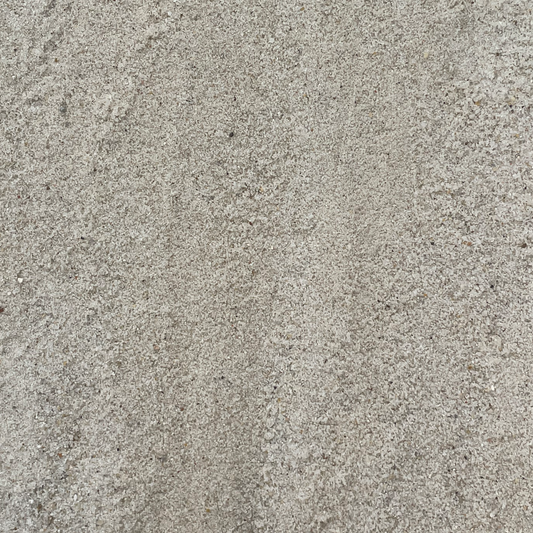
Order only what you can keep dry; if storage holds half a season, schedule a second delivery for mid-winter. Deliveries run year-round. Coarse sand for spot traction is in the sand collection if you want a straight-sand bin near ramps or steps.
When should a Brockton property order winter salt?
September and October. Ordering early avoids the rush that follows the first forecast of snow, and treated salt tends to sell out first in deep-cold years. Property managers juggling several sites can read our salt timing guide for property managers. Contractor accounts can set up recurring winter orders through sales@ottrsupply.com. For the full list of materials we deliver locally, see our Brockton landscape supply page.
Check the National Weather Service Boston forecast for overnight lows before treating, and go light near drains; the EPA Southeast New England Program explains why.
Is untreated rock salt enough for a Brockton lot?
For most storms above roughly 20°F, yes. Keep some treated salt for cold snaps, since untreated salt essentially stops working below about 15°F.
How should I estimate 20/80 for one sloped ramp?
Measure the ramp's square footage, divide by 10,000, and multiply by 1.5 to 2 cubic yards per application.
Do you deliver salt during the winter?
Yes. Deliveries run year-round, including winter. Ottr delivers only; we do not spread salt or plow.
Does salt-sand need cleanup in spring?
Yes. The sand stays on the pavement, so plan a spring sweep.
Questions about a winter order? Call or text (617) 645-0987.