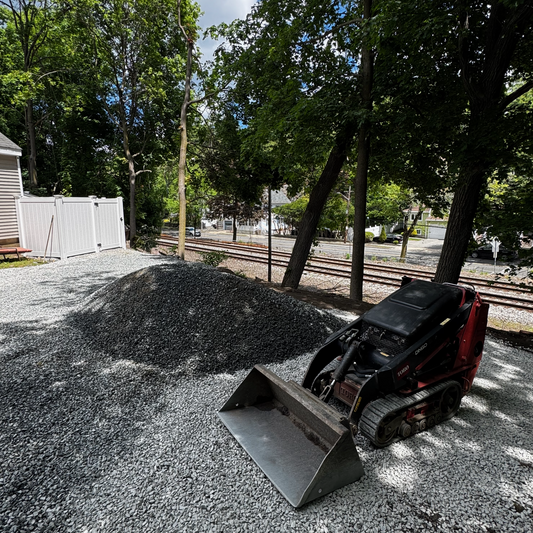
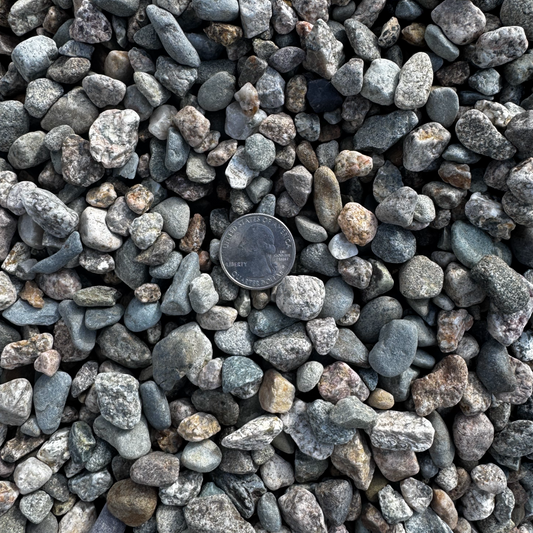
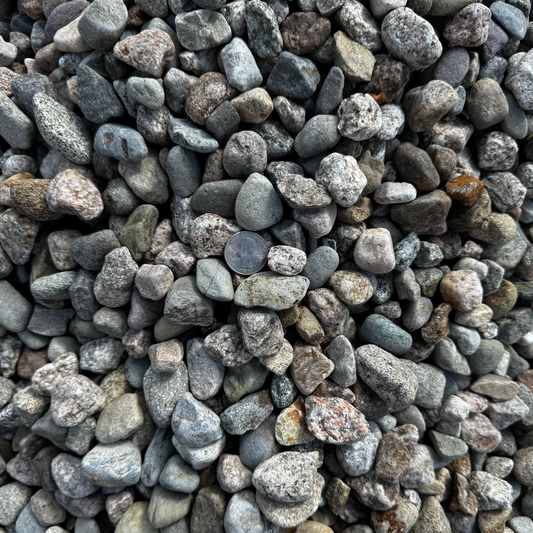
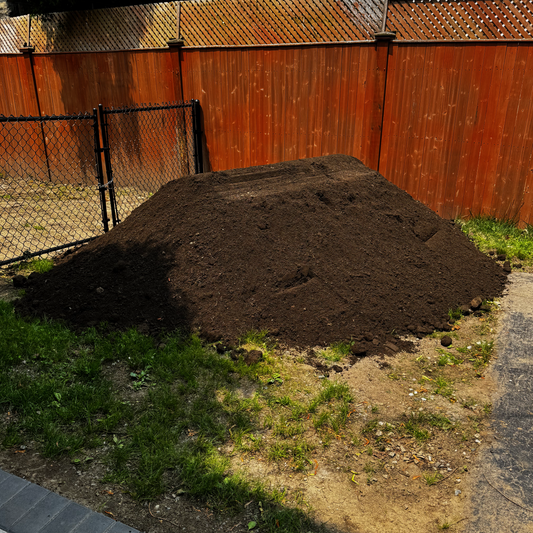
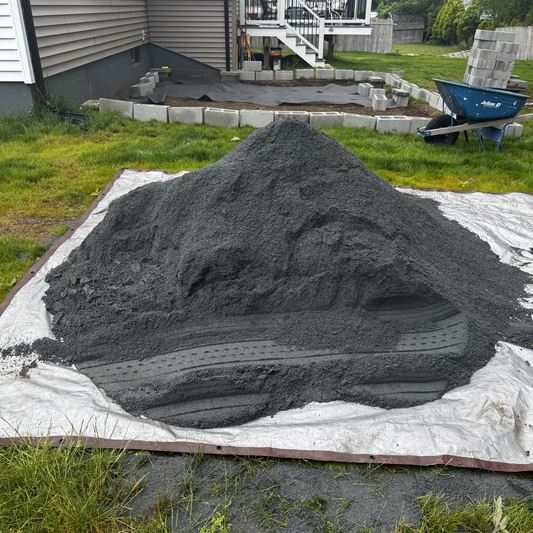
Methuen has a lot of grade changes: hills off Route 113, condo complexes stepping down toward the Spicket River, mill-building lots downtown, and long frontage along Route 28. Straight salt works on flat, sunny pavement in moderate cold, but many Methuen properties don't have much of that. Here are five signs your lot needs sand in the mix.
1. Your driveway or entrance is on a slope
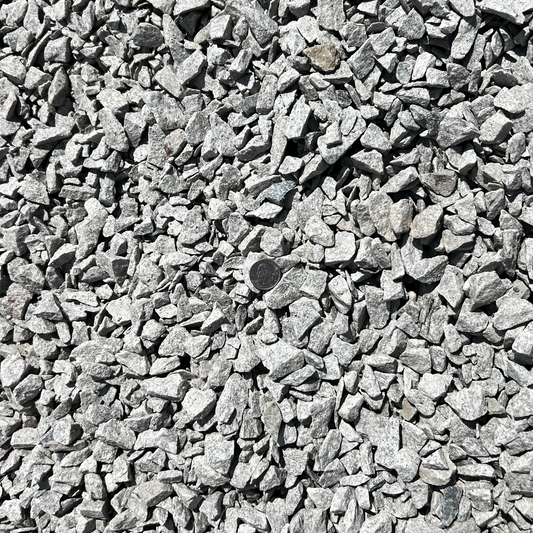
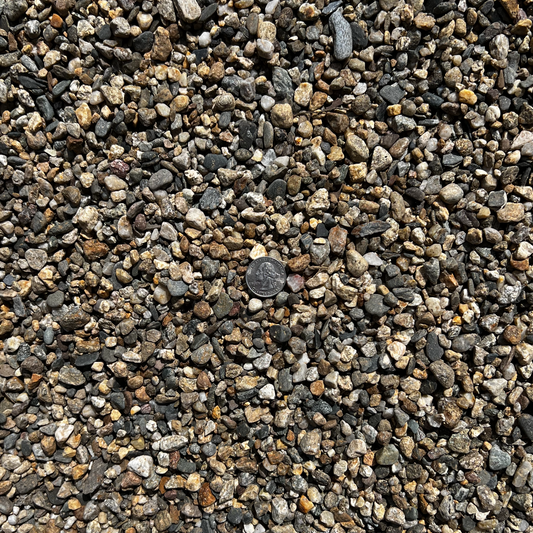
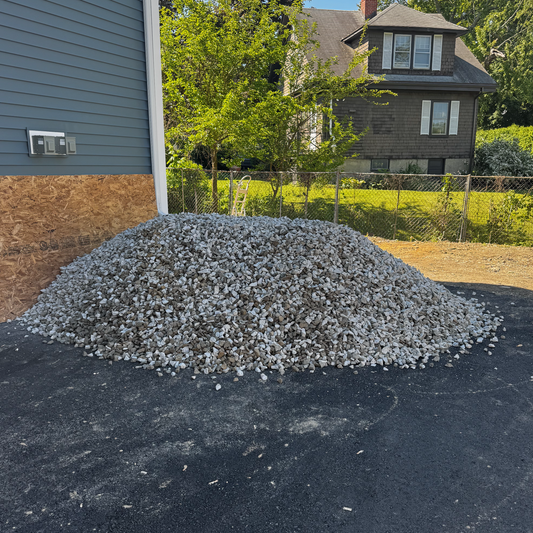
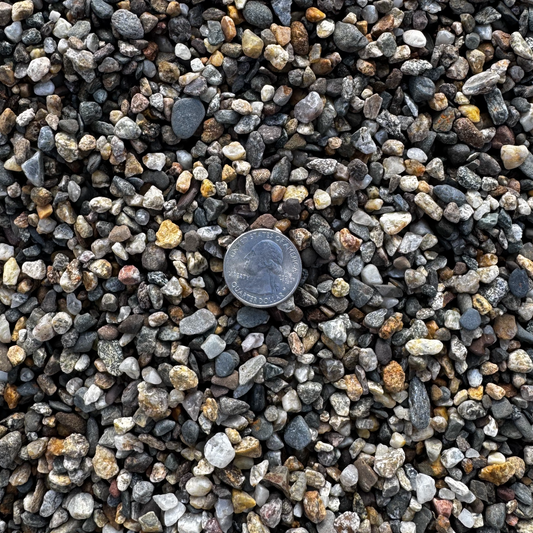
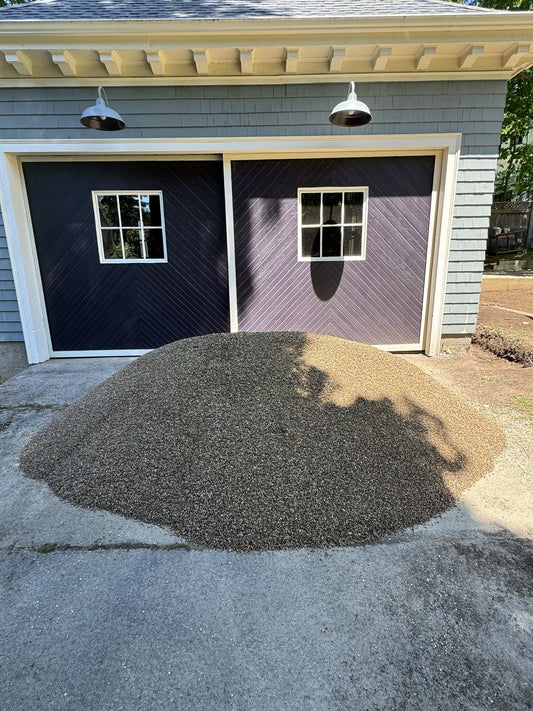
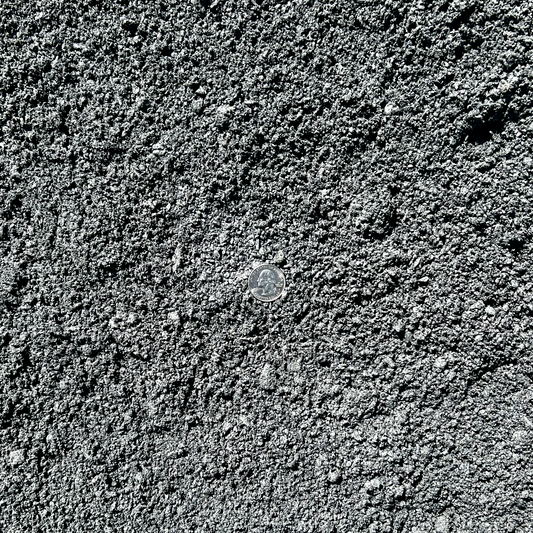
On a grade, melted water runs downhill and refreezes at the bottom. Sand stays where you spread it and gives tires and boots something to grip even when the melt stalls. For steep driveways and sloped lot entrances, Salt & Sand 20/80 is the traction-first choice. It's about 500 lbs of salt and 2,000 lbs of sand per yard.
2. People walk on ramps, steps, or ADA paths
Foot traffic needs grip right away, not after the salt has had time to work. Ramps, accessible paths, and building entrances are where a sand-heavy mix does the most good. Rock salt can also irritate pets' paws, so wiping paws after walks helps around residential walkways.
3. You're covering long plowed routes
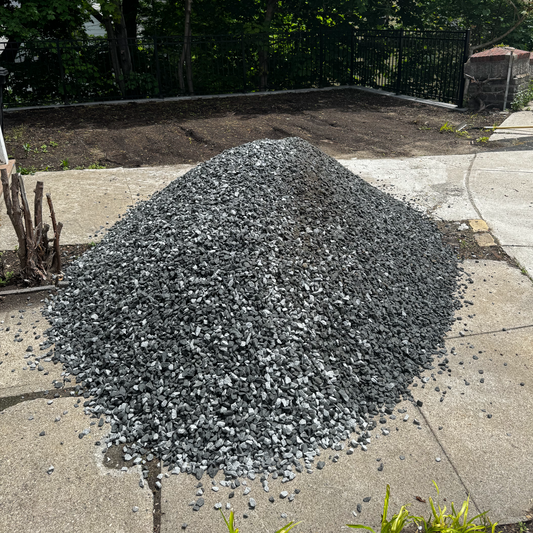
HOA roads, long private drives, and plaza perimeters take a lot of material per pass. A salt-sand blend covers more distance per application while still giving some melt. Salt & Sand 50/50 is the "one bin handles most storms" mix. On a ~10,000 sq ft lot it runs about 1–1.5 cubic yards per storm, and a season commonly takes 6–12 yards.
4. Shade and runoff keep refreezing the same spots
North-facing walks, the shadow side of a building, and the area under a downspout melt during the day and turn to ice again overnight. Salt alone struggles there once temperatures fall below 20°F. Sand keeps those spots walkable in between applications. If the cold gets deeper than that, treated rock salt keeps melting down to roughly -15°F, and you can spot-apply it on top of the blend.
5. Your surface or edges don't handle salt well
Gravel driveways, concrete poured within the last year, and walks bordered by lawn or beds all call for less salt. Avoid chloride salts on new concrete and use sand for traction that first winter. Near turf, a 20/80 mix or plain coarse sand limits the spring runoff that burns lawn edges. The EPA Southeast New England Program has background on how road salt moves into groundwater.
Which mix should a Methuen lot pick?
| Material | Best for | Below 20°F | Typical per application |
|---|---|---|---|
| Untreated rock salt | Flat, sunny pavement in moderate cold | Slows; stops near 15°F | ~0.16 tons per 5,000 sq ft |
| Salt & Sand 50/50 | Mixed lots, most storms | Sand still grips; salt slows | ~1–1.5 cubic yards per 10,000 sq ft |
| Salt & Sand 20/80 | Slopes, ramps, gravel, turf edges | Traction holds | ~1.5–2 cubic yards per 10,000 sq ft |
Plenty of Methuen properties stock both: the 50/50 for the main lot and the 20/80 for ramps and the steep entrance. Sand stays on the pavement, so plan for a sweep in spring. Our Quincy guide to getting more out of your winter material covers how to split a stockpile.
How do Methuen deliveries work for salt and sand?
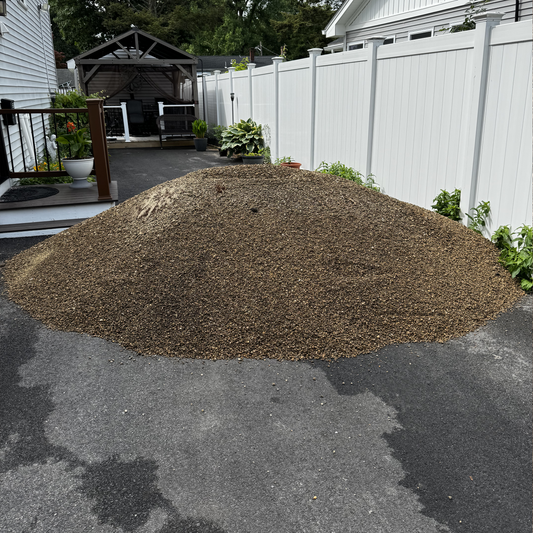
Ottr delivers salt and salt-sand mixes in bulk across the service area, up to 6 cubic yards per load. Each material is its own load with its own delivery fee, which you'll see at checkout for your ZIP. Ordering in September or October lets you avoid the rush after the first storm. Pricing is on each product page. You can browse everything in the salt and ice melt collection or on the Methuen landscape supply page.
Frequently asked questions
Does sand melt ice?
No. Sand only adds traction. The salt in the blend does the melting.
Which mix is better for a steep Methuen driveway?
The 20/80 mix, because it puts traction first and still adds a light melt.
Can I order 50/50 and 20/80 together?
Yes. Each one is a separate load with its own delivery fee.
Do I need to clean up the sand in spring?
Yes. Plan a sweep once the season is over.
Need help picking a mix? Call or text (617) 645-0987.