Quick Answer
The five pruning mistakes that cost a Massachusetts garden a full season: pruning old-wood bloomers in February (no flowers in June), topping shrubs flat across the top (dense leaf, dead inside), using dull or anvil pruners (crushed stems invite disease), cutting too close or leaving stubs (bark tear or rot), and pruning too hard at the wrong time of year (stress, water sprouts, weak regrowth). All five are reversible — but the year you lose, you don't get back.
Why February Is When These Mistakes Happen
Late winter is when most pruners come out. Branches are bare, leaves are gone, and the structure is finally visible. That clarity is good — it lets you see what to cut. But it also tempts homeowners into cutting things that shouldn't be cut, hard, with dull blades, on a Saturday afternoon when the work feels productive. The five mistakes below cost gardens across Greater Boston a full year every February.
#1 — Pruning Old-Wood Bloomers in February
The single most common one. Old-wood bloomers — bigleaf hydrangea (macrophylla), oakleaf hydrangea, lilac, forsythia, azalea, rhododendron, mountain laurel, and many viburnums — set their flower buds on last year's growth, in late summer.
Cut them in February and you've cut off June.
The recovery is just patience: the plant skips a flowering year and returns the next. But the missed bloom isn't replaceable. The cure is species ID before any cut. The Brookline hydrangea pruning guide walks through telling new-wood from old-wood hydrangeas; the same logic applies across the broader shrub list.
#2 — Topping Shrubs Flat Across the Top
A row of arborvitae, boxwood, or yew gets tall, and the homeowner takes the hedge trimmer across the top in a flat line. The shrub responds with dense growth at the cut surface — and dead, leafless interior because no light reaches inside.
Two years in, you have a dome of green on top of bare brown sticks. Five years in, you can't recover without ripping it out.
The fix is renewal pruning — taking out the oldest one-third of stems at the base each year, leaving the rest to grow naturally. The shrub stays full top-to-bottom. The International Society of Arboriculture guidance covers this in detail for trees and large shrubs.
#3 — Using Dull or Anvil Pruners
A dull blade crushes stem tissue instead of slicing it. Crushed tissue heals slowly, invites fungal infection, and signals stress to the plant. Anvil-style pruners are designed to crush — they're fine for dead wood but wrong for live stems.
Symptoms: brown ring around the cut by April, twig dieback an inch or two below the cut by May, weaker growth all season.
Use bypass pruners for live stems under ¾", loppers for thicker. Sharpen them. Twenty minutes with a flat file before you start saves dozens of cuts from going wrong. The Hingham pruner sharpening walkthrough is the procedure. The bypass vs anvil pruners test shows the cut-quality difference on apple wood.
#4 — Cutting Too Close or Leaving Stubs
Two opposite mistakes, same outcome — disease entry.
Too close: cutting flush against the trunk removes the branch collar (the swollen ring where branch meets trunk). The collar is the plant's healing tissue. Without it, you've left a wound that won't close.
Stubs: leaving 2+ inches of branch beyond the collar gives the stub no way to heal. It dies back, rots, and the rot moves into the trunk.
The right cut is just outside the branch collar — angled to follow the collar's natural slope. On bigger limbs, use a three-cut method: undercut six inches out, top-cut just past the undercut to drop the limb cleanly, then a final cut at the collar. ISA's Trees Are Good has the diagrams.
#5 — Pruning Too Hard or at the Wrong Season
Removing more than one-third of a shrub or tree's canopy in a single season stresses the plant. The response is water sprouts — vertical, fast-growing, weak shoots that ruin the form. On fruit trees, this kills next year's crop.
And season matters: spring-bloomers prune after bloom (May–June). Summer-bloomers prune late winter (February). Fruit trees prune late dormant (February through early March, before bud break). Maples and birches bleed sap heavily in late winter — prune those in summer instead. The UMass Extension landscape program is the regional reference for timing by species.
What to Order Before You Pick Up the Pruners
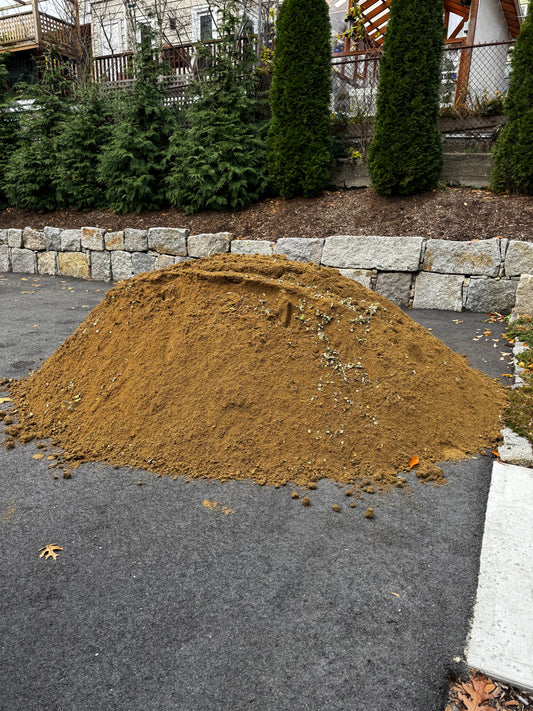
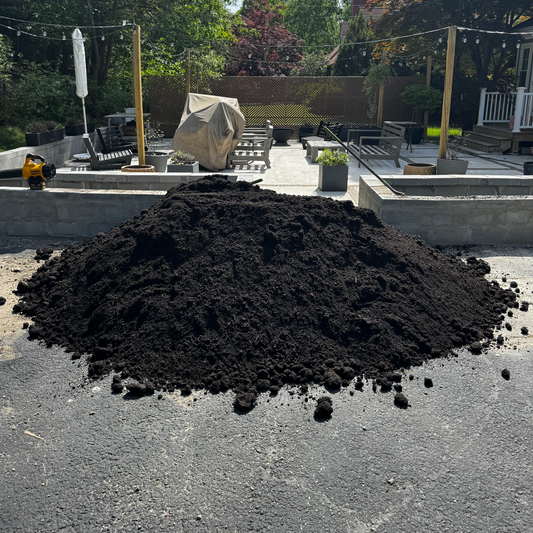
Pruning is half the February job; topdressing is the other half. After every prune, a thin ring of compost out to the drip line feeds the spring flush. Browse the full Ottr catalog for bulk compost, loam, and the mulch lineup that goes down once March warms.
For the rest of the February pruning lineup — fruit trees, roses, summer-blooming shrubs — see the Plymouth fruit-tree pruning Q&A and the Hingham pruner sharpening Saturday project. Done right, the next four weekends fix what's wrong with the yard. Done wrong, you wait a year.