Quick Answer
In Quincy, prune Knockout roses in late February or early March — cut the entire shrub back to 18–24 inches tall, remove all dead and crossing canes, and top-dress with 1 inch of compost. Knockouts bloom on new wood, so a hard cut now makes summer flowers larger and the plant denser. The window opens once nighttime lows stay above 20°F for a week. The whole job takes 20–30 minutes per shrub.
Why Knockouts Get a Hard Prune
Knockout roses (the Conard-Pyle hybrid that took over American front yards after 2000) bloom on the current season's growth. Hard pruning in late winter forces a flush of strong new shoots that flower from June through October. Skip the prune and you get a leggy, congested shrub with smaller flowers held high above bare bottom canes.
In Quincy, where front-yard Knockouts run along walkways, fences, and foundations from Wollaston to West Quincy, the late-February cut is the single most important rose-care action of the year.
When to Prune in Quincy
The window is late February through mid-March. Three local cues:
- Forsythia just starting to swell — visible yellow at the bud tips
- No more 0°F nights forecast for the next 10 days
- Soil thawed enough to walk the bed without sinking
In a normal Quincy year, that's February 25 to March 10. If snow is on the ground, prune anyway — the snow won't bother the plant.
Tools You'll Need
- Sharp bypass pruners — for canes up to ½ inch. Anvil pruners crush rose wood; don't use them. See the pruner sharpening playbook.
- Loppers — for canes up to 1 inch
- Heavy leather gloves — Knockout thorns are stout enough to draw blood through cotton garden gloves
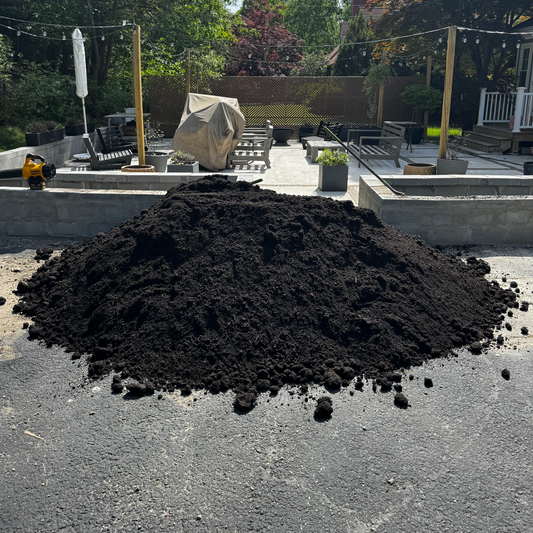
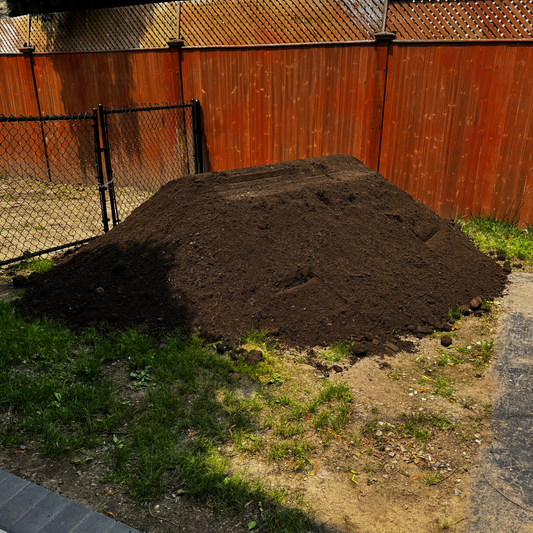
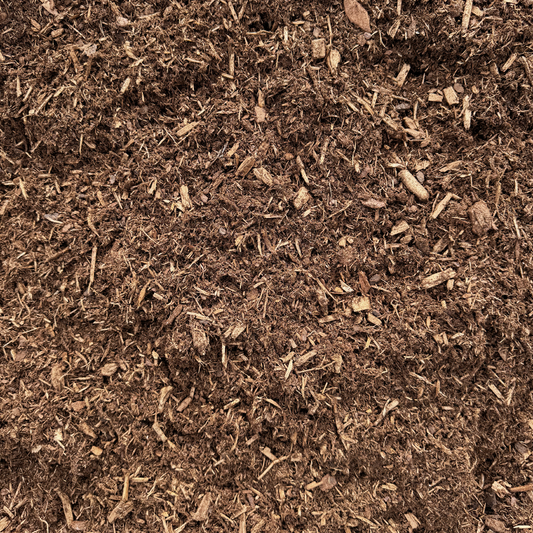
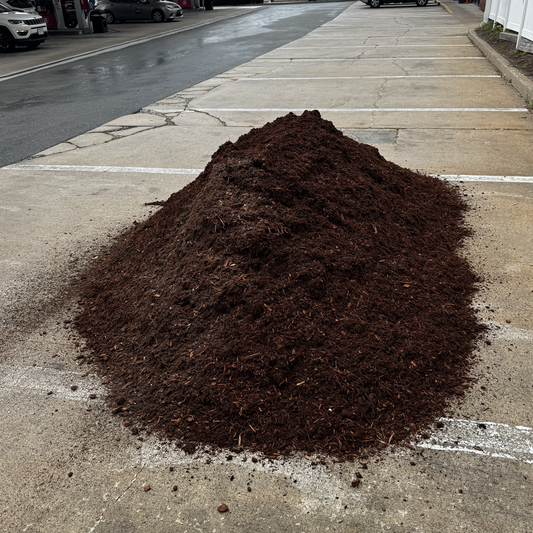
- ¼ cubic yard of compost — covers about three mature Knockout shrubs at 1-inch depth around the root zone
Step 1 — Cut the Whole Bush Back
Knockouts respond to hard pruning, not gentle shaping. Cut every cane to 18–24 inches above the ground. Yes, the whole bush. The cut should be at a 45-degree angle, ¼ inch above an outward-facing bud (a small reddish nub on the cane).
If your Knockout has gotten massive (over 6 feet tall and wide), this single cut takes off 60–70% of the plant. That's correct. Knockouts bounce back hard — by July, the shrub will be 4 feet tall and full of bloom.
Step 2 — Remove Dead and Crossing Canes
After the height cut, look at what's left:
- Dead canes — brown, brittle, no green inside when scratched. Cut to the base.
- Crossing canes — any two canes rubbing each other. Cut the weaker one.
- Spindly canes — anything thinner than a pencil. Cut to the base.
- Inward-growing canes — anything pointed back into the center of the shrub. Cut to the base.
You want 5–7 strong, outward-pointing canes left on a mature bush. Less than that, leave more. More than that, thin further.
Step 3 — Top-Dress with Compost
Spread 1 inch of compost in a 24-inch ring around each plant, kept 2 inches off the canes themselves to prevent rot. This feeds the spring flush without the salt burn of synthetic fertilizer applied too early. A quarter cubic yard covers roughly three mature shrubs.
Browse the Plant Establishment & Tree Planting collection for compost sized to small bulk orders, and the Quincy landscape supply page for delivery scheduling.
Step 4 — Clean Up the Bed
Rake out fallen leaves and last year's mulch chunks from under the rose. Rose foliage carries blackspot fungal spores that overwinter on dead leaves — bag and dispose, don't compost. Apply fresh mulch only after the soil warms in April. For neighbor context on apple-tree pruning happening the same week, see When Should I Prune Apple Trees in Duxbury?. For a parallel screened-loam Q&A useful when planning rose-bed soil amendments, see What Is Screened Loam, and Does My Belmont Lawn Need It?. The 2026 follow-up on stone tonnage math sits at Stone Tonnage in Bridgewater.
Step 5 — Watch the Spring Flush
By late April, you'll see new red shoots emerging from each cut. By Memorial Day, the bush will be 18–30 inches tall and budding. By mid-June, it's in full bloom. The hard cut you made in February is what produces that show.
For ongoing rose-care guidance, the American Rose Society has authoritative national resources — Knockouts respond similarly across the country, with the Quincy-specific timing being late February to early March.