Most people get this wrong in the same direction: they wait for the weather to feel like fall, and by then the window is closing.
When is the overseeding window in Middlesex County?
Roughly mid-August through mid-September. The edges shift a little inside the county: Cambridge, Somerville and Medford hold heat in dense pavement and tight lots, while the northwest corner past Concord toward Groton sits higher and cools sooner. That is a few days either way. Plan around the middle of the window, which works everywhere.
Why does soil temperature matter more than air temperature?
Seed responds to the soil around it, not to how the afternoon feels. Cool-season grasses — bluegrass, the fescues, perennial ryegrass, essentially every lawn in the county — germinate best when soil at two to four inches sits in roughly the 50 to 65°F range. Below 50°F germination slows badly, then stops.
Soil temperature lags air temperature by weeks. Soil is a large, slow mass: it warms late in spring and cools late in fall. That lag is the whole reason the late-summer window beats the spring one.
- Spring: April air is pleasant, soil is still cold, seed sits there. By the time soil warms, crabgrass is germinating alongside your seedlings and winning.
- Late summer: soil still carries July's heat while nights cool. Seed germinates fast, grows into cooling air rather than rising heat, and summer weeds are finished.
You can stop guessing for about ten dollars. A soil thermometer pushed two inches down mid-morning tells you where you stand: when the reading drops out of the high 70s into the 60s, the window is open. UMass Extension Turf has the regional guidance and NWS Boston has the season.
What is the decision rule?
Work backward from winter. A seedling needs roughly six to eight weeks of active growth to build enough root to hold through a Massachusetts winter, and soil here drops below the 50°F growing threshold in late October or early November. Subtract eight weeks and you land in the first half of September.
| Seeding date | What to expect | Verdict |
|---|---|---|
| Before Aug 15 | Soil often still too hot; seedlings fight heat | Wait |
| Aug 15 – Sep 1 | Best conditions of the year | Go |
| Sep 1 – Sep 15 | Still solid; use a faster-germinating mix | Go |
| Sep 15 – Oct 1 | Germinates, roots thinly, partial winter loss | Marginal |
| After Oct 1 | Germinates, then heaves out over winter | Don't |
The rule: seed by September 15. If that date has passed, do not buy seed and hope. Hold the lawn as it is and seed properly next August, or wait for a dormant seeding in late November, when the ground is cold enough that seed sits inert until spring instead of germinating into a killing frost.
What actually goes wrong when you seed late?
The failure is deceptive, which is why people repeat it. Seed sown in mid-October germinates. You see green. It looks like it worked. Then freeze-thaw cycles run all winter, the ground expands and contracts, and shallow-rooted seedlings are pushed out of the soil. By March they are lying dead on the surface. A seedling with two inches of root is anchored; one with half an inch is not.
Does seed choice buy you time?
A little. Perennial ryegrass germinates in roughly five to ten days, tall fescue in seven to fourteen, Kentucky bluegrass in fourteen to twenty-one or more. Late in the window, fast germination beats the finer texture of a slow species. A tuning adjustment, not a way to move the deadline.
What does the lawn need from you inside the window?
Seed-to-soil contact. Seed lying on thatch does not germinate, and this is why most overseeding fails. Core aerate or dethatch first — how to tell which you need is here — then seed into the openings.
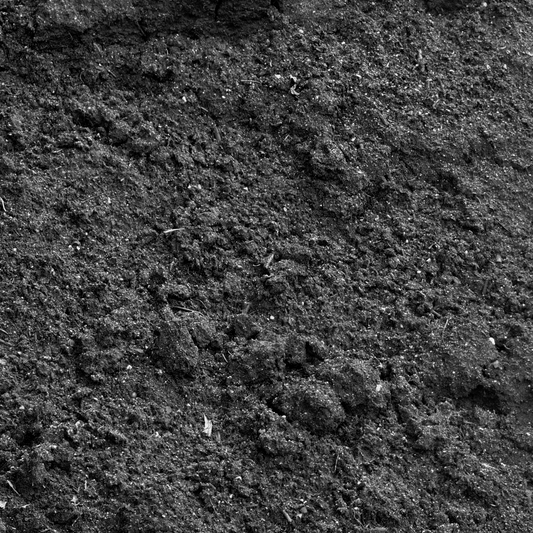
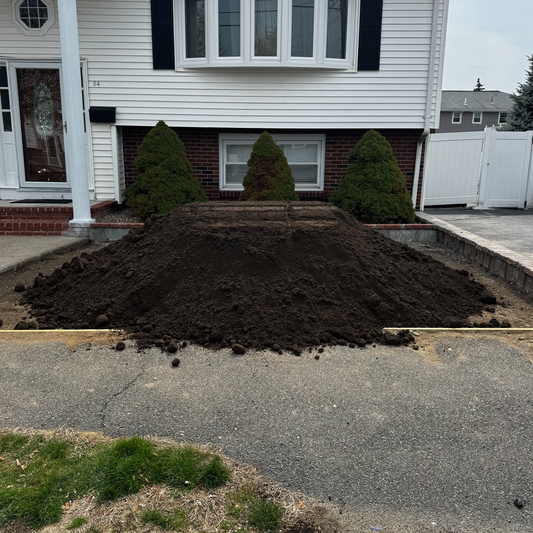
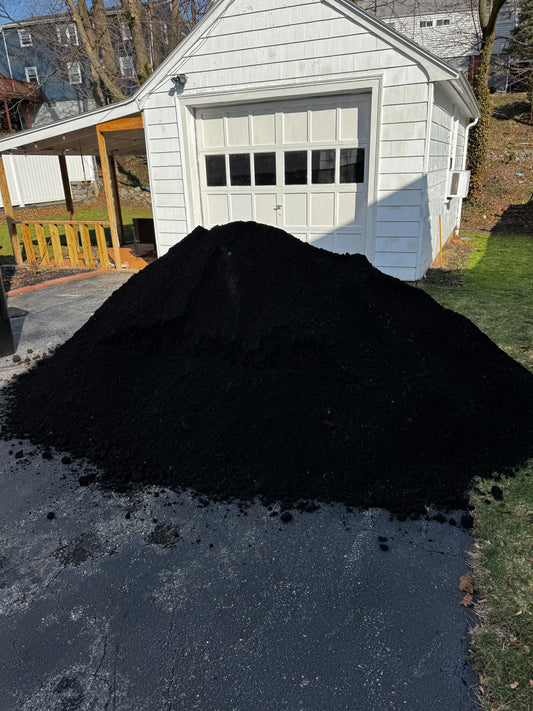
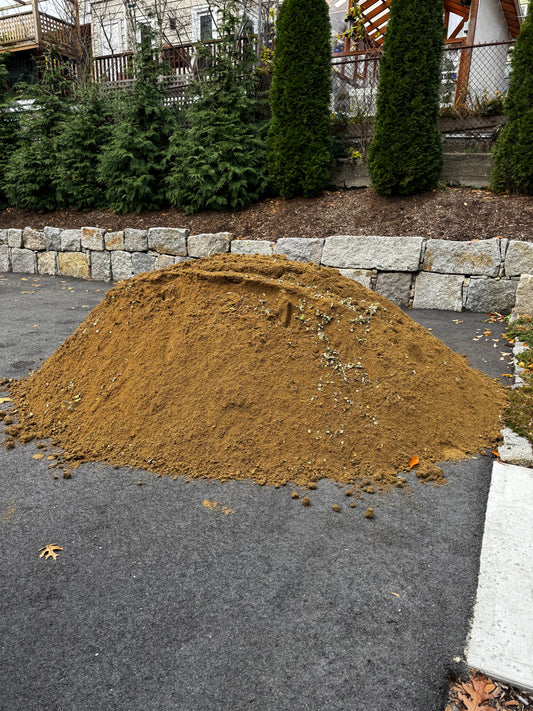
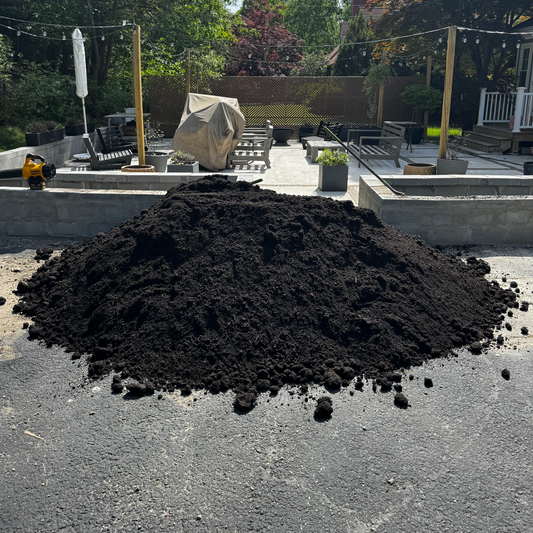
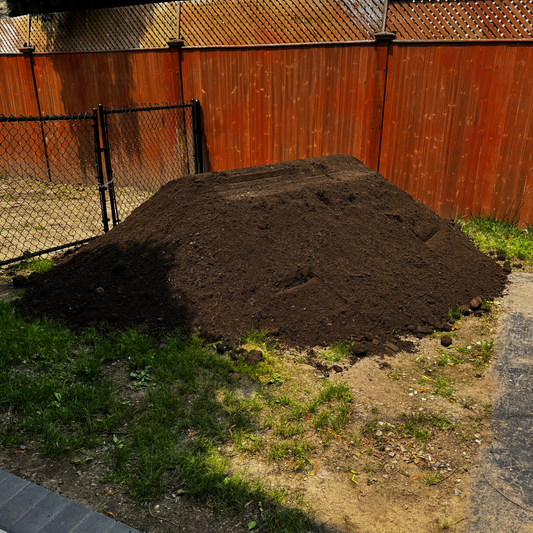
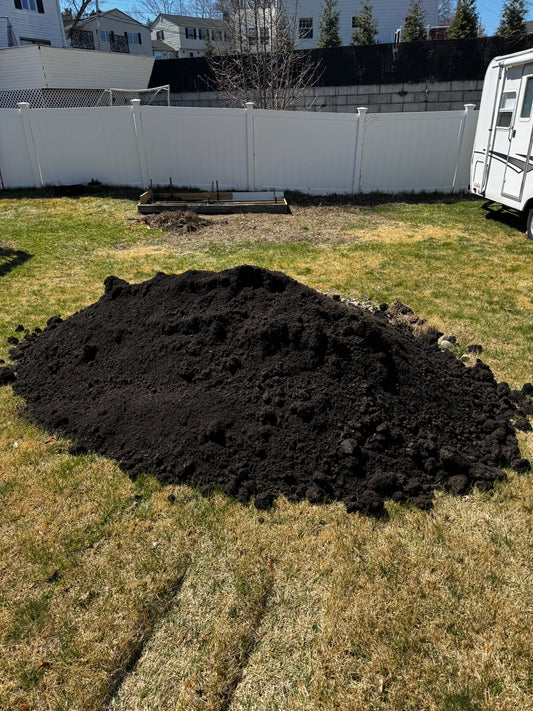
A thin topdressing. A quarter inch of screened loam dragged in over fresh seed raises germination more than anything else you can buy: it holds moisture at the seed and presses it into soil. The method is here.
Water, lightly and often. Keep the top quarter inch damp until germination — short cycles two or three times a day, not one deep soak — then water deeper and less often so roots chase it down. Getting that backwards kills more new seed than late planting does. Keep pre-emergent crabgrass products away from a seeding; they do not distinguish between crabgrass and the seed you paid for.
How much loam does the topdressing take?
Cubic yards = (square feet × depth in inches) ÷ 324. One yard covers about 1,300 sq ft at a quarter inch.
| Lawn size | Loam at ¼" | At $55/yd | Loads |
|---|---|---|---|
| 2,500 sq ft | 2 yd | $110 | 1 |
| 5,000 sq ft | 4 yd | $220 | 1 |
| 7,500 sq ft | 6 yd | $330 | 1 |
| 10,000 sq ft | 8 yd | $440 | 2 |
Soil caps at 6 cubic yards per trip. Delivery is $100 per load inside 30 driving miles of our Dispatch Office in Dorchester, which covers most of Middlesex County; past 30 miles it is $100 plus $4 per mile. Loads are counted per line item — loam plus compost is two loads and $200.
Middlesex County overseeding questions
Can I overseed in spring instead?
You can, and it is the second-best option. Cold spring soil delays germination and crabgrass competes directly. Given a choice, take August.
My lawn is brown right now — should I seed it?
Test first. Most brown August turf is dormant and recovers without seed. The five-sign check is here.
Is dormant seeding in late fall a real option?
Yes, as a fallback. Seed goes down after the soil is cold, sits through winter and starts in spring. Less consistent than August, far better than seeding into October.
Price the topdressing on the lawn levelling and repair collection or across the soil range, or text (617) 286-2740 and we will size the load.