Everett packs a lot of pavement around a little grass — front strips between sidewalk and street, side yards between triple-deckers, thin soil over old fill. It dries out fast. By early August much of it is straw-coloured and very little is actually dead. Five checks before you spend money.
1. Did the whole lawn change colour at the same time?
Dormancy is a whole-plant response to drought, so it shows up broadly and fades in gradually — tan across the sunny areas with soft, blurry edges. Grubs, disease, dog urine and fuel spills show up as sharp-edged, irregular patches in otherwise green lawn. Uniform means dormant; patchy with hard edges means run the grub-versus-drought test.
2. Does the grass pass the tug test?
This is the one to remember. Grab a small handful of brown blades and pull steadily — a firm pull, not a yank. Test five or six spots, not one; the front strip and the shaded side yard usually disagree.
| What happens | What it means |
|---|---|
| Plant resists, blades snap off, crown stays put | Dormant — it will recover |
| Whole plant lifts out, roots brown and brittle | Dead — reseed this patch |
| A whole section peels back like loose carpet | Grubs — roots have been chewed off |
3. Is the crown still alive at the base?
Part the brown blades and look at the soil line, at the small node the leaves grow from. On a dormant plant the crown stays firm and pale — cream, white or faintly green — even with everything above it tan. On a dead plant it is brown and crumbles. While the crown is intact the lawn has a full recovery in it. UMass Extension Turf covers the physiology.
4. Is there green exactly where water lingers?
Note where green survived: under the maple, along the north wall, below the downspout, in the low corner the driveway drains into. If green tracks moisture and shade rather than a random pattern, this is drought, and drought is reversible. Keep that map — it shows which parts of the yard need help every summer.
5. Does it respond to water within two weeks?
Give the lawn about an inch of water a week in one or two soakings, not daily sprinkles. Dormant turf shows green at the base within 10 to 14 days. Anything still tan after three weeks of consistent water is dead and belongs on the reseed list. Check NWS Boston first — rain does this job for free.
What do the genuinely dead patches need?
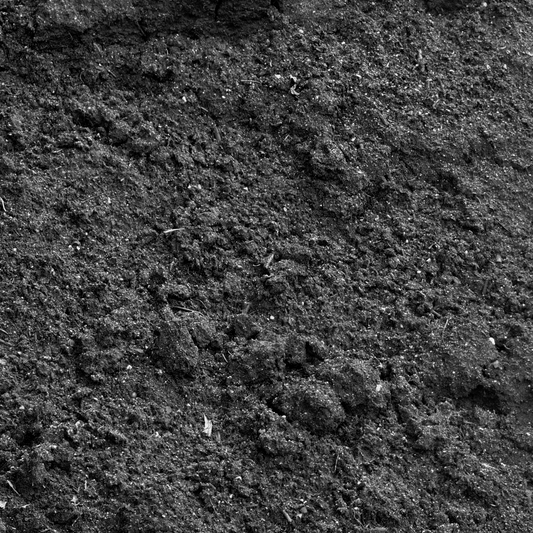
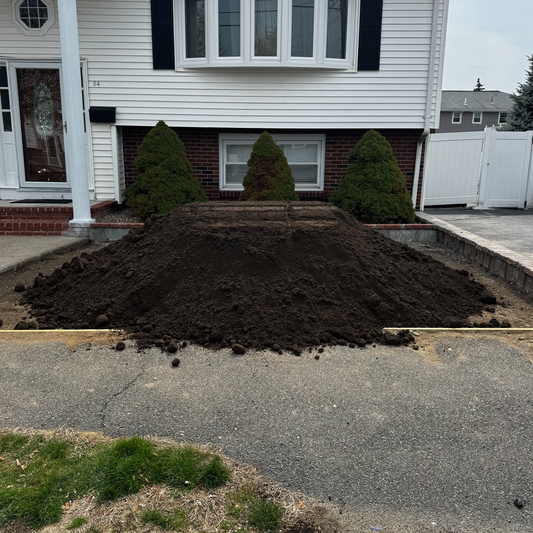
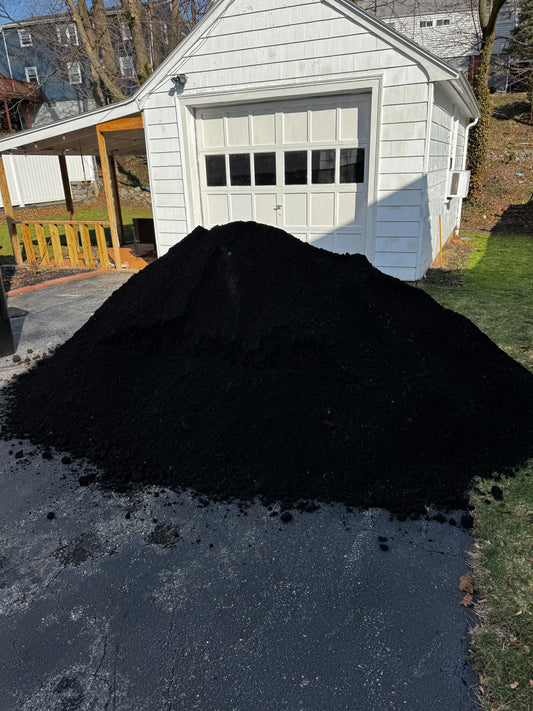
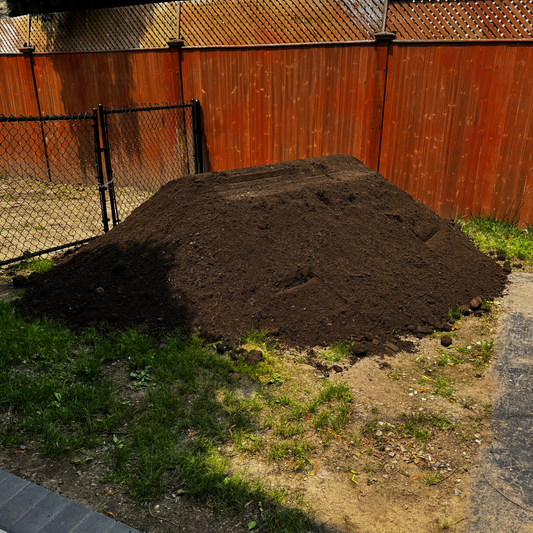
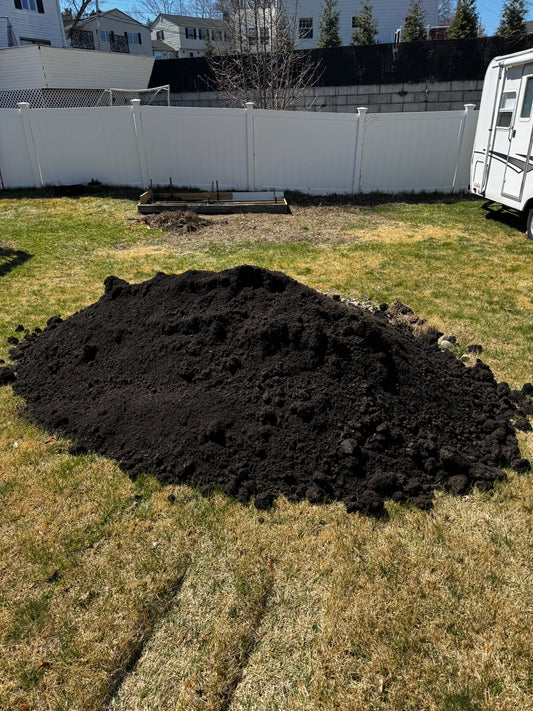
Only the dead patches, and only inside the mid-August to mid-September seeding window. Rake the dead material out, spread about half an inch of screened loam at $55 a yard, seed into it and keep the surface damp. Cubic yards = (square feet × depth in inches) ÷ 324. One yard covers roughly 650 sq ft at half an inch — plenty for a typical Everett front and side yard.
Delivery to Everett is $100 flat — 7.4 driving miles from our Dispatch Office in Dorchester, well inside the 30-mile zone. It is charged per load, loads are counted per line item, and soil caps at 6 cubic yards per trip. No minimum order, but $100 of freight on one yard is a poor ratio.
Everett lawn questions we get in August
How long can a lawn stay dormant before it dies?
Several weeks. Risk climbs the longer it runs, which is why half an inch of water every two to three weeks is worth doing even after you have given up on green.
Should I fertilise a dormant lawn to wake it up?
No. Fertiliser on dry, dormant turf pushes growth the plant cannot support and can burn it. Water first, feed after it greens up.
Can I seed straight into a brown lawn?
Seed dropped on thatch and dry soil mostly fails. Raking and a thin loam layer matter more than which seed you buy.
Price your dead square footage on the lawn levelling and repair collection or the Everett landscape supply page, browse the soil range, or text (617) 286-2740. Our August outlook has the rest of the month.