The mature lawns around Lake Quannapowitt and up through Montrose are the kind that build thatch: established bluegrass, decades of feeding and watering, never renovated. Newer turf usually has none worth touching, so measure before renting anything.
What is thatch, and is yours a problem?
Thatch is the layer of dead and living stems, crowns and rhizomes between the green canopy and the soil. It is not grass clippings — those are mostly water and break down in days. A thin layer is useful. Past about half an inch it holds water at the surface, keeps roots shallow and blocks seed from reaching soil. Spongy footing, a scalping mower and water that beads off are the symptoms.
Step 1: Measure the thatch layer
Cut a wedge three inches deep with a flat spade in two or three places. From the side you see green blades, a brown fibrous layer, then soil. Measure the brown layer.
| Thatch depth | What to do | Why |
|---|---|---|
| Under ½" | Nothing. Core aerate if soil is compacted. | Beneficial at this depth |
| ½" to ¾" | Core aerate, two passes | Aeration is gentler and does the job |
| Over ¾" | Power rake or vertical mow, then aerate | Too thick for aeration alone |
| Over 1½" | Stage it over two seasons | Removing it all at once can kill the lawn |
Step 2: Decide between dethatching and aeration
Dethatching tears material out of the canopy. Core aeration pulls plugs of soil and thatch and drops them on the surface, where they break down and inoculate the thatch with soil microbes. For most Wakefield lawns aeration is the better tool — it relieves compaction too and does far less damage. Use a power rake only when the layer is genuinely thick.
Step 3: Mow low and clear the lawn
Two days before, mow to about 1½ to 2 inches and bag the clippings. Water lightly the day before if the ground is hard — tines and blades work poorly in baked soil, and cores pull cleanly from slightly moist ground.
Step 4: Run the machine in two directions, then clear
Make one pass, then a second at roughly 45 degrees to the first — a single pass leaves stripes and misses ground. Set a power rake shallow to start: blades should reach the base of the thatch, not gouge soil. A power rake pulls up a startling amount of material, so rake it off and remove it. Aeration cores can stay where they land.
Step 5: Seed immediately, then topdress
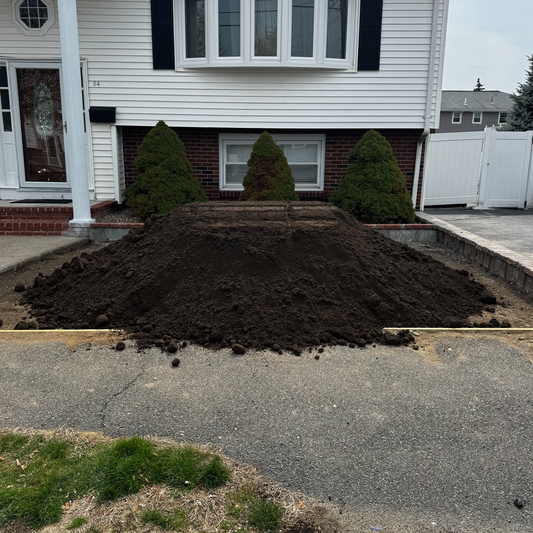
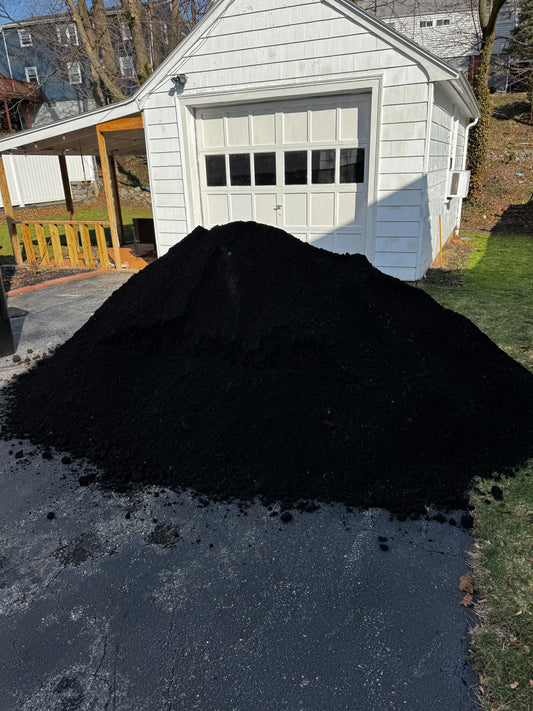
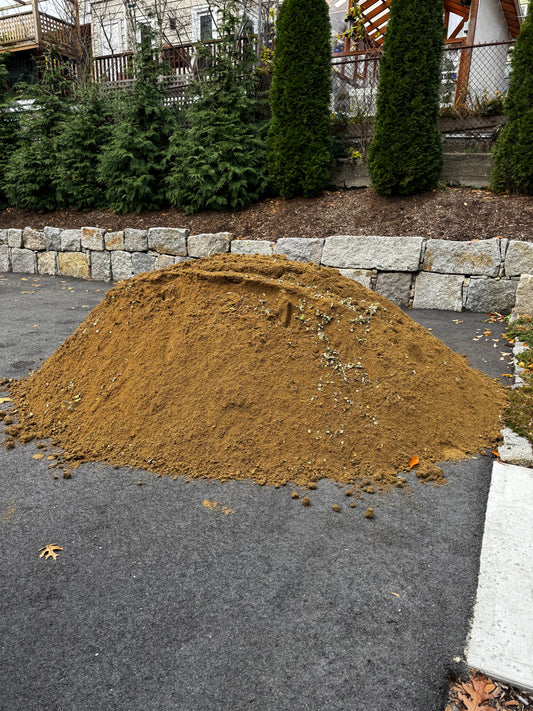
The openings close fast, so spread seed the same day, topdress with about a quarter inch of screened loam and drag it in with the back of a rake so seed sits in soil contact. Keep the top quarter inch damp until germination — short cycles two or three times a day, not one long soak.
How much loam does the topdressing take?
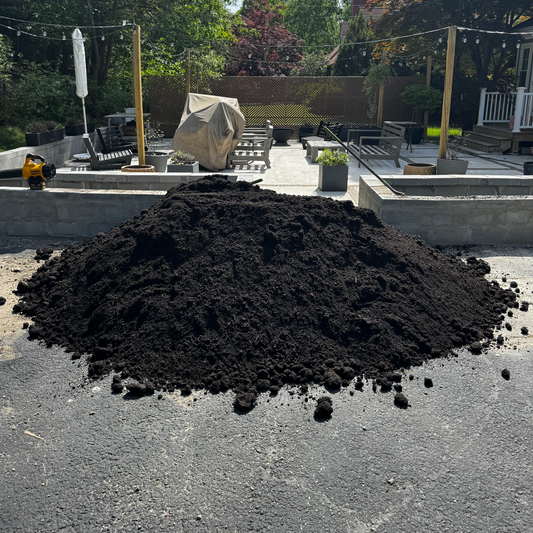
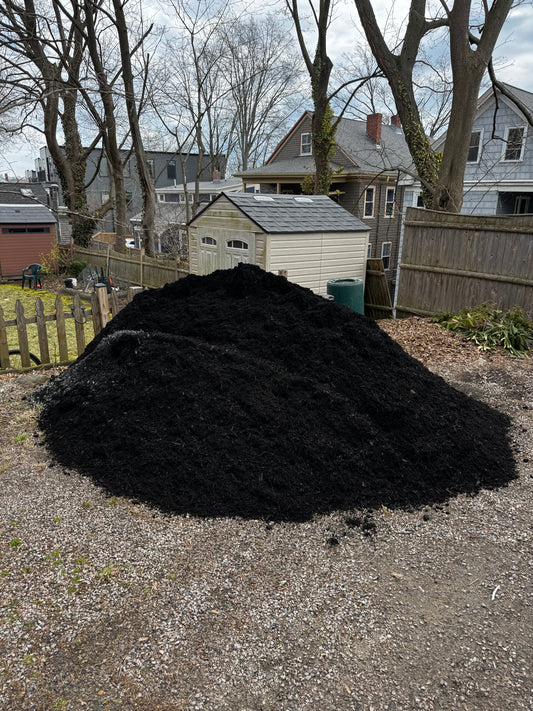
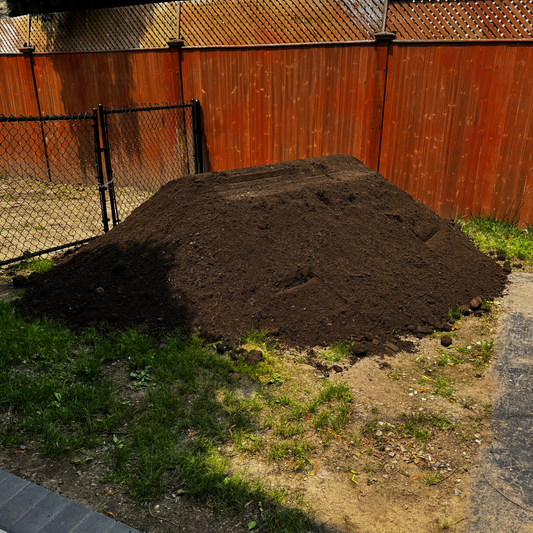
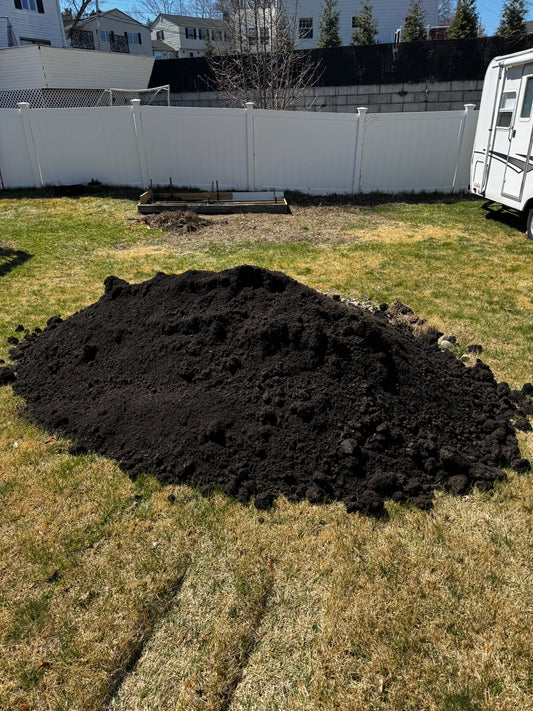
Cubic yards = (square feet × depth in inches) ÷ 324. One yard of screened loam covers about 1,300 sq ft at a quarter inch.
| Lawn size | Loam at ¼" | Material at $55/yd | Delivery | Total |
|---|---|---|---|---|
| 2,500 sq ft | 2 yd | $110 | $100 | $210 |
| 5,000 sq ft | 4 yd | $220 | $100 | $320 |
| 7,500 sq ft | 6 yd | $330 | $100 | $430 |
Wakefield is 14.9 driving miles from our Dispatch Office in Dorchester, inside the 30-mile flat zone, so delivery is $100 per load. Soil caps at 6 cubic yards per trip — 7,500 sq ft is the last size that fits one truck at a quarter inch. Loads are counted per line item, so loam plus compost is two loads and $200.
When should this happen?
Mid-August into early September, so the lawn has warm soil and six weeks to close back up. Dethatching in May or June opens a lawn right when crabgrass is waiting. Timing rules here; if the lawn is thin from damage rather than thatch, run the grub-versus-drought test first. UMass Extension Turf has the research.
Wakefield dethatching questions
Can I dethatch with a lawn rake?
On a small lawn with a thin layer, yes, and it does less damage than a machine. On 5,000 sq ft you will regret it by the second hour.
How soon can I mow after seeding?
At about three inches. Mow high with a sharp blade — dull blades tear seedlings out.
Price the topdressing on the lawn levelling and repair collection, the soil range or the Wakefield landscape supply page, or text (617) 286-2740 with your square footage.