Is it too late in the season to mulch?
No. July is one of the better months for it, because the job mulch does best in July is the job you need done — holding moisture in the root zone and keeping soil temperature down. What changes in July is not whether you mulch. It is the order of operations.
What has to happen before the mulch goes down?
The soil has to be wet. That is the whole answer, and it is the step people skip. Dry mulch over dry soil is a barrier, not a blanket: a half inch of summer rain lands on dry bark, wets the top of it, and never reaches the ground. So:
- Water long enough to put roughly an inch on the bed.
- Wait an hour, then push a screwdriver or trowel in. It should slide to 4 to 6 inches; if it stops at 2, keep watering.
- Mulch that evening or the next morning, while the soil is still damp.
How deep should July mulch be?
Two inches of new material, and no more than 3 inches total over the root zone once you count what is already there. Three fresh inches on two old ones gives you five, and at that depth mulch holds heat, starves the soil surface of air.
Keep it off stems and trunks, pulled back so the root flare shows. The ISA's arborist guidance is blunt about volcano mulching, and July is when the damage appears fastest because bark stays wet in heat. On the clay-heavy fill soils common in the inner Middlesex towns it is worse still — the soil below already struggles for air.
Which mulch handles a Middlesex July best?
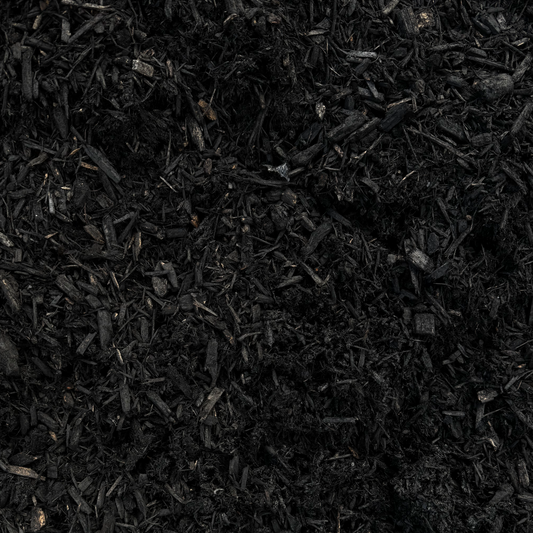
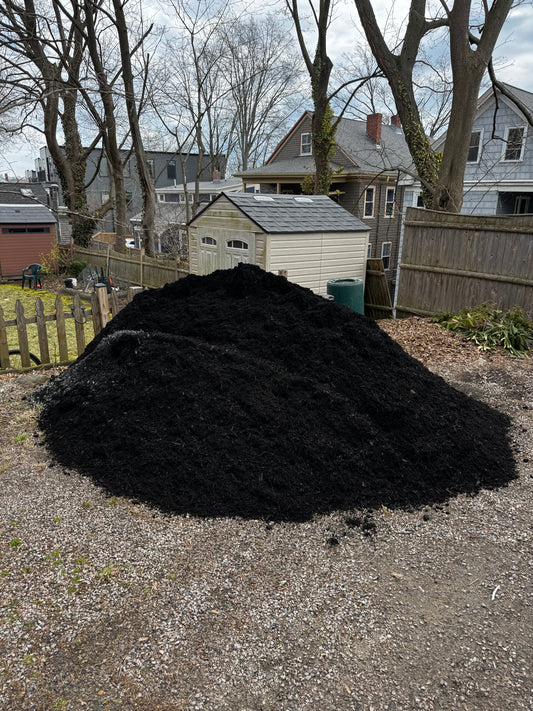
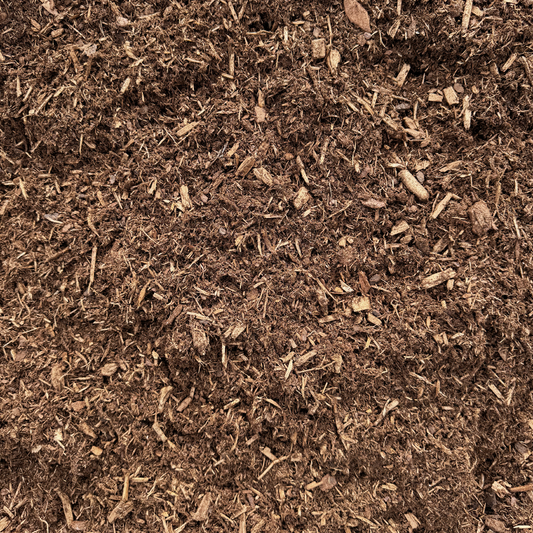
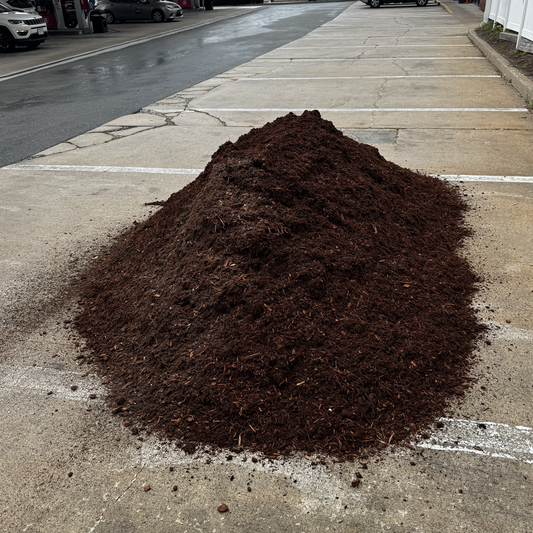
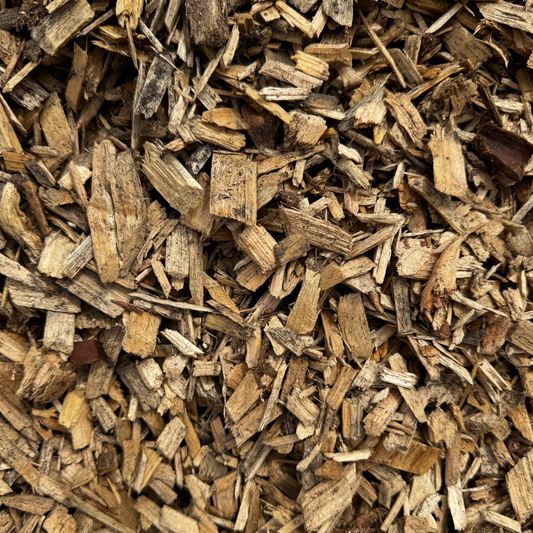
The county runs from triple-decker frontages in Somerville and Cambridge to mill-city streets in Lowell to wooded lots past Concord, and exposure matters more than the town. On slopes and anywhere water runs, use Pine Bark Mulch at $55 a yard — the nugget shape resists washout better than any shredded product. Near vegetables or herbs, use Hemlock Mulch at $63, undyed bark that takes its reddish-brown from the bark itself. The UMass Extension landscape program covers regional plant and pest specifics.
How much mulch do I need?
Cubic yards = (square feet × depth in inches) ÷ 324. At the 2-inch July depth one yard covers about 160 square feet, so a 4-foot bed running 40 feet along a fence is exactly one yard.
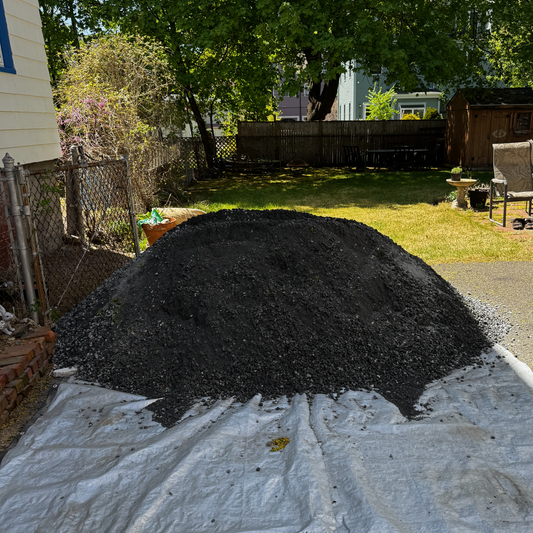
Mulch ships up to 10 yards per trip and the fee is per load. Most of Middlesex County is inside 30 driving miles of our Dispatch Office in Dorchester at $100 flat, but Lowell straddles the line at 29.8 to 32.7 miles depending on ZIP, putting it at $100 to $111. Run your ZIP through the checker for the exact figure. No minimum order, so one yard is a real order.
Common questions
Will mulching in July burn my plants?
Not if the soil is wet first and total depth stays at 2 to 3 inches. Summer mulch damage comes from depth against stems and trunks, not the calendar.
Should I pull the old mulch out or mulch over it?
Mulch over it, as long as total depth stays under about 3 inches. Break the crust with a rake first. Only strip it if it has matted solid or gone sour.
Can I weed, water and mulch the same afternoon?
Yes — that is the ideal sequence. Weed, cultivate the top inch, water deeply, mulch.
Order by the cubic yard from mulch bed refresh or compare all five options in mulch, or text your bed dimensions to (617) 286-2740. If your soil never holds water, start with the fixes for sandy coastal soil; for a small city frontage see the two-hour front bed refresh.