Why does a Hull yard dry out so fast?
Hull is a barrier-beach peninsula — a narrow sand spit stitched together by a chain of glacial drumlins, Hingham Bay on one side and the open Atlantic on the other. The soil between those hills is mostly sand: big particles, big pores, almost no organic matter, so water goes straight through and dissolved nutrients go with it. The drumlin slopes also shed runoff hard, which is why the same three feet of bed washes out every year. Check your parcel on the NRCS Web Soil Survey before spending money guessing.
1. Build organic matter with compost
Sand cannot hold water. Organic matter can. Compost at $50 a cubic yard is the cheapest effective thing you can put on a Hull yard, and one yard covers 324 square feet at an inch deep. For 1,500 square feet of thin lawn that is 4.6 yards — order 5, and it is one trip.
2. Replace the top 4 inches where you want lawn
Top-dressing improves sand; it does not turn beach sand into lawn soil. Where you want real turf, take out 4 inches and bring in Loam (Screened) at $55 a yard or Super Loam at $65, both in the soil and loam collection. The math: 1,000 square feet × 4 inches ÷ 324 = 12.3 yards. Soil caps at 6 yards a trip, so that is two loads — and Hull is 17.5 driving miles from our Dispatch Office in Dorchester, inside the flat zone, so each load is $100 flat.
3. Mulch every bed — it is a water tool, not decoration
Two to three inches of mulch cuts surface evaporation more than anything else you can do in sandy soil, and one yard covers about 100 square feet at 3 inches. Use Pine Bark Mulch at $55 a yard: the nugget shape resists washout on a slope better than any shredded mulch, and it is undyed, so it belongs next to a vegetable bed.
4. Fix the low spot that ponds instead of draining
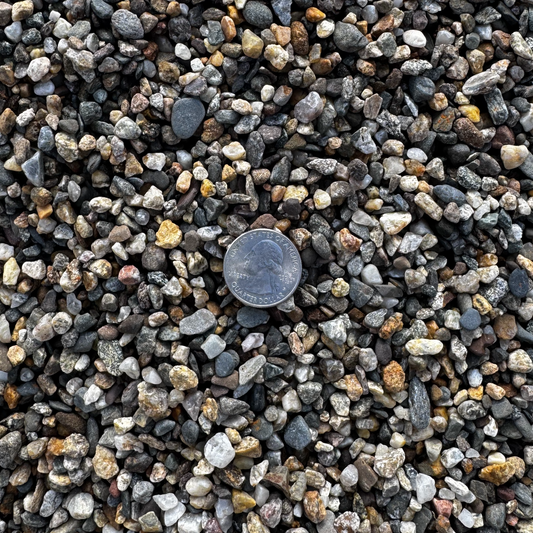
Dig an 18-inch test hole, fill it, and time it. Not drained in four hours means the problem is below the surface and no amount of loam fixes it. The answer is a stone-filled trench or dry well running away from the house, backfilled with open-graded Gray Granite ¾" at $79.50 a yard — everything for it is in the French drain and drainage collection. Keeping that runoff on your own property is also what EPA municipal stormwater guidance asks of coastal towns.
5. Armour the places that wash every single year
If you have replaced mulch in the same channel three summers running, stop replacing mulch — water has chosen that route. Line it with stone instead: Riverbed ⅜" pea stone at $97.50 a yard if it should look intentional, gray granite at $79.50 if it just needs to work. Set it on fabric and run it somewhere the water can safely go.
Common questions
Should I add clay or peat instead of compost?
No. Clay in sand crusts, and peat dries into a layer water runs off. Screened compost worked into the top few inches, repeated annually, is what changes how sand behaves.
How much loam do I need to raise a low area?
Square feet × depth in inches ÷ 324. A 300-square-foot area raised 3 inches is 2.8 yards, so order 3.
Can you deliver to a narrow Hull street?
Usually yes, curbside — the default drop everywhere. On-property delivery requires a signed liability waiver, so arrange it in advance.
Order compost, loam, mulch and drainage stone by the cubic yard from the Hull landscape supply collection, or text your square footage to (617) 286-2740. Doing bed work too? Whether you can lay mulch in July covers the step people skip in heat.