Quick Answer
A 200 sq ft Lexington bed needs 1.25 cubic yards of mulch at 2 inches deep. The formula: (200 sq ft x 2 in) / 324 = 1.23 cu yd, rounded up to 1.25. For a brand-new bed at 3 inches deep, the answer is 1.85 cubic yards (round to 2). For an established Lexington bed with 1 inch existing mulch, the add-on volume is 0.62 cubic yards (round to 0.75) - half the order of a full reapplication.
Why 200 sq ft Is the Lexington-Standard Bed
Lexington yards - particularly the colonial homes off Mass Ave, the older subdivisions in East Lexington, and the larger lots toward Bedford - average 150-300 sq ft per individual bed. A 200 sq ft bed is the practical median: a typical 4 ft wide x 50 ft front foundation strip, or a 5 ft wide x 40 ft side bed.
The math for 200 sq ft is the math homeowners run most often. Worth getting right.
The Formula
(Square feet x inches deep) / 324 = cubic yards
The 324 is fixed: 1 cubic yard = 27 cubic feet, and 27 ft³ x 12 in = 324 inch-square-feet of coverage.
Worked Example - 200 sq ft at 2 Inches Deep
200 x 2 / 324 = 1.23 cubic yards
Round up to 1.25 cubic yards. Ottr delivers in half-yard increments - see the mulch collection.
Worked Example - 200 sq ft New Bed at 3 Inches
For a new bed with bare soil and no existing mulch, apply 3 inches:
200 x 3 / 324 = 1.85 cubic yards
Round to 2 cubic yards. The extra 0.75 yards over the established-bed math is the difference between a bare-soil first-application and an established refresh.
Worked Example - Established Bed Refresh
For an established 200 sq ft Lexington bed with 1 inch of existing mulch, calculate the add-on:
200 x 1 / 324 = 0.62 cubic yards
Round to 0.75 yards. That's exactly half the volume of a full 2-inch reapplication.
For the full refresh-vs-replace technique, How to Refresh a Tired Mulch Bed in a Brockton Yard covers the rake-weed-edge-top-up sequence.
Worked Example - Mixed Bed (New + Established)
For a 200 sq ft Lexington bed with 50 sq ft of new planting (3 inches deep) and 150 sq ft of established (2 inches deep):
(50 x 3) + (150 x 2) = 150 + 300 = 450 450 / 324 = 1.39 cubic yards
Round to 1.5 cubic yards.
The 200 sq ft Quick Reference
| Bed condition | Add-on depth | Cubic yards |
|---|---|---|
| Bare soil, new planting | 3 in | 1.85 (round to 2) |
| Established, no existing mulch | 2 in | 1.23 (round to 1.25) |
| Established, 0.5 in existing | 1.5 in | 0.93 (round to 1) |
| Established, 1 in existing | 1 in | 0.62 (round to 0.75) |
| Established, 1.5 in existing | 0.5 in | 0.31 (round to 0.5) |
| Established, 2+ in existing | 0 (skip year) | 0 |
Why Lexington Beds Often Need Less Than the "Default" Order
Lexington landscapes run mature - many beds have 1-1.5 inches of existing mulch by March. The default homeowner instinct is to order 1.25 yards "for a 200 sq ft bed at 2 inches" - but the right answer is the add-on volume, which is often half that.
Three reasons Lexington homeowners over-order:
- Big-box bag-label coverage rates assume bare soil.
- Landscape contractors quote full-depth applications regardless of existing mulch.
- The "more is better" instinct.
The fix is to measure existing depth before placing the order. For the broader depth-and-add-on logic, How Deep Should Mulch Be in a Brookline Bed? covers the 2-inch ceiling that applies in Lexington.
What 1.25 Cubic Yards Actually Looks Like
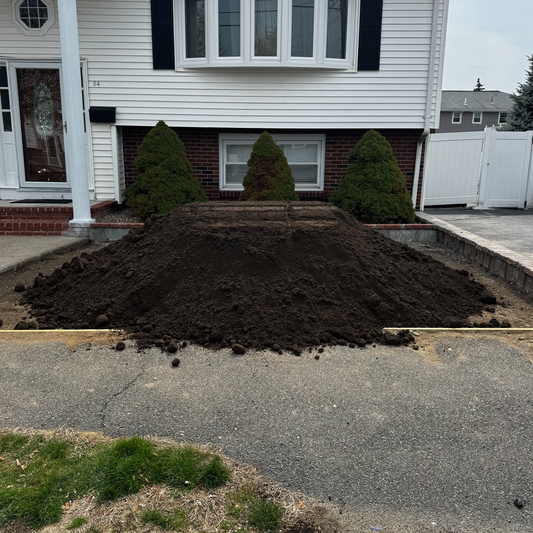
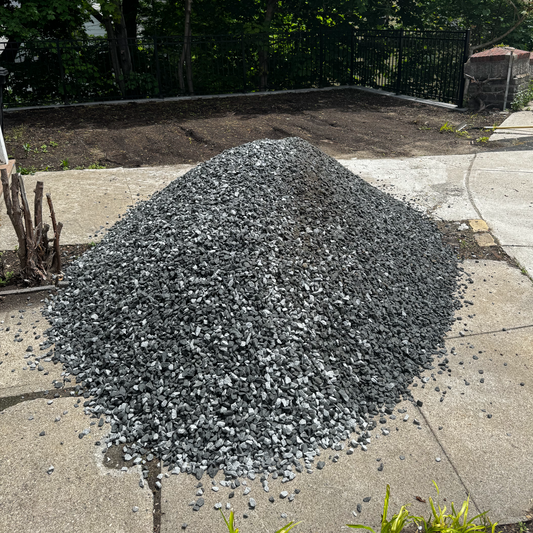
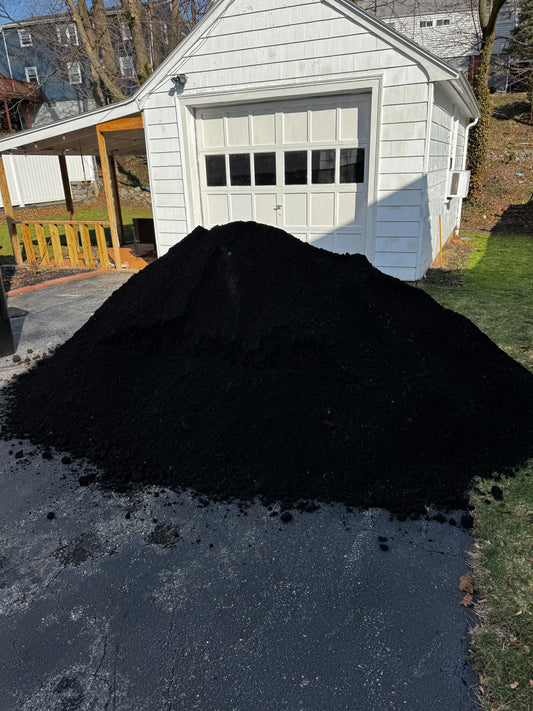
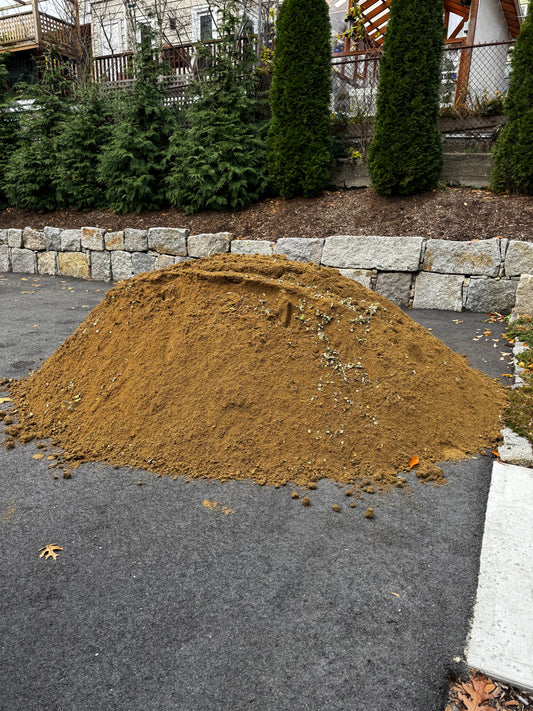
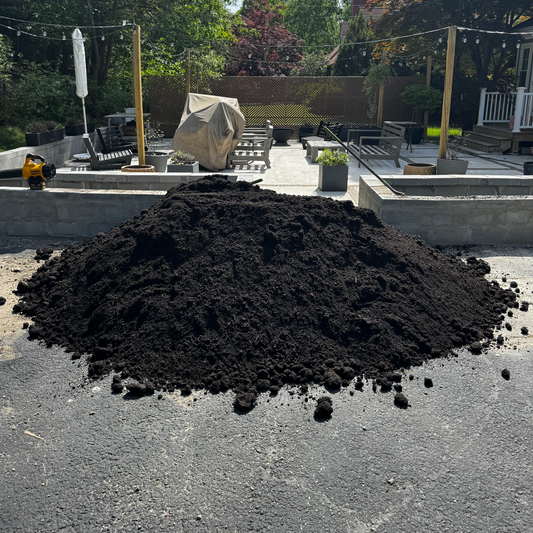
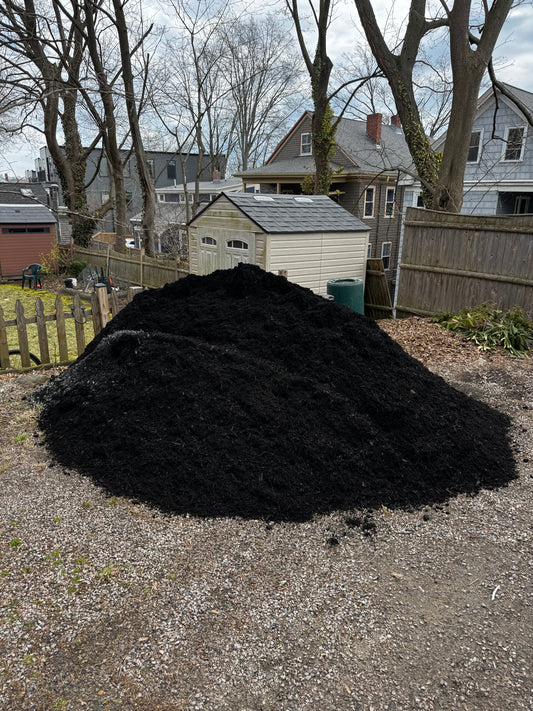
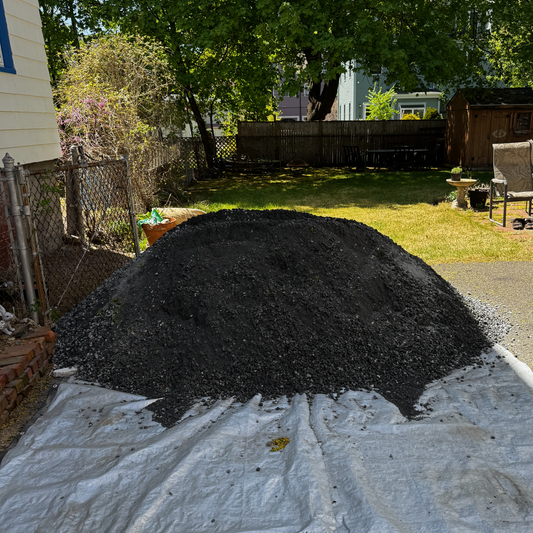
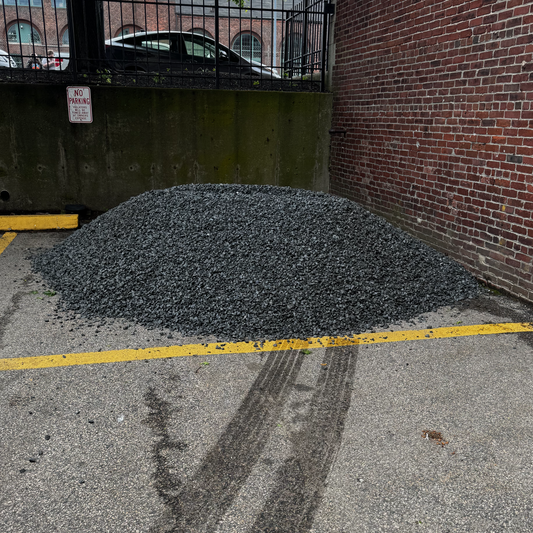
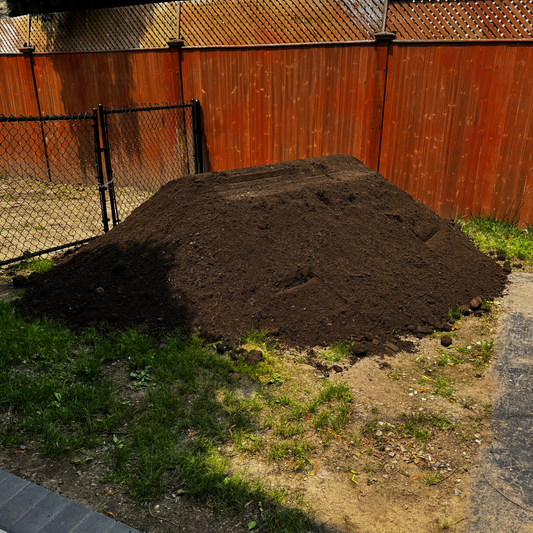
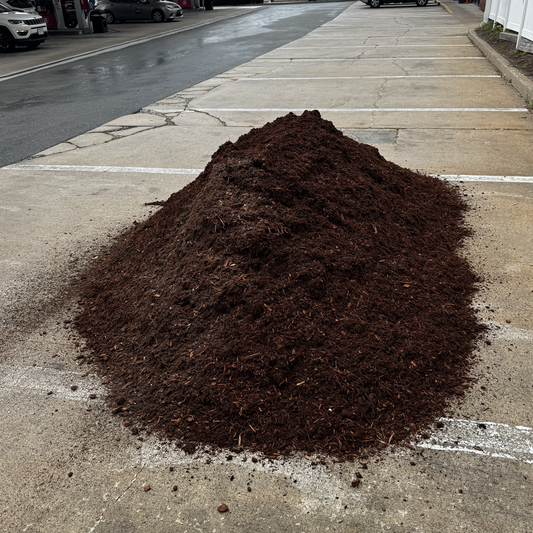
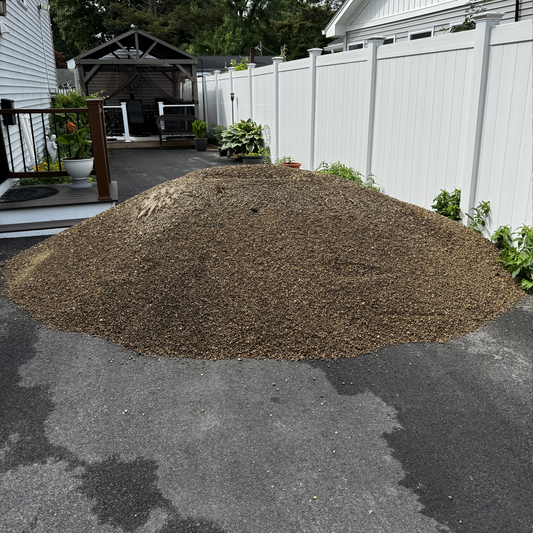
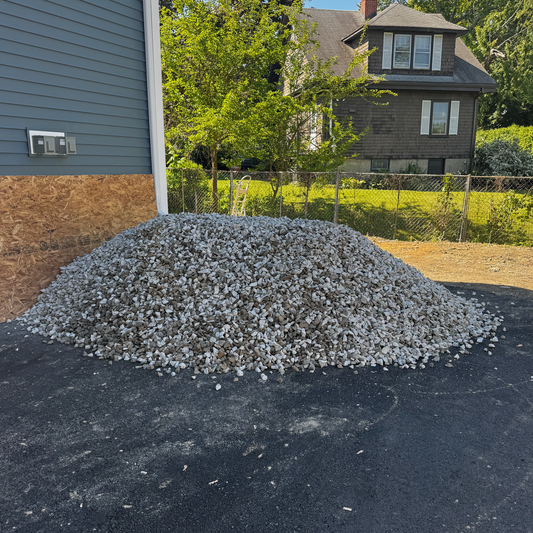
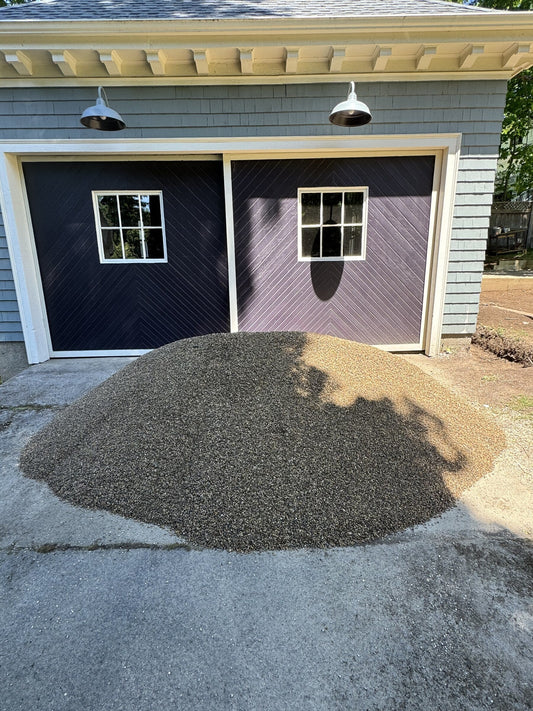
- Pile size on the driveway: roughly 4 ft tall, 8 ft base diameter, 50 sq ft footprint.
- Wheelbarrow trips: 1.25 yards = ~25 wheelbarrow loads (5-cu-ft barrow, half-full for control).
- Bagged equivalent: 1.25 yards = ~17 standard 2-cu-ft bags.
For a Lexington single-car driveway, the pile fits comfortably to one side of the parking lane. For staging best practices, How to Stage a Mulch Pile on an Essex County Driveway covers the technique that ports directly to Lexington.
Bagged vs Bulk for 200 sq ft
| Format | Volume needed | Approximate cost | Effort |
|---|---|---|---|
| Bulk (1.25 yd) | 1 delivery | Lowest per yard | Driveway space, tarps |
| Bagged (17 bags at 2 cu ft) | 17 bags | 30-50% premium | Easy to handle, store |
For 200 sq ft at 2 inches, bagged is reasonable if you don't have driveway access for bulk delivery. Above 1.5 cubic yards (300+ sq ft), bulk is always the better choice.
For the broader hemlock-vs-pine-bark product comparison once you've sized the order, the 2026 Plymouth County hemlock vs pine bark walk-through covers the trade-offs.
Common Math Mistakes
- Forgetting that mulch settles. Apply at 2 inches, not 1.5 inches "knowing it'll fluff." Settling (10-15%) is already factored into the 2-inch standard.
- Using bag coverage rates as gospel. Bag labels show coverage at varying depths - check the depth assumption before scaling.
- Including lawn area in the bed measurement. Lawn doesn't get mulched.
- Buying for "just-in-case" coverage. Extra mulch becomes too-deep mulch, which kills plants.
The Lexington 30-Minute Worksheet
- Measure the bed (length x width).
- Measure existing mulch depth in 3-4 spots with a hand trowel.
- Calculate add-on inches needed (2 - existing).
- Multiply: sq ft x add-on inches.
- Divide by 324.
- Round up to nearest 0.25 yard.
- Place the order at /collections/mulch or /collections/lexington-landscape-supply.
For the broader regional standard on mulch quality and depth, UMass Extension Landscape, Nursery & Urban Forestry has the authoritative reference.
The short version: 200 sq ft at 2 inches = 1.25 cubic yards. Measure existing depth first. Order the add-on volume, not the default. Lexington beds run cleaner and the order is right-sized.