Quick Answer
A Brookline lawn in June needs 1 inch of water per week, split into two deep runs (Tuesday + Friday), starting at 4 a.m., and skipped entirely after a 1+ inch rain. For a typical Brookline spray-zone system, that's 18–20 minutes per run; for rotor zones, 50 minutes. Run the catch-can test once to dial in the exact runtime — Brookline soils, mostly heavier clay-loam, hold water differently than the South Shore.
Why Brookline Needs a Different Schedule Than Plymouth
Brookline soil is mostly clay-loam — heavier, slower-draining, more water-holding than sandy Plymouth County soils. The same 30-minute spray run that's right for a Plymouth lawn over-saturates a Brookline lawn and runs off the surface. Less frequent, deep watering is the right approach.
Per USEPA WaterSense and the UMass Turf Program, the universal rule for cool-season MA lawns is 1 inch per week in June, 1.25 inches in July, 1.5 inches in August. Hit that target with the fewest runs that don't cause runoff.
Step 1: Calculate Your Weekly Target
For Brookline through June: 1 inch of water per week, including rainfall.
Lawn size matters less than zone-runtime math. A 5,000 sq ft Brookline lawn with 5 spray zones still gets 1 inch — it just takes 5 zones × 18 minutes each.
Step 2: Split Into Two Deep Runs
The default Brookline mistake: 15 minutes daily. Wrong on clay soil — water never penetrates past 2 inches. The fix:
- Two runs per week. Tuesday + Friday OR Wednesday + Saturday.
- Each run delivers ½ inch. Two halves = 1 inch weekly target.
Deep, infrequent watering pushes roots down 4–6 inches. Once roots are deep, the lawn finds moisture in the subsoil during 90°F+ stretches.
Step 3: Set Per-Zone Runtime From Catch-Can Data
The runtime that delivers ½ inch differs by head type. Run the catch-can test (six tuna cans per zone, run 15 minutes, measure depth):
- Spray heads: typically 0.4 inches per 15 minutes → run 18–20 minutes per run
- Rotor heads: typically 0.15 inches per 15 minutes → run 50 minutes per run
- MP rotators: typically 0.12 inches per 15 minutes → run 60–65 minutes per run
If you haven't audited the system, see How to Audit a Sprinkler System Before Plymouth County's Summer Heat — the catch-can math is identical for Brookline.
Step 4: Start Zones at 4 a.m.
Pre-dawn watering is the only smart timing. Reasons:
- Lowest evaporation — air temperature 60–65°F, not 85°F
- Lowest wind — 4 a.m. wind speeds in Brookline average 3–5 mph vs. 8–12 mph at noon
- Leaves dry by sunrise — eliminates fungal disease risk that evening watering creates
- No daytime water-restriction conflicts — Brookline doesn't have mandatory restrictions but neighboring Newton periodically does
Never water in the evening. Wet grass overnight = brown patch by July.
Step 5: Adjust for Rainfall
The single highest-leverage skill in summer lawn watering: don't water when it just rained. Mount a $5 rain gauge to a fence post visible from the driveway. If the gauge shows over 1 inch in the past 7 days, skip that week's runs entirely. If it shows 0.5–1 inch, run only one zone-cycle (½ inch).
For the rain gauge setup, see 5 Rain Gauge Setups for Norfolk County Yards — engineering applies in Brookline.
June vs July vs August Adjustment
Same logic, different totals:
| Month | Target/week | Per-run for spray | Per-run for rotor |
|---|---|---|---|
| June | 1.0" | 18 min | 50 min |
| July | 1.25" | 22 min | 60 min |
| August | 1.5" | 27 min | 70 min |
Increase runtime, not run frequency. Brookline clay still gets two runs per week in August — just longer.
What You'll Need from Ottr
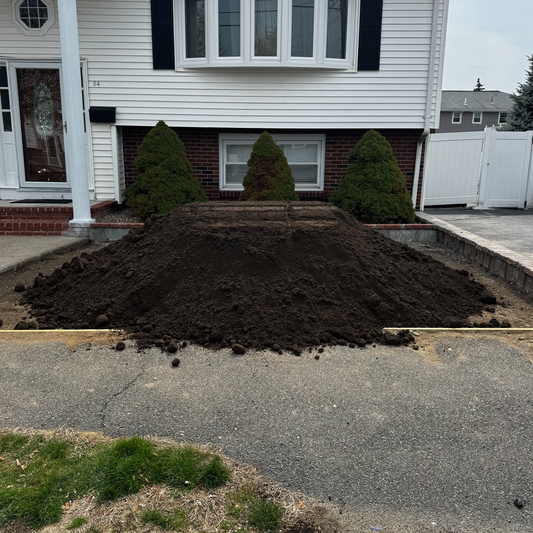
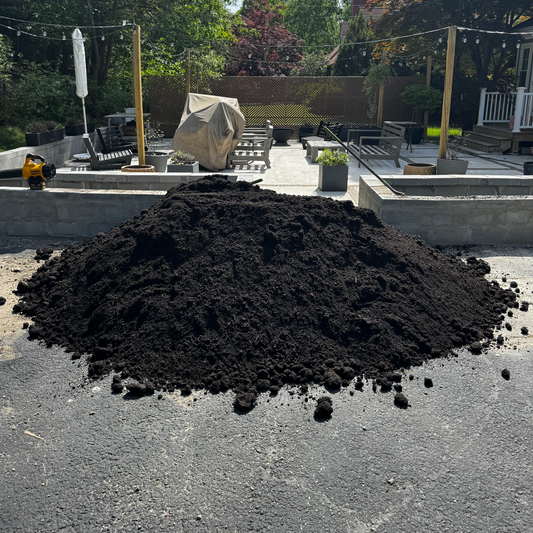
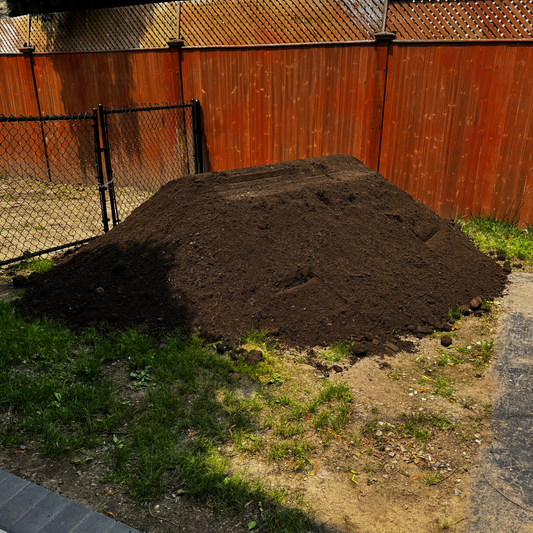
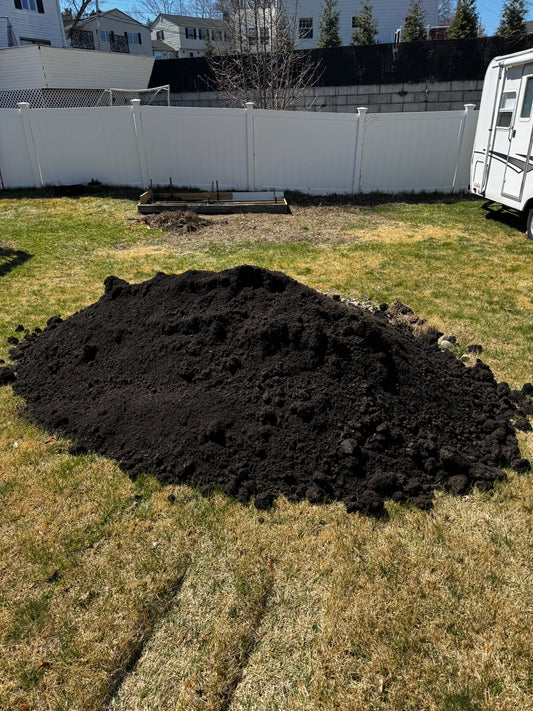
- Topsoil Loam ½" Screened — top-dress around saucered heads (½ cubic yard per 1,000 sq ft)
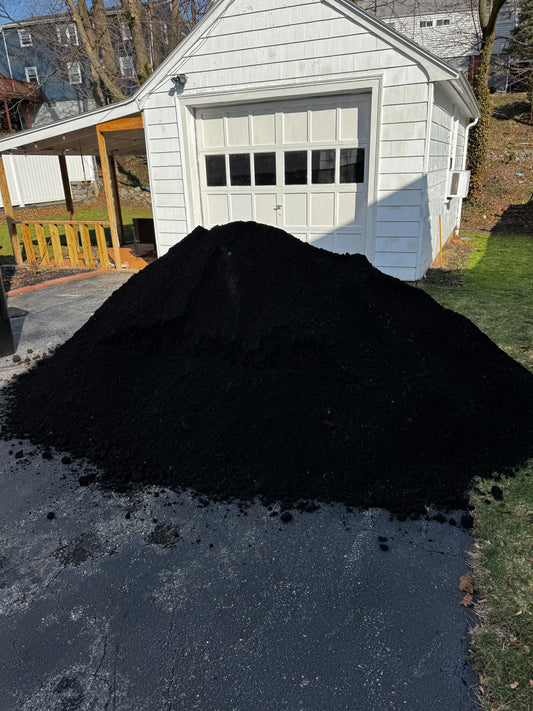
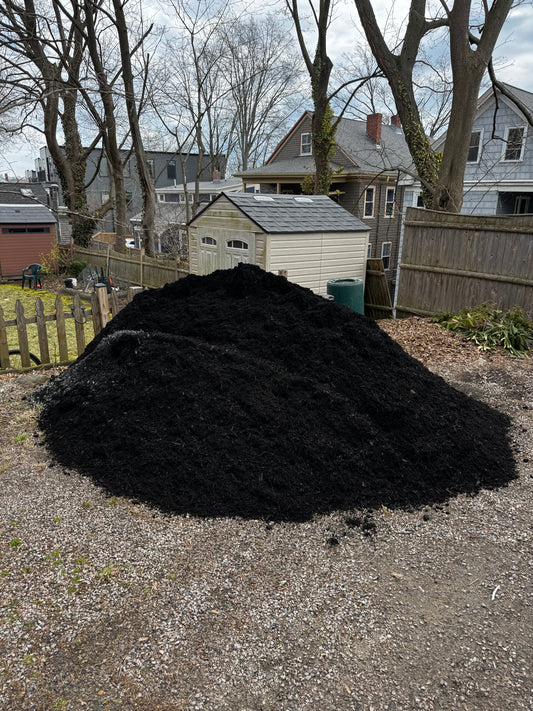
- Compost — ¼" top-dress on thin areas to improve water retention
Browse lawn leveling and repair and Brookline landscape supply for delivery scheduling.
For the matching diagnosis playbook, see How to Diagnose Heat Stress on a Plymouth County Lawn and the universal dormant-vs-dead Q&A.
The short version: 1 inch a week, two deep runs, 4 a.m., gauge the rain. Brookline lawns through summer.