Quick Answer
Yes — adding mulch in July helps Suffolk County plants survive heat. A 2-inch mulch layer reduces soil-surface evaporation by roughly 50% and keeps root-zone temperatures 8–12°F lower than bare soil. The right depth is 2 inches total (existing plus new), not deeper. Hardwood or hemlock work fine in July; avoid fresh mulch volcanoes against plant stems. Water before AND after mulching to bond the layer to the soil.
Why Suffolk County Beds Need July Mulch
Suffolk County — Boston, Chelsea, Revere, Winthrop — runs the highest urban heat-island temperatures in eastern MA. South-facing beds in Roxbury, Dorchester, and Hyde Park hit soil-surface temperatures of 115°F+ in July afternoons. Plants in those beds without protective mulch lose roots, drop leaves, and stress for the rest of the season.
Per the UMass Extension Landscape, Nursery & Urban Forestry program, 2 inches of mulch is the most cost-effective summer plant protection homeowners can apply.
Q: Does adding mulch in July help plants survive heat?
A: Yes — measurably. Three documented benefits:
- Evaporation reduction. Bare soil loses water to evaporation at ~0.25 inches per day in MA July heat. Mulched soil loses ~0.10 inches per day. That's a 60% water savings.
- Temperature buffering. Root-zone temps under 2 inches of mulch run 8–12°F cooler than bare soil. For cool-season grasses or perennials with 75°F optimal soil temp, this is the difference between thriving and stressed.
- Weed suppression. Less competition for soil moisture during heat.
July mulching delivers 8 weeks of these benefits — through the hottest part of the year.
Q: How thick should July mulch be?
A: 2 inches total (existing + new), not deeper. This is the universal MA mulch depth rule.
- Under 1.5 inches: Below protective threshold. Top up.
- 1.5–2 inches: Optimal.
- 2–3 inches: Acceptable but no added benefit.
- Over 3 inches: Counterproductive. Smothers shallow roots, creates anaerobic conditions in heat, attracts pests.
Most Suffolk County beds last mulched in March or April are sitting at 1–1.5" by late June and benefit from a top-up.
Q: Hardwood, hemlock, or pine bark — which for July?
A: All three work. Pick by aesthetics and budget.
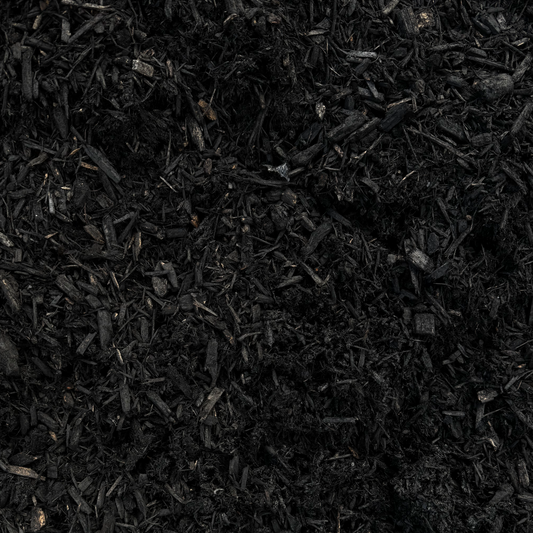
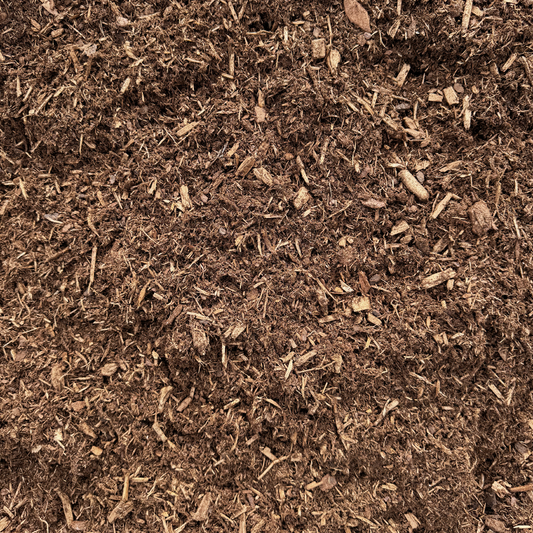
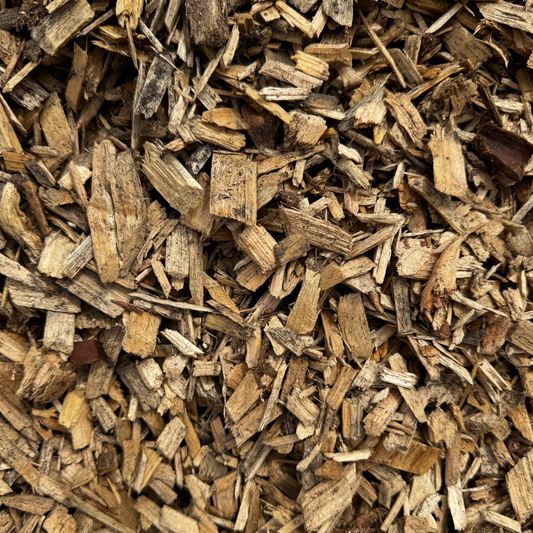
- Hemlock: Slow decomposition, dark color holds in summer, classic New England look. Best for visible front beds.
- Hardwood: Faster decomposition (more soil benefit), economical, multipurpose. Best budget pick.
- Pine bark: Longest-lasting, slightly acidic (good for acid-loving plants — azaleas, rhododendrons, blueberries), distinct rust color.
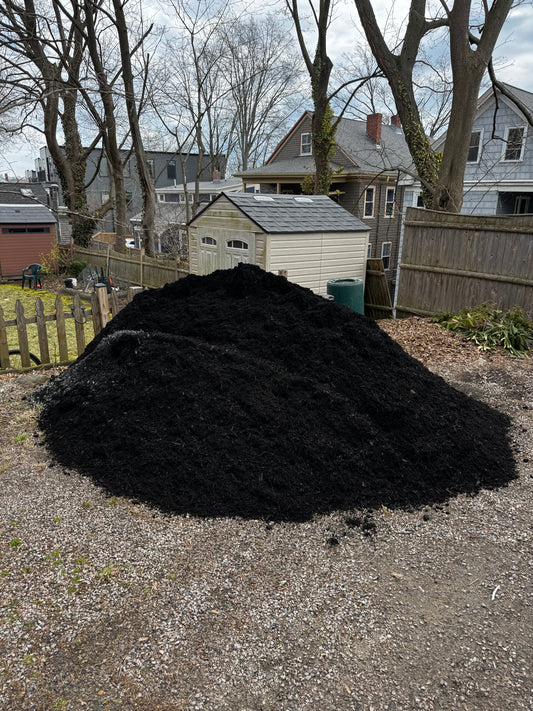
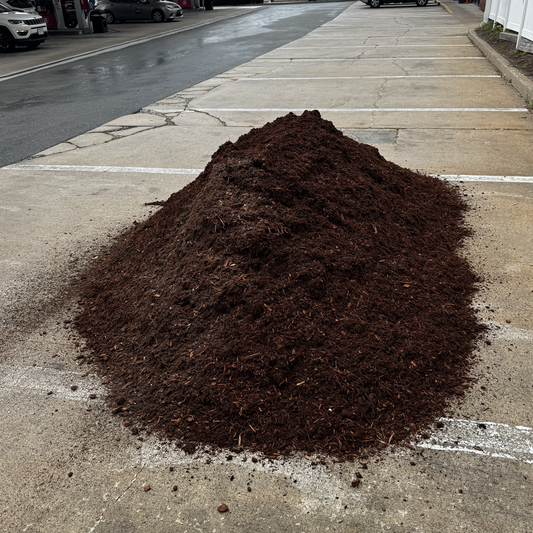
For Suffolk County urban beds with mature plantings, hemlock is the most common choice. Browse the full mulch lineup.
Q: Is it too late to mulch in July?
A: Not at all. July mulching delivers 8 weeks of summer protection, then continues working into fall as a soil amendment. Even mulching on July 31 protects roots through August's worst heat.
The cutoff would be late September — after which the mulch's main benefit (cooling, water retention) is moot, and you're better off with a fall-specific application.
Q: Should I water before or after mulching?
A: Both.
- Day before: Deep watering soaks the soil 6–8 inches down, giving the mulch a wet substrate to seal.
- Day of, after mulching: Water lightly to bond mulch to soil. Without this, fresh mulch sheds water for 2 weeks until it absorbs and starts working.
Total water: ~1 inch the day before plus a 5-minute hose soak after mulching per 100 sq ft.
Q: What about already-mulched beds — should I refresh?
A: Decision tree:
- Existing mulch < 1.5 inches: Refresh. Top up to 2 inches.
- Existing mulch 1.5–2 inches: Fluff only. Rake to break crust, restore air pockets.
- Existing mulch > 2 inches: Leave it. No top-up needed.
For the technique, see How to Refresh Mulch in a Melrose Bed in Mid-Summer.
Q: Can mulch hurt plants in July heat?
A: Yes, if applied incorrectly. Two failure modes:
- Mulch volcanoes — piling mulch against plant stems or tree trunks traps moisture against living tissue, invites borers, and rots stems. Always leave 3 inches of bare soil at the base of every plant.
- Excessive depth (over 3 inches) — smothers shallow roots, creates anaerobic decomposition that releases plant-toxic compounds in the soil profile.
Done correctly (2 inches, pulled back from stems), mulch only helps.
Q: Should I add compost under the mulch?
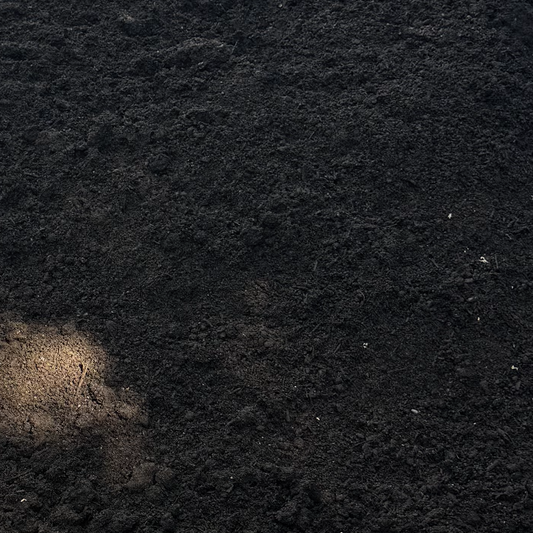
A: Optional, valuable. A ½-inch compost top-dress before mulching:
- Feeds soil biology that's stressed in summer heat
- Adds slow-release nutrients
- Improves soil water-holding capacity over 6–12 months
For Suffolk County urban beds with depleted soil, this is the highest-ROI add-on. Costs about $30 in compost for a 200 sq ft bed.
Browse the full Ottr catalog for compost.
Q: How much mulch do I need to refresh a typical Suffolk County bed?
A: Math by area and current depth.
For a 200 sq ft bed at 1" existing depth, refreshing to 2":
- 200 sq ft × (2 − 1) inches ÷ 12 = 0.6 cubic yards
For 100 sq ft: 0.3 cubic yards. For 400 sq ft: 1.2 cubic yards.
Order with 2-day lead time during the late-June squeeze. See Late-June Material Demand Update for Arlington for current Suffolk-area demand.
What You'll Need from Ottr
For a 200 sq ft Suffolk County mulch refresh:
- Hardwood or hemlock mulch: 0.6 cubic yards
- Compost (optional): 0.15 cubic yards
Browse mulch, mulch bed refresh, and the full Ottr catalog for delivery.
For the matching plant choice, see 5 Heat-Resistant Plants for a Cambridge Front Bed. For the refresh technique, see How to Refresh Mulch in a Melrose Bed in Mid-Summer.
The short version: Yes, mulch in July helps. 2 inches, not deeper. Pull back from stems. Water before and after. Suffolk County beds need this most because of urban heat-island effect.