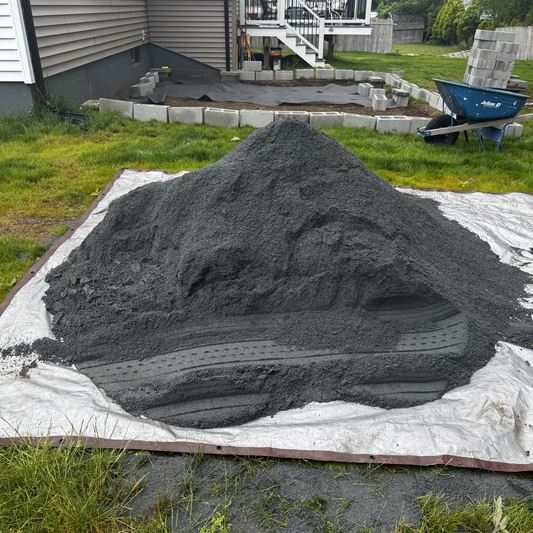
A Cape Cod driveway can have a few deep wheel ruts and a much larger area that only needs a finish refresh. Estimating both at one depth can produce an order that does not match the work.
Before choosing gravel, mark each repair zone. Measure the material that needs to be replaced rather than guessing from the driveway’s overall appearance.
What should you measure first?
Use three categories: isolated patches, long ruts, and surface refresh. Record length, width, and average depth for each.
For an irregular area, divide it into smaller rectangles. Measure several depths where the excavation varies. Take care around buried utilities and have a contractor assess deep or recurring failures before work begins.
Our Truro driveway rut article covers the repair problem on sandy ground. Quantity comes after deciding what the base needs.
How does the volume calculation work?
Multiply area in square feet by depth in inches, then divide by 324.
| Example repair | Calculation | Geometric volume |
|---|---|---|
| Small patch | 6 × 4 × 4 ÷ 324 | 0.30 cubic yard |
| Worn strip | 30 × 3 × 2 ÷ 324 | 0.56 cubic yard |
| Surface refresh | 60 × 12 × 1 ÷ 324 | 2.22 cubic yards |
These are measurement examples, not recommended construction depths. Round the final order only after accounting for the actual repair and material.
Why might the purchase quantity differ?
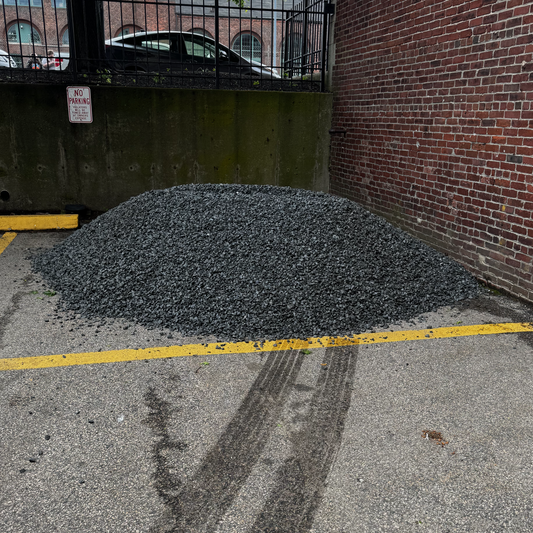
Compaction reduces loose aggregate volume. Excavation may also reveal a larger failed area than the original depression suggested. Product characteristics and the contractor’s installation method affect the allowance.
Ask whether a figure describes loose delivered material or the finished compacted space. Keeping those terms clear prevents comparing two different measurements.
Which gravel should you choose?
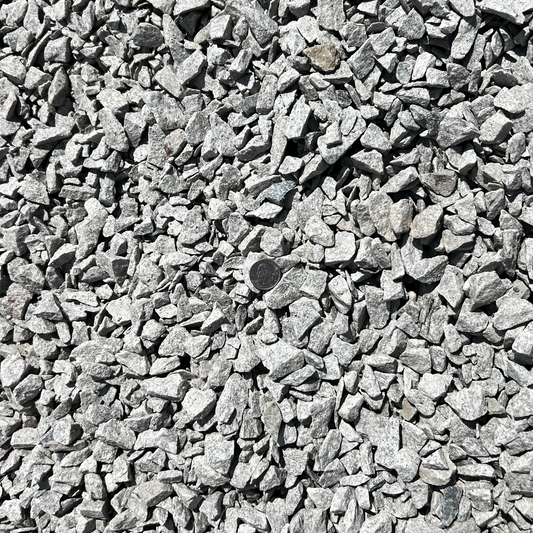
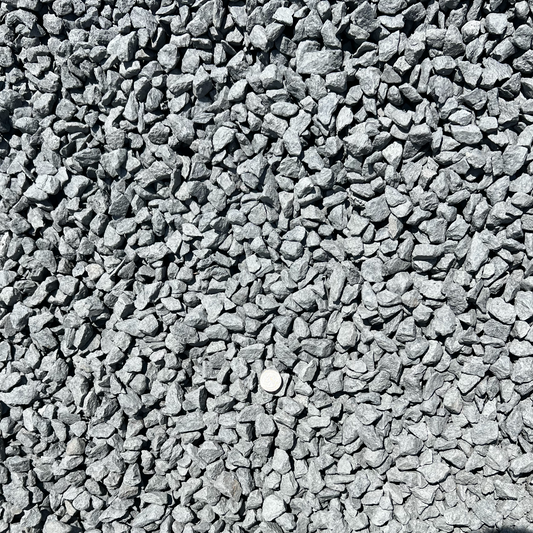
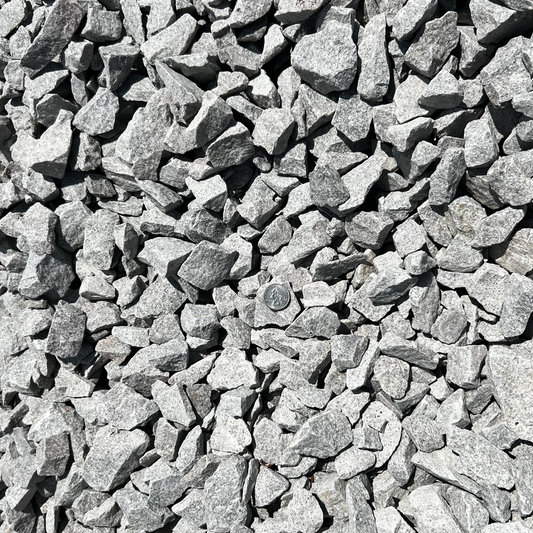
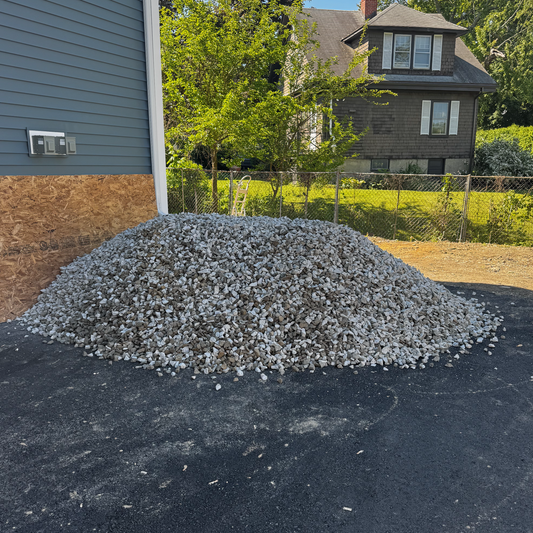
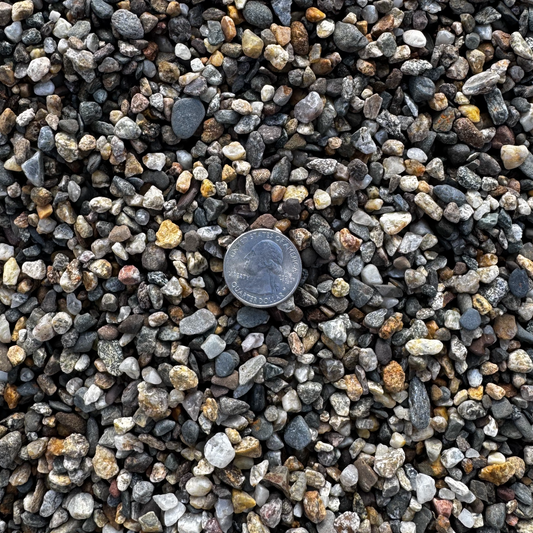
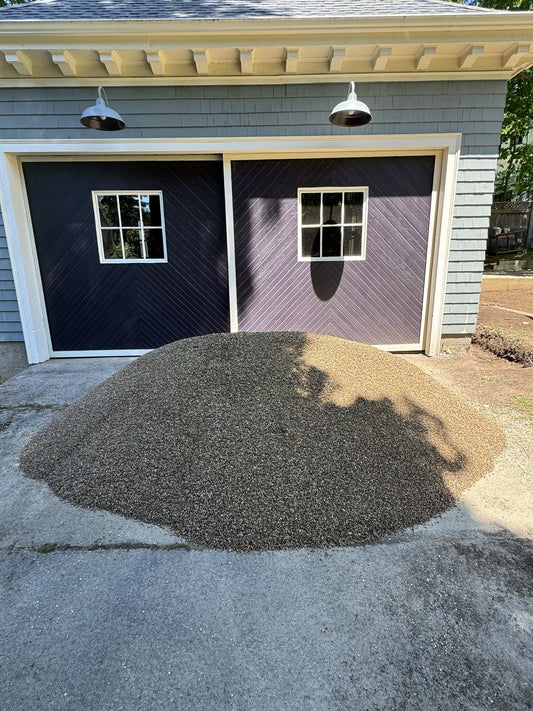
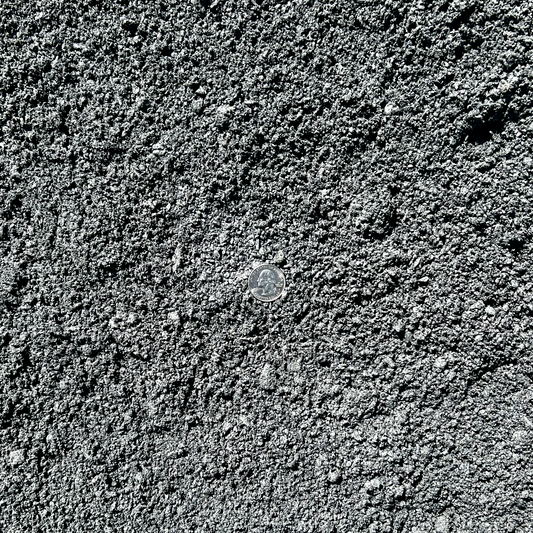
A structural repair may call for a compactable material such as Dense Pack ¾-inch to minus. Finish stone selection depends on the existing driveway and desired surface.
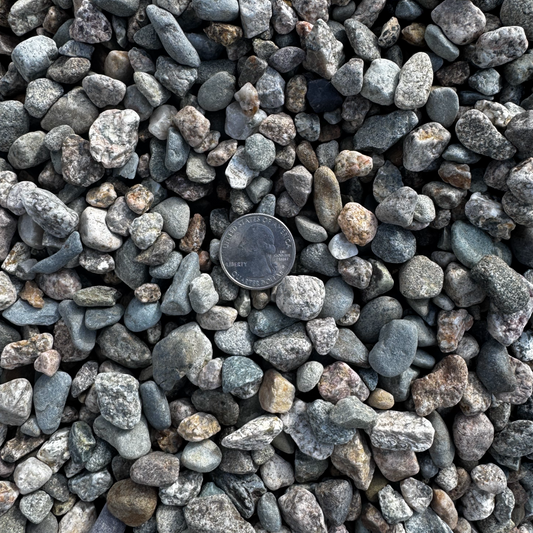
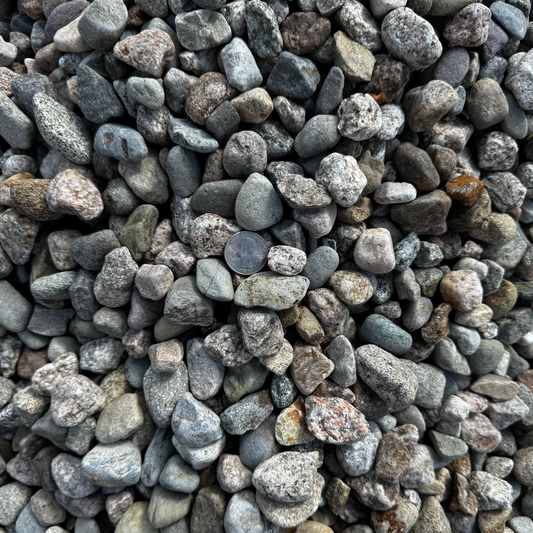
Browse the base materials and driveway gravel separately. Do not substitute attractive rounded stone for a compacted repair simply because the volume is the same.
The FHWA gravel road guide provides background on maintaining the surface as a system. Once measured, choose your product and use Ottr’s material estimator on the product page to check the geometry. Finish the repair while the ground is workable, then plan winter salt for the maintained route.
Frequently asked questions
Does the formula include compaction?
No. It gives geometric volume. The delivered amount needs to reflect material and installation allowances.
Should every pothole use the same depth?
No. Measure the actual failed area and determine the repair required.
Can I combine different repair zones?
Calculate them separately first, then total the quantities for the same material.