Quick Answer
The five fall fertilizer mistakes that cost MA homeowners next year's spring lawn: applying too late (after November 1), using a high-phosphorus blend (illegal in MA without soil-test justification), broadcasting on dormant or frozen turf, fertilizing right before a heavy rain, and skipping the soil test entirely. The right fall fertilizer move: a slow-release nitrogen, low- or zero-phosphorus winterizer applied between October 1 and October 25, on damp (not wet) turf, when no rain is forecast for 24 hours.
Why Fall Fertilizer Is the Most Mis-Applied of the Year
Spring fertilizer is forgiving — the grass is growing fast, soaking up nutrients, recovering from any over-application within weeks. Fall is the opposite. Cool-season turf is shifting from blade growth to root growth and winter prep. Wrong product, wrong timing, or wrong rate doesn't recover until April. The September-through-November application is the one that matters most for next year's spring color.
For the related calendar context, see How to Schedule Fall Lawn Care in Middlesex County. For the broader booking-and-planning context, How to Plan Fall Booking After Labor Day in Stoneham sets up the schedule.
Mistake 1: Applying Too Late
After November 1 in eastern MA, soil temperatures drop below the 50°F threshold where roots can absorb most nutrients. Fertilizer applied to dormant turf either washes off in late-fall rain or sits on frozen ground until spring — at which point you've wasted the bag and risked runoff into storm drains.
Fix: Apply October 1–25. The grass blade growth is slowing but root uptake is still active.
Mistake 2: Using a High-Phosphorus Blend
MA tightened its phosphorus regulation in 2014. Phosphorus fertilizer on established turf is restricted to soil-test-justified applications only. A blend showing N-P-K of 10-10-10 on an established lawn is technically a regulatory issue and often unnecessary — most MA soils have plenty of phosphorus already.
Fix: Choose a winterizer with N-P-K like 24-0-10 or 20-0-12. Phosphorus only goes down on new seeding (starter fertilizer) or with a soil test showing deficiency.
Mistake 3: Broadcasting on Dormant or Frozen Turf
Once the lawn goes dormant (no green growth, soil temps below 40°F), fertilizer applied to the surface mostly leaches or runs off in winter rain. The nitrogen ends up in the local watershed, not in the grass roots.
Fix: Apply while the grass is still actively growing in October — the lawn is still green, mowing is still happening every 2 weeks, soil is still warm.
Mistake 4: Fertilizing Right Before Heavy Rain
Heavy rain within 24 hours of application washes fertilizer off the leaf surface and out of the root zone before it can be absorbed. You lose half the bag and contribute to nutrient runoff.
Fix: Check the forecast. Apply when no significant rain (>0.25") is expected for at least 24 hours. A light watering after spreading (¼") is ideal — settles the granules without flushing them.
Mistake 5: Skipping the Soil Test
The whole fall fertilizer math runs through soil test results. Without one, you're guessing N rate, ignoring P needs, and missing the K deficit that some MA lawns develop after a dry summer. The UMass Soil and Plant Nutrient Testing Laboratory standard turf test ($20) gives the answers in 2 weeks.
Fix: Test every 2–3 years. Adjust the fall fertilizer choice to what the soil actually needs — usually less than the bag wants you to apply.
For the lime question that often pairs with fall fertilizer, see Should I Apply Lime Now in My Plymouth County Lawn?. For the drain-vs-swale review that comes up alongside fall lawn drainage, French Drain vs Surface Swale for an MA Yard.
What This Means for You
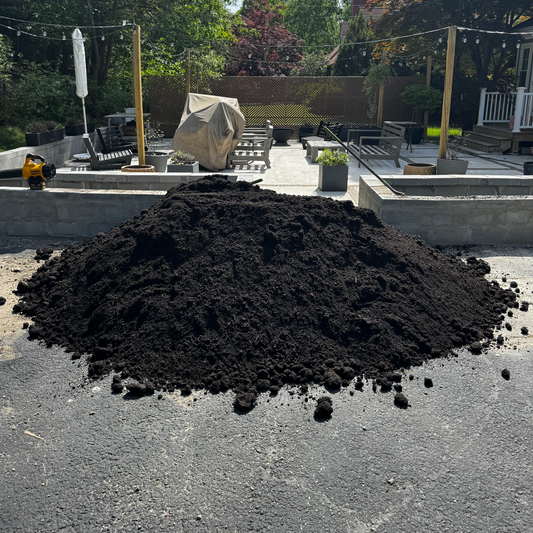
The right fall fertilizer move is small, simple, and on-schedule: October 1–25, slow-release nitrogen, zero phosphorus on established turf, applied to damp grass with no heavy rain in the forecast. The UMass Extension Turf Program has the authoritative product guidance for MA-compliant fertilization. Order screened loam from the lawn leveling and repair collection for the top-dress side of the same fall calendar.