Quick Answer
The five drainage solutions Newton properties actually use, ranked by frequency: French drain along the foundation (most common, $25–40/lin-ft DIY material), dry well for downspout discharge (best for tight Newton lots), swale across a slope (the cheapest fix when grading allows), downspout extension into a stone bed (entry-level — works for half the problems), and rain garden in a low spot (the prettiest answer, MA stormwater guidance favors it). Pick by failure mode, not by cost.
Why Newton Has More Drainage Problems Than Most MA Towns
Newton's older neighborhoods — Newton Centre, Auburndale, Waban, Chestnut Hill — sit on glacial-till soils that drain slowly, with mature tree canopy that holds soil moisture, and houses built before modern foundation drainage standards. The Garden City has the most mature yards in eastern MA, which means the most settled soil, the most root-clogged drains, and the most decades-old grading mistakes.
Per EPA Stormwater Management, Newton homeowners file more drainage-related stormwater complaints per capita than most Middlesex County towns. Five solutions cover 95% of the cases.
1. French Drain Along the Foundation
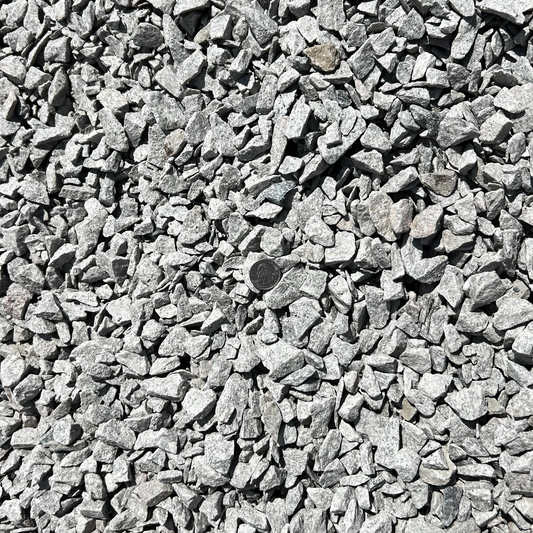
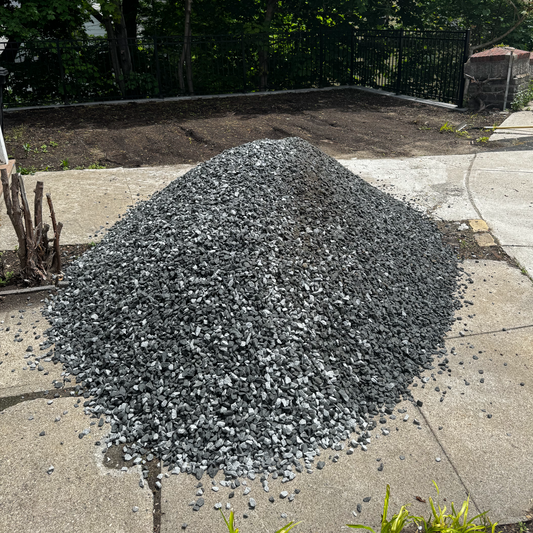
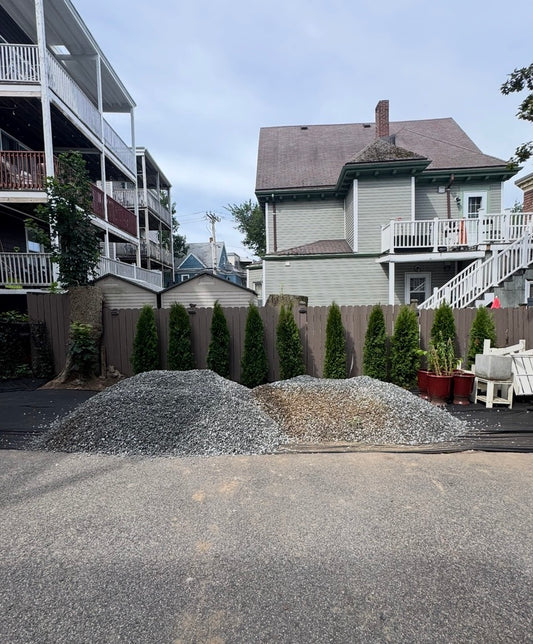
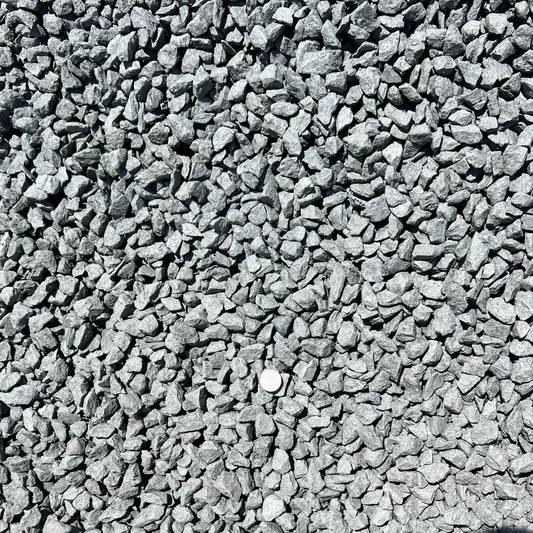
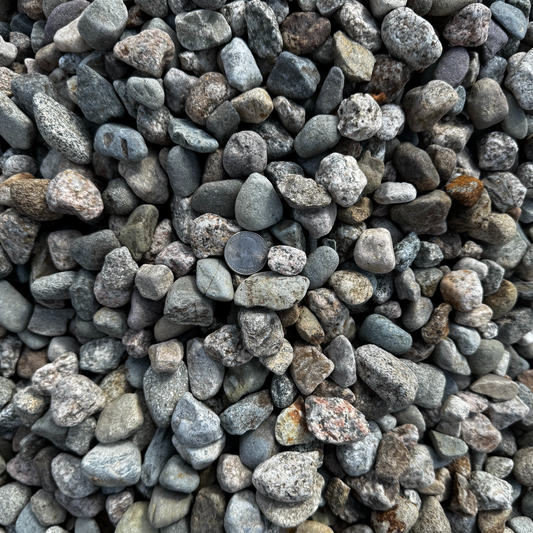
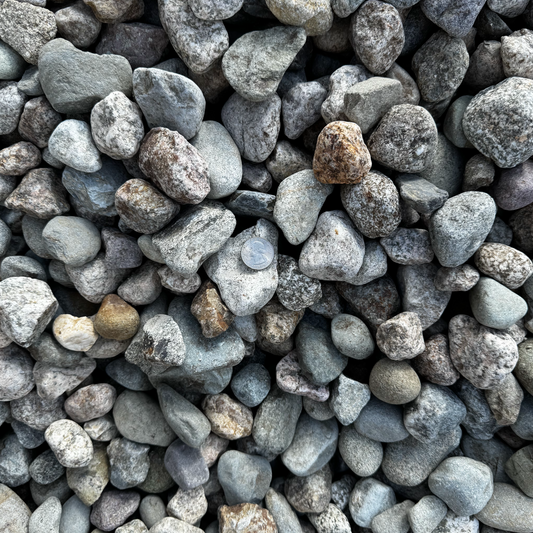
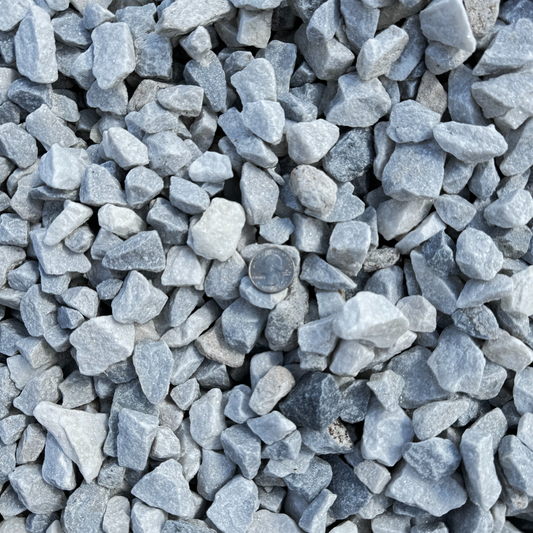
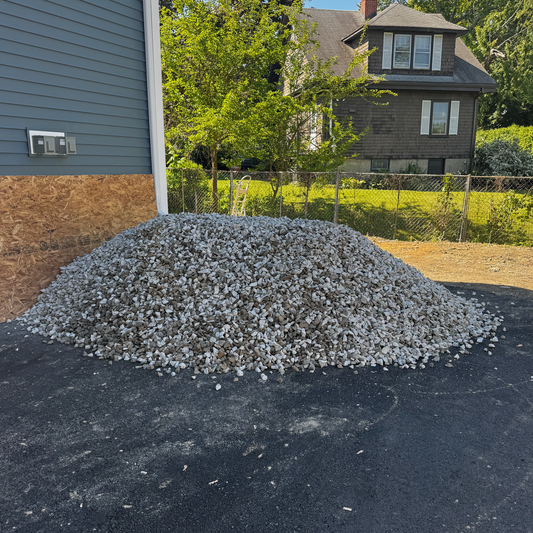
The Newton default. A 12-inch-wide, 18-inch-deep trench along the wet side of the foundation, lined with woven landscape fabric, filled with ¾" washed stone, with 4" perforated PVC pipe running through the center, daylighting to a swale or storm system at the low end.
When to use: Wet basement, water pooling against foundation, soil staying soggy 24+ hours after rain.
Material specs (per 50 linear feet): - ¾" washed stone: 4 cubic yards - 4" perforated PVC: 50 ft + couplings - Landscape fabric: 100 sq ft - Approximate DIY material cost: $1,200–1,500
Browse French drain & drainage. For the trenching method, see How to Trench a French Drain in a Boston Backyard.
2. Dry Well for Downspout Discharge
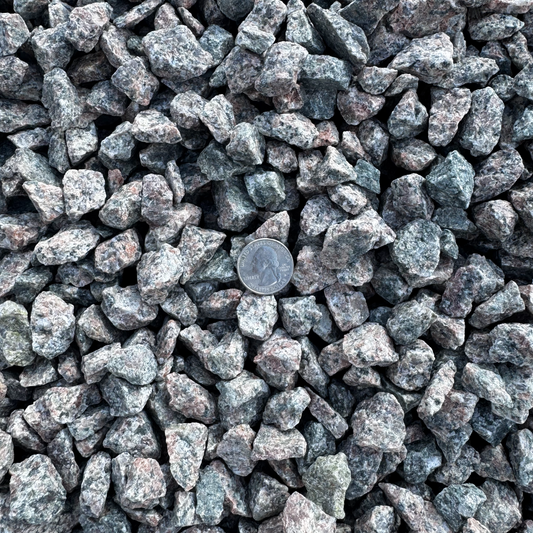
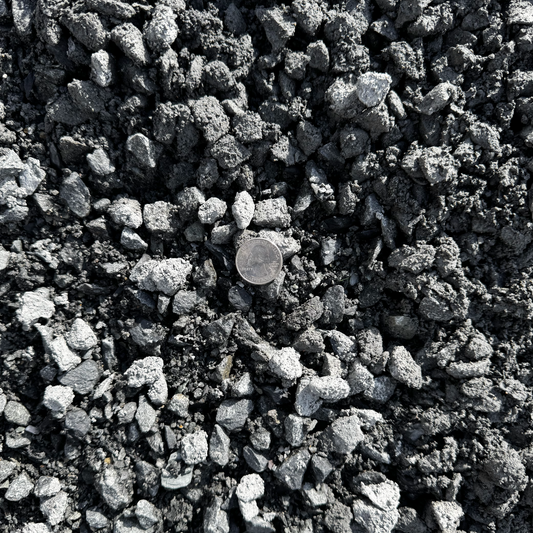
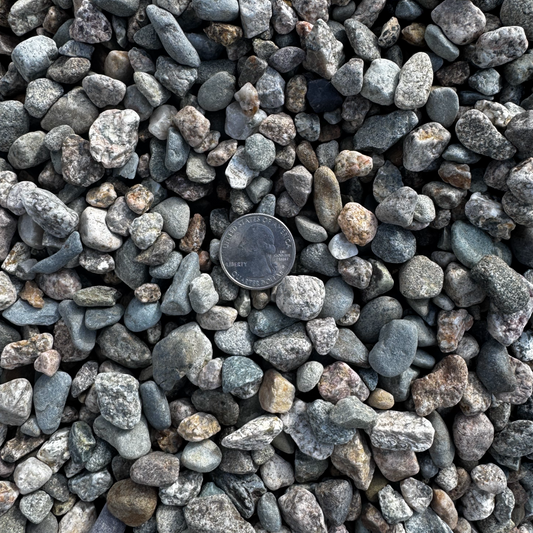
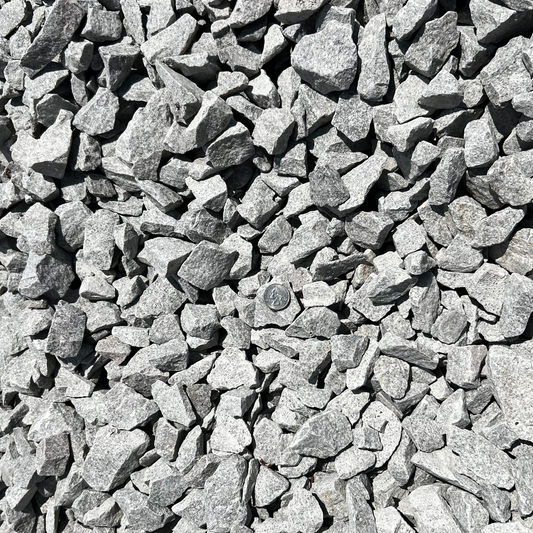
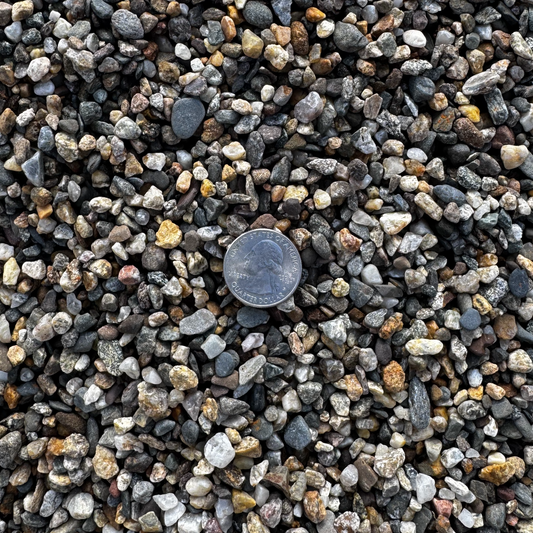
Best for tight Newton lots. A buried 4–8 cubic foot pit lined with fabric and filled with 1.5" crushed stone, fed by an underground PVC pipe from one or two downspouts. Water enters the dry well, infiltrates into surrounding soil over hours.
When to use: Downspouts dumping at the foundation, no room for a swale or rain garden, soil that drains at least somewhat (perc test recommended).
Material specs (per 100 sq ft of roof drained): - 1.5" crushed stone: 1.5 cubic yards - Geotextile fabric: 50 sq ft - 4" PVC pipe: 20–30 ft to reach the well - Approximate cost: $400–600
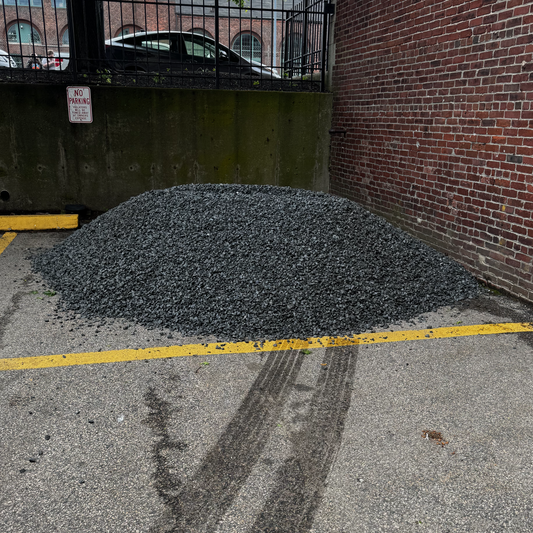
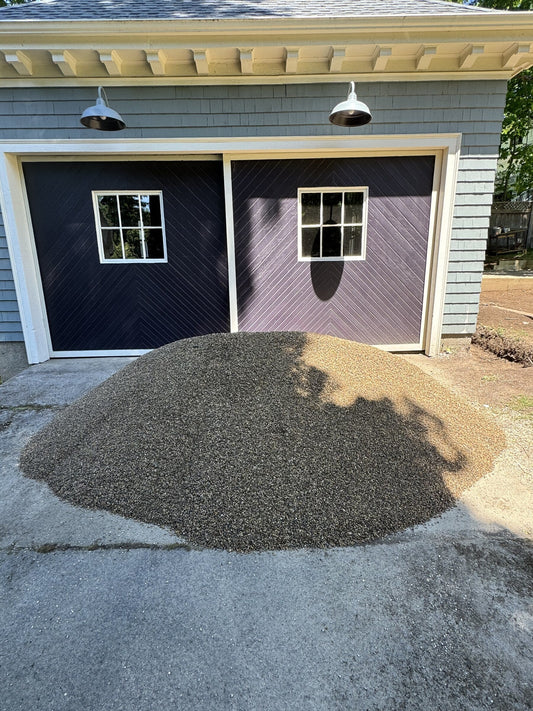
Browse crushed stone for the fill material.
3. Swale Across a Slope
The cheapest fix when grading allows. A shallow grass-lined channel that intercepts water moving across a slope and routes it around (not into) the problem area. No pipe, no stone — just careful grading.
When to use: Newton property has a backyard slope feeding water toward the house or driveway. Most Auburndale and Newtonville lots have this.
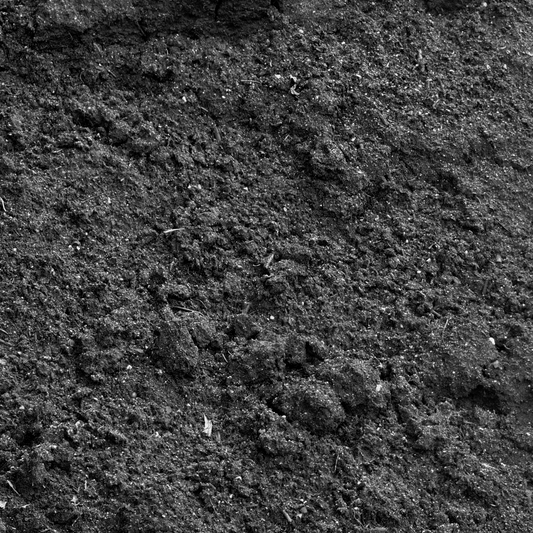
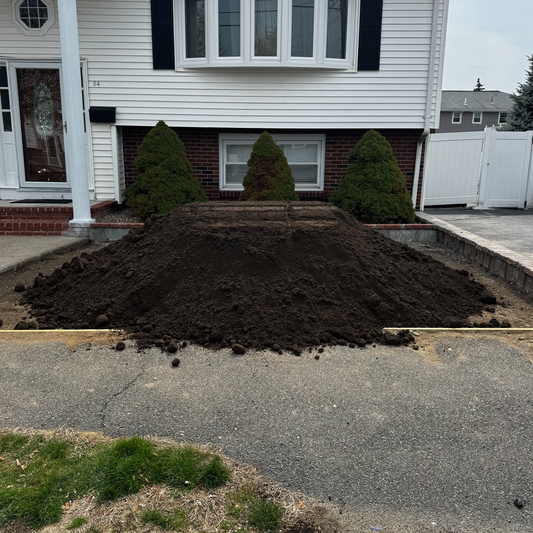
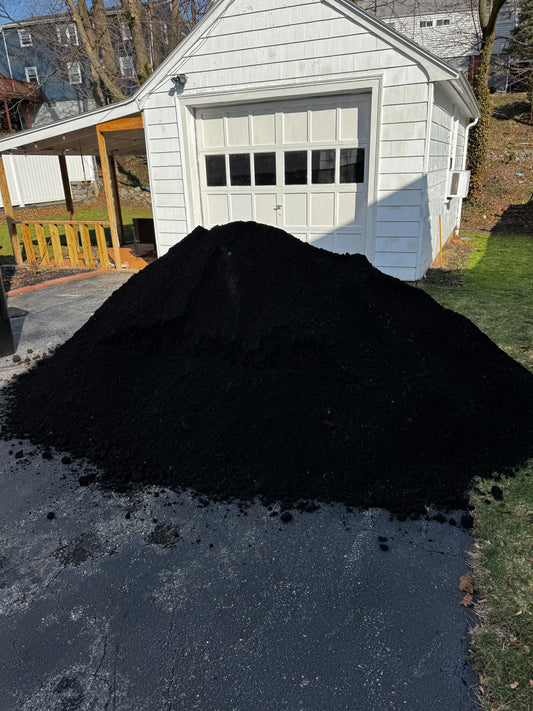
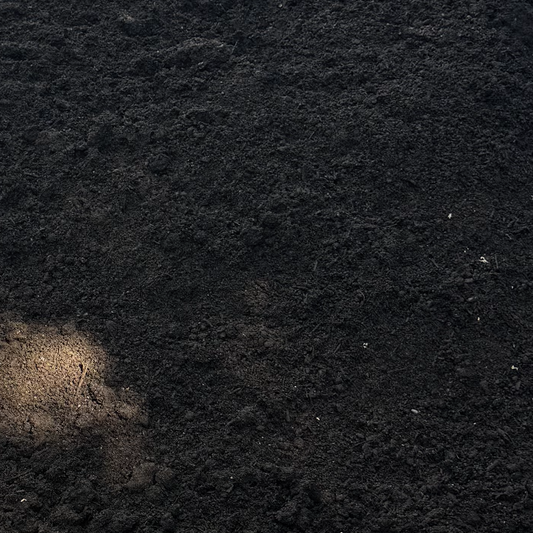
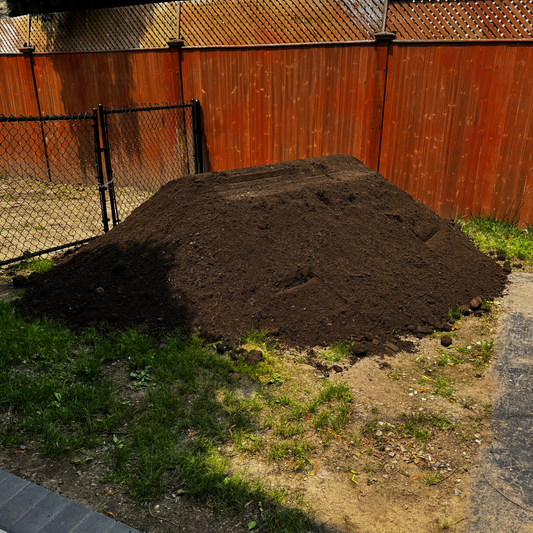
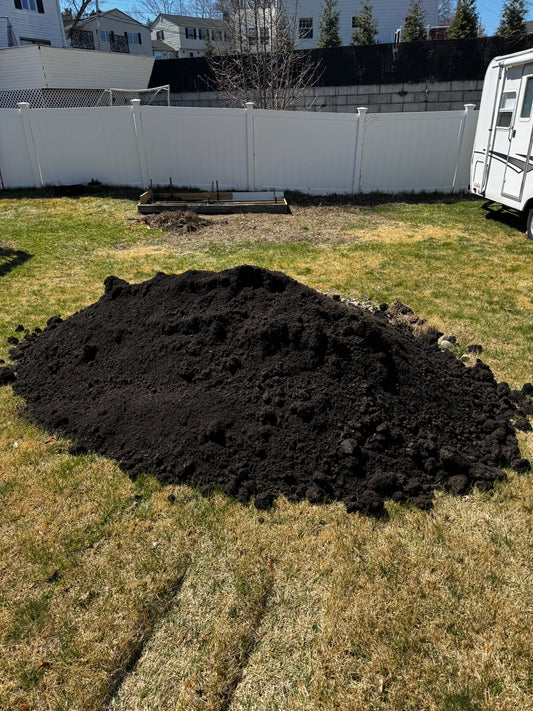
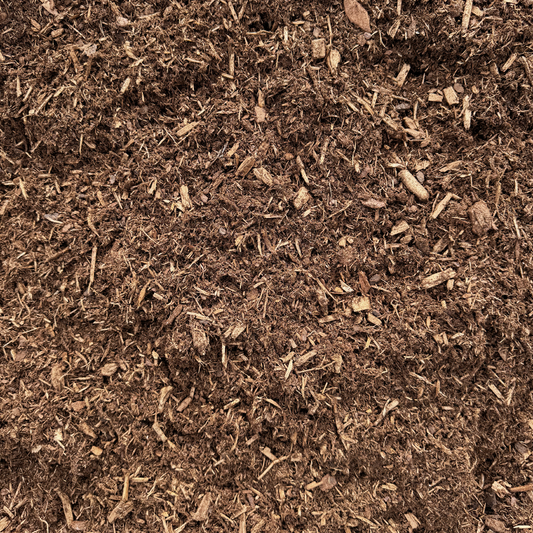
Material specs (per 50 linear feet of swale): - Topsoil Loam ½" Screened: 1.5 cubic yards (rebuild grade) - Compost: 0.5 cubic yards (top-dress for grass establishment) - Grass seed (fine fescue): 5 lbs
Approximate cost: $300–500. The cheapest option but requires accurate grading — call a landscape contractor for the swale layout if it's longer than 30 feet.
4. Downspout Extension Into a Stone Bed
Entry-level fix. A 6–10 ft above-ground or buried extension routes downspout water into a small stone-filled bed at least 10 feet from the foundation. Water spreads, infiltrates, doesn't pool.
When to use: Single problem downspout, minor wet spot, no whole-yard issue.
Material specs (per 1 downspout): - 1.5" crushed stone or river rock: 0.3 cubic yards - Geotextile fabric: 30 sq ft - Extension pipe: 10 ft
Approximate cost: $80–150. Often the right starter project — solve one downspout, see if the basement dries up, escalate if needed.
For decorative stone selection in visible areas, see Decorative Stone Picks for Boston Foundation Beds — same engineering applies in Newton.
5. Rain Garden in a Low Spot
The prettiest answer. A shallow planted depression (6–10 inches deep) in a natural low spot of the yard, filled with engineered soil mix (50% sand, 30% loam, 20% compost), planted with native MA wetland-tolerant species like swamp milkweed, blue flag iris, and red-twig dogwood.
When to use: Newton homeowner wants the yard to look better AND drain better. MA stormwater guidance favors rain gardens for low-impact development.
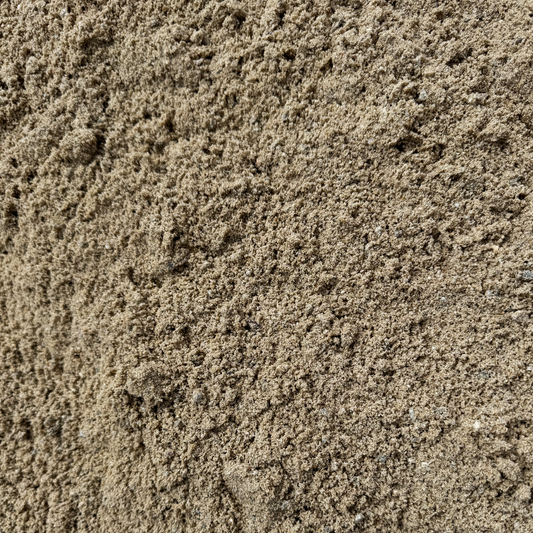
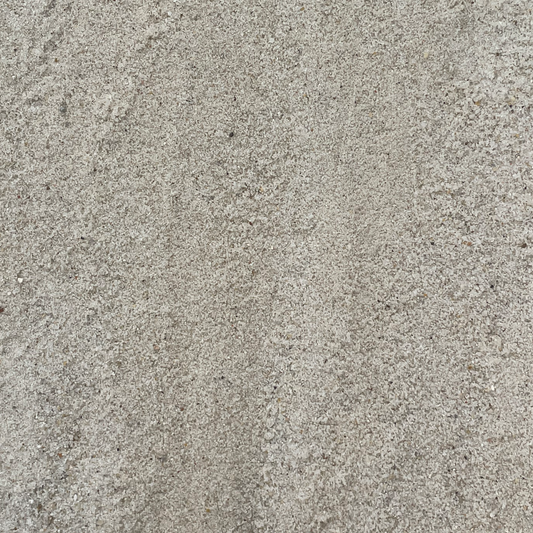
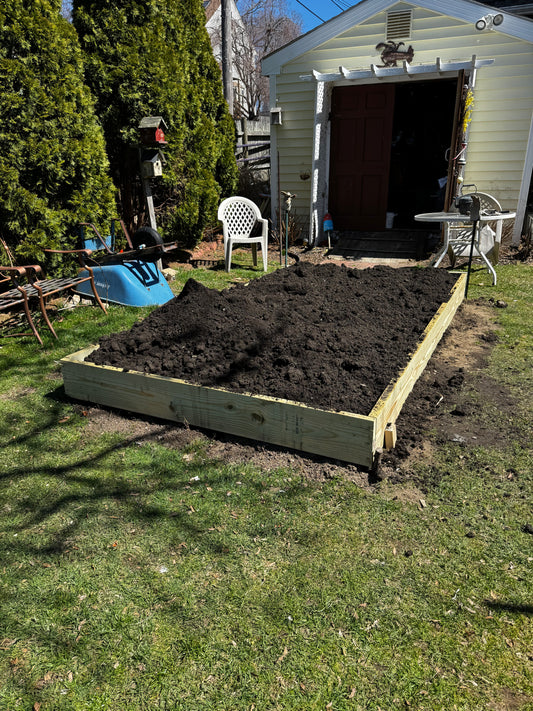
Material specs (per 100 sq ft): - Mason sand: 1 cubic yard - Topsoil Loam ½" Screened: 0.6 cubic yard - Compost: 0.4 cubic yard - Plant material: $200–400 (40 plants)
Approximate cost: $700–1,200. Best return on investment of any Newton drainage project — handles drainage AND raises property aesthetic.
For the matching plant guide, see 5 Native MA Plants for a Middlesex County Front Yard — many natives work in rain gardens too.
How to Pick
The Newton decision tree:
- Wet basement? French drain (#1).
- Tight lot, foundation pooling? Dry well (#2).
- Slope feeding water toward house? Swale (#3).
- One bad downspout? Extension to stone bed (#4).
- Want it pretty? Rain garden (#5).
Most Newton properties end up with TWO of these — usually #1 plus #2 or #4. Don't try to do all five.
What You'll Need from Ottr
Browse French drain & drainage for the bulk of the materials, and Newton landscape supply for delivery scheduling.
For the matching pricing playbook, see Pricing French Drain Jobs in Belmont: Lin-Ft Worksheet and How to Trench a French Drain in a Boston Backyard.
The short version: French drains, dry wells, swales, extensions, rain gardens. Five solutions, picked by failure mode. Newton's drainage problems are usually solvable in one season.