Quick Answer
Dollar spot is a fungal disease (Clarireedia jacksonii) that creates small, silver-dollar-size bleached patches on cool-season Middlesex County lawns — Cambridge, Somerville, Arlington, Lexington, Newton, Medford. Three diagnostic markers: silver-dollar-size patches (not big circles like brown patch), hourglass-shaped lesions on individual blades with brown borders, and white cobwebby mycelium visible in dawn dew. The #1 cause is under-fertilization. Treatment: light nitrogen application (0.5 lb N/1,000 sq ft slow-release), morning-only watering, mow at 3.5 inches. Most cases recover in 3-4 weeks without fungicide.
Why Middlesex County Is Dollar Spot Country in Late July
Middlesex County's typical lawn — Kentucky bluegrass and fescue mix on ¼-acre suburban lots — is the textbook dollar spot host. Three conditions converge in late July:
- Low residual nitrogen — homeowners who fed in May are out of available N by late July
- Prolonged leaf wetness — humid nights, heavy dew that lingers past 9 AM
- Warm-day cool-night swings — typical Middlesex County late-July weather
The result: dollar spot pressure that peaks across the county every year between July 20 and August 10.
Q: What is dollar spot?
A: A fungal disease caused by Clarireedia jacksonii (recently reclassified from Sclerotinia homoeocarpa). The fungus lives in the thatch layer of cool-season lawns and emerges as a disease during specific weather. It's in every Massachusetts lawn all the time — only certain conditions make it visible.
Q: How do I tell dollar spot from other lawn problems?
A: Three diagnostic markers, all must be present:
- Patch size: small, silver-dollar to baseball-size (2-4 inches across). NOT large circles — that's brown patch.
- Blade lesions: under a hand lens, individual blades show hourglass-shaped bleached lesions with brown borders.
- Dawn mycelium: in early morning dew, white cobwebby fungal growth visible on patch surface. Disappears by 9 AM.
If you see all three, you have dollar spot. If you have large circles or no blade lesions, look elsewhere.
For other lawn-damage diagnoses: - Lawn lifts like loose carpet → grub damage, see Top 5 Lawn Pests in Medford and How to Spot Them - Lawn-wide brown → drought dormancy, see Is It Worth Watering a Brown an MA Lawn in July? - Irregular brown along sunny edges → chinch bug, see Top 5 Lawn Pests in Medford and How to Spot Them
Q: What causes dollar spot in Middlesex County?
A: Three drivers, all peaking in late July:
- Low nitrogen. This is the #1 driver. Lawns under-fertilized or unfertilized since spring are highly susceptible. The UMass Turf Program considers nitrogen deficiency the most reliable predictor of dollar spot.
- Leaf wetness over 8 hours. Overnight watering, heavy dew, evening sprinkler use — anything that keeps blades wet through the night feeds the fungus.
- Temperature swings. 80°F days followed by 60°F nights are ideal for the fungus.
Q: Can I treat dollar spot myself?
A: For minor cases (under 10% of lawn area), yes. The treatment is counterintuitive — you feed the lawn instead of spraying a fungicide:
- Apply 0.5 lb nitrogen per 1,000 sq ft (light feed) using a slow-release fertilizer. This is below the brown-patch trigger threshold and corrects the underlying deficiency.
- Water in the morning only. 5 AM start, 2 deep cycles per week. Switch from any evening watering immediately.
- Mow at 3.5 inches. Don't scalp.
- Sharpen mower blade. Clean cuts heal; ragged cuts invite secondary infection.
Most cases recover in 3-4 weeks with these steps alone.
For larger infestations (10%+ of lawn), fungicide application is appropriate. Propiconazole (Banner Maxx) or thiophanate-methyl (Cleary 3336) are standard. Most homeowners benefit from a pro application — see Lawn-Disease Triage Pricing for Middleborough Crews for the contractor-side.
Q: Will dollar spot kill my lawn?
A: Rarely. Dollar spot affects the leaf blades but generally doesn't kill the crown (the growing point at the soil line). Most lawns recover fully with corrective nitrogen + watering changes. Heavy or repeated infestations can thin the lawn enough to invite weed invasion — that's the secondary risk.
Q: When should I fertilize to prevent dollar spot?
A: Three windows for Middlesex County cool-season lawns:
- Late April / early May: First spring application, 0.75-1 lb N/1,000 sq ft slow-release.
- Labor Day (early September): The most important application of the year, 1 lb N/1,000 sq ft slow-release.
- Mid-October: Final winter-prep application, 0.5-0.75 lb N/1,000 sq ft.
Skip July fertilization — it drives brown patch even as it suppresses dollar spot, so net it's a wash. The corrective light July feed for active dollar spot is the exception, not the rule.
Q: What about my lawn-care company's "fertilizer program"?
A: Ask them what's in the late-July application. Many programs over-fertilize in July (high nitrogen) which causes brown patch but suppresses dollar spot, OR under-fertilize all summer which invites dollar spot. The right program for Middlesex County is heavier on Labor Day, lighter in July.
Q: Should I overseed dollar-spot-thinned lawn?
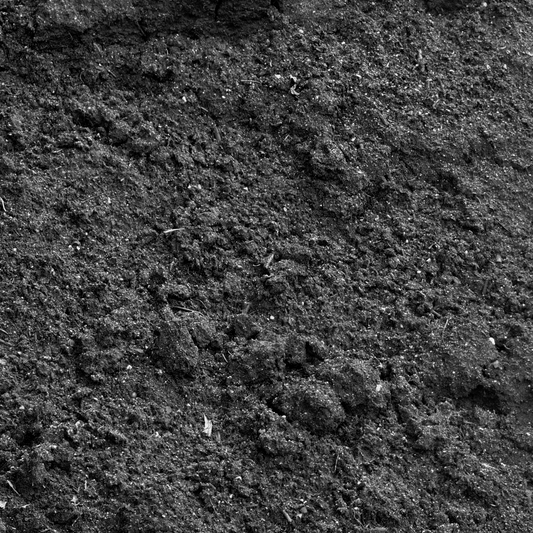
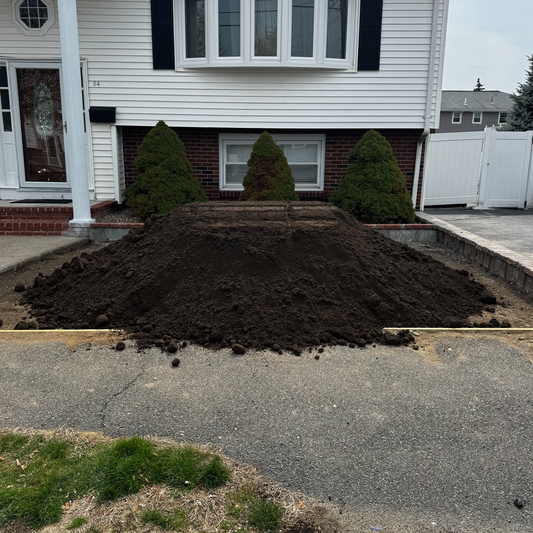
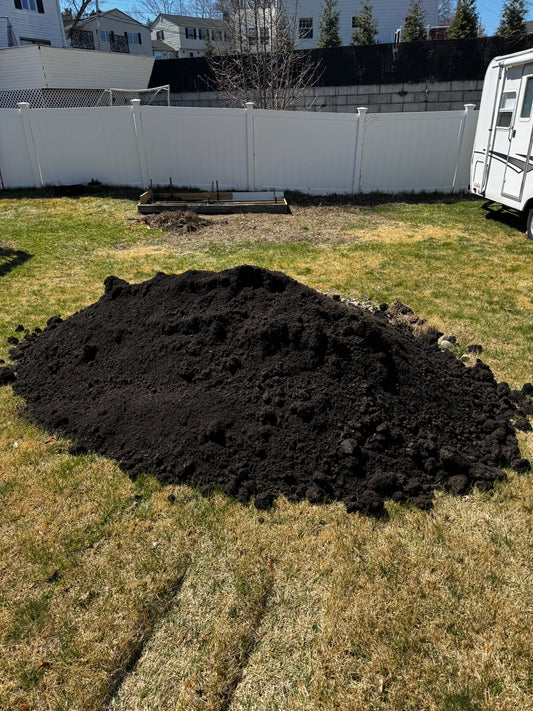
A: Yes, in early September. Overseeding with a Kentucky bluegrass / fine-fescue mix on top-dressed Topsoil Loam ½" Screened is the right recovery move for any thinned areas. Don't overseed in summer — establishment fails in heat.
For the broader Middlesex County landscape supply catalog including bulk Topsoil Loam ½" Screened, Super Loam, and Compost, see the regional collection.
Q: Is there a resistant grass variety I should plant?
A: Yes, partially. Modern fine-fescue and tall-fescue varieties are more dollar-spot-resistant than older Kentucky bluegrass cultivars. If you're renovating, ask your seed source for "dollar spot resistant" mixes.
Q: What if my dollar spot keeps coming back every year?
A: Switch to a higher-nitrogen-baseline fertilizer schedule. Repeating dollar spot is a symptom of chronic under-fertilization. Move to: - Labor Day: 1 lb N/1,000 sq ft (don't skip this one) - October: 0.75 lb N/1,000 sq ft - April: 1 lb N/1,000 sq ft slow-release
Within 2 seasons of consistent fertilization, dollar spot pressure typically drops by 60-80%.
The Middlesex County Dollar Spot Playbook
- Diagnose: small patches, hourglass lesions, dawn mycelium.
- Treat: light nitrogen feed (0.5 lb N/1,000 sq ft slow-release), morning-only watering, mow at 3.5 inches.
- Rebuild fertility: 3-application annual program, heavier on Labor Day.
- Overseed thinned areas in early September.
- Skip fungicide unless damage exceeds 10% of lawn.
For the brown patch parallel diagnosis (the other major fungal disease appearing right now), see How to Diagnose Brown Patch on a Worcester County Lawn. For the broader summer maintenance task list, Top 5 July Maintenance Tasks for Brookline Yards covers the complete picture.