Quick Answer
Composting leaves in a Cambridge backyard takes a 3x3x3 ft wire bin, shredded leaves layered with a nitrogen source (1" nitrogen per 6" leaves), water to wrung-sponge dampness, and one turn at 6 weeks. Finished leaf compost is ready for raised beds in 8–12 months. The result is a soil amendment as good as anything you can buy — for free.
Why Cambridge Yards Should Compost Leaves
Cambridge has small lots, mature street trees, and gardeners who want every inch of space producing. Backyard leaf composting hits all three: it diverts leaves from the trash, it produces a high-value soil amendment, and a 3x3 bin fits behind a triple-decker.
For the leaf-mold variant (no nitrogen, longer cycle), see What Is Leaf Mold, and Why Should Wellesley Gardeners Make It?. For shredding methods, see 5 Ways to Shred Leaves in an Arlington Yard.
Step 1 — Site the Bin (10 minutes)
Pick a spot with:
- Level ground — finished compost is heavy; you don't want a tipping pile
- Partial shade — full sun dries the pile too fast
- Hose access — moisture is the variable that makes or breaks composting
- 3 feet of clearance on all sides for turning
A 3x3x3 ft wire bin is the minimum size that holds heat. Smaller piles don't reach the 130–150°F core temperatures that drive faster decomposition.
Step 2 — Shred Leaves Before Binning (30 minutes per bin-load)
Whole leaves mat and refuse to break down. Shredded leaves break down in 8–12 months. Run leaves through a mulching mower or dedicated shredder until pieces are dime-sized or smaller.
A 3x3 bin holds about 27 cubic feet of loose shredded leaves — roughly the leaf load from a Cambridge quarter-yard.
Step 3 — Layer with a Nitrogen Source (30 minutes)
Leaves are pure carbon. Compost wants 25:1 to 30:1 carbon-to-nitrogen. To balance, add a nitrogen layer for every 6 inches of leaves:
- 1 inch finished compost (best)
- 1 inch fresh grass clippings
- 1/2 cup alfalfa meal per square foot
- 1/4 cup blood meal per square foot (faster, more concentrated)
Coffee grounds work but in moderation — they compact. Vegetable scraps work but draw rodents in Cambridge backyards; skip them in this pile.
The US Composting Council has authoritative C:N ratio guidance.
Step 4 — Water to Wrung-Sponge Dampness (10 minutes per layer)
After each layer, hose down to dampness. The squeeze test: grab a handful, squeeze. A few drops of water should come out. If it streams, too wet. If nothing comes out, too dry.
Cover the bin with a tarp if Cambridge gets a wet October — saturated piles go anaerobic and smell.
Step 5 — Turn at 6 Weeks, Harvest in 8–12 Months
Turn the pile with a garden fork at the 6-week mark. The center will be hot (130–150°F) and steaming. Pull the outside in, the inside out. This re-aerates and re-distributes moisture.
A second turn at 3 months speeds finished compost to 8 months. No turn at all stretches it to 12+ months — still works, just slower.
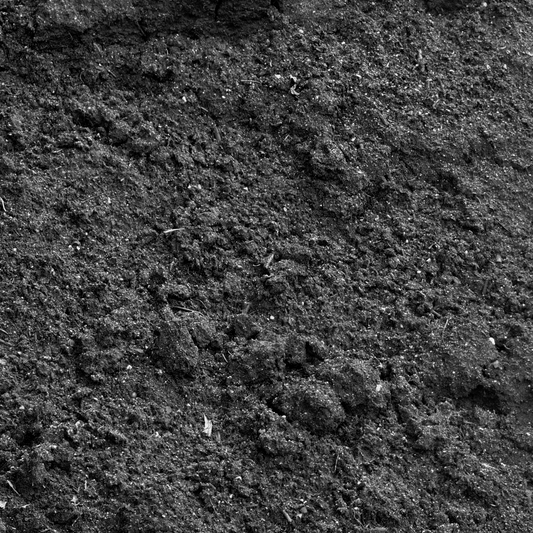
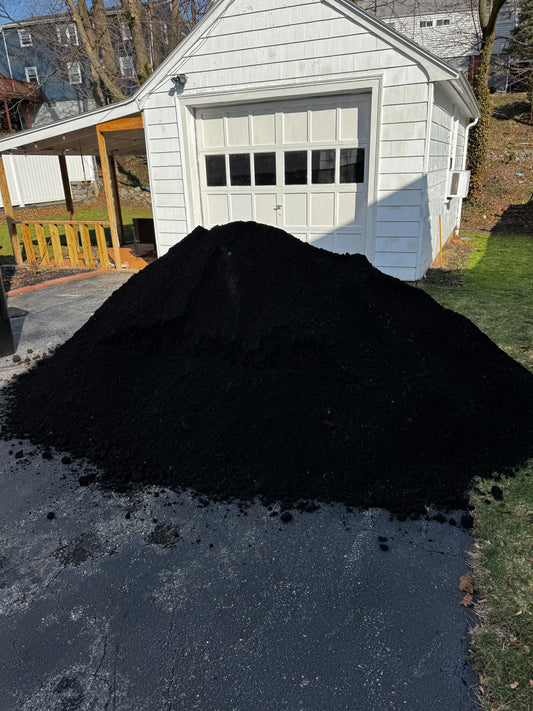
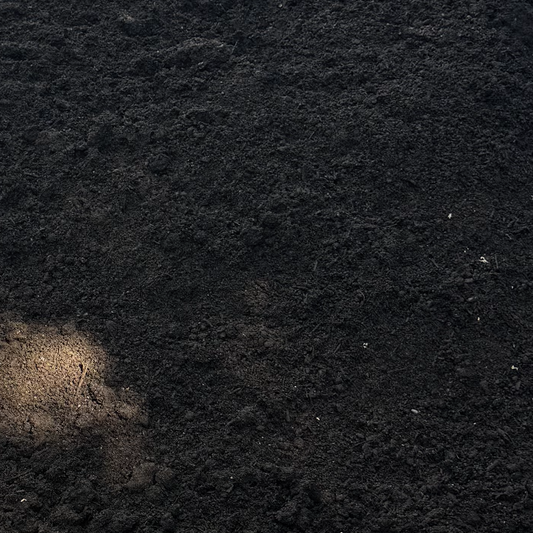
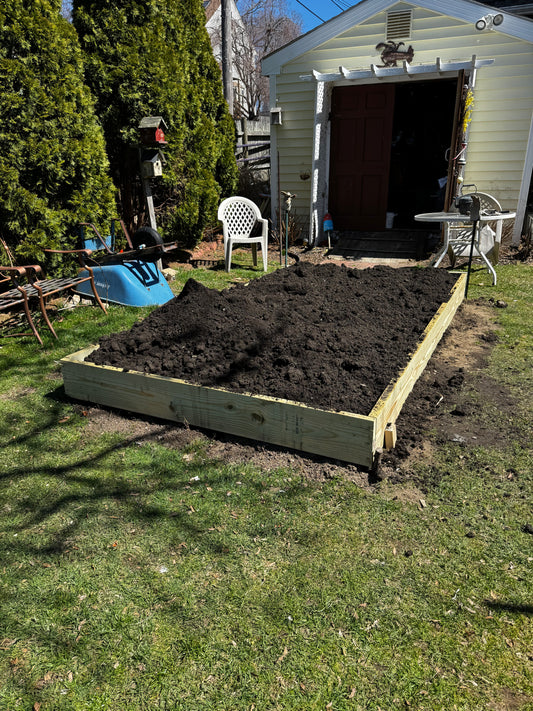
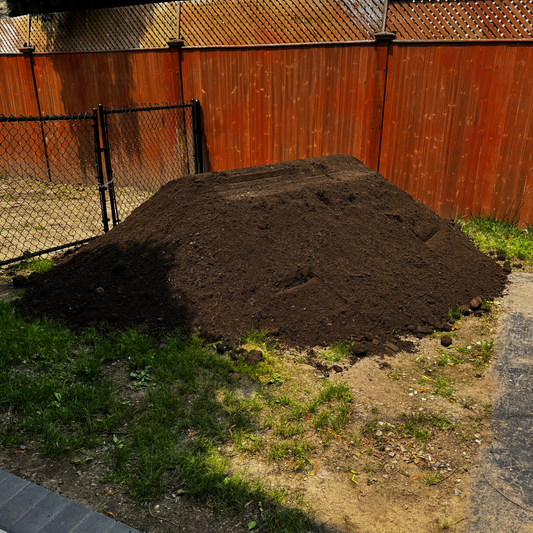
Finished leaf compost looks dark brown, smells earthy, and crumbles. Use as raised-bed top-dress, mulch under shrubs, or as a 1:1 blend with topsoil for new beds.
When the Pile Doesn't Heat Up
Three usual causes:
- Too dry — water it
- Too coarse (un-shredded) — turn and add fresh shredded layer
- Not enough nitrogen — add fresh grass clippings or alfalfa meal
The UMass Extension Landscape program has the regional troubleshooting detail.
What This Means for You
A 3x3 wire bin, shredded leaves, a nitrogen source, and 8–12 months gets you a year's worth of soil amendment. For Cambridge homeowners, finished bulk compost is also available year-round — see mulch bed refresh and the full catalog. For Cambridge-specific delivery, see Cambridge landscape supply.