Quick Answer
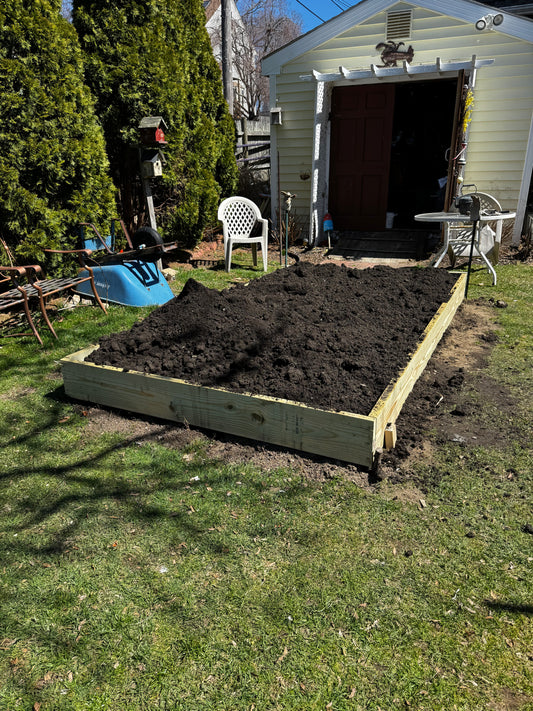
Build a 4x8 cedar raised bed in a Hingham backyard in 4 hours: cut boards (30 min), assemble frame on site (1 hr), level and stake (30 min), fill with 0.7 cubic yards of Topsoil Loam in the bottom 8 inches, then 0.5 cubic yards of mature compost mixed 50/50 with loam for the top 4 inches (1.5 hr). Total cost: $180-250 for cedar lumber, $130-200 for the bulk fill materials. Plant after May 15 for warm-season vegetables.
Why a Cedar Raised Bed Fits Hingham
Hingham backyards - across the South Shore, the older neighborhoods near Hingham Square, the larger lots out toward World's End - sit on a mix of compacted glacial subsoil and sandy coastal fill. Both conditions punish in-ground vegetable gardens. A raised bed solves the soil problem outright.
Cedar is the right wood for Hingham because:
- Rot resistance. Cedar lasts 8-12 years untreated.
- No chemical leaching. Unlike pressure-treated lumber, cedar doesn't shed copper or arsenic into the soil.
- Available locally. Most regional lumber yards stock cedar in the right dimensions.
- Cost. Cedar costs more than pine but less than ipe or other tropical hardwoods.
Step 1 - Choose the Bed Size
Three sizes work well for Hingham backyards:
- 4 ft x 8 ft x 12 in deep: the standard. Fits most yards. Reachable from both sides without stepping in.
- 4 ft x 4 ft x 12 in deep: for tight side-yards or first-time gardeners.
- 4 ft x 12 ft x 12 in deep: for larger yards. Need to be careful not to step into the bed; use a stepping stone in the middle.
Why 4 ft wide? The arm-reach math. Most adults can reach 2 ft into a bed comfortably. A 4-ft-wide bed is reachable from both sides without stepping in (which compacts soil).
Why 12 in deep? Most vegetable root systems live in the top 12 inches. Tomatoes, peppers, lettuce, and beans all root well at 12 inches. For root crops (carrots, parsnips), go 18 inches.
Step 2 - Buy the Cedar
For a 4 ft x 8 ft x 12 in bed, you need:
- Two 8-foot 2x12 cedar boards (the long sides)
- Two 4-foot 2x12 cedar boards (cut from one 8-foot board)
- Four 12-inch 2x4 cedar pieces (corner stakes, optional - depends on design)
Total cedar: about $180-250 from regional yards (Mahoney's Lumber, Cohasset Hardware, or Hingham Lumber).
Hardware:
- 16 stainless or coated deck screws (3-inch)
- 4 corner brackets (galvanized) - optional but recommended for longevity
Tools:
- Drill with bit and driver
- Square or level
- Tape measure
- Saw (for the 4-foot end pieces if not pre-cut)
For the broader edging-and-bed reference, the 2026 Belmont edging walk-through covers the bed-edge design that pairs with raised-bed installation.
Step 3 - Pick the Site
Walk the yard with the family. The right Hingham raised-bed site has:
- 6+ hours direct sun (vegetable bed). 4-5 hours for lettuce/leafy greens.
- Level ground. Slight slope is fine; major slope means leveling work.
- Water access. Hose reach matters in July.
- Out of the lawn-mowing path if possible.
- Visible from the kitchen window. Vegetables that aren't visible aren't harvested.
For Hingham specifically, the sunniest spot is often the southwest corner of the yard. Watch for tree shade encroaching from neighbor lots in summer (when leaves are full).
Step 4 - Assemble the Frame
On the site:
- Square the corners. The 4-foot ends meet the 8-foot sides at 90 degrees.
- Pre-drill pilot holes through the long boards into the end-grain of the short boards.
- Drive 3-inch deck screws (4 per corner, 2 top and 2 bottom).
- Add corner brackets if using.
Test the frame for square: measure both diagonals. They should be equal (about 8 ft 11 in for a 4x8). If they're off, gently rack the frame until square.
Step 5 - Level and Stake
Set the assembled frame on the site. Check level in two directions with a 4-foot level. Adjust by:
- Removing soil from the high side.
- Adding crushed stone or sand to the low side.
For longevity, drive 2x4 stakes 12 inches into the ground at the inside corners (4 stakes total). Screw the frame to the stakes. This prevents the bed from racking out of square as the soil settles.
Step 6 - Fill the Bed (Volume Math)
For a 4 ft x 8 ft x 12 in bed, total volume is:
4 x 8 x 1 = 32 cubic feet = 1.2 cubic yards
The right fill is layered, not mixed:
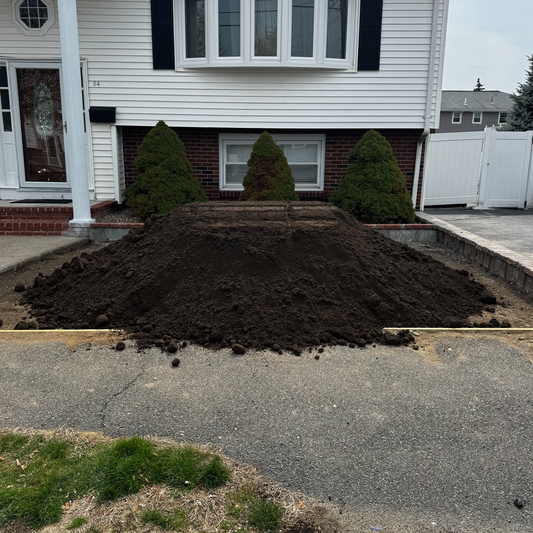
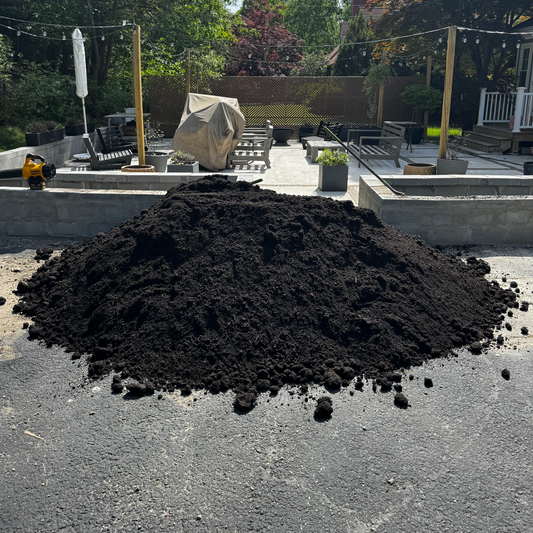
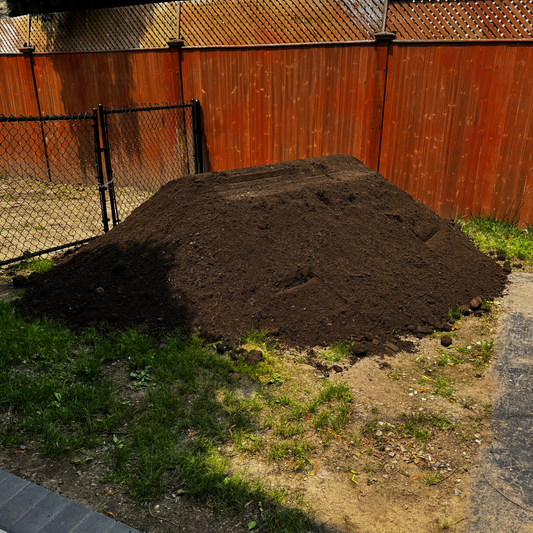
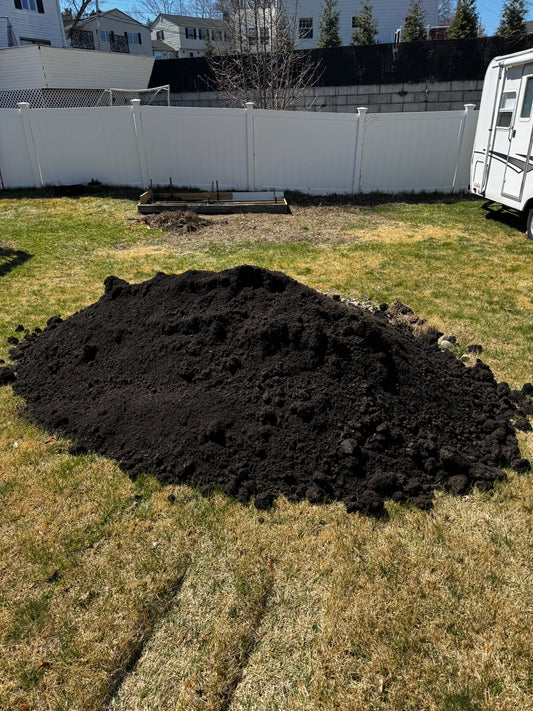
- Bottom 8 inches: Topsoil Loam 1/2-inch Screened. Volume: 4 x 8 x 0.67 ft = 21.4 cubic feet = 0.79 cubic yards (round to 0.75).
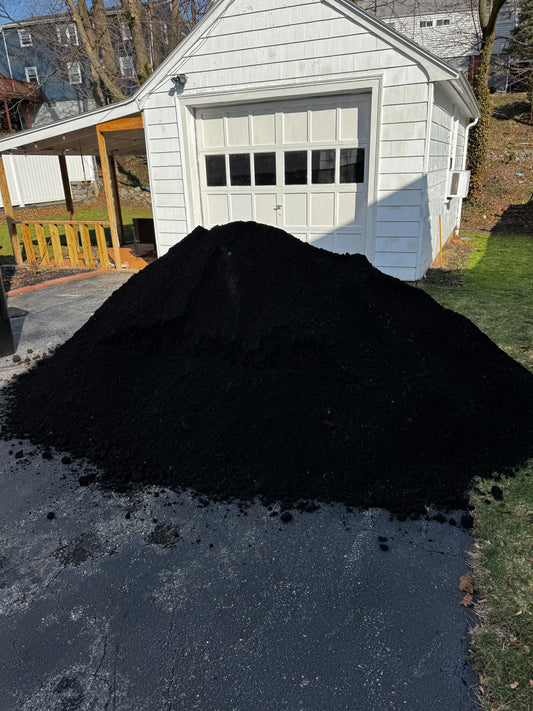
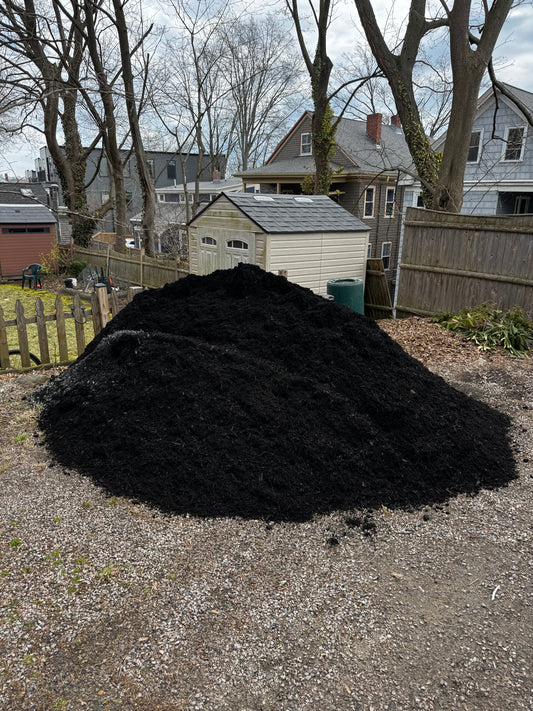
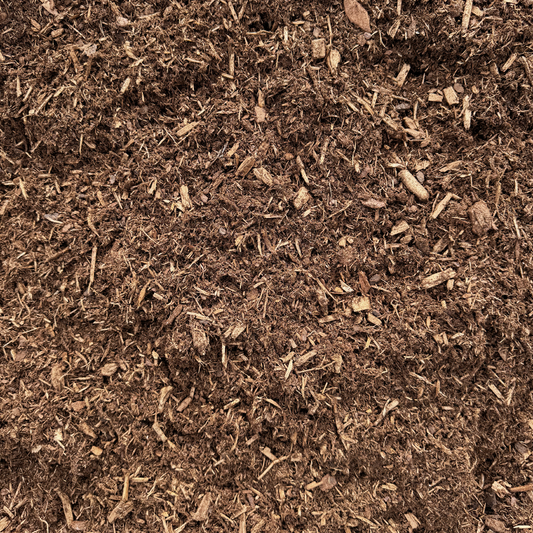
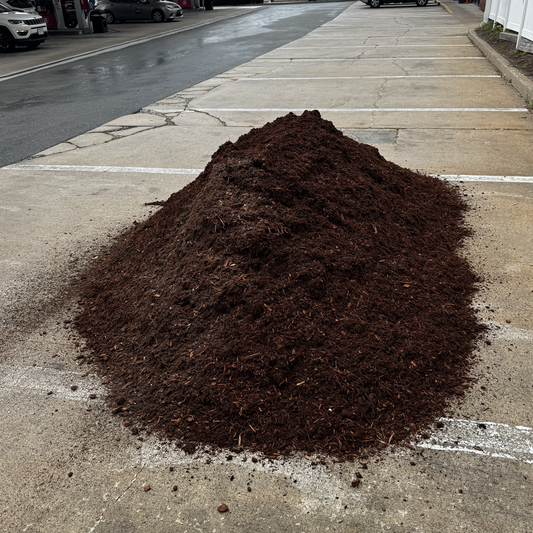
- Top 4 inches: 50/50 mix of Topsoil Loam and Ottr Compost. Volume: 4 x 8 x 0.33 ft = 10.7 cubic feet = 0.4 cubic yards mixed (0.2 yd loam + 0.2 yd compost).
Total order: 0.95 yd loam + 0.2 yd compost. Round to 1 yd loam, 0.25 yd compost for clean delivery.
For the broader compost-vs-topsoil framing, Compost or Topsoil for a Quincy Garden? A Plain-English Choice covers the layered approach that this bed uses.
Step 7 - Plant After Last Frost
Hingham's last frost date is around May 8-15. Warm-season vegetables (tomatoes, peppers, basil, beans) plant after May 15. Cool-season vegetables (lettuce, peas, spinach, broccoli) can go in starting April 15.
For the broader frost-date reference, the 2026 Boston last frost walk-through covers the regional timing that ports directly to Hingham.
The Hingham Bed Cost Worksheet
| Item | Cost |
|---|---|
| Cedar lumber (4x8x12 in bed) | $180-250 |
| Hardware (screws, brackets) | $25-35 |
| Topsoil Loam (1 cu yd) | varies |
| Ottr Compost (0.25 cu yd) | varies |
| Stakes (4x4-foot 2x4) | $15-20 |
| Total | ~$300-450 |
A 4x4 bed costs roughly half. A 4x12 bed costs roughly 1.5x.
Common Mistakes
- Using pressure-treated lumber. Don't. Older PT had arsenic; newer PT has copper compounds that leach into soil.
- Skipping the level check. A racked bed accumulates water on the low end.
- Filling with pure compost. Slumps 25-40% in year one. Layered with topsoil is right.
- Building too wide (over 4 ft). Can't reach the middle without stepping in.
- Forgetting drainage. Cedar boards don't seal against soil; water drains out the bottom naturally. Don't line the bed with plastic.
For the broader regional reference on raised bed vegetable production, the UMass Extension Vegetable Program is the authoritative source.
Browse the raised-garden-bed-materials collection for the soil and compost products and the Hingham landscape supply route for delivery scheduling.
The short version: 4x8x12-inch cedar bed, layered fill (8 in loam, 4 in 50/50 mix), 4-hour build, plant after May 15. Hingham backyards are one cedar bed away from a productive vegetable garden.