Quick Answer
The five bluestone patio layouts that work best in Middlesex County yards are: (1) random rectangular, (2) running bond, (3) ashlar, (4) square thermal, and (5) bluestone with a brick border. Each handles a different yard size and design intent. Random rectangular suits casual cottage-style backyards in Lexington and Wellesley; running bond is the cleanest for narrow side-yard walkways in Cambridge and Somerville. All five sit on the same 4-inch Dense Pack base + 1-inch bedding sand sub-structure.
Why Bluestone in Middlesex County
Middlesex County yards run from postage-stamp Cambridge plots to acre lots in Concord and Lincoln. Bluestone — quarried from the Pennsylvania-New York border and trucked into MA — is the most-installed natural patio material in the county. It's hard, frost-resistant, and ages to a soft blue-gray that suits both colonial and modern architecture.
The five layouts below are all designs that get installed every year by Middlesex contractors. Each works at a different scale and style.
1. Random Rectangular Pattern
Best for: Lexington and Wellesley backyards, 200–500 sq ft, casual or cottage style
Random rectangular uses bluestone in mixed sizes (typically 12×12, 12×18, 12×24, 18×24, and 24×24) laid in a varied, non-repeating pattern. The "random" is actually planned — the supplier delivers a calibrated mix of sizes, and the installer fits them with consistent ¼-inch joints.
Look on a typical Middlesex County random-rectangular layout: organic, no obvious grid, a comfortable cottage feel.
Material order: Square footage + 10% waste, calibrated mix from supplier, plus base and sand per the yardage formula.
2. Running Bond
Best for: Cambridge and Somerville side-yard walkways, narrow patios under 200 sq ft
Running bond uses uniform-size bluestone (typically 12×24 or 18×24) laid like brick — each row offset by half a stone. It's the cleanest, most contemporary layout, and the offset pattern visually elongates narrow spaces.
Running bond reads as modern. It pairs well with mid-century and contemporary homes. The pattern is geometrically rigid; the installation needs to be precise.
Material order: Uniform-size order, square footage + 8% waste (less than random because there's less cutting).
3. Ashlar Pattern
Best for: Concord and Lincoln backyards, 400+ sq ft, formal or traditional style
Ashlar uses a specified mix of three or four sizes (commonly 12×12, 12×24, 18×24, 24×24) in a repeating module. Unlike random, the pattern repeats every 4–6 feet, so the eye reads order rather than randomness. Ashlar is the layout you see in formal estate yards and historic property restorations.
Ashlar requires the supplier to deliver an exact size mix. Order in full pallets to keep the ratio right.
4. Square Thermal Pattern
Best for: Brookline and Newton modern backyards, 150–400 sq ft, minimalist
Square thermal uses uniform 24×24 thermal-finish bluestone (a flame-treated surface that's flatter and more uniform than natural cleft). The pattern is a strict grid — every joint aligns. It's the most contemporary look.
Thermal-finish bluestone runs 15–25% more per square foot than standard cleft. The premium pays back in a flatter, more uniform surface that suits modern furniture and outdoor kitchens.
For neighbor context on the pruning work that happens before the dig in March, see How to Make a Three-Cut Limb Removal in a Newton Yard. For mulch pre-staging that pairs with hardscape pre-orders, see How to Pre-Order Spring Mulch for a Worcester County Property. The 2026 follow-up on French drain integration sits at French Drain Pillar.
5. Bluestone with Brick Border
Best for: Cambridge, Arlington, and Belmont colonials and Victorians, any size
Bluestone field with a brick soldier-course border is the classic New England patio. The brick frame ties the patio to traditional architecture; the bluestone field gives the surface area and durability. The border runs 4–6 inches wide on three sides (open side facing the lawn).
Brick border requires a parallel base prep — same Dense Pack and bedding sand depth, with a tightly compacted edge. Use a clay paver brick rated for freeze-thaw, not a softer reclaimed brick that'll spall in five winters.
Material order: Bluestone field square footage + brick linear footage at the border, plus base for both. For the calculation method, see How to Lay Out a Backyard Patio in a Boston Lot.
Base Material Is the Same for All Five
Every layout above uses identical sub-structure:
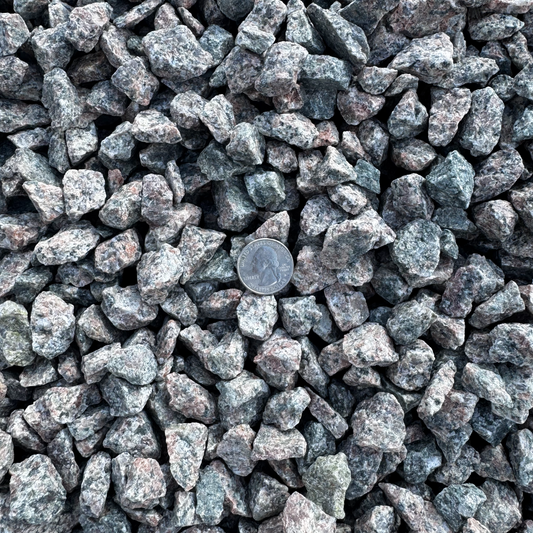
- 4 inches of Dense Pack ¾" to minus, compacted in 2-inch lifts
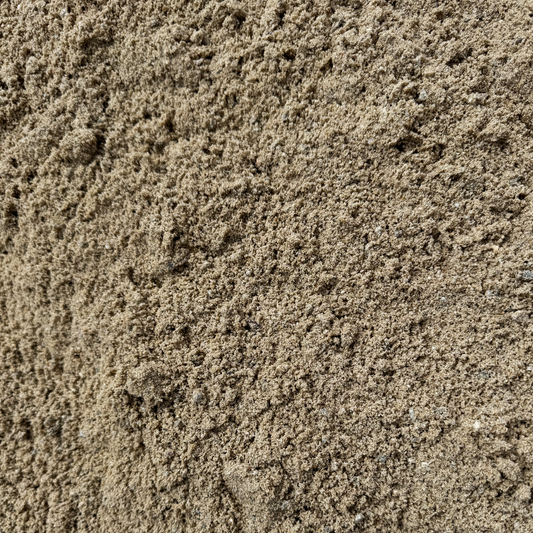
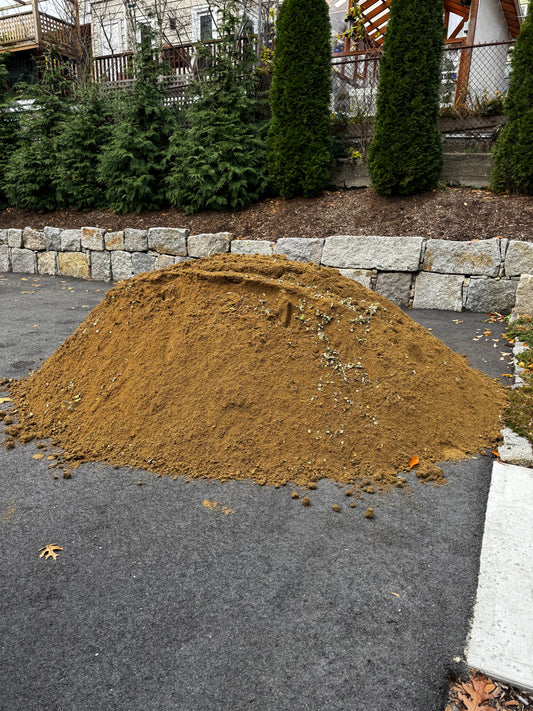
- 1 inch of Mason Sand or Concrete Sand as a bedding layer
- Polymeric sand in the joints after laying
Browse the Patio & Walkway Base collection for per-yard rates on Dense Pack and bedding sand. For Middlesex County delivery scheduling, the Cambridge landscape supply page has the contact path.
For the residential paver design standard most Middlesex contractors work to, the Interlocking Concrete Pavement Institute (ICPI) publishes the technical manual covering all five of these layouts.