Quick Answer
Bulk wins above 0.5 cubic yards for a Cambridge townhouse bed. A typical 100 sq ft bed at 3 inches deep needs 0.93 cubic yards or about 25 bags — and bulk is roughly 40% cheaper at that volume, plus saves 90 minutes of bag-to-bed labor. Bagged makes sense only for very small refresh jobs (under 14 bags / 0.5 yards) or when the townhouse has zero driveway access for a delivery truck.
Why This Question Matters in Cambridge
Cambridge townhouses face the worst-case mulch math in eastern MA: small beds (driving the bagged math up), tight access (driving the bulk delivery cost up), and density (driving the per-bag retail markup up). The actual right answer flips on the volume threshold — below half a yard, bagged works; above, bulk dominates.
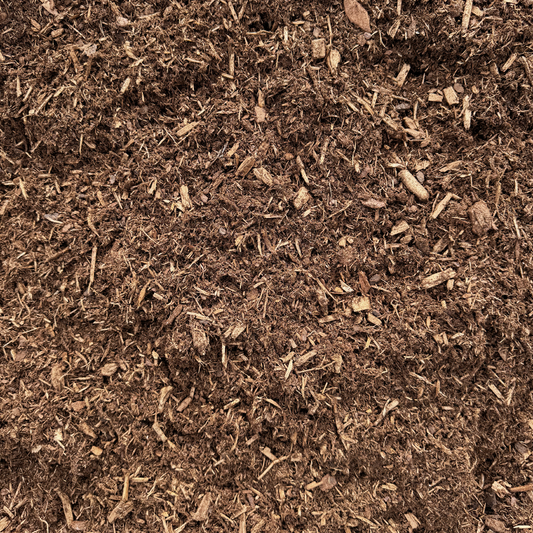
Browse the mulch collection for current per-yard pricing and bulk delivery scheduling to Cambridge.
Q: Should I buy bagged or bulk mulch for a Cambridge townhouse bed?
A: Bulk above 0.5 cubic yards. Bagged below.
The math at a typical Cambridge townhouse bed of 100 sq ft at 3 inches deep:
- 0.93 cubic yards required volume
- 25 bags at 2 cubic feet each to match
- Bag retail at typical Cambridge hardware-store pricing: $6 to $8 per bag = $150 to $200 total
- Bulk delivery from Ottr at standard April Cambridge rates: roughly $90 to $110 total including delivery
Net savings: $60 to $90 per Cambridge bed, plus 90 minutes of bag-handling labor. For two adjacent beds, the savings double.
For the volume math walkthrough applied to garden beds, see the How to Calculate Raised Bed Soil Volume for a Duxbury 4x8 read.
Q: How many bags of mulch equal a cubic yard?
A: Roughly 27 standard 2-cubic-foot bags. The strict math: 27 cubic feet per yard divided by 2 cubic feet per bag = 13.5 bags. But because bagged mulch is compressed in the bag and expands when you spread it, the practical equivalent is 14 bags loose-volume but 27 bags full-yard equivalent. Order to the practical 27-bag number for a true cubic-yard match.
Q: Where does bulk get delivered for a Cambridge townhouse?
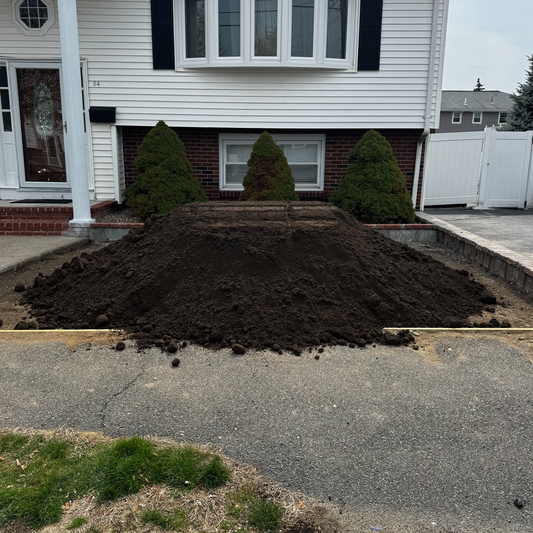
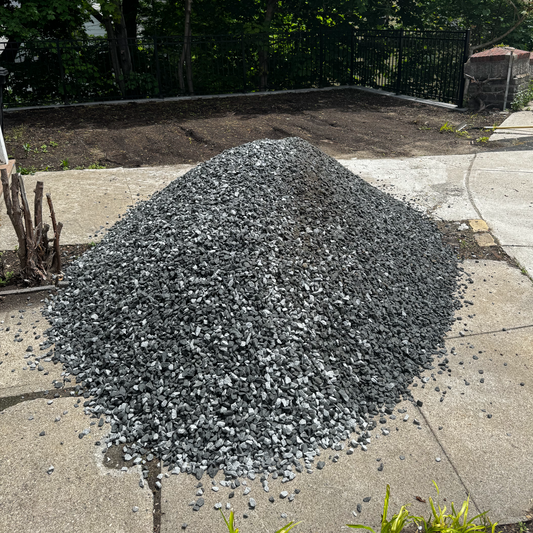
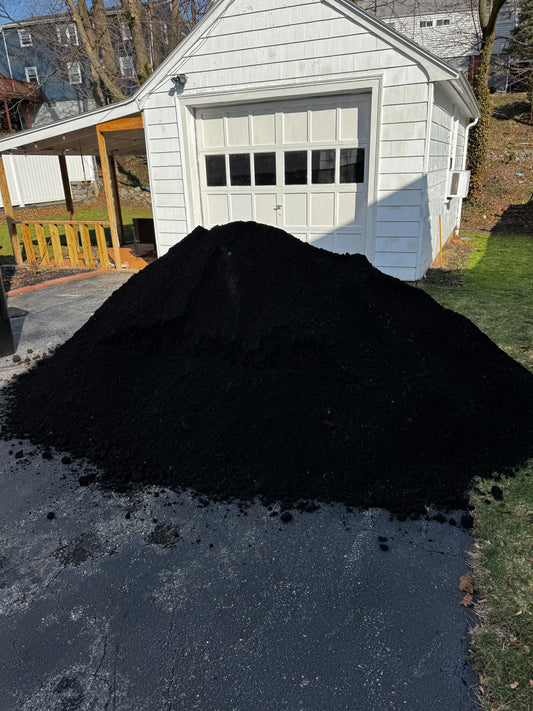
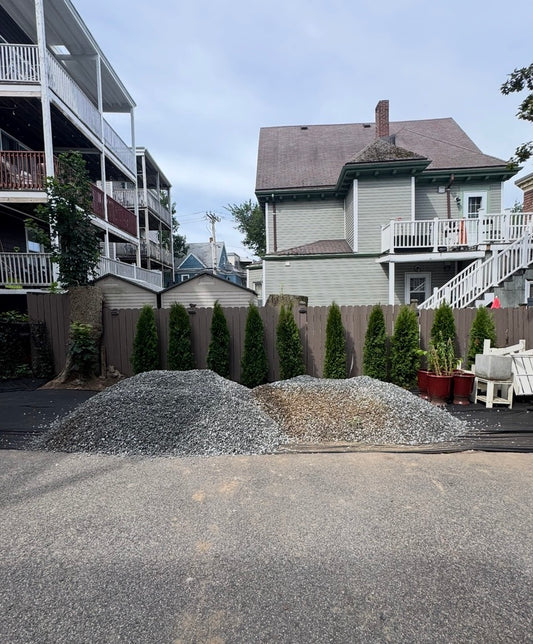
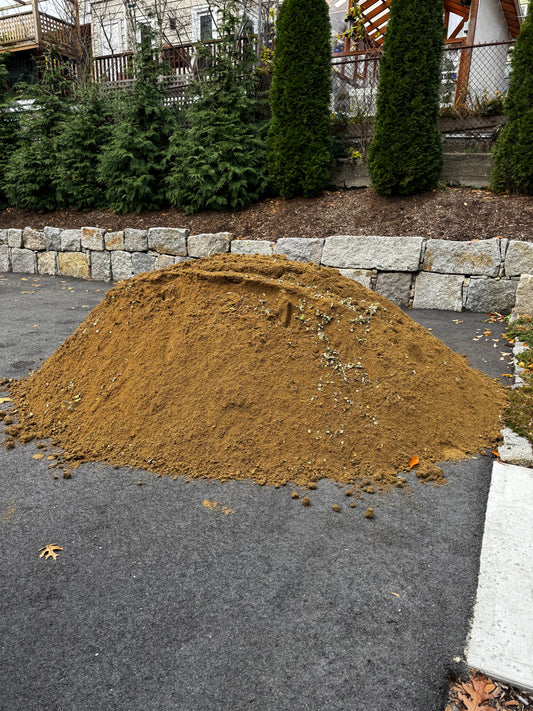
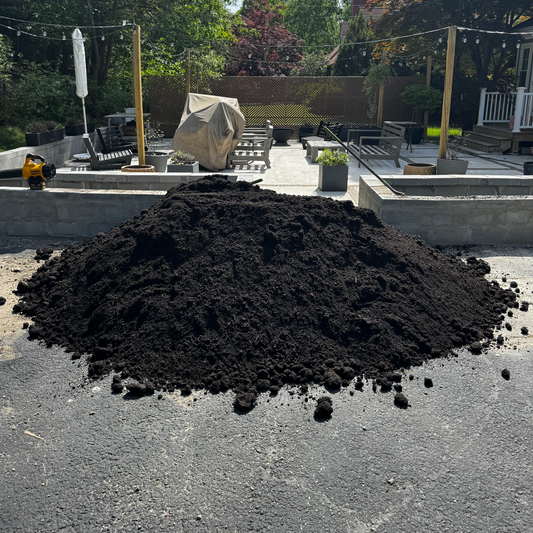
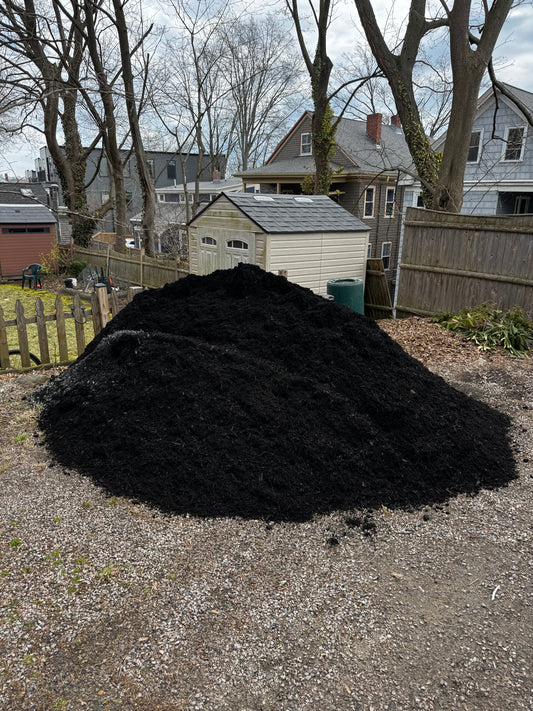
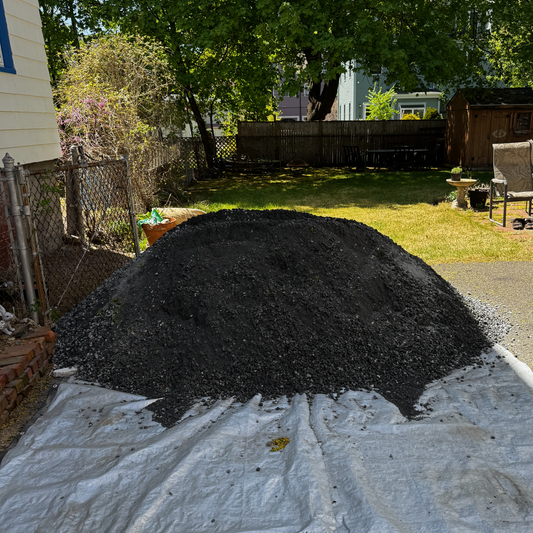
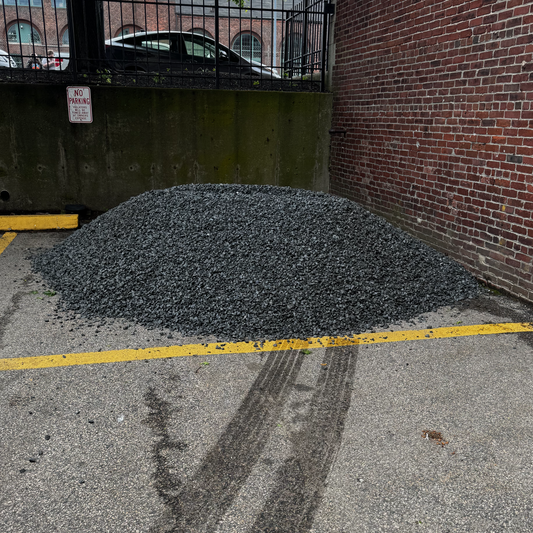
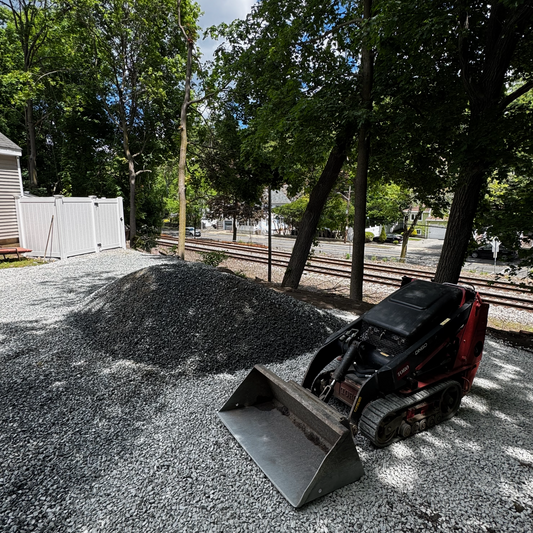
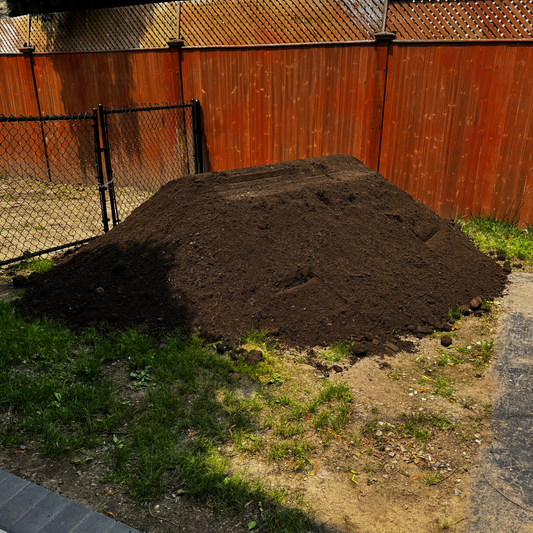
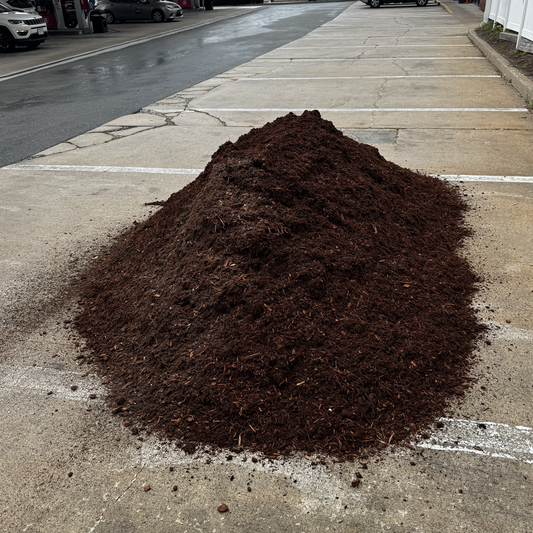
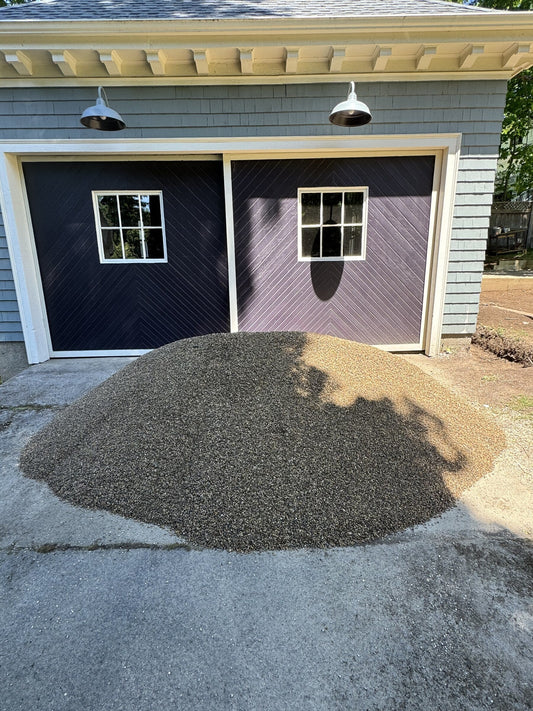
A: On a tarp on the driveway or street-parking spot. The Ottr 14-yard truck needs 40 feet of straight clearance and 13 feet of overhead — most Cambridge driveways accommodate this. For tighter situations, a smaller partial-yard delivery truck is available at a surcharge.
For coordinating shared driveway townhouses, the Bulk Stone Delivery Logistics for Worcester County Crews read covers the staging logic that translates to mulch deliveries.
Q: Can I split a bulk delivery with neighbors?
A: Yes — and you should. Two adjacent Cambridge townhouses each ordering 0.5 yards together fill a 1-yard delivery; the per-trip fee splits. Three or four townhouses splitting a 14-yard truckload is the most efficient pattern in dense Cambridge neighborhoods like Cambridgeport, Mid-Cambridge, and East Cambridge. Coordinate the drop spot and the day; one neighbor handles ordering, all share the cost.
Q: Does bagged mulch hold its color longer than bulk?
A: No. Both products fade at the same rate — typically 60 to 90 days for dyed mulches (Black, Red Cedar) and 90 to 120 days for natural products (Hemlock, Pine Bark). Bagged manufacturers use the same colorants as bulk producers; the marketing claim that bagged "holds color longer" doesn't survive testing.
For more on color longevity by mulch type, see the Mulch Demand Crests in Brookline Mid-April read.
Q: What's the labor difference between bagged and bulk?
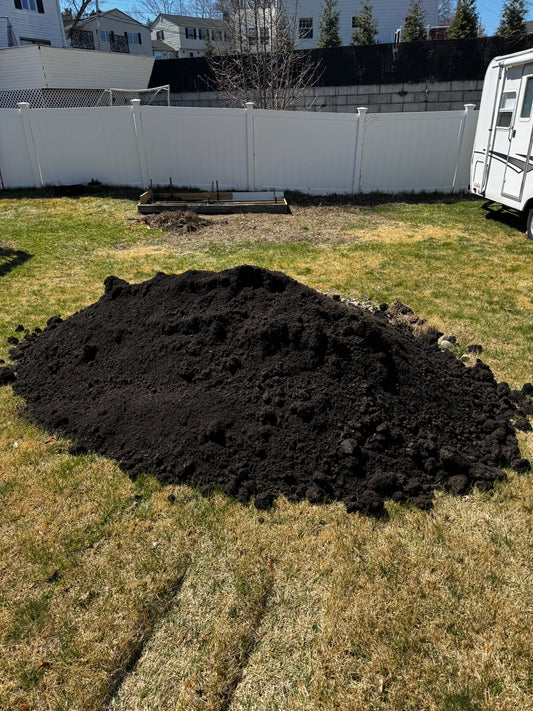
A: 90 minutes per cubic yard. Bagged mulch requires lifting 25 bags (50 lb each), cutting bags open, and spreading at the bed. Bulk arrives in a single pile that you wheelbarrow and rake.
For a 100 sq ft Cambridge townhouse bed:
- Bagged labor: 90 minutes of bag handling + 30 minutes spreading = 2 hours
- Bulk labor: 30 minutes wheelbarrow + 30 minutes raking = 1 hour
For multi-yard jobs, the labor savings compound. The Spring Cleanup Pricing Worksheet for Plymouth Crews read covers the loaded-rate math that quantifies this.
Q: What about bagged premium mulch — is it ever worth it?
A: Only for tiny applications. A single-pot container refresh (see the 5 Container Garden Tips for an Arlington Front Porch read), a 4-foot-square sidewalk strip, or a few specific spots in an otherwise-finished bed — bagged is fine. For any actual planted bed, bulk wins.
Q: Does bulk get delivered to second-floor Cambridge balconies?
A: No. Both products require ground-level access. For balcony plantings, bagged is your only realistic option — and you're sized at the partial-yard equivalent anyway.
The Cambridge Townhouse Mulch Decision Tree
- Bed size under 50 sq ft (under 14 bags / 0.5 yards) and ground-level beds: Bagged.
- Bed size 50-150 sq ft (14-40 bags / 0.5-1.5 yards): Bulk wins; save 40%.
- Bed size 150-400 sq ft: Bulk wins by a much larger margin; save 50%+.
- Bed size 400+ sq ft or multiple beds totaling that: Always bulk.
For the upcoming Half-Moon Edger vs Power Edger for a Norfolk County Bed Edge read tomorrow, the same calculation framework applies to tool selection. The 2026 follow-up on lawn leveling tools in Brookline is the 2026 leveling tools Brookline read.
What This Means for You
One threshold (0.5 cubic yards), two outcomes. Order through the Cambridge landscape supply routes for next-day delivery to most townhouse driveways. Skip bagged for anything above the threshold — the math doesn't lie, and you have better things to do with 90 minutes than wrestle 25 bags into a back-yard bed.