Why did it wash out?
Almost always one of three things, none of them the stone.
- The crown is gone. Tyres and ploughs flatten the hump down the centre, and water then runs the length of the drive instead of across it.
- The shoulders have bermed up. Grading leaves a ridge along both edges that traps water — the most common cause of rutting here.
- Water is arriving from elsewhere. A roof valley, a neighbour's slope, or the town road.
Norton allows both extremes on one street. Sandy outwash west of town gives up its fines and the surface goes loose; low ground near the Canoe River and Norton Reservoir holds water, and saturated subgrade ruts under one loaded truck.
What does rebuilding the crown mean?
A fall of ¼ to ½ inch per foot from the centreline to each edge — on a 10-foot drive, 1¼ to 2½ inches of crown at the middle. Enough to shed water within 20 feet.
- Walk it in the rain, or with a hose at the high end, and mark where water stands and runs.
- Cut the berm off both shoulders, back into the drive.
- Scarify the ruts — filling a glazed rut bottom gives the same rut by December.
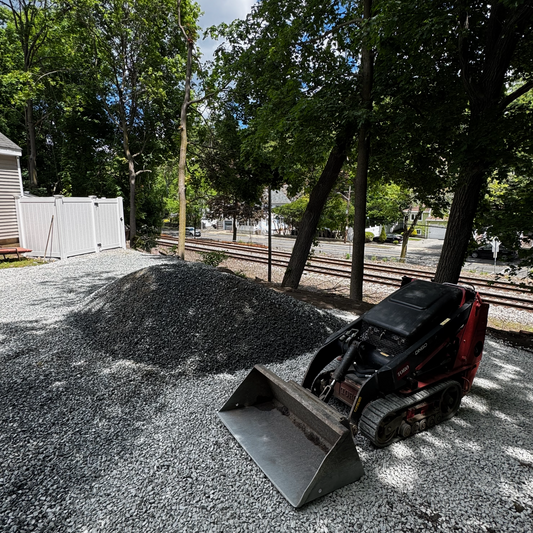
- Spread stone in lifts of 3 to 4 inches, shaping the crown as you go.
- Dampen and compact each lift. Dense-graded stone locks when damp, moves when dry.
Why does dense pack hold where clean stone does not?
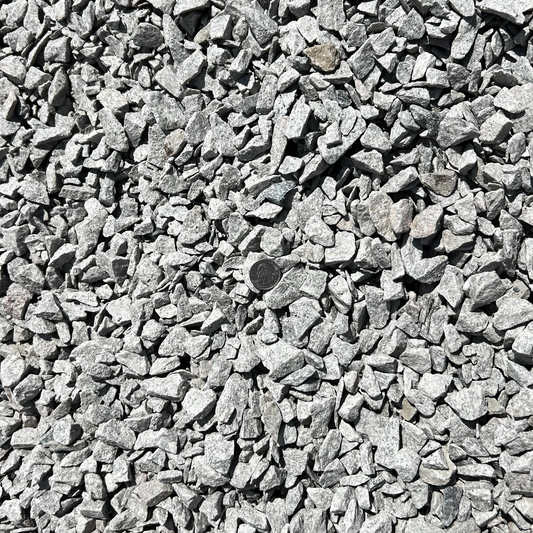
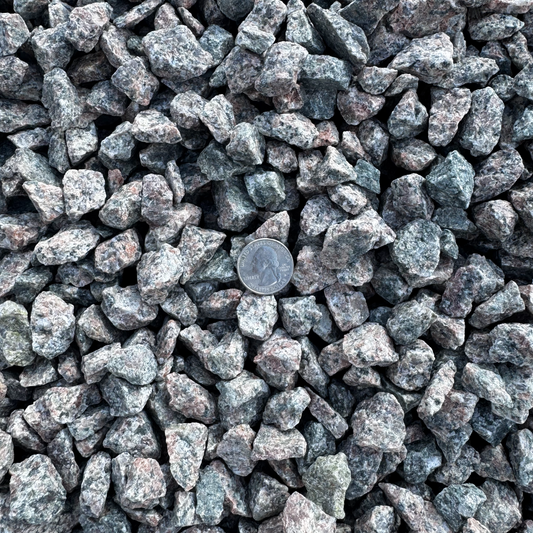
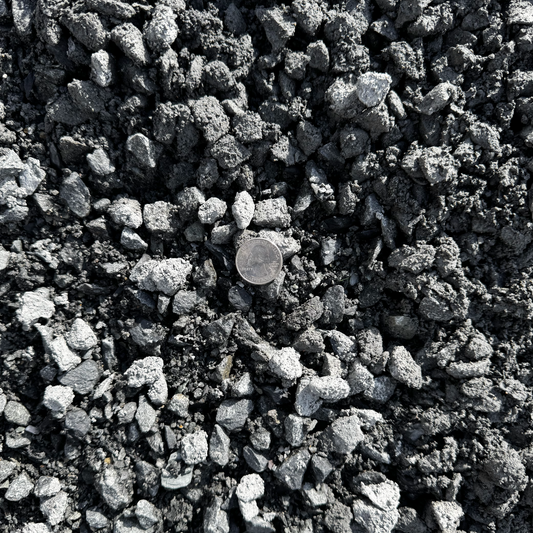
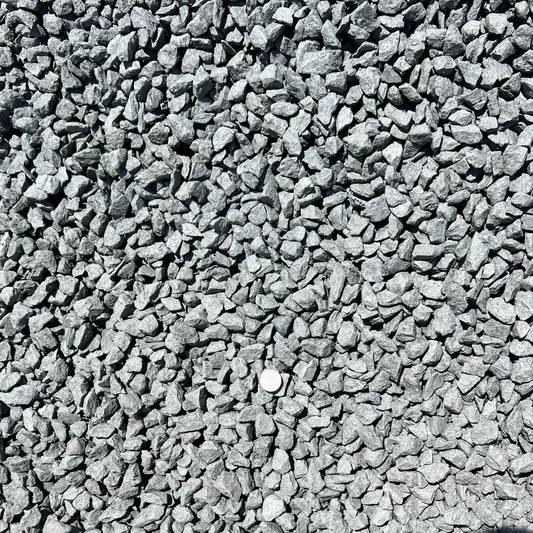
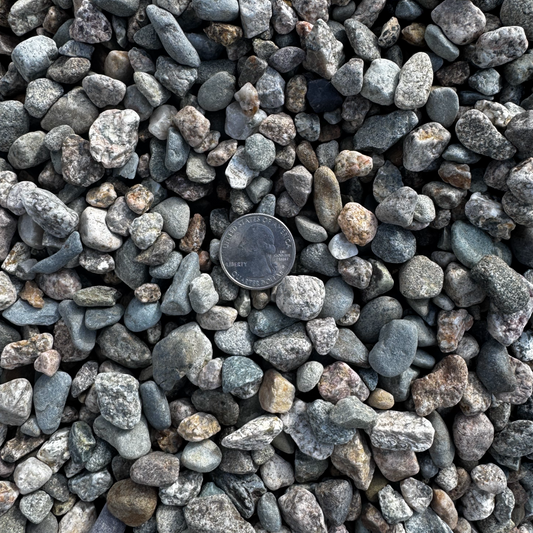
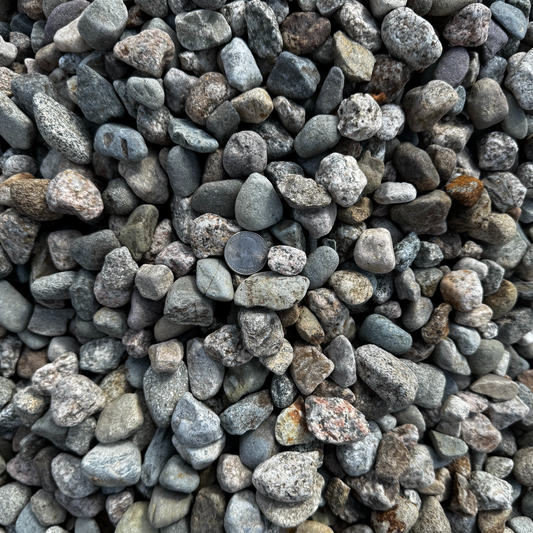
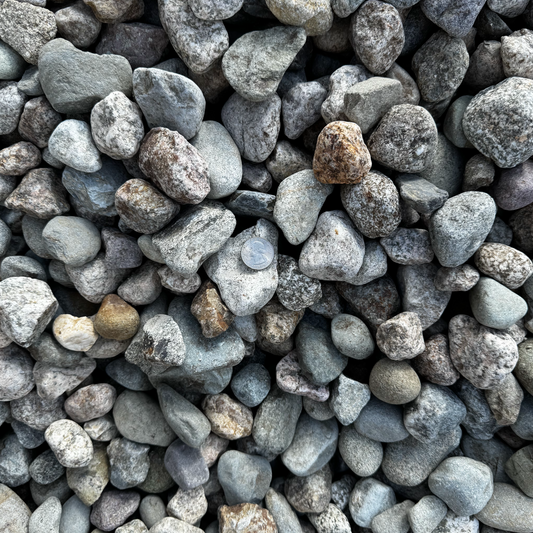
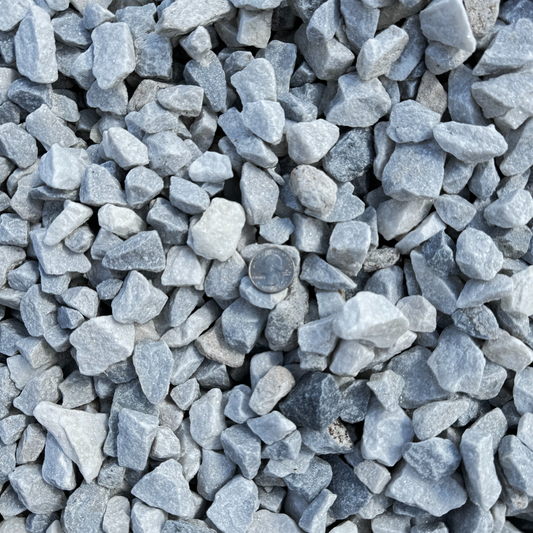
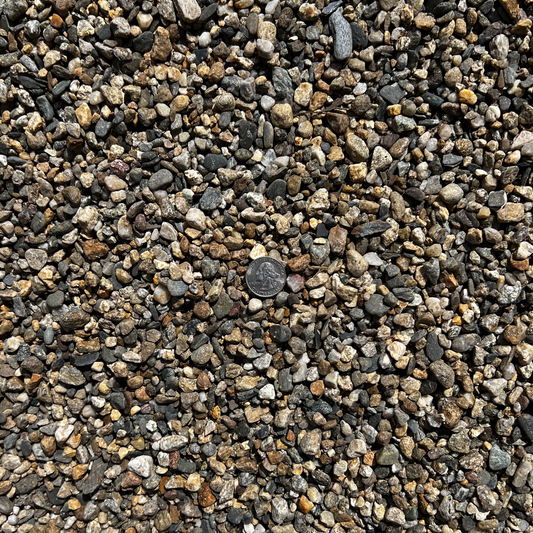
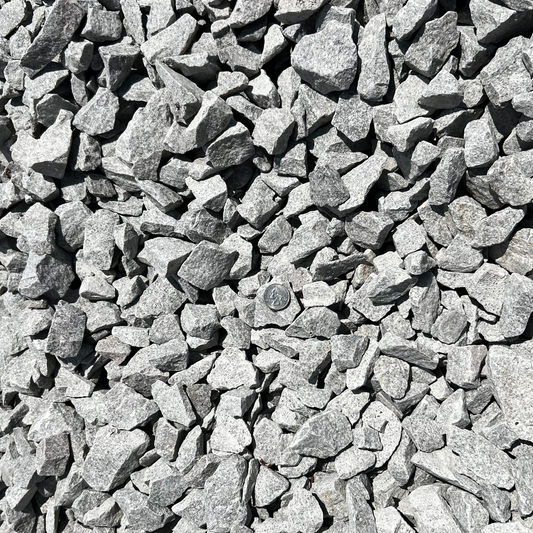
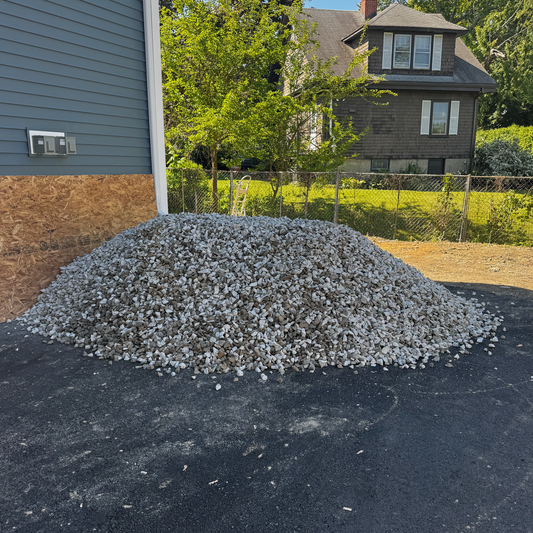
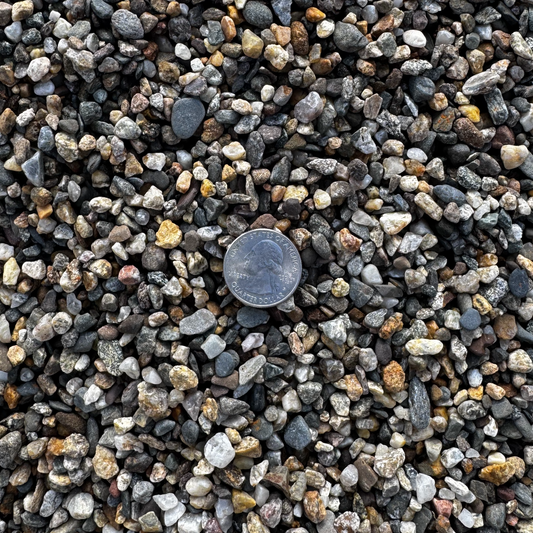
Dense Pack ¾"-to-minus and #610, both $76 a yard, are dense-graded: every size from the top stone down to dust, so a compacted lift behaves close to a slab. Clean stone like #57 has the fines screened out — it drains, which is why it belongs in a drain trench, and it never locks. Plan sets name dense-graded base by the MassDOT M1.03.1 spec; we sell both sized to that description, with no lab testing.
#610 to rebuild depth, dense pack to re-top a drive that still has base. Full comparison in Dense Pack vs #610 for a Raynham driveway base.
How much stone does a 10-by-100-foot driveway take?
cubic yards = (square feet × depth in inches) ÷ 324. A 10-by-100-foot drive is 1,000 square feet.
| Job | Depth | Math | Order | Loads |
|---|---|---|---|---|
| Re-top a sound drive | 2 in | 1,000 × 2 ÷ 324 = 6.2 yd | 6 yards | 1 |
| Rebuild the surface course | 4 in | 1,000 × 4 ÷ 324 = 12.3 yd | 12 yards | 2 |
| Ruts and low spots only | spot fill | — | 1–2 yards | 1 |
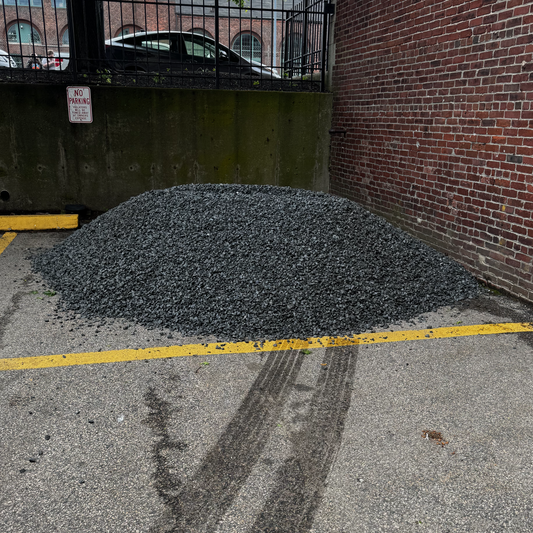
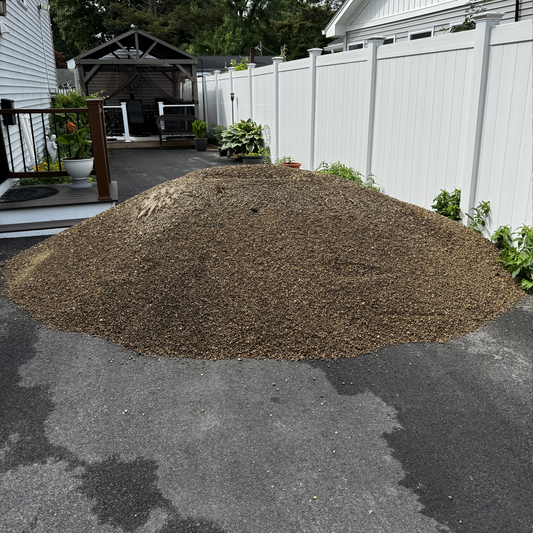
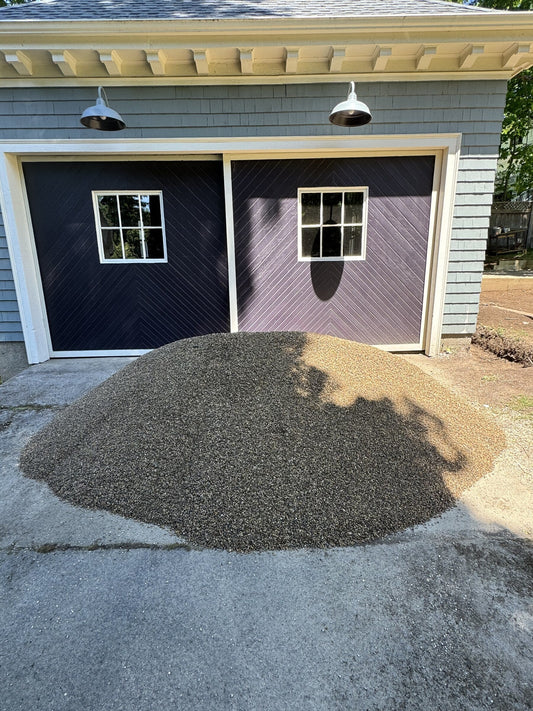
Six yards lands just under a true 2 inches and fits one truck. The cap matters because the fee is per load, not per yard: stone caps at six yards a trip, and two materials the same day is two loads.
What will more gravel not fix?
If the water arrives from the town road or off a roof, more stone is a stopgap. That job wants a culvert, a swale, or a trench drain — and if it discharges toward wetland, read the EPA stormwater guidance and call Norton Conservation first.
What does delivery cost to Norton?
$100 per load inside 30 driving miles of our Dispatch Office in Dorchester, then $4 a mile past 30. Norton is roughly 34.8 miles out: $119 per load, $131 to Chartley. Materials are in driveway construction and repair and crushed stone; the town page is Norton landscape supply.
Do I need a compactor?
Parking the car on each lift helps, but it is not the same thing. A rented plate compactor costs less than the stone you otherwise lose.
Should I use stone dust on top?
Only if you want a hard-packed surface and accept that it dusts in July and goes slick when wet. #10 Stone Dust at $69 a yard does that over a base, not instead of one.
How long does a regrade last?
Five to eight years if the crown holds and the shoulders stay clear. Pulling the berm off once a year is the cheapest maintenance there is.
Ready to order? Start in driveway construction and repair, or text the drive dimensions to (617) 286-2740.