Quick Answer
To top-dress a tired Newton lawn in early May: mow short (2.5"), spread a 1/4-inch blend of screened loam and compost across the lawn, work it into the canopy with a stiff push broom, overseed at 2 lb per 1,000 sq ft, and water lightly twice a day for 10 days. Total job for a 3,000 sq ft Garden City lawn: 3 hours, one cubic yard of loam-compost blend, and 6 lb of seed. The lawn greens up by May 25.
Why Top-Dress in Early May (Not Later)
The Newton top-dress window is April 25 through May 10. Soil temperatures are reliably above 50°F, daytime highs sit in the mid-60s, and the lawn is still in active spring growth — perfect for working a thin layer of organic matter into the canopy without smothering anything.
After May 10, daytime heat slows the cool-season grass push. Top-dressing in late May or June stresses the existing turf. If you missed the window, defer to the September top-dress slot.
For Newton yards along Beacon Street, Centre Street, and the Chestnut Hill side — most of which are mature, slightly compacted, and showing thin spots from the winter — May 3 is the prime Sunday.
Materials
For a typical 3,000 sq ft Newton lawn:
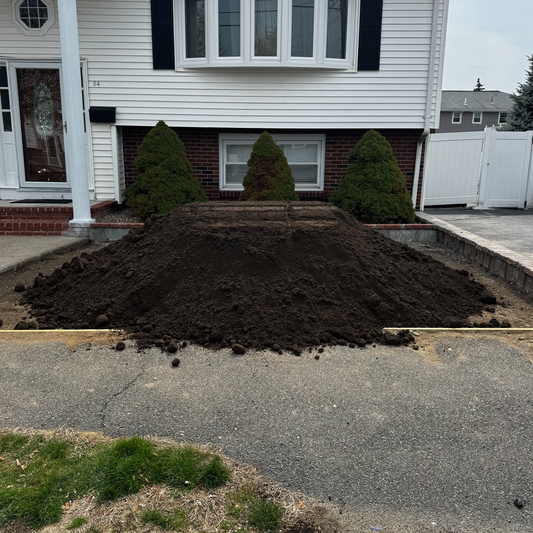
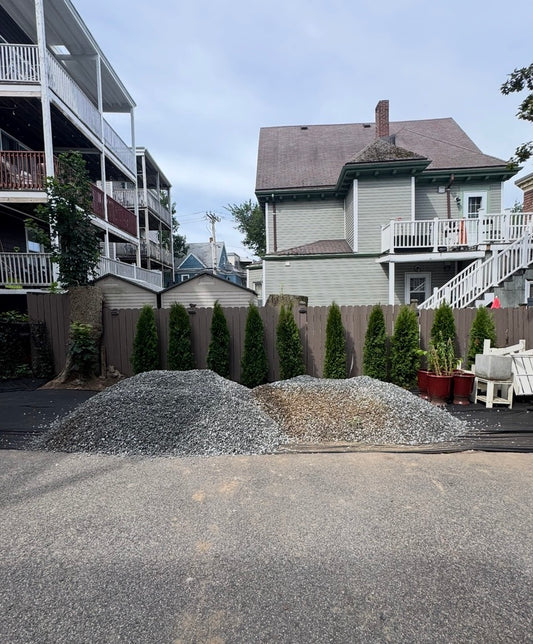
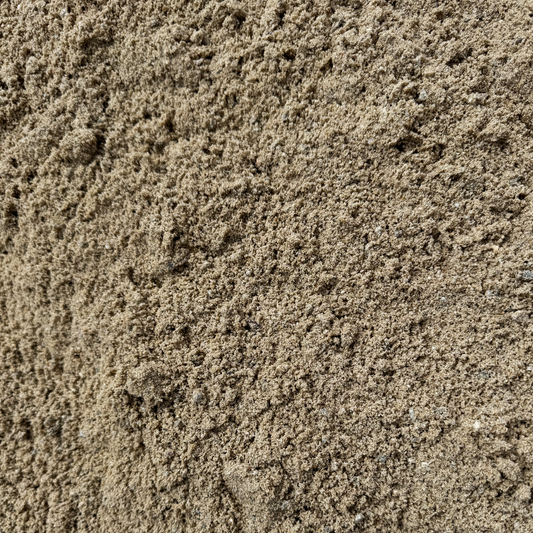
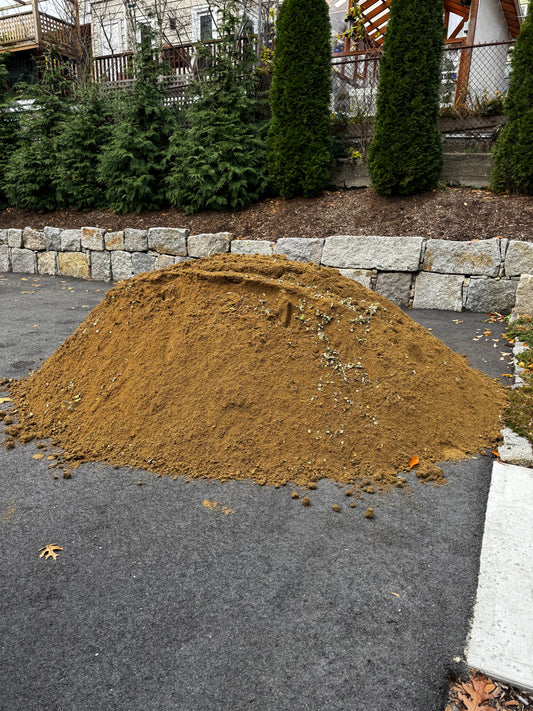
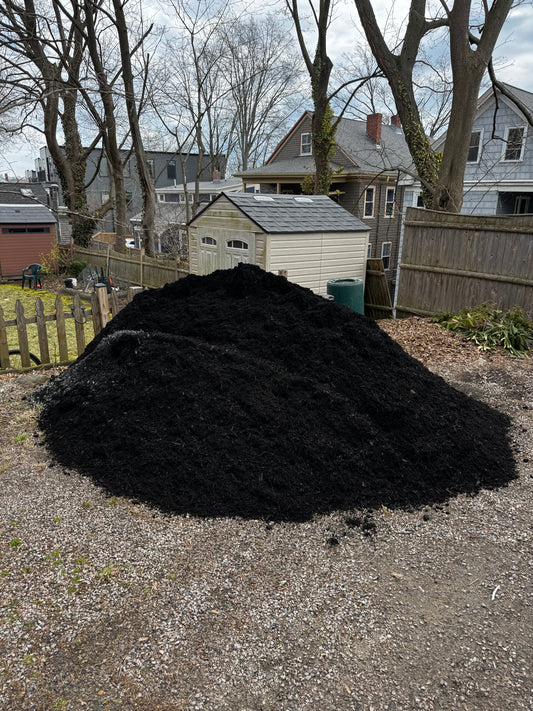
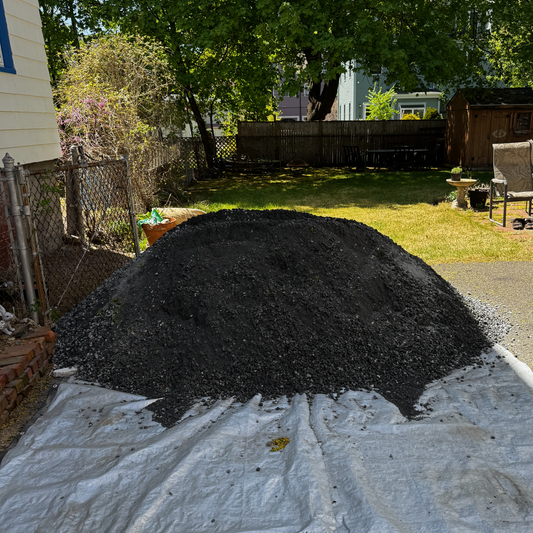
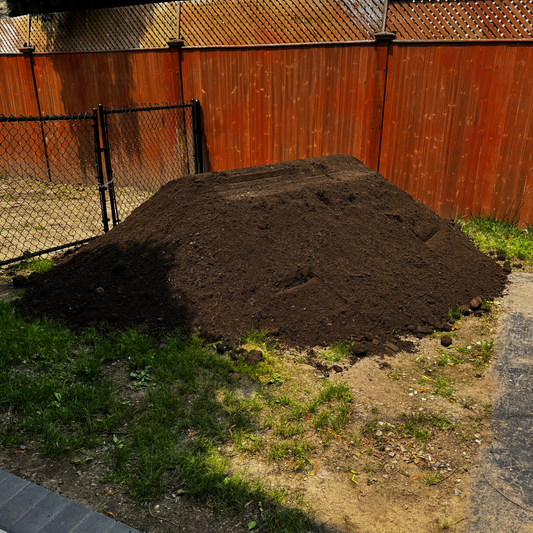
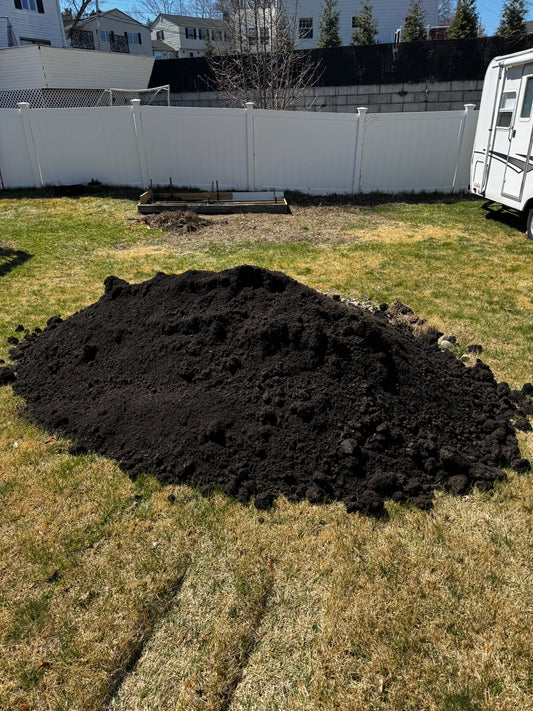
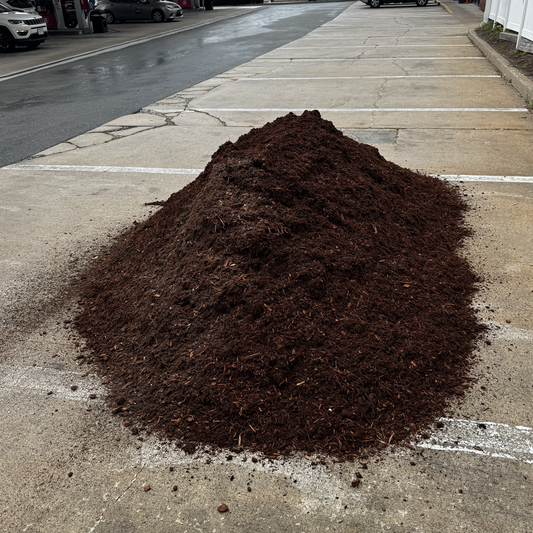
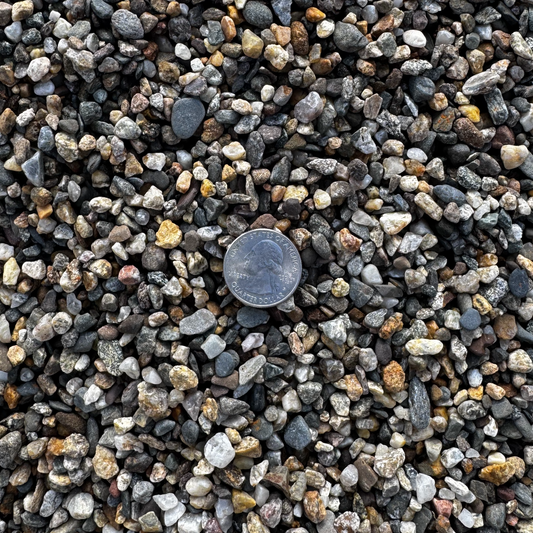
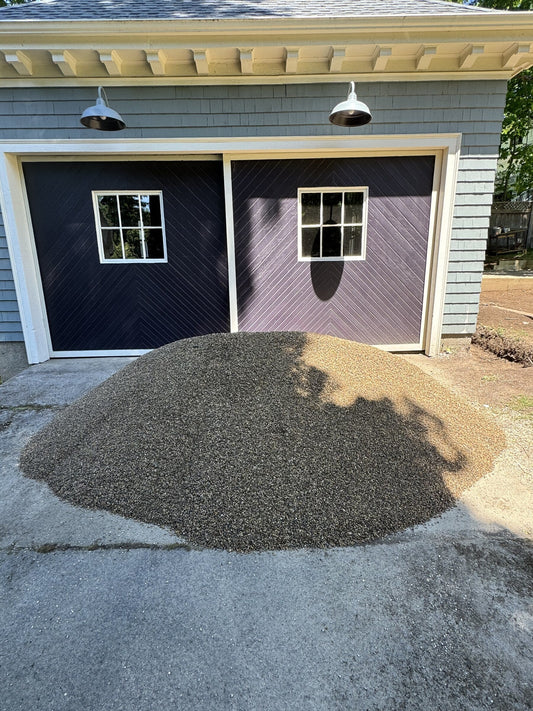
- Screened loam — 1/2 cubic yard (about 1/4" coverage across 3,000 sq ft)
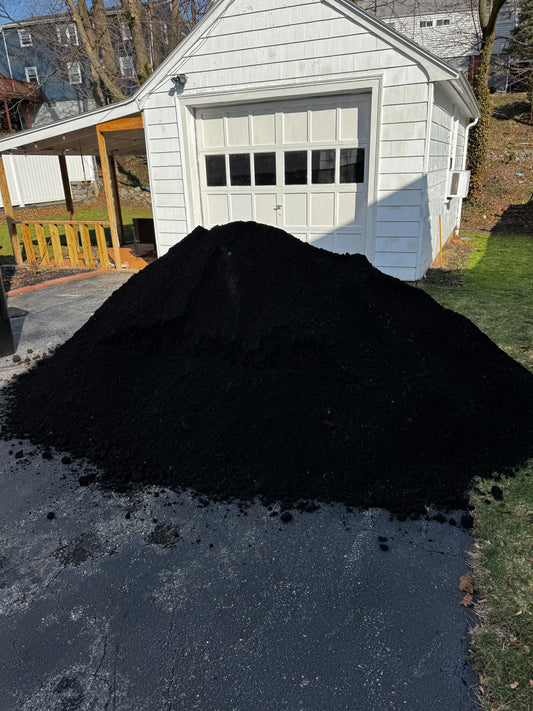
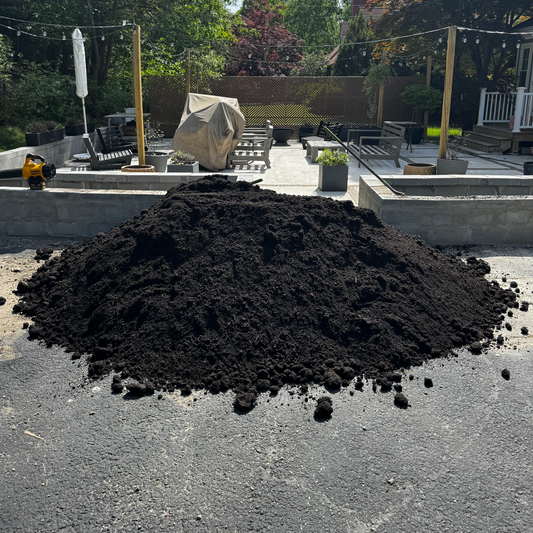
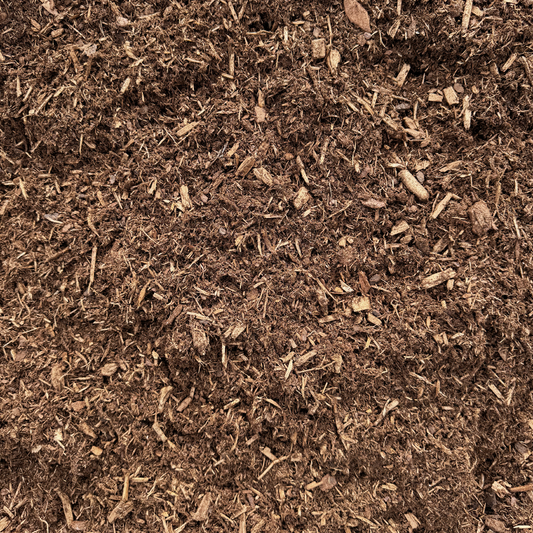
- Screened compost — 1/4 cubic yard (mixed 2:1 loam:compost for the spread)
- Cool-season grass seed — 6 lb (Kentucky bluegrass / fine fescue / ryegrass mix)
- Starter fertilizer — low-phosphorus, applied separately
Browse the lawn leveling and repair collection for loam by the cubic yard. The US Composting Council STA program certifies compost quality; look for STA-tested product or ask your supplier for the spec sheet.
Step 1: Mow Short (15 min)
Drop the mower deck to 2.5" — a half-inch lower than your normal cut — and mow. Bag the clippings. The short cut opens the canopy so the top-dress material reaches the soil instead of sitting on grass blades. Sharp blade, single pass.
Step 2: Mix Loam and Compost (15 min)
Dump loam and compost in a wheelbarrow or on a tarp. Mix to a uniform blend, 2 parts loam to 1 part compost. The compost adds biological activity; the loam adds the body the seed needs to root into.
For Newton lawns with heavier clay subsoil (common east of Walnut Street), bump the compost share to 1:1 — the extra organic matter helps long-term. For lighter Charles River alluvial soils on the west side, the 2:1 mix is fine.
Step 3: Spread Evenly (45 min)
Shovel small piles every 8 feet across the lawn. Walk the area with a wide-back leveling rake or a drag mat (a piece of cyclone fencing weighted with a 2x4 works) and pull the piles into a uniform 1/4-inch layer.
Don't go thicker than 1/4 inch in a single pass. A heavy layer smothers the existing turf. If your lawn needs more body, do a second pass in September.
Step 4: Broom-Work the Canopy (30 min)
Take a stiff push broom and sweep back and forth across the lawn. The goal is to work the loam-compost blend down between the grass blades and onto the soil surface. You should still see green grass blades when you're done — not a brown layer on top.
This is the single step most DIY top-dressers skip. Without it, you're just putting a layer of soil on top of grass. With it, the material is in contact with the soil, the existing roots, and any seed you're about to broadcast.
Step 5: Overseed (10 min)
Broadcast cool-season grass seed at 2 lb per 1,000 sq ft — about half a new-seeding rate, since you're filling in, not starting from scratch.
For Newton, the right mix is 40% Kentucky bluegrass / 40% fine fescue / 20% perennial ryegrass. The bluegrass spreads through rhizomes over time; the fescue handles partial shade common in Newton's tree-lined yards; the ryegrass germinates fast and holds the surface while the others establish. The UMass Turf Program has the authoritative regional seed-mix guidance.
For deeper renovation in spots that need more than a top-dress, see How to Reseed a Bare Spot Where the Snow Plow Tore Out a Medford Lawn — the same technique scales to larger patches.
Step 6: Water Lightly, Twice a Day (Days 1–10)
For the first 10 days, water twice a day for 5–10 minutes — enough to keep the top half-inch moist without ponding. Skip a watering if it rains.
After day 10, shift to deeper, less frequent watering — every 2–3 days, deep enough to wet 2 inches down. This trains the new seedlings to grow deep roots.
Step 7: First Mow (Day 21–28)
Hold the first mow until the lawn is back to 4". Cut to 3" — only the top inch. Sharp blade. After that, return to a 3.5" maintenance height for the rest of May.
Why This Works Better Than Just Reseeding
Reseeding fixes the thin spots. Top-dressing fixes the whole lawn — the soil under it, the surface level, the canopy openness. For Newton lawns that have lost an inch of grade in 10 years (driveway settling, foot-traffic compaction, organic matter breakdown), top-dressing brings the surface back up gradually.
For tool picks on lawn leveling and top-dressing, see The Edger Question: Which Tool Actually Works on Waltham Lawn-Bed Lines. For Mother's Day-adjacent gift ideas if a top-dressed lawn is what mom would love, see 5 Last-Minute Mother's Day Garden Gifts You Can Pull Together This Weekend.
What This Means for You
Three hours on a Sunday in early May, one cubic yard of loam-compost blend, and the Newton lawn that's been tired since 2024 is back to a respectable cool-season turf by Memorial Day. Order delivery through the Newton landscape supply routes — Ottr drops loam and compost the morning of.