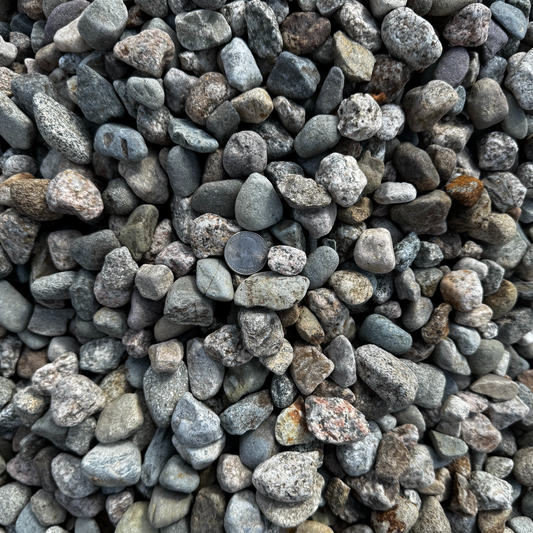
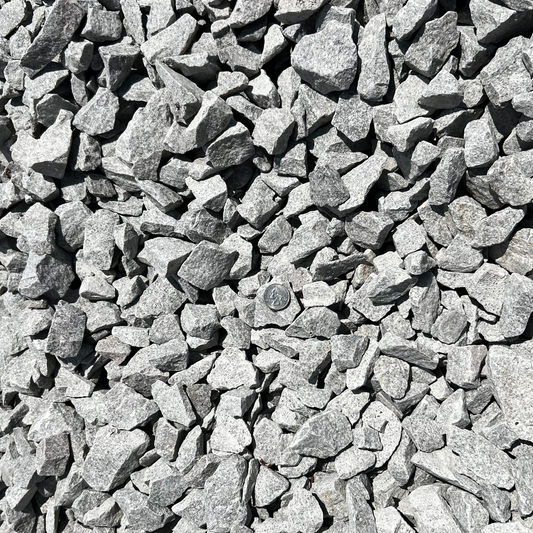
Fix slope erosion in three moves: find where the water actually enters, cut its speed before it reaches the slope, then armor the channel with stone sized to the flow — Creek Stone 2"–3" for dry creek beds, Rip Rap 6"–12" for concentrated runoff. Delivery to Attleboro is $133 per load.
Why do Attleboro slopes rill after every storm?
Attleboro is inland Bristol County: rolling terrain draining to the Ten Mile and Bungay Rivers, with heavier glacial till underneath most of it. Till is dense and absorbs slowly, so in a hard downpour most of what falls runs rather than soaks. Put that on a graded back slope with thin topsoil and you get rills in one season and a gully in three.
The other half is usually man-made — roof water off a downspout, sheet flow off a driveway. Concentrated water cuts; spread water does not. Check what your parcel is built on with the USDA NRCS Web Soil Survey before blaming the slope.
How do I find where the water actually runs?
Go out in a real storm and mark the flow path with flags or paint — where water enters the slope matters more than where the damage shows. Read the aftermath too: fines fanned out in a delta means sheet erosion, while a narrow trench with undercut edges means concentrated flow. Then stake top and bottom, run a level string and measure the drop; above roughly 33 percent grade, armoring alone will not hold.
What do I fix first?
- Extend downspouts past the top of the slope and discharge into stone, not soil.
- Interrupt sheet flow at the crest with a shallow swale, a trench drain across a driveway lip, or a French drain. The EPA's stormwater guidance works from the same principle: slow it, spread it, sink it.
Which stone size do I use where?
| Material | $/yd³ | Use for | Do not use for |
|---|---|---|---|
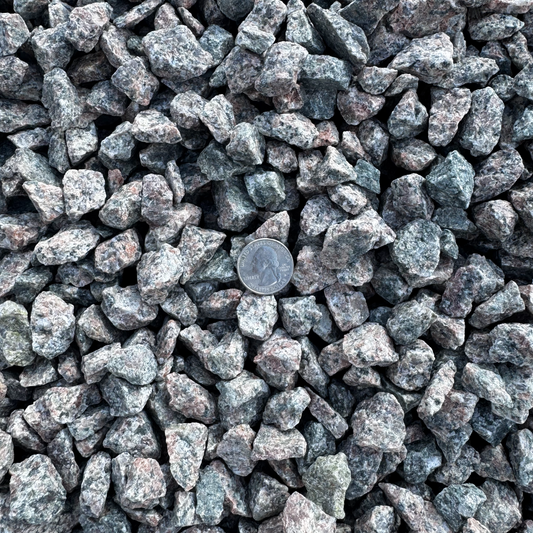
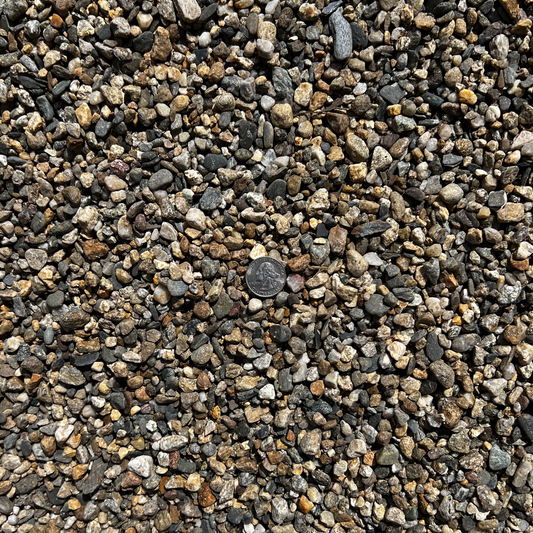
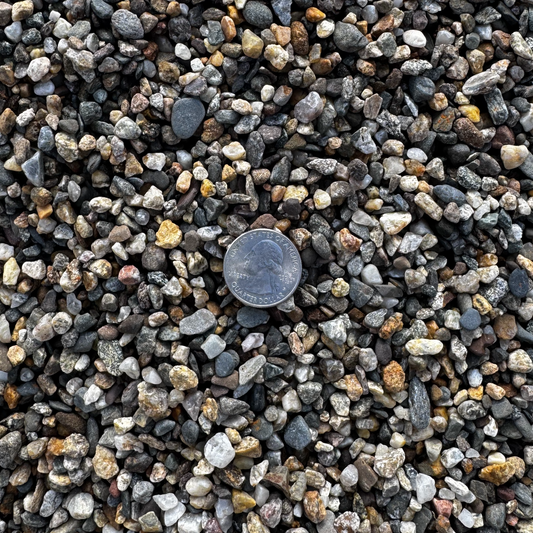
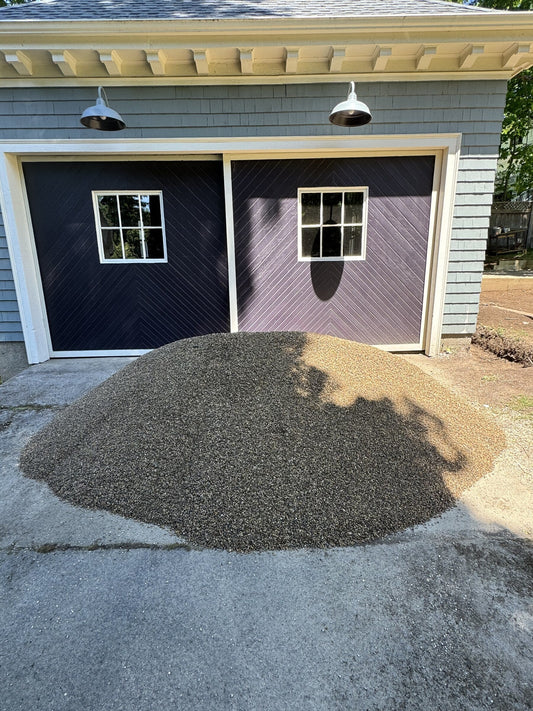
| Riverbed ⅜" (Pea Stone) | 97.50 | Flat drainage beds, infill | Any slope with flow |
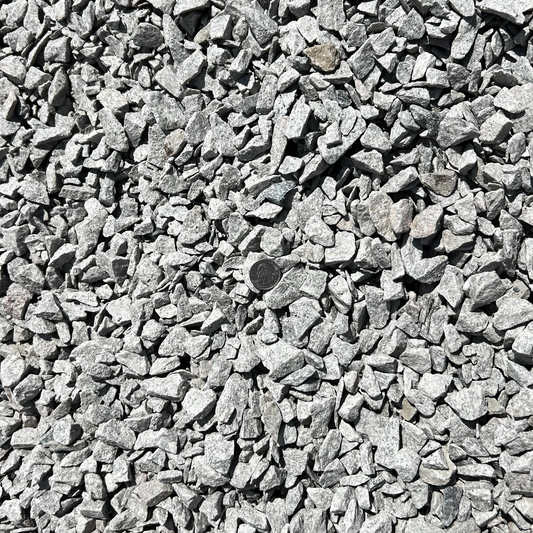
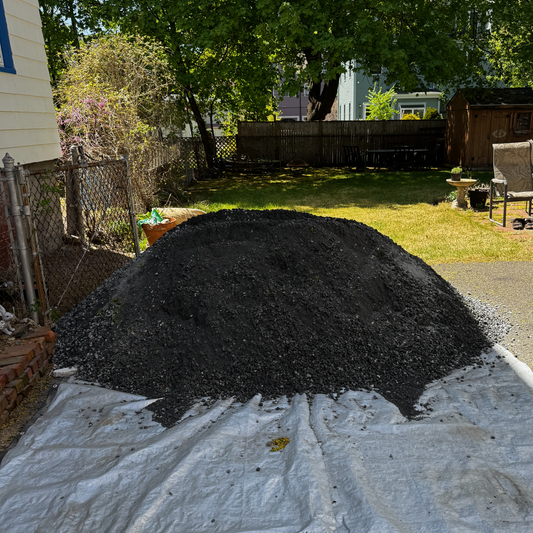
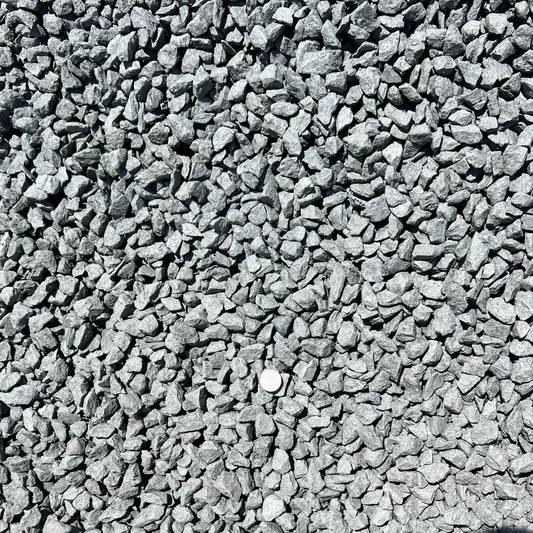
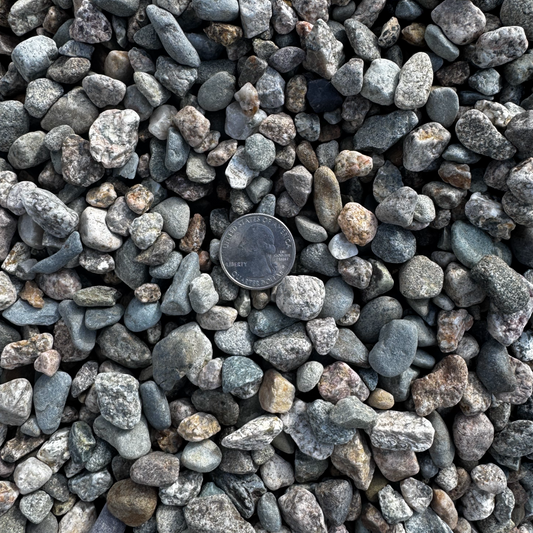
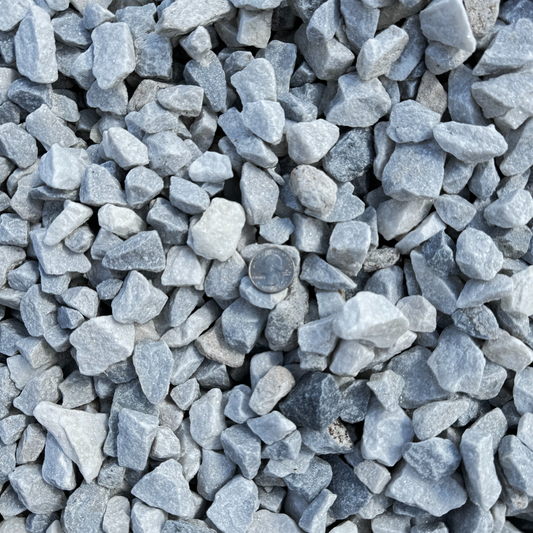
| Creek Stone 2"–3" | 115 | Dry creek beds, moderate flow | High-velocity outfalls |
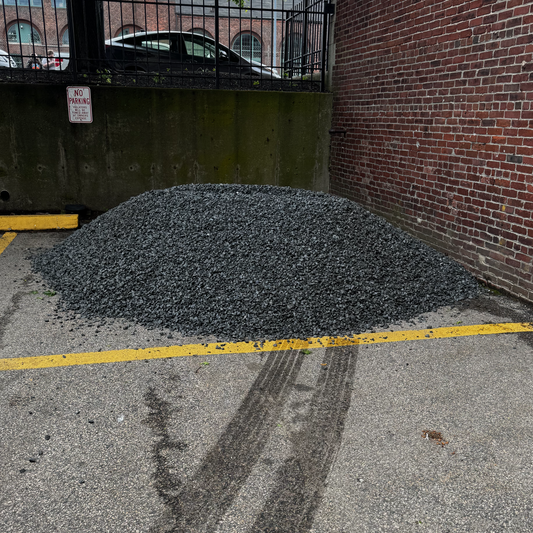
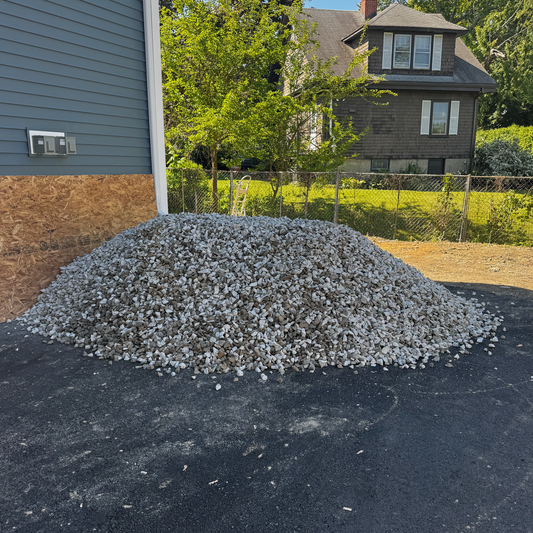
| Rip Rap 6"–12" | 65 | Concentrated flow, outfalls, steep armoring | Anywhere you want to walk |
How do I build the repair?
- Shape the channel 6 to 8 inches deep and two to three times as wide as the water occupies. Wide and shallow is stable; narrow and deep is a gully with stone in it.
- Lay non-woven geotextile across the full width and up both banks, overlapped 12 inches, or the stone sinks into the till and the soil beneath keeps eroding.
- Place the stone. Rip rap at least 12 inches deep so no stone moves alone; creek stone 4 to 6 inches with the largest pieces along the edges. Extend it 3 feet past where the flow appears to start and stop — inlets and outlets fail first.
- Revegetate the shoulders. Bare soil next to armored stone is the next rill.
How much stone, and what does delivery cost?
Use cubic yards = (square feet × depth in inches) ÷ 324. A 30-foot dry creek bed 3 feet wide at 6 inches is 1.7 yards — order 2.
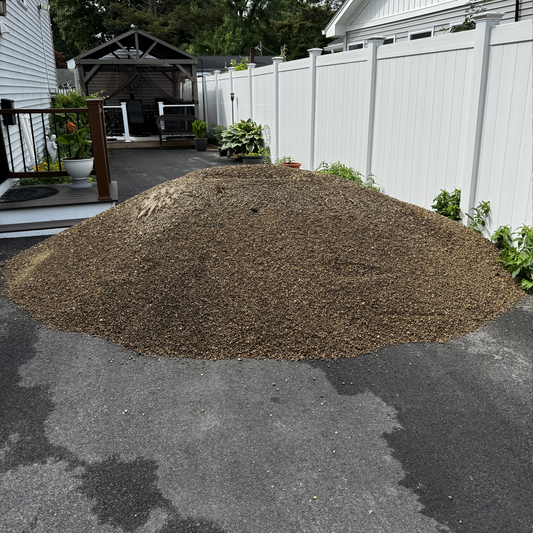
Attleboro is $133 per load at 38.3 driving miles from our Dispatch Office in Dorchester, a single ZIP so no range, priced at $100 plus $4 per mile beyond 30. Stone caps at 6 yards per trip and the fee is per load, counted per line item — so a repair using both creek stone and rip rap is two loads and $266 of freight.
Frequently asked questions
Can I fix erosion with mulch instead of stone?
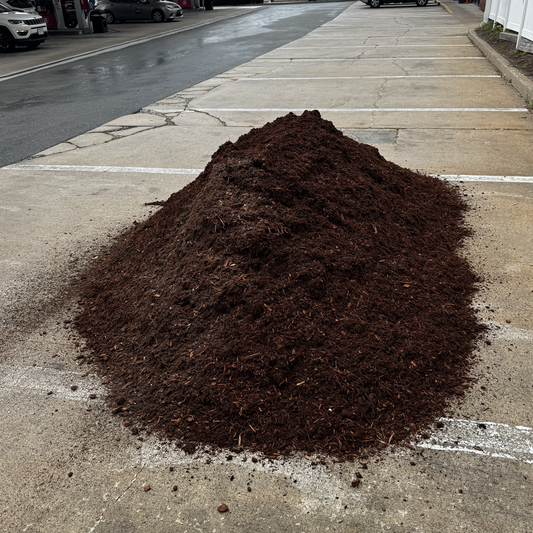
Only where water spreads rather than channels, and only with nugget-shaped Pine Bark.
Do I really need fabric under the stone?
Yes, on Attleboro's heavier till especially. Fabric keeps stone from being swallowed by soft soil.
When is regrading the only answer?
When the slope is steeper than about 1:3, or more water arrives than any channel you can fit.
Shop French drain and drainage materials and decorative stone, or price Rip Rap 6"–12" by the yard. Local delivery is on the Attleboro landscape supply page, and the county fee table is in what bulk delivery to Bristol County actually costs.