Brewster's problem slopes are sand. The kettle-hole banks around Long Pond and the Nickerson ponds are steep glacial deposits with no cohesion, and the bay-side grades toward the flats are the same material. Water does not soak in gently on a slope like that — it channels, and deepens the channel every storm.
1. Find out where the water actually goes
Before you buy a single yard, go outside during real rain and watch. Nine times out of ten the culprit is not the slope; it is a downspout, driveway edge or compacted path dumping concentrated flow at one point. Fixing that costs a length of extension pipe — armoring the wrong twenty feet costs a $305 delivery. The EPA's stormwater guidance explains how runoff concentrates.
2. Slow the water before you try to stop it
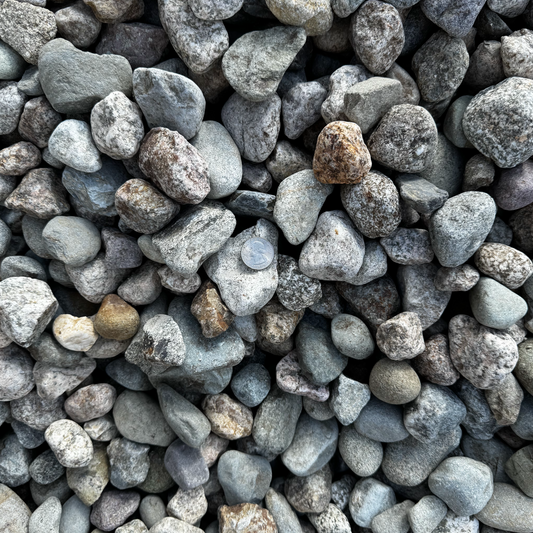
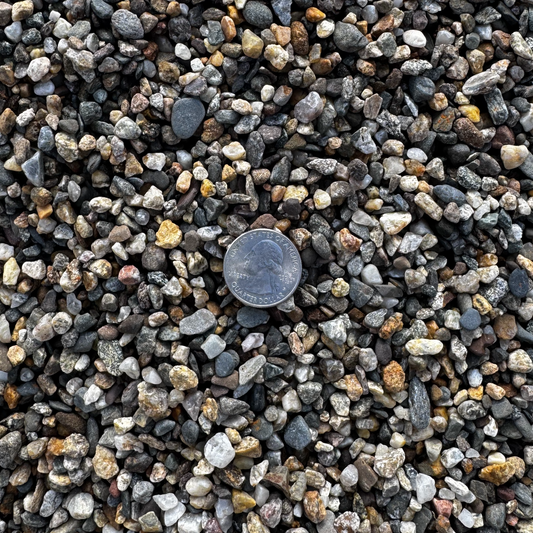
A shallow swale cut across the slope intercepts sheet flow and carries it sideways at low velocity instead of straight down. Line it with Creek Stone 2"–3" at $115 a yard. Skip this step and your armoring washes out.
3. Armor the concentrated flow path with angular stone
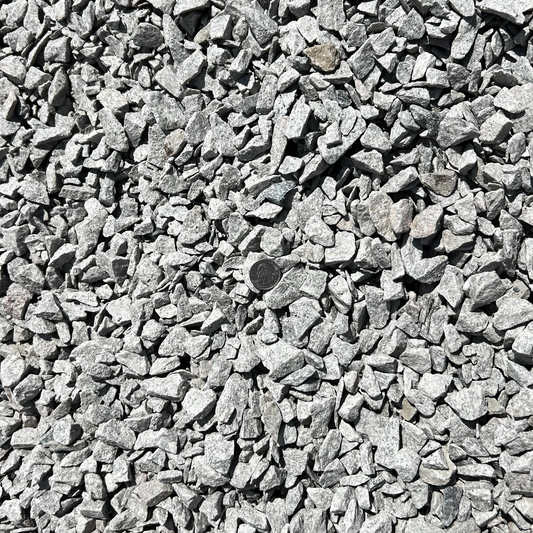
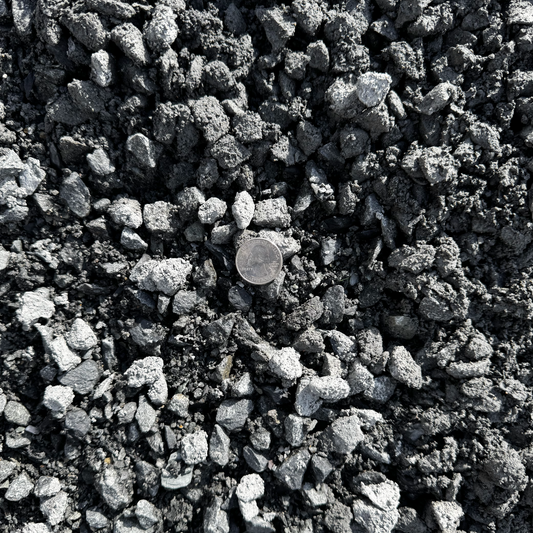
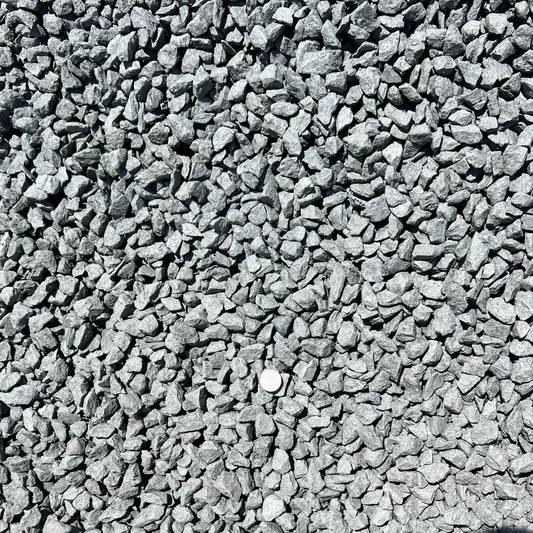
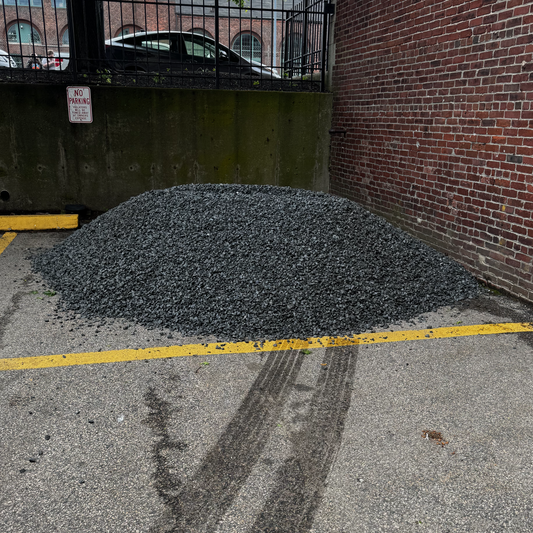
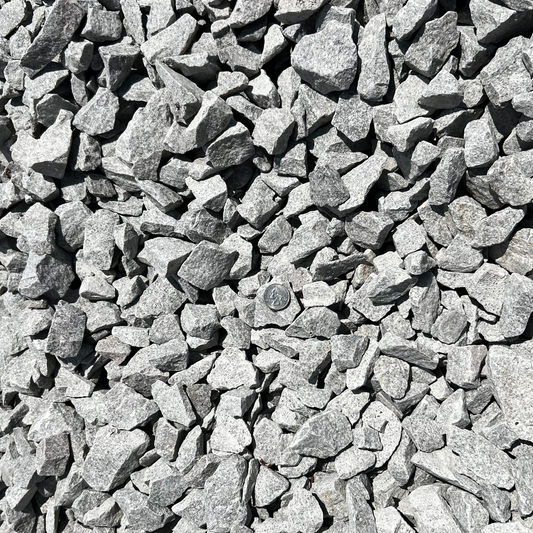
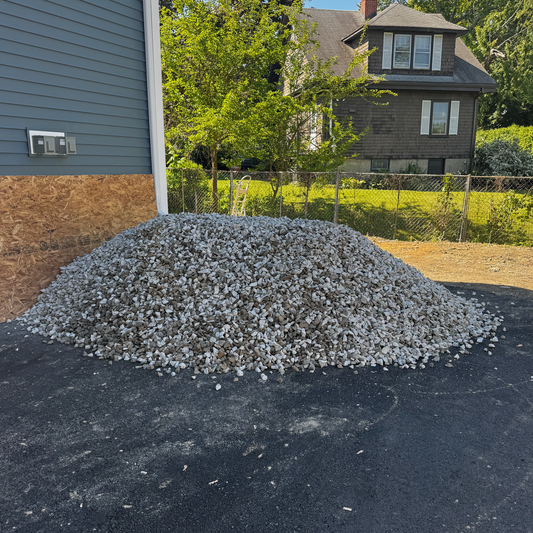
Where water is already moving fast — an outfall, a scoured gully — you need weight and interlock. Rip Rap 6"–12" at $65 a yard is both the cheapest material here and the most effective, because the angular faces key into each other.
| Situation | Material | Price/yd | Honest caveat |
|---|---|---|---|
| Scoured gully, fast outfall | Rip Rap 6"–12" | $65 | Effective and cheap; looks industrial up close |
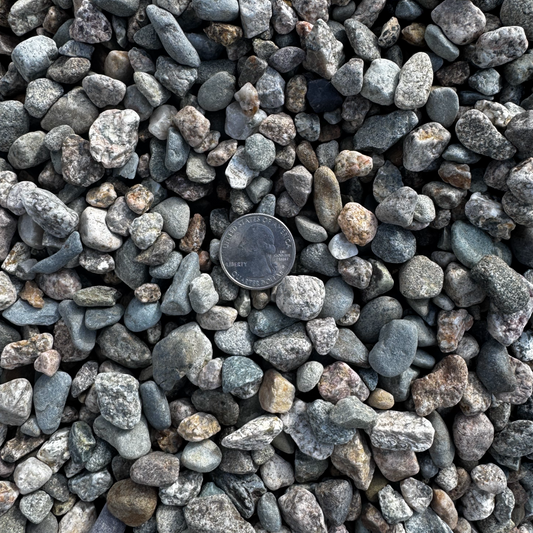
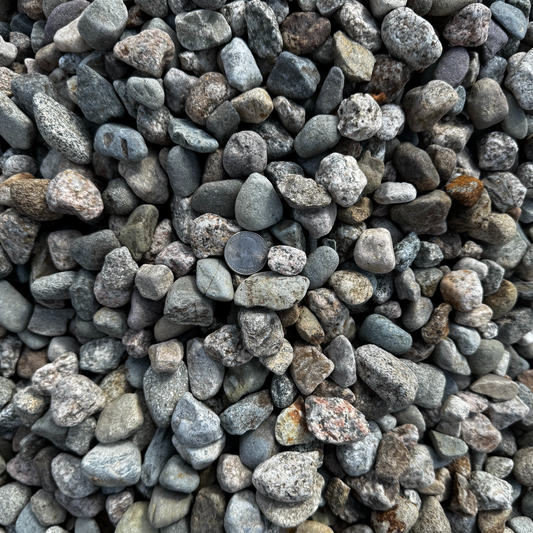
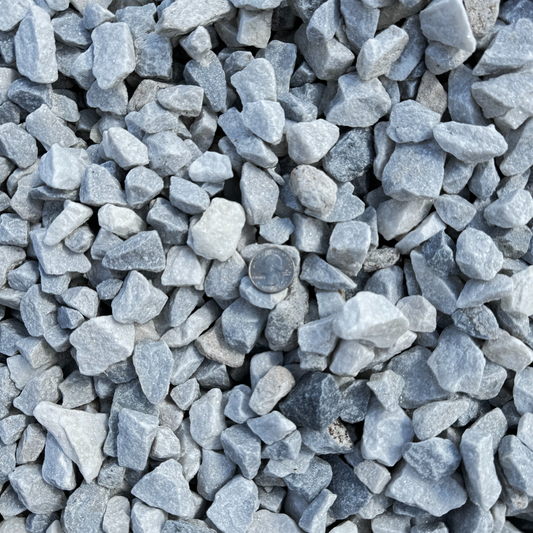
| Dry creek bed, moderate flow | Creek Stone 2"–3" | $115 | Looks right, but too light for a real gully |
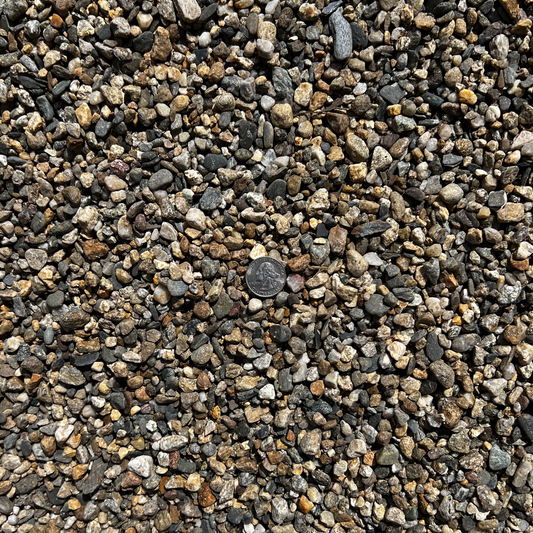
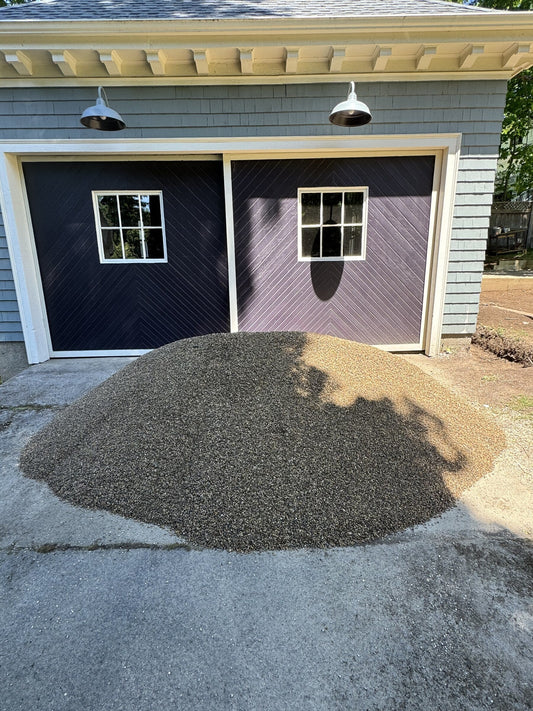
| Gentle slope, decorative | Riverbed grades | $90–$120 | Rounded stone rolls downhill on anything steep |
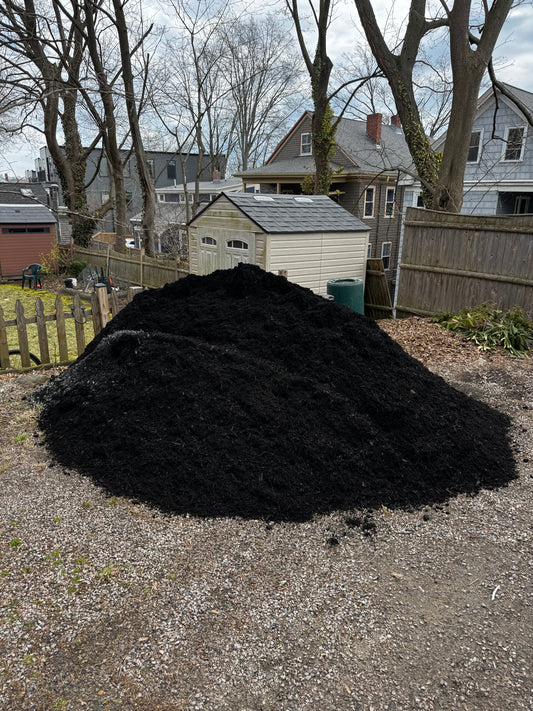
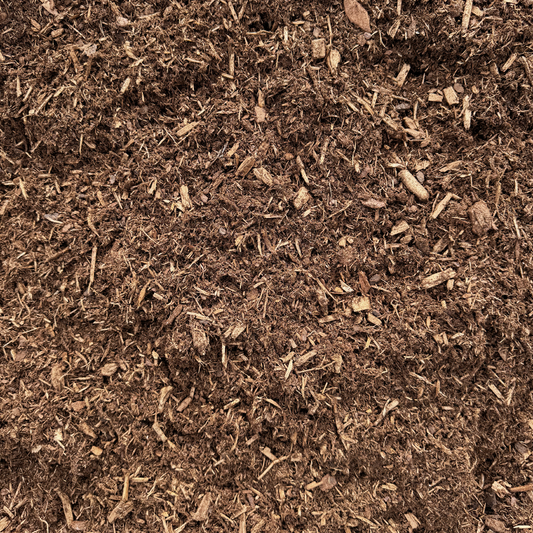
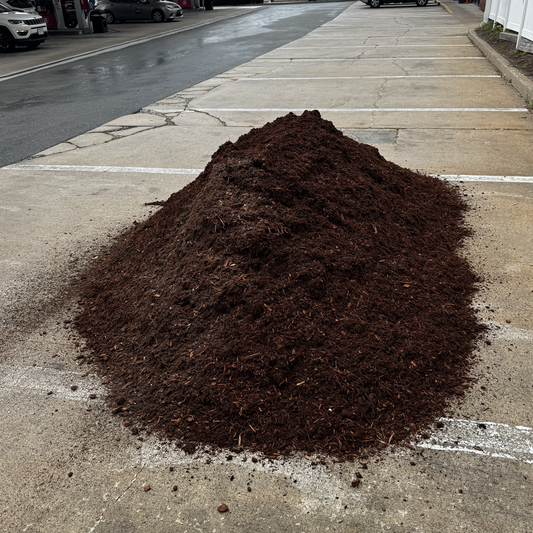
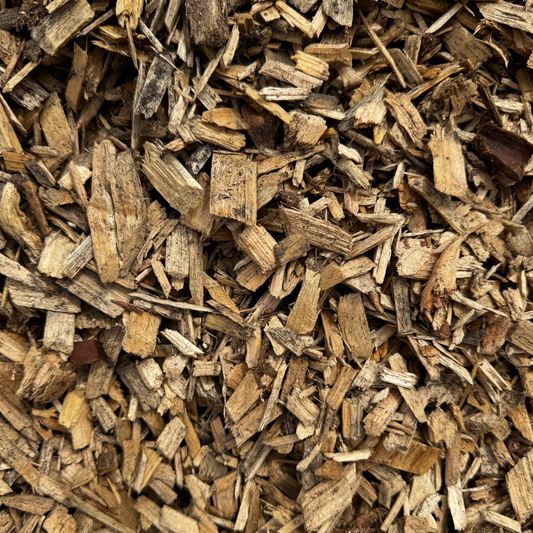
| Slope face under 3:1 | Pine Bark Mulch | $55 | Nuggets resist washout; still moves in a downpour |
The distinction that matters: angular stone stays, rounded stone rolls. Rounded riverbed grades from the decorative stone range look better and are the wrong choice anywhere gravity is doing real work.
4. Cover the slope face, realistically
Pine bark is the best mulch for a slope because its nuggets knit and shed water rather than floating. But be honest about the grade: steeper than roughly 3:1, no mulch survives a summer downpour, and reapplying annually is not erosion control, it is a subscription. Above that, use stone or plant it.
5. Plant it, because roots are the only permanent fix
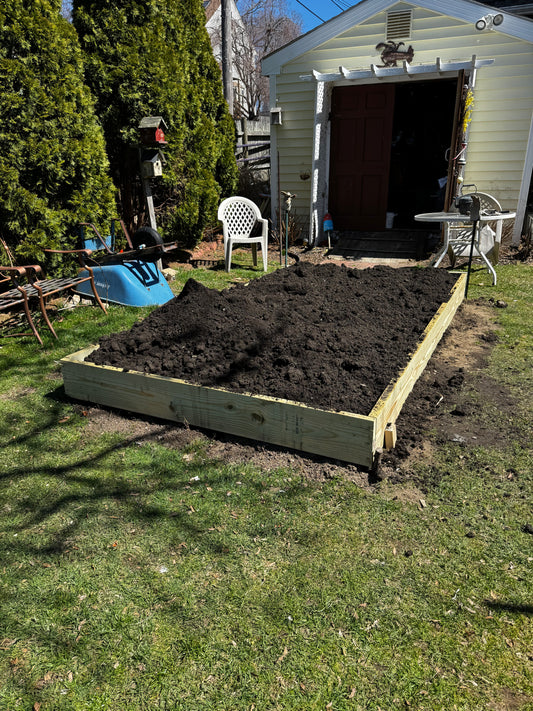
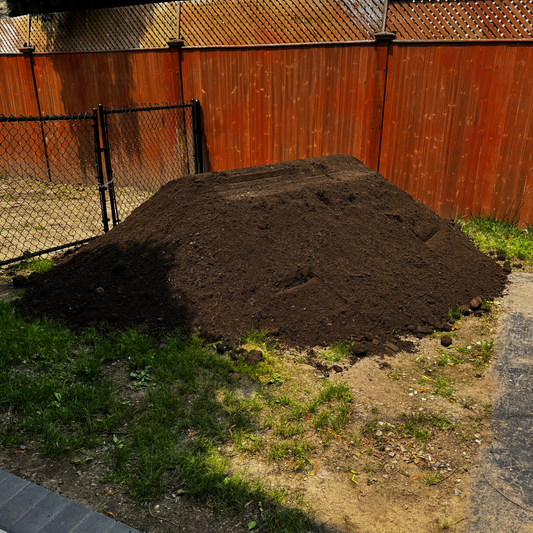
Stone and mulch buy time. Roots hold sand together, and deep-rooted groundcover and shrubs outperform any hard material over ten years. Amend the planting pockets rather than the whole slope — compost in individual holes gives plants something to grip without creating a loose layer that slides. Check pond and coastal-bank setbacks with the Cape Cod Commission before regrading.
How much stone do I need, and what will it cost?
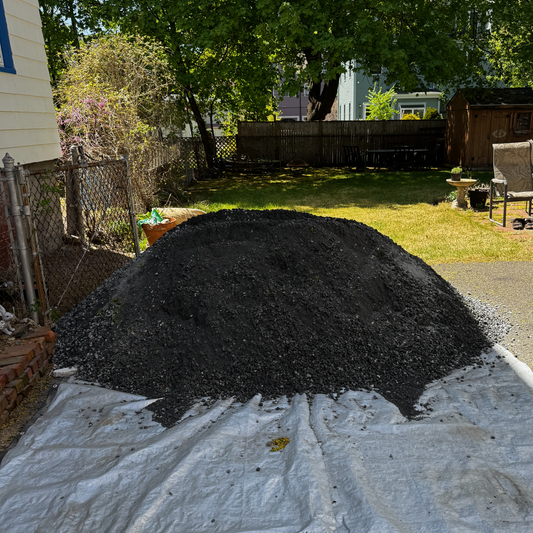
Use the formula: cubic yards = (square feet × depth in inches) ÷ 324. A 40-foot swale three feet wide, lined 12 inches deep, is 120 square feet — 4.4 yards, inside one load.
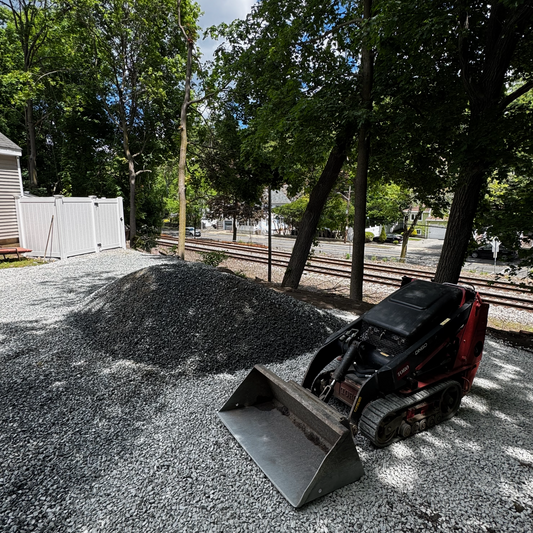
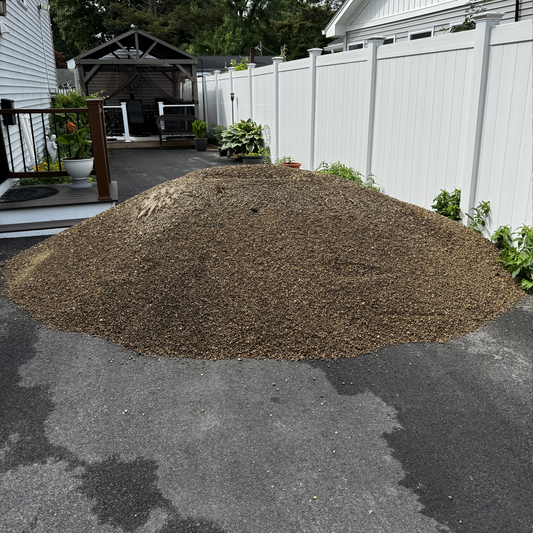
Delivery to Brewster is $305 per load: a single ZIP about 81 driving miles out, priced at $100 per load inside 30 miles plus $4 for every mile beyond. Stone caps at six yards per trip and loads count per line item, so rip rap plus creek stone is two trucks and $610 of freight. Since 4.4 yards costs the same as 6, settle the whole plan before ordering.
Frequently asked questions
Will planting alone stop an active gully?
No. Seedlings wash out before they root. Armor the channel first, then plant into the stabilised slope.
What size stone for a slope?
Rip Rap 6"–12" for concentrated flow, 2"–3" creek stone for a dry creek bed. Anything under about 2 inches migrates downhill.
Is there a minimum order?
No — one cubic yard is valid, but the $305 fee is the same either way.
Browse drainage materials, find addresses under Brewster Landscape Supply, and if the slope is bare sand, how to amend sandy soil covers the planting side. Put your ZIP into the checker for an exact price, or text (617) 286-2740 with photos of the slope.