Many Walpole houses, from older colonials near the center to the ranches and capes toward East Walpole, sit on ground that has settled. Backfill sinks, beds get built up the wrong way, and with the heavy glacial soil common in this part of Norfolk County, fall rain ends up in the cellar. September is a good month to fix it: the ground is workable, and you're ahead of both the rain and the freeze.
How much slope does a Walpole foundation need?
The common rule is a drop of at least 6 inches over the first 10 feet away from the wall. That's roughly a 5 percent grade. Where a property line or a driveway limits you, steepen the slope close to the house and add a swale to carry the water away. Keep the finished soil several inches below siding, sill plates, and window wells.
Which materials do you need?
| Layer | Material | Why |
|---|---|---|
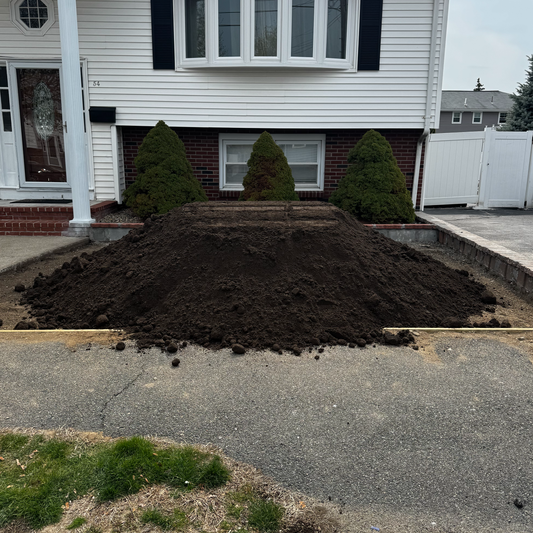
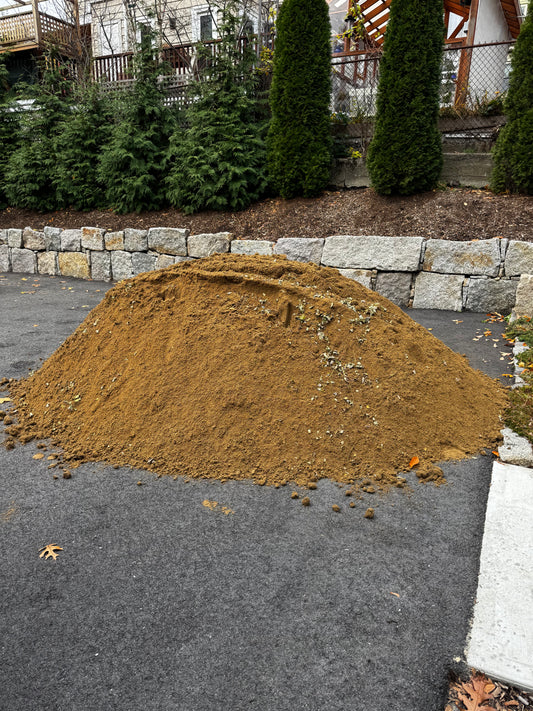
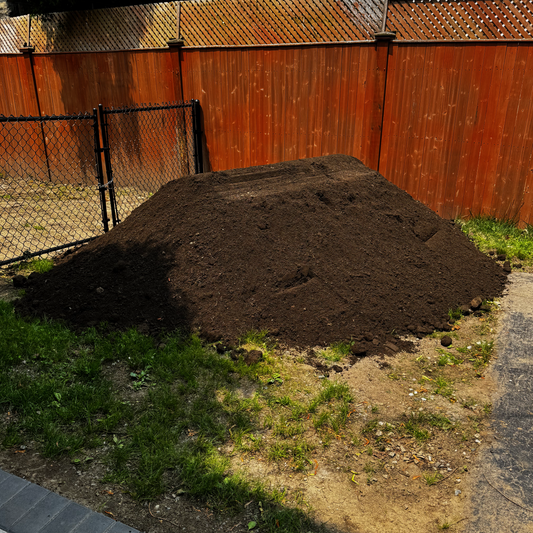
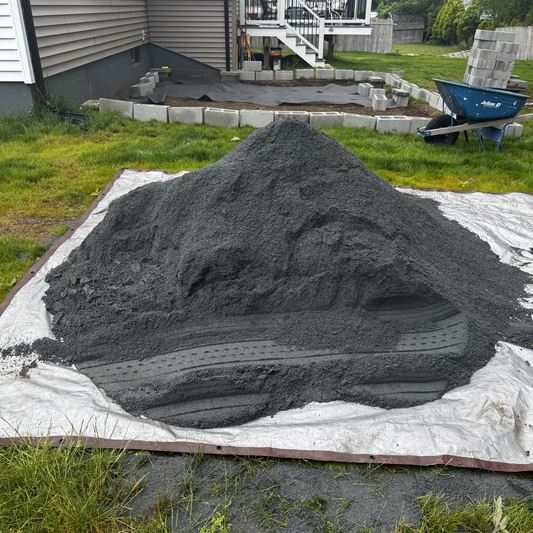
| Bulk of the slope | Common Borrow or Fill Dirt | Compacts firmly and builds height so loam isn't wasted as fill |
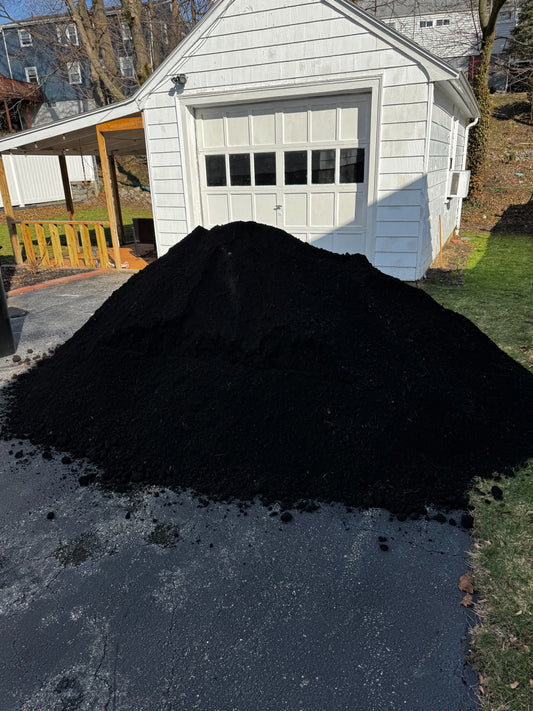
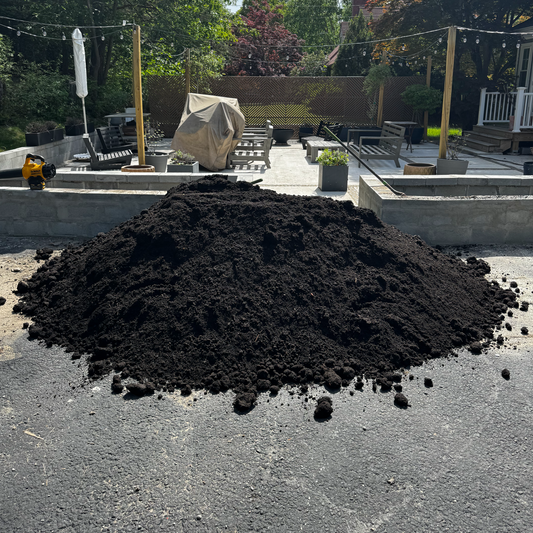
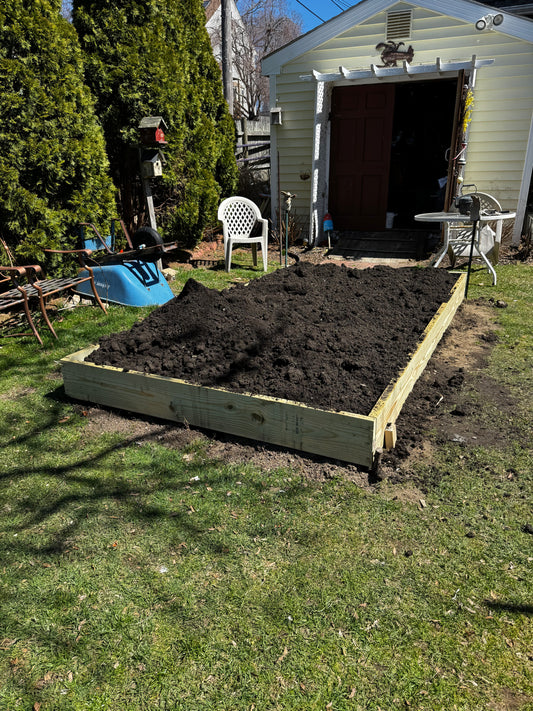
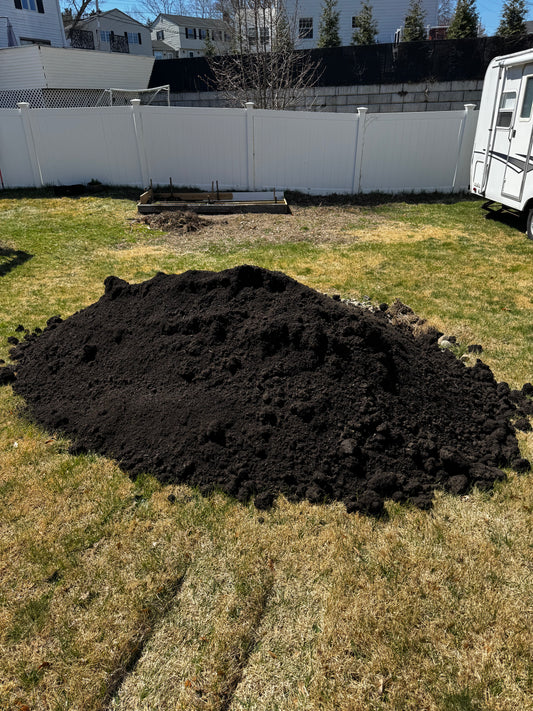
| Finish layer, 4–6 inches | Screened Loam | Grows grass and sheds water |
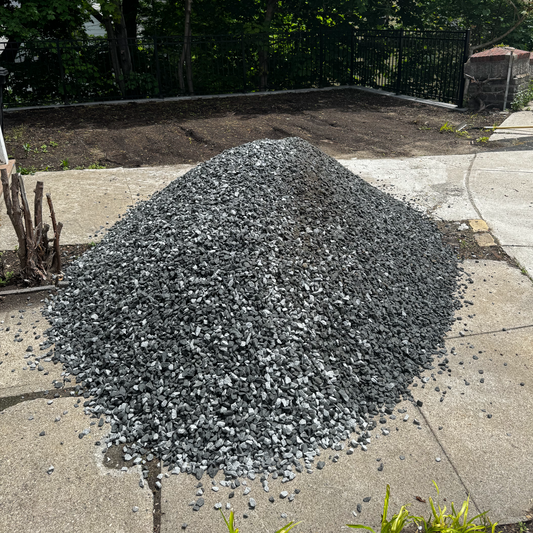
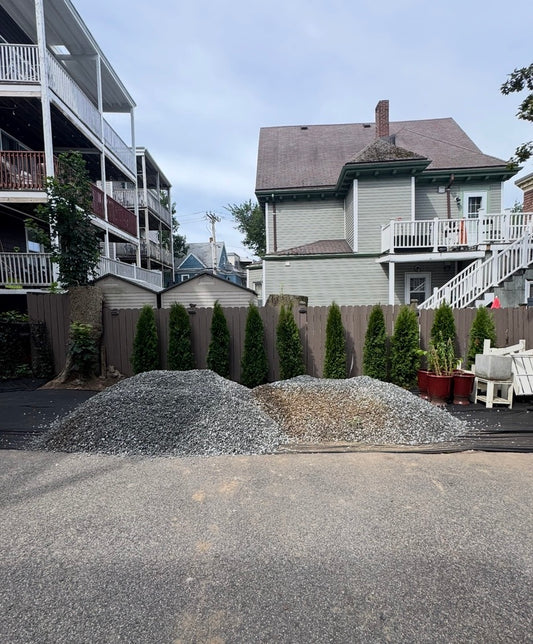
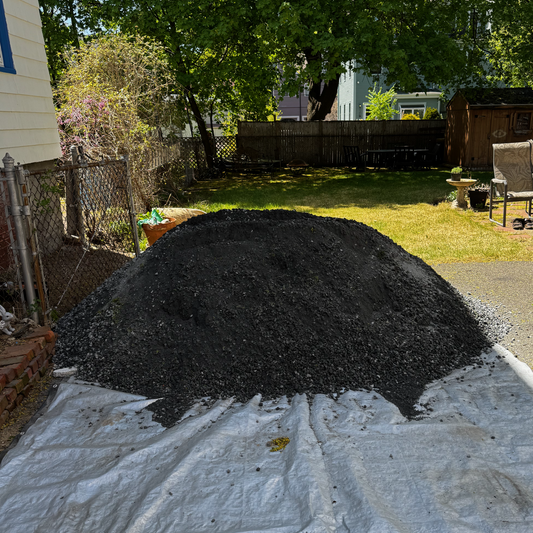
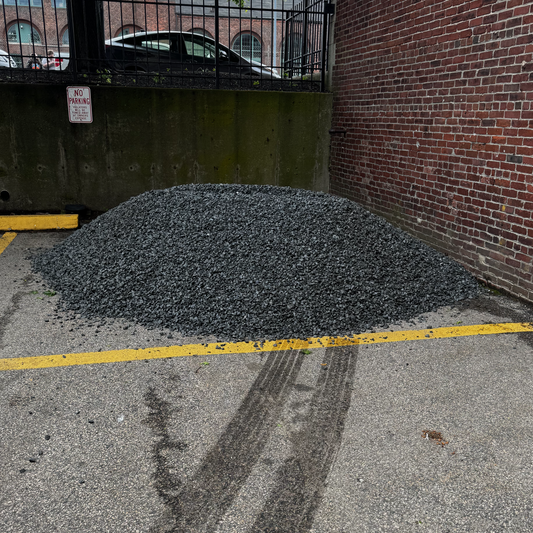
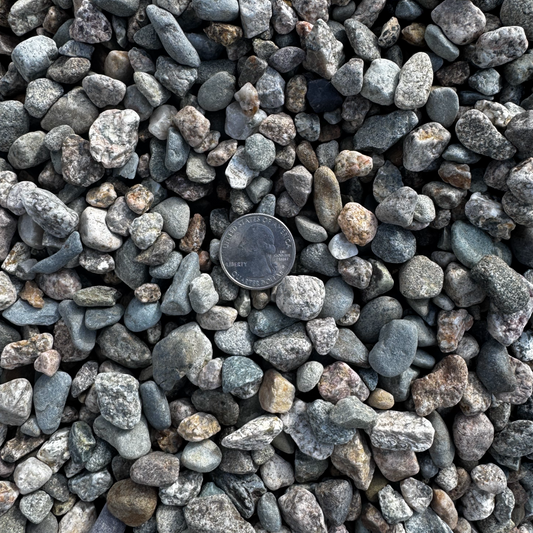
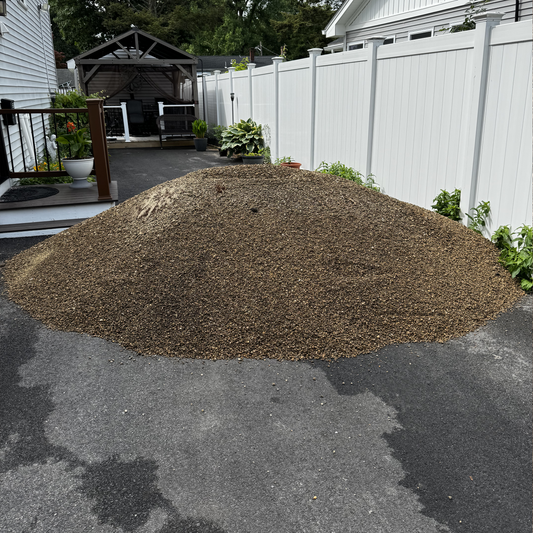
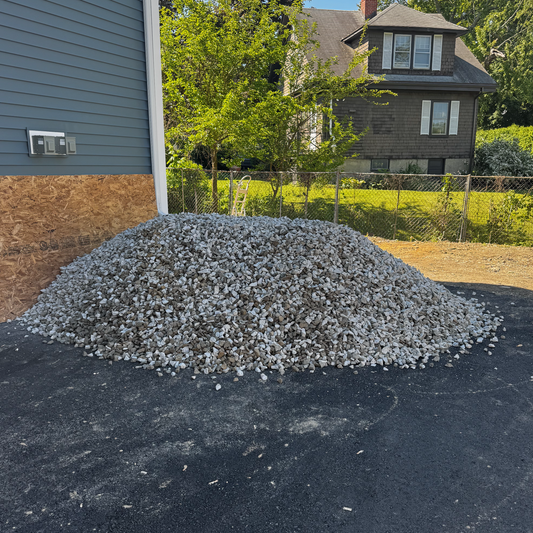
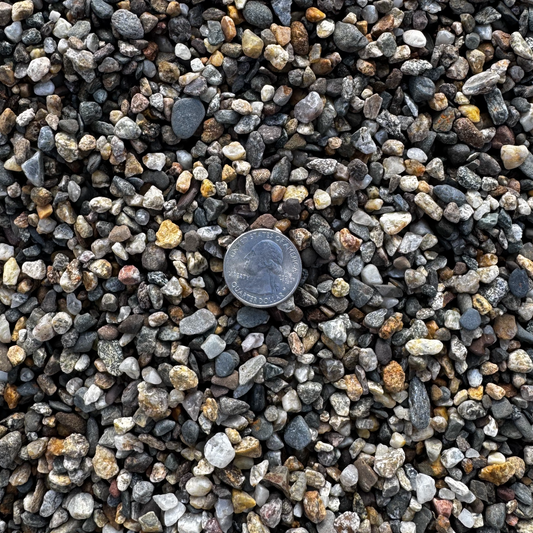
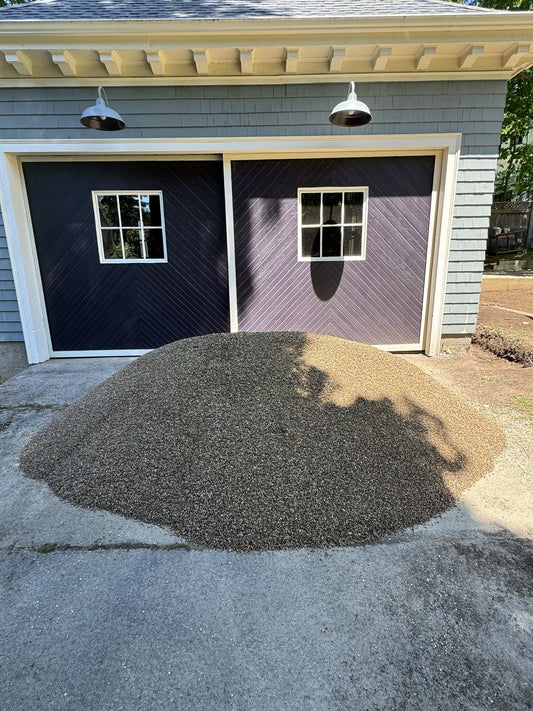
| Optional drip edge or splash area | #57 Stone | Clean drainage stone with no fines, used where roof water lands |
See all fill and finish soils in our soil collection and drainage stone in the crushed stone collection.
How much fill and loam should you order?
Use square feet × depth in inches ÷ 324 = cubic yards. Say you're regrading a 10-foot-wide band along a 40-foot wall (400 sq ft), rising from nothing at the outer edge to 6 inches at the wall. That averages 3 inches, so 400 × 3 ÷ 324 ≈ 3.7 cubic yards of borrow. Add 4 inches of loam over the same 400 sq ft, which is about 4.9 cubic yards. Round up and order 4 yards of borrow and 5 yards of loam. Each material is its own load, and soil loads run up to 6 cubic yards.
How do you regrade around a foundation, step by step?
- Check the current grade. Run a string line from a stake at the wall to a stake 10 feet out, level it, and measure the drop. If it's less than 6 inches, or slopes toward the house, it needs work.
- Clear and fix the water sources. Pull back old mulch and edging. Extend downspouts so they discharge several feet from the foundation.
- Place borrow in lifts. Spread fill 3–4 inches at a time and tamp each layer, shaping it to the slope with the high side against the wall.
- Check the slope again. Use the string line every few feet along the wall, and fill any dips that would pond water.
- Cap with loam. Spread 4–6 inches of screened loam, rake it smooth, and keep the same fall away from the house.
- Seed or cover. Seed by September 15 if you can. After about October 1, cover the loam with straw or mulch and plan a dormant seeding in late November.
What should Walpole homeowners know about delivery?
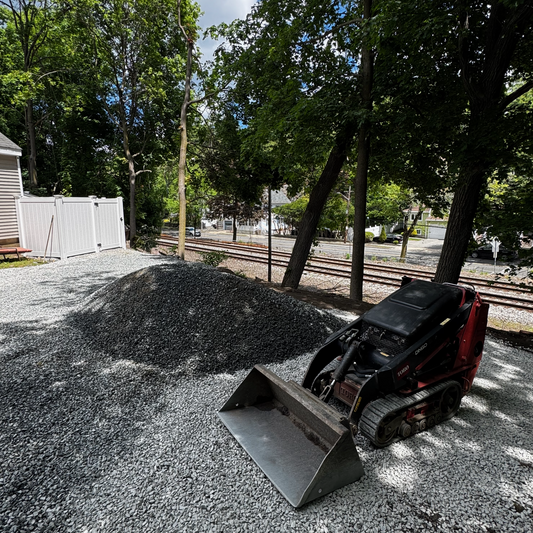
Drops are curbside or on the driveway by default. On-lawn drops are available by request with a waiver. The truck needs about 13.5 ft of overhead clearance and about 10 ft of width, and it can't dump over a fence, so plan to wheelbarrow into a fenced backyard. Pricing is on each product page, and the delivery fee for your ZIP appears at checkout. Local details are on our Walpole landscape supply page. For more on keeping water away from older foundations, see our Brookline foundation drainage guide. UMass Extension has guidance on turf for newly graded soil.
Frequently asked questions
Can I use loam for the whole slope?
You can, but borrow or fill dirt compacts better underneath. Save the loam for the top 4–6 inches.
Should I put stone against the foundation?
A strip of #57 stone works under a drip line, but the soil underneath still needs to slope away from the house.
Can borrow and loam come on one truck?
No. Each material is its own load with its own delivery fee.
Not sure what to order for your foundation project? Call or text (617) 645-0987.