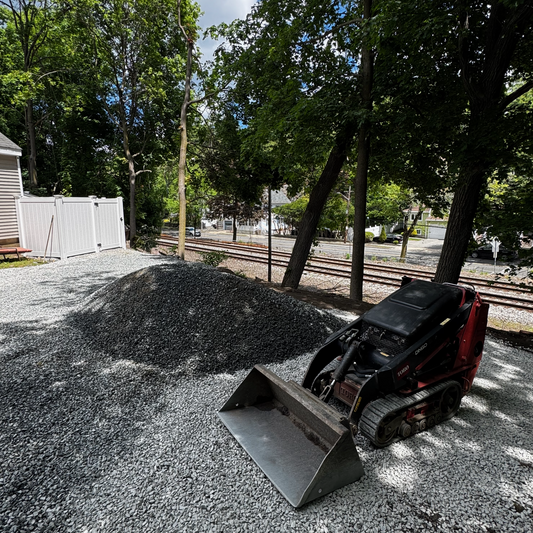
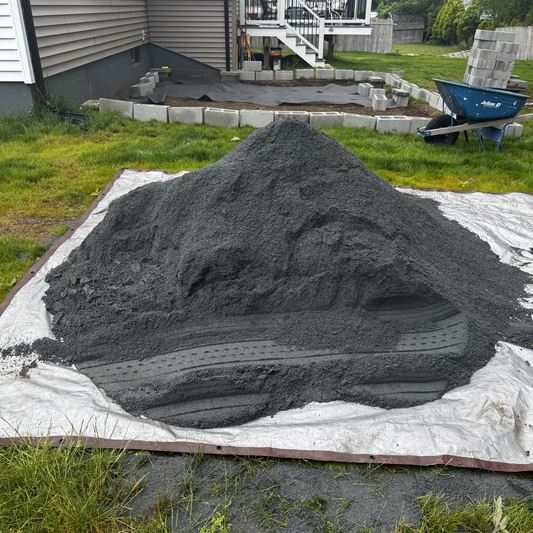
The gravel path from the driveway to the side door gets used all winter. In October, a few thin spots may look harmless. Once leaves, frost, and snow cover the surface, uneven sections are harder to judge.
For a Norfolk County home, start by deciding whether the path needs a surface refresh or a more substantial repair. Our Weston gravel path winter Q&A covers the seasonal questions; this checklist helps you get the work done.
What should you inspect before ordering gravel?
Clear the entire path so you can see its width and edges. Look for bare sections, loose borders, pooled water, and depressions that return after raking.
Push down on suspect areas. If the base moves or pumps water, more finish stone alone will not address the underlying issue. Correct the soft section before topping up the surface.
Which material should go where?
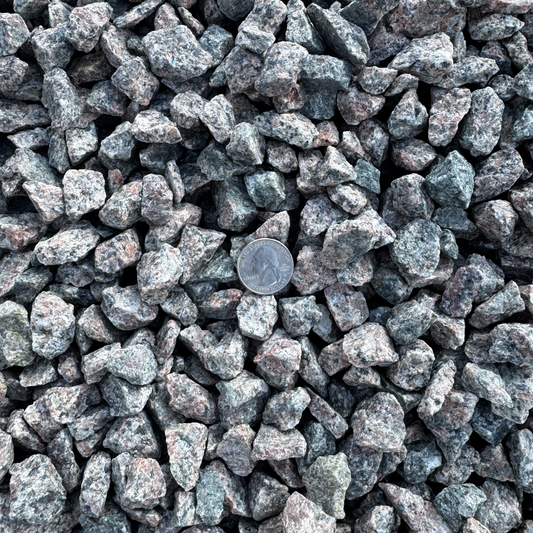
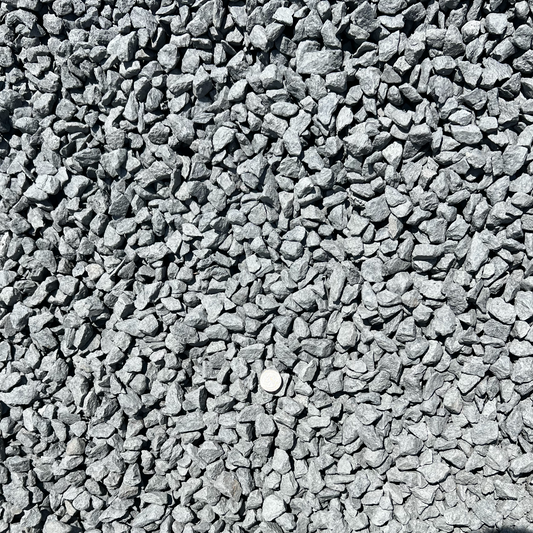
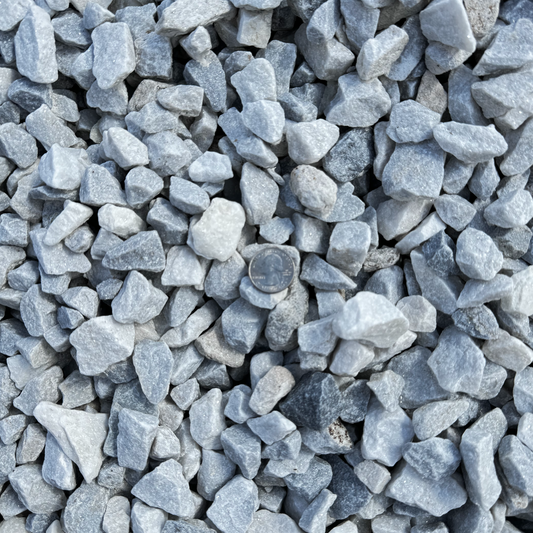
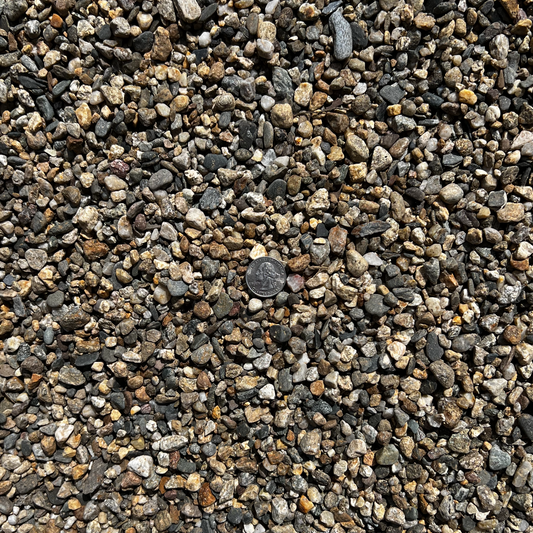
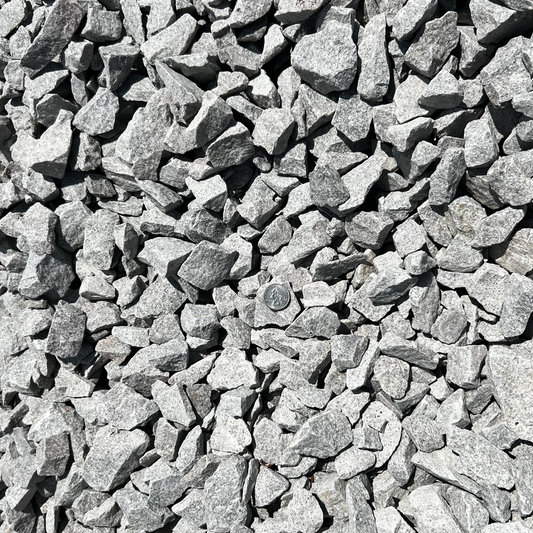
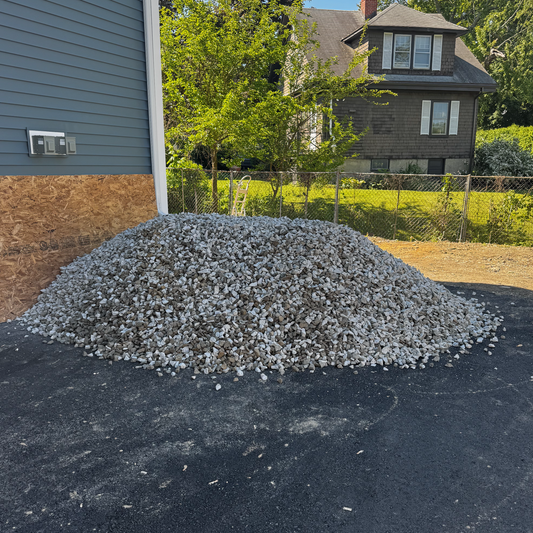
The supporting layer and the visible finish have different jobs. Browse base materials for structural work and the crushed stone range for appropriate aggregate options.
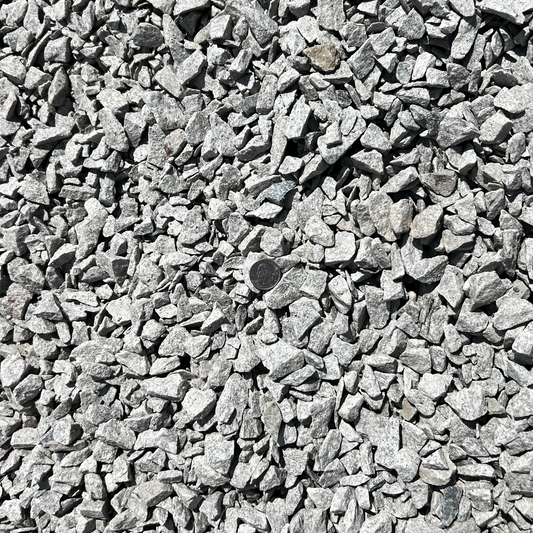
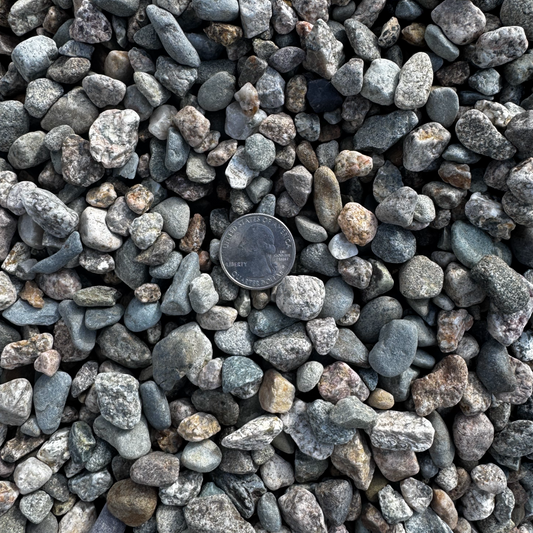
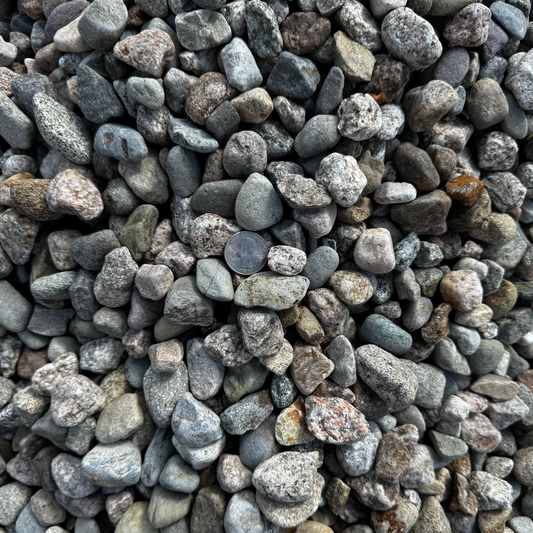
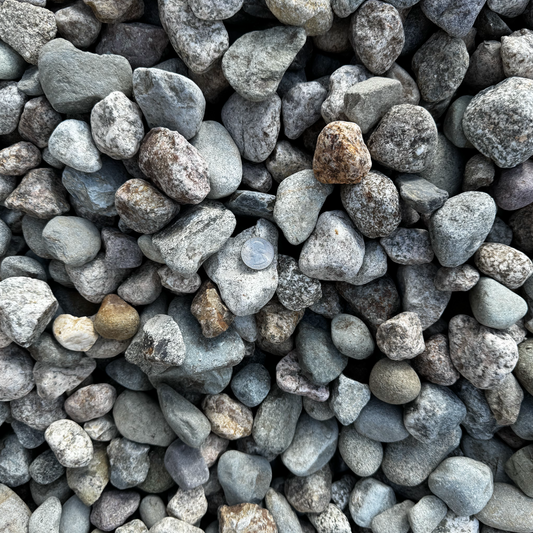
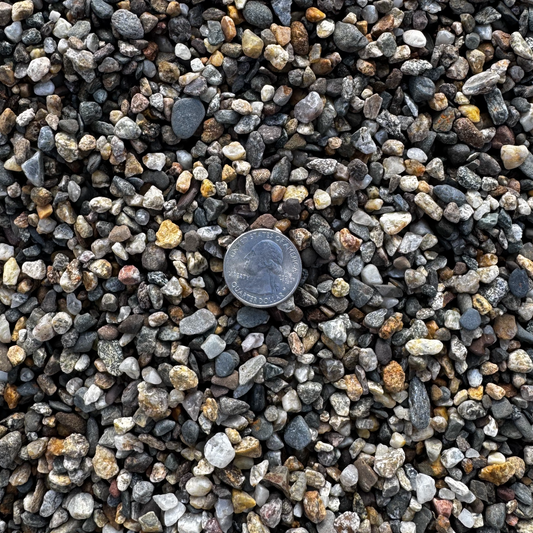
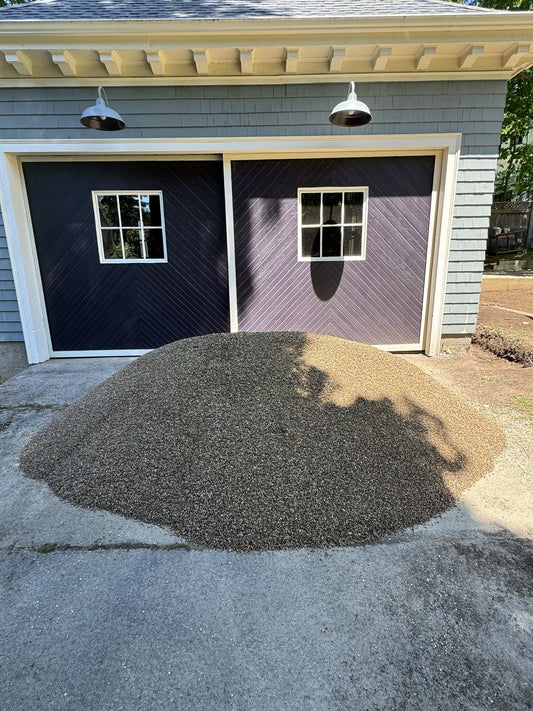
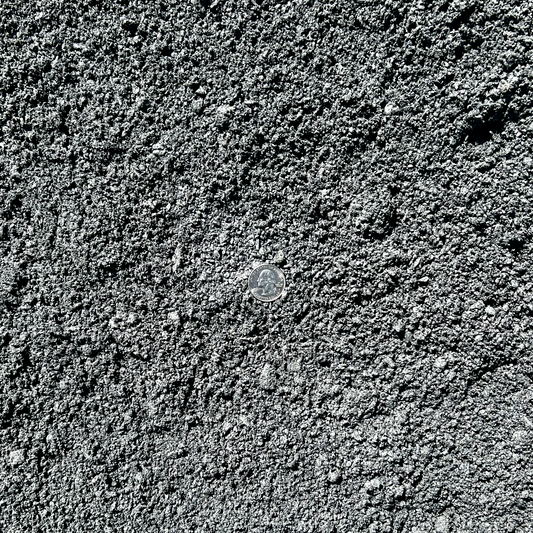
Dense Pack ¾-inch to minus is one compactable base option. A decorative rounded surface may suit a garden setting, but it needs proper edging and should not be treated as a compacted structural repair.
For a regularly used route, consider how the finished surface works for everyone who needs to travel over it, including people using mobility aids. A loose decorative path may not suit that purpose.
How much material does a refresh take?
Measure the actual length and width. Multiply square feet by the proposed depth in inches, then divide by 324 for geometric cubic yards.
For example, a 4-by-60-foot path has 240 square feet. A 1-inch geometric layer is about 0.74 cubic yard. That example explains the math; the proper finish depth depends on the existing path and chosen material.
Keep excavation and compaction allowances separate from a simple surface-volume calculation. Order for the work being performed.
How should you finish the job?
Repair edging first, correct low spots, spread evenly, and compact materials intended for compaction. Check transitions at steps, gates, and pavement so the new surface does not create a trip point.
The FHWA drainage maintenance guidance is useful background on the importance of directing water away from travel surfaces.
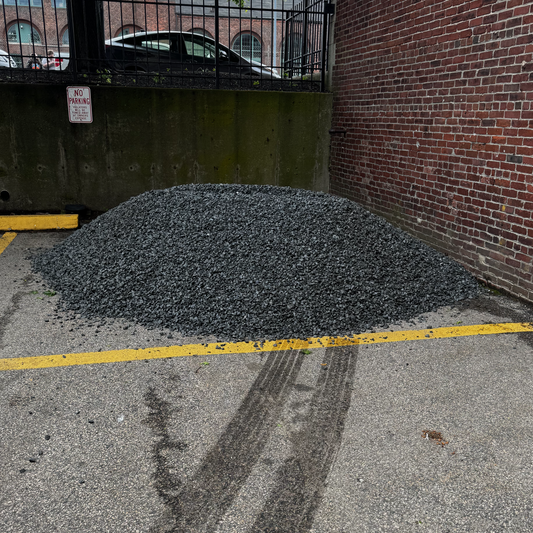
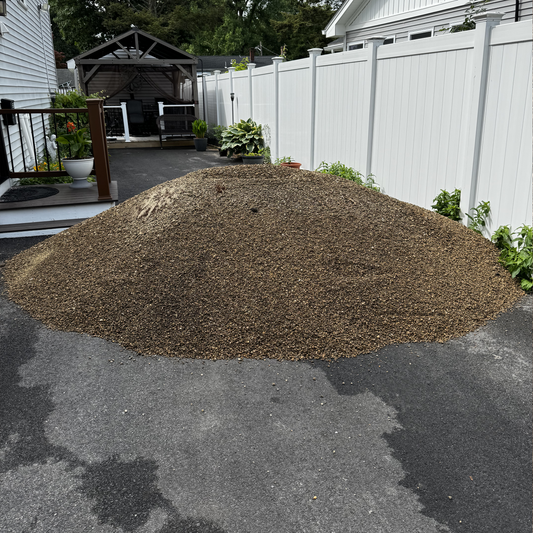
Before winter, mark the path edges and decide how snow will be cleared without scraping away the surface. Choose your repair aggregate from the driveway gravel collection, then stock the winter treatment appropriate for the finished route.
Frequently asked questions
Should I add several inches of loose gravel?
Only add the depth appropriate for the design. An unnecessarily deep loose layer can make walking and snow removal more difficult.
Can a top-up repair a soft base?
No. Investigate and repair the soft section before adding the finish material.
Should the path be checked after rain?
Yes. Rain can reveal low spots and drainage issues that are hard to see on a dry day.