Winthrop is about as exposed as residential ground gets in Massachusetts — a peninsula barely a mile wide with open ocean on one side and the harbour on the other.
What does salt air actually do to a lawn?
Two things, and they call for different answers. Salt spray desiccates blades directly, worst on the windward side and out near Winthrop Beach and Point Shirley. That damage is cosmetic. Sodium in the root zone is the real problem — it breaks down soil structure and makes it harder for roots to pull water. That one shows up on a soil test, not by eye.
How do you tell dormant from dead?
Grab a handful of brown turf and pull. Dormant grass resists; dead grass lifts out in a mat with no root. Check five or six places — windward corner dead, middle dormant. If most is dormant, water deeply and wait two weeks before ordering soil.
Why test before you order soil?
A test through the UMass Soil and Plant Nutrient Testing Laboratory reads pH, organic matter and soluble salts. If sodium is the issue, the answer is leaching, not loam — deep irrigation to flush salts past the root zone.
Which grass tolerates the exposure?
| Grass | Salt tolerance | Drought tolerance | Notes |
|---|---|---|---|
| Fine fescues | High | High | Backbone of a coastal mix. Fine texture, low input. |
| Tall fescue | Good | High | Deep roots, coarse blade, takes wind well. |
| Perennial ryegrass | Moderate | Moderate | Up in under a week. Useful as a nurse grass. |
| Kentucky bluegrass | Low | Low to moderate | Slow to germinate, first to burn in salt wind. |
A fescue-dominant blend with a little rye is the sensible Winthrop lawn. A bluegrass-heavy mix is fighting the site.
What are the steps?
- Test and water first. Send the sample, irrigate deeply for two weeks, and decide what is dead after that.
- Mow low and clear the dead mat. Two inches, bag the clippings, rake out anything that lifts freely.
- Leach if the test says sodium. Long, slow watering to move salts down, plus the amendment the report names.
- Topdress with loam and compost. A quarter inch over living turf, no more. Half an inch is for bare areas only.
- Seed a fescue-dominant blend. Rake or roll it in — loose seed on an exposed lot ends up next door.
- Water light and often. Two or three short cycles daily until germination.
How much loam does it take?
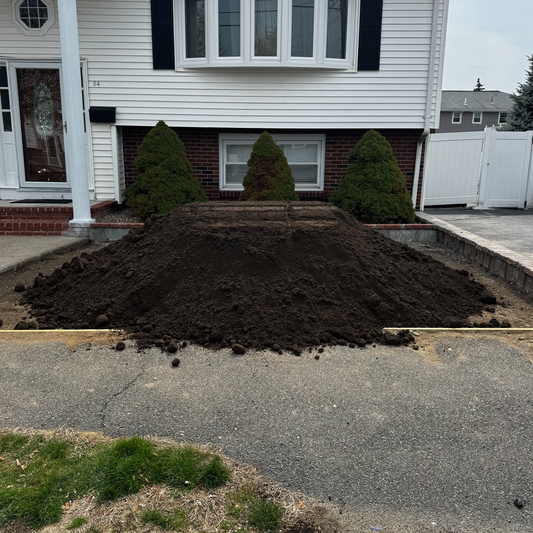
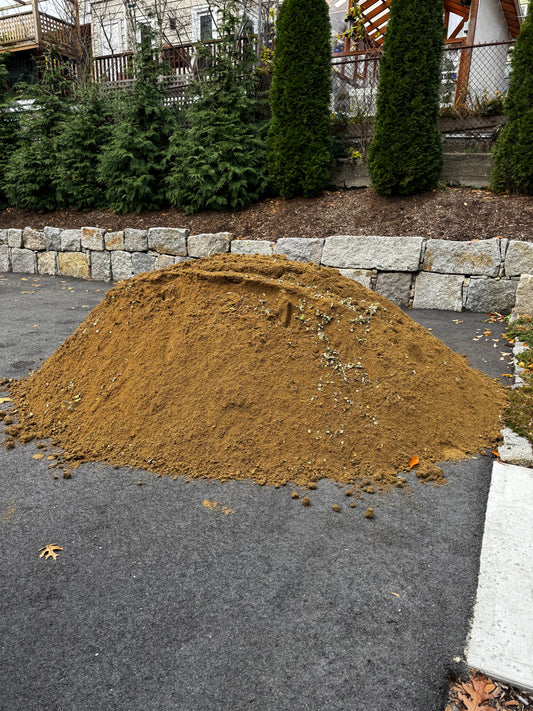
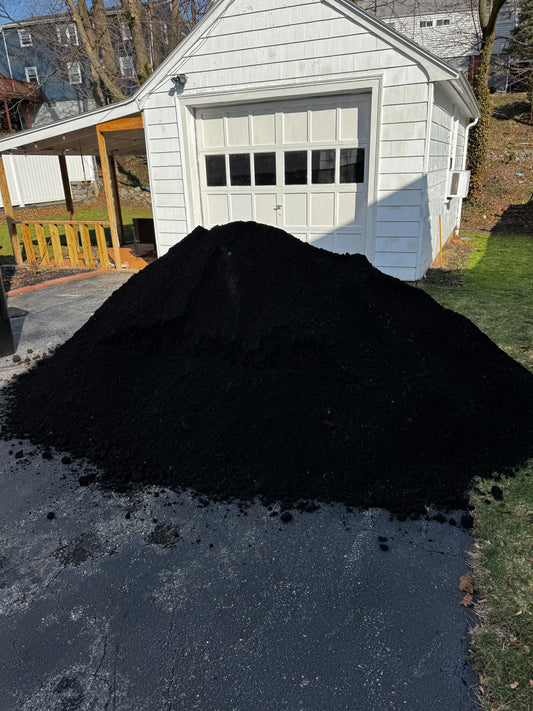
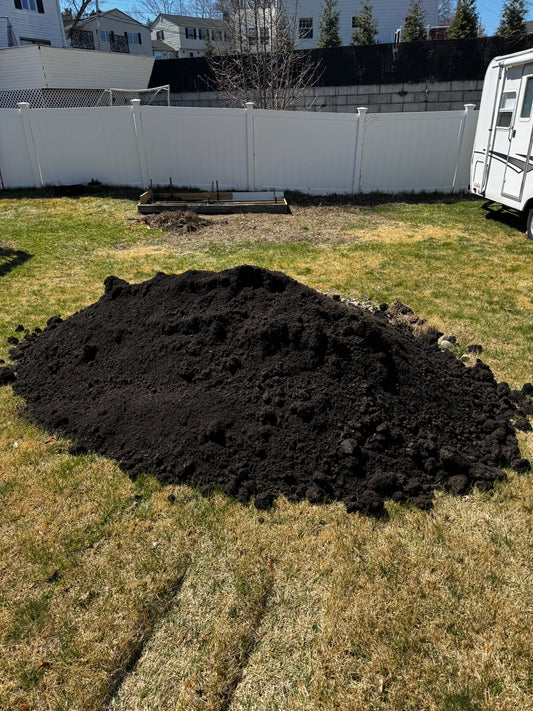
Winthrop lots are small: cubic yards = (square feet × depth in inches) ÷ 324. A 2,500 square foot lawn at a quarter inch is 1.9 yards, so order 2. Blend two parts Screened Loam to one part compost — on sandy coastal ground the organic matter does more work than the loam. Depth tables are in how much loam you need to topdress a lawn.
What does delivery to Winthrop cost?
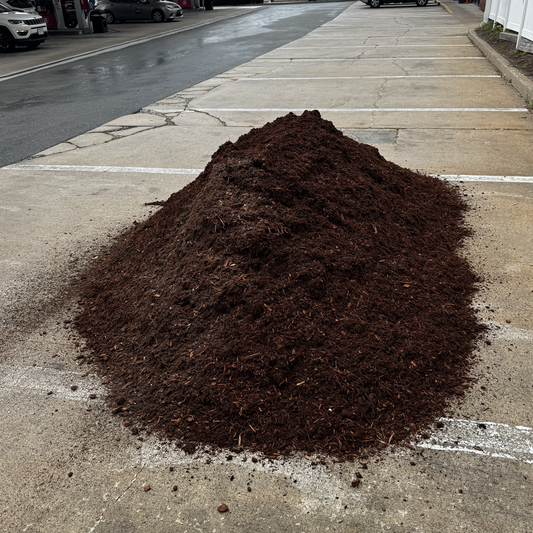
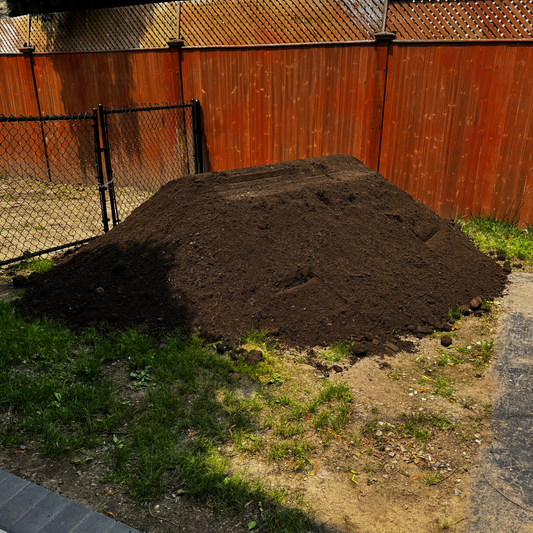
Winthrop is 8.8 driving miles from our Dispatch Office in Dorchester, so delivery is $100 per load. Soil caps at 6 yards a trip and loads are counted per line item. Streets are narrow, so tell us where the pile goes — curbside is standard, and on-property tipping needs a signed waiver. Browse soil, lawn levelling and repair, or the Winthrop landscape supply page.
Questions from the peninsula
Will my lawn come back on its own?
Most of it, usually. Dormant cool-season grass greens up within two to three weeks of consistent water.
Should I add sand because the soil is already sandy?
No. Sandy coastal soil needs organic matter, not more drainage.
When is the seeding window here?
Mid-August to mid-September. UMass Extension tracks it.
Is fall a good time to plant shrubs on an exposed lot?
Yes for most woody plants — see fall tree and shrub planting prep — though broadleaf evergreens do better in spring.
Test first, water second, and order only for what is genuinely gone. Pick your yardage in soil, or text (617) 286-2740 for a second read.