Quick Answer
Some bulk mulches cost more in January because the suppliers who feed Suffolk County yards are running on last year's inventory — the dyed and premium hemlock blends often run 5–12% higher in January than they will by mid-March, when fresh production hits the yard. Plain hardwood and aged dark are usually flat or slightly cheaper. The trick in Boston, Chelsea, Revere, and Winthrop is knowing which pile is "old-stock priced" and which is "fresh-load priced," then timing your order accordingly.
Why January Pricing Looks Strange
Most homeowners assume bulk mulch prices march steadily from "winter cheap" to "spring expensive." That's only half right. The real curve in Suffolk County is shaped by supplier production cycles, not calendar months. Sawmills and grinding yards across northern New England slow down in December and January, then ramp hard in February. What you buy in January is whatever made it into the yard before the slowdown — and that supply isn't priced the same across products.
This Q&A walks through the questions Suffolk County homeowners and small contractors actually ask in January, with practical timing notes.
Q: Why is dyed black mulch more expensive in January than March?
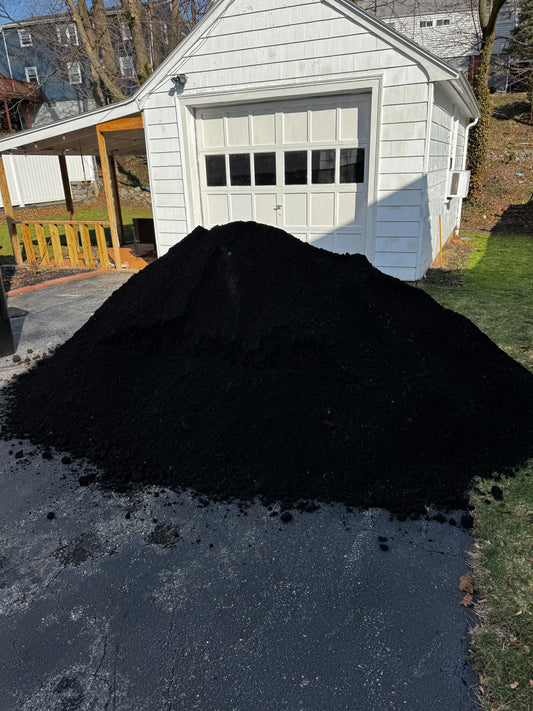
A: Colorant cost and inventory turn. Dyed black and dyed brown mulch sitting in the yard in January was colored last fall using last year's pigment contracts. Suppliers price it to clear before the new pigment lots come in. When fresh-dyed production hits in late February, per-yard pricing typically drops 5–10%. If you don't need black mulch on the bed before March 15, waiting almost always saves money. For why some Brookline yards push back against dyed mulch entirely, see 5 Hardwood Mulches That Hold Color in a Sun-Baked Brookline Front Yard (publishes 2026-03-03).
Q: Is plain hardwood mulch the same price year-round?
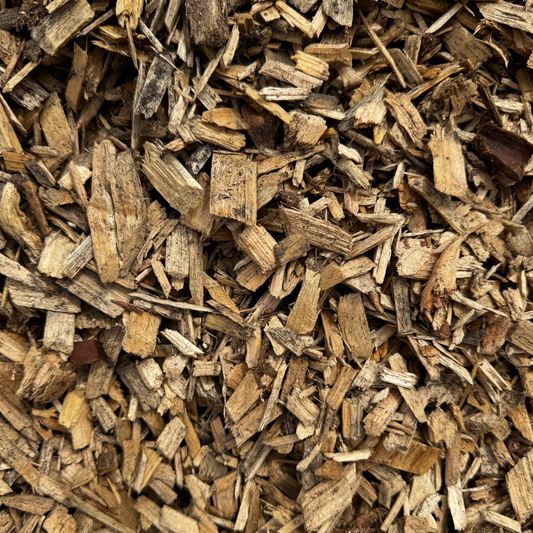
A: Close to it. Plain ground hardwood — the workhorse for most Suffolk County beds — is the most price-stable product in the bulk mulch lineup. Sawmill residue feeds it continuously, and yards keep enough volume on hand that one truckload doesn't move the per-yard rate. Expect maybe 2–3% drift across the season, with the lowest pricing usually showing up in late January when yards want to clear pile space for incoming dyed product.
Q: Why is hemlock so much more expensive in January?
A: Sawmill availability. Hemlock mulch comes from a narrower set of New England sawmills than hardwood. When those mills slow in winter, hemlock supply tightens fast. Suffolk County yards stockpile what they can in November, then ration through February. Per-yard hemlock pricing in January often runs 10–15% above its summer floor. If you're set on hemlock for a Cambridge or Beacon Hill front bed, either order before Thanksgiving or wait until late March when fresh hemlock production reopens.
Q: When do prices actually drop?
A: Late February through mid-March, in three waves. First, dyed product drops as the new colorant lots arrive. Second, hemlock settles when the sawmills come back online. Third, plain hardwood ticks down briefly when yards want to make room for the spring volume push. By April 1, prices stabilize for the season — that's the "spring pricing" most homeowners think of as the baseline. Pre-booking before that April reset is what the Brockton homeowner mulch-order guide covers in detail.
Q: If January is expensive, why pre-book at all?
A: Pre-booking locks delivery slot, not just price. Suffolk County's spring delivery calendar fills up fast — Boston, Chelsea, Revere, and Winthrop driveways are tight, alleys are tighter, and the hauling truck needs scheduled access. A January reservation gets you a March or early-April drop date that's effectively unbookable by mid-February. The pre-book rate is set against current January pricing for stable products and against projected spring pricing for hemlock and dyed — so the deal is almost always fair on net.
Q: What about screened compost-mulch blends?
A: Steady winter pricing, big spring jump. Compost-amended mulches and bark-fines hold January pricing well because they aren't on the same dye or sawmill cycle. But once March compost demand picks up — gardeners pulling product for vegetable beds — these blends can jump 8–15% in a two-week window. If you garden, the January order is the better order. The US Composting Council maintains the Seal of Testing Assurance program that helps you confirm which blends meet quality standards.
Q: Does delivery cost change too?
A: Yes — January delivery is the cheapest of the year. Trucking demand is low. By mid-March, dispatch is booking 2–3 weeks out and same-week delivery slots disappear. A January or early-February drop typically costs the same per-yard delivery fee as summer, but you skip the spring scheduling premium some yards add to peak weeks.
Q: I want the lowest possible January per-yard price. What do I order?
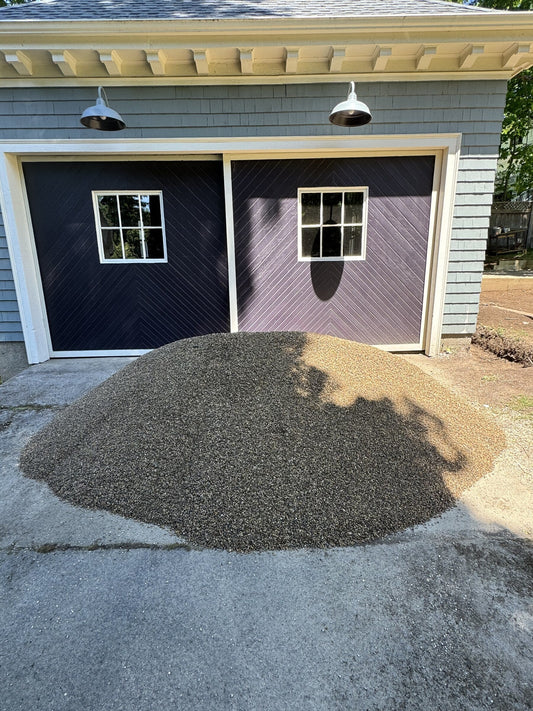
A: Plain ground hardwood, by the largest single load you can use. Non-dyed, non-hemlock, sized to one drop. For a typical Boston-neighborhood backyard, that's a 4–6 yard order. The bigger the load, the more the trucking cost amortizes. Avoid splitting deliveries across a fall and a spring trip — one drop saves the second mobilization fee.
Q: Does Ottr publish January pricing?
A: Yes — current per-yard rates are listed on each product page. The bulk mulch collection shows live pricing for plain hardwood, hemlock, dyed black, dyed brown, and pine blends. Pricing updates with each supplier load.
The January Buying Playbook for Suffolk County
- If you need plain hardwood: order now. Stable price, cheap delivery, slot guaranteed.
- If you need dyed: wait until late February unless you absolutely need it on the bed by mid-March.
- If you need hemlock: either order pre-Thanksgiving for the next season or wait until late March for fresh production.
- If you garden with compost-mulch: order in January before the March demand spike.
- Pre-book either way. Even if pricing isn't the rock-bottom rate, a confirmed delivery slot in March is worth the small premium.
For broader regional context on what Suffolk County and the rest of eastern MA can expect this year, the March 1 Boston yard kickoff covers the pivot from winter staging to spring bed work. For pre-order timing across Plymouth County, see How Plymouth County Homeowners Pre-Order Bulk Mulch and Lock March Delivery.
For mulch-quality fundamentals — testing, organic-matter content, and what separates a clean blend from a contaminated one — the UMass Extension Landscape program is the most authoritative MA-specific reference.
The short version: January mulch pricing in Suffolk County isn't one number. It's five product cycles running on different clocks. Buy plain hardwood now, dyed later, hemlock at the edges, and you'll spend 8–12% less across a typical season.