How deep should the trench be?
Six inches below finished grade for a path that only carries people: 4 inches of base, 2 inches of walking surface. Cut a seventh if you want the gravel flush with the lawn.
North Attleborough sits on glacial till, a stony subsoil that holds a clean sidewall. In the Ten Mile River lowlands and around Falls Pond the ground is softer, and there you want two extra inches of base. Strip the sod and root mat out either way — organic material left under a path is what dishes it three springs later.
What stone goes in the base, and what goes on top?
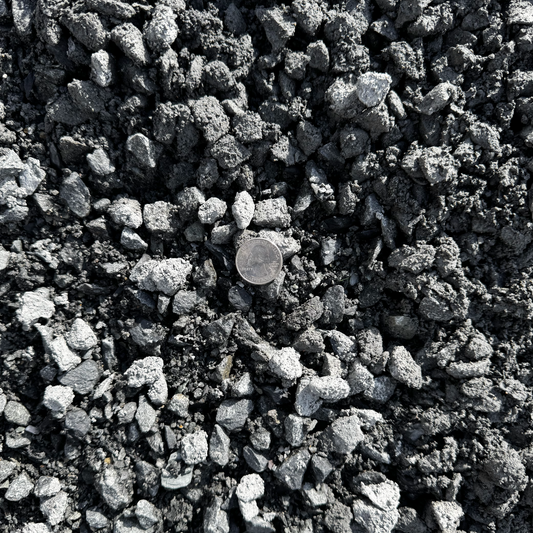
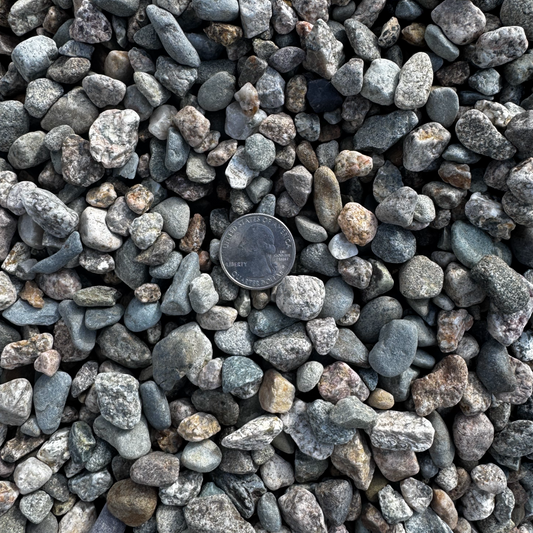
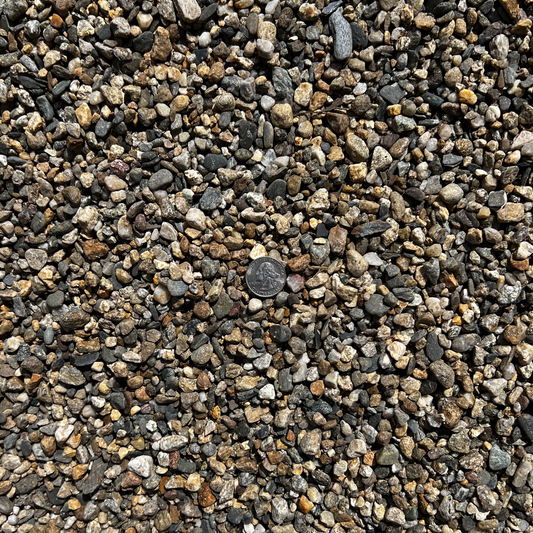
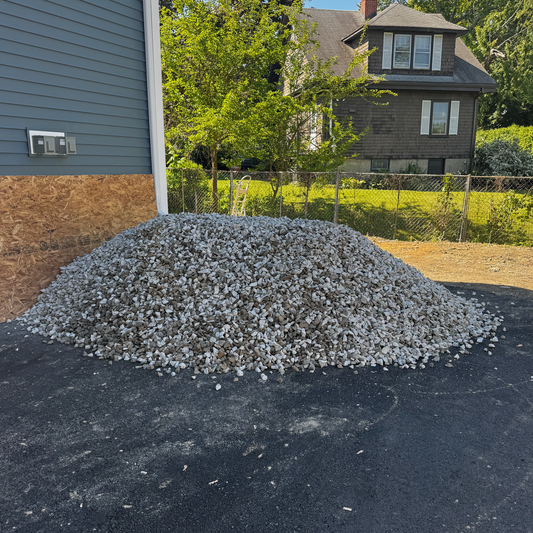
The base wants a dense-graded stone — one carrying everything from its top size down to dust, so the fines lock the lift under a compactor. #610 at $76 a yard is the standard pick; Dense Pack ¾"-to-minus is the same $76. Plan sets name this material by the MassDOT M1.03.1 spec; we sell both sized to that description and run no third-party lab testing, so treat the name as a size range.
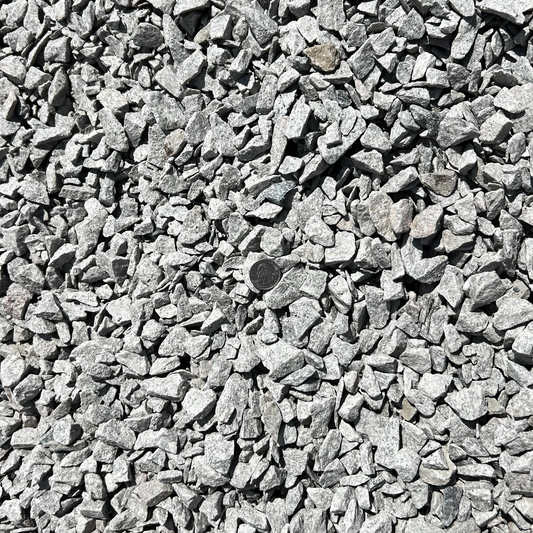
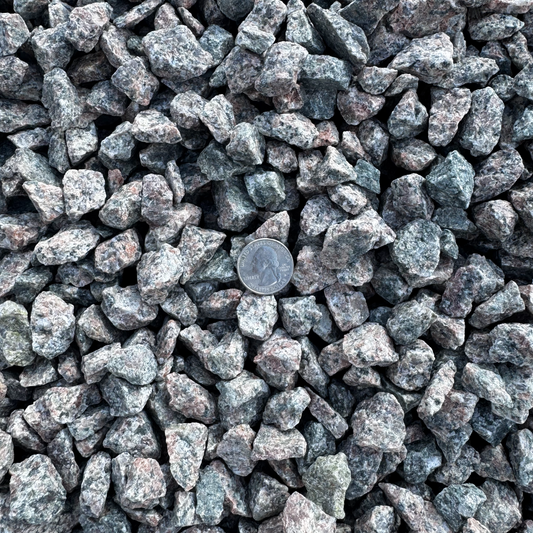
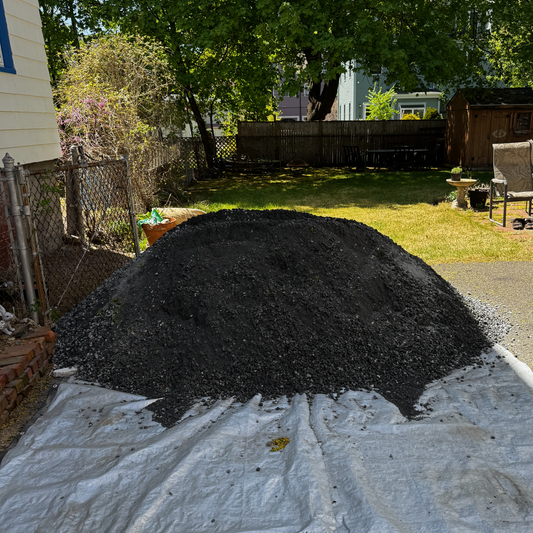
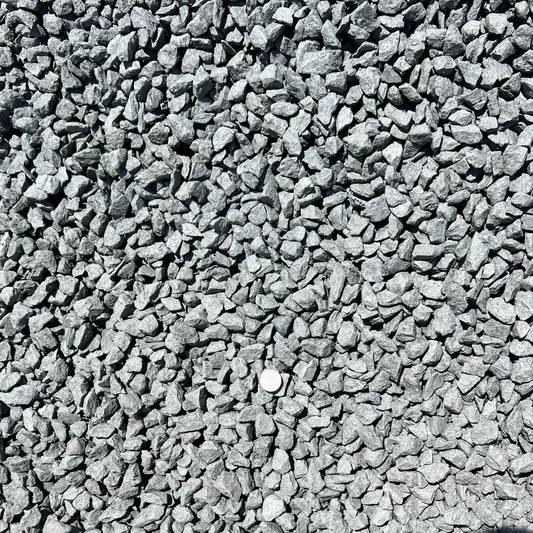
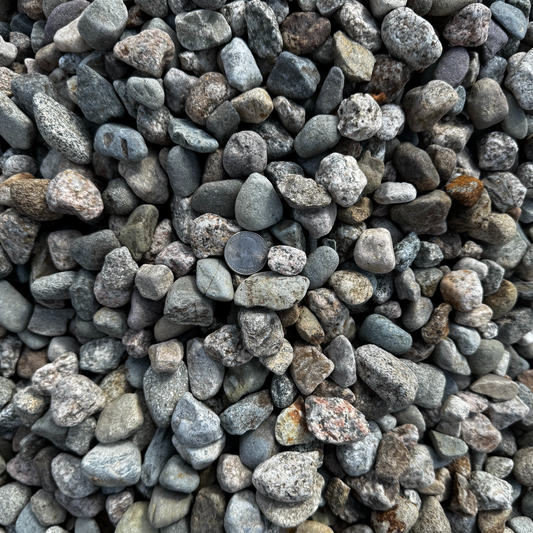
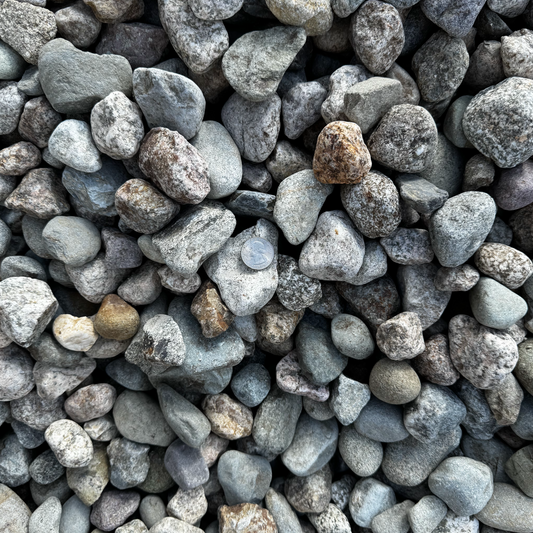
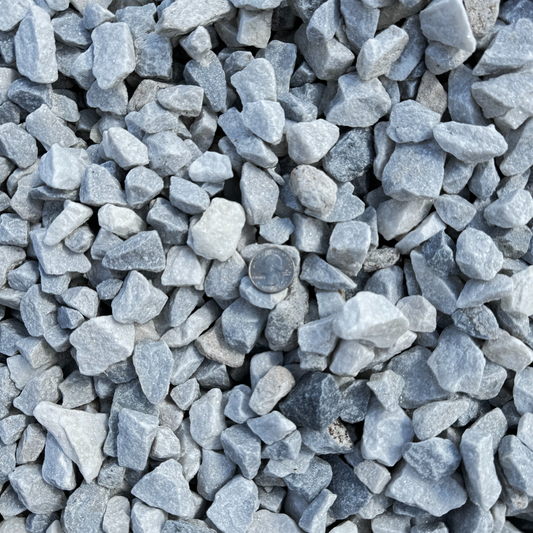
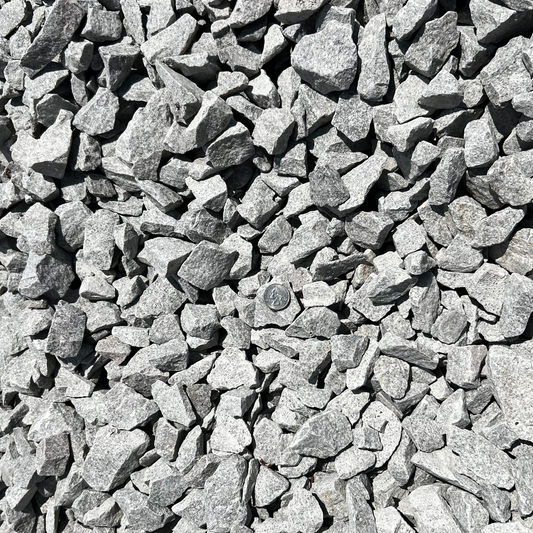
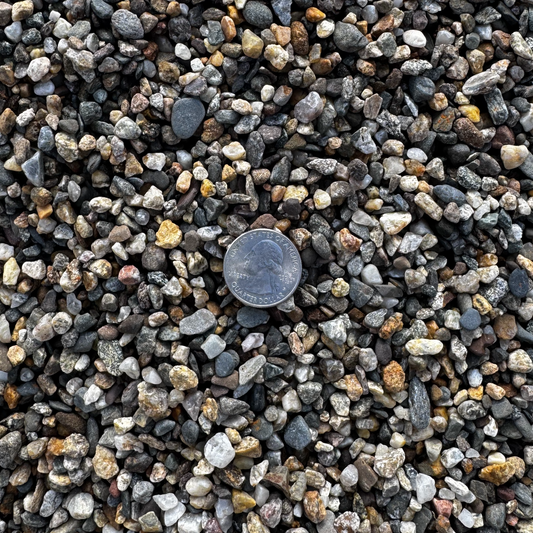
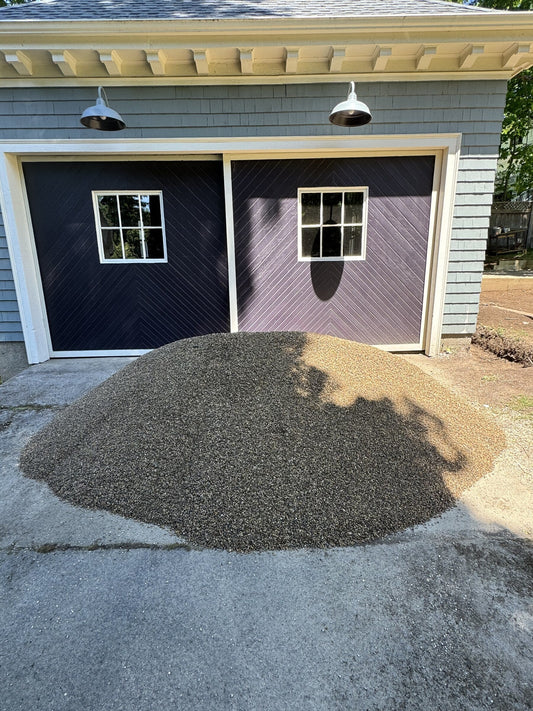
The top course is a different job: look right, stay put, shed rain. Angular stone does that; round stone does not. Gray Granite ⅜" at $75.25 keys against itself. Pea stone at $97.50 is prettier, rolls under a shoe and migrates downslope. Both are in crushed stone, with the rest of the patio and walkway base range.
How much stone does a 3-by-50-foot path take?
cubic yards = (square feet × depth in inches) ÷ 324. A 3-by-50-foot path is 150 square feet.
| Course | Depth | Math | Order |
|---|---|---|---|
| Base — #610 or dense pack | 4 in | 150 × 4 ÷ 324 = 1.85 yd | 2 yards |
| Top — Gray Granite ⅜" | 2 in | 150 × 2 ÷ 324 = 0.93 yd | 1 yard |
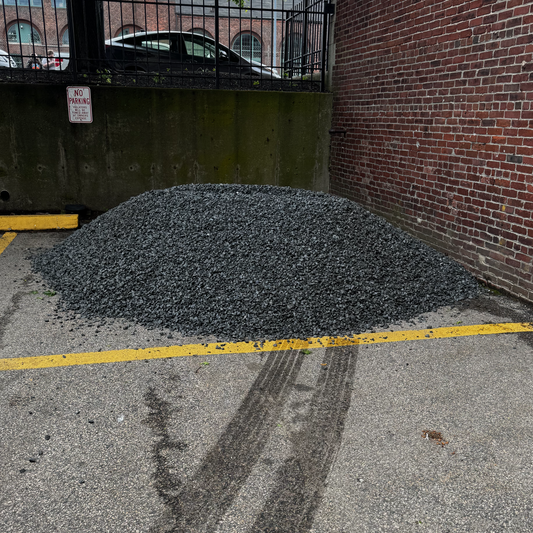
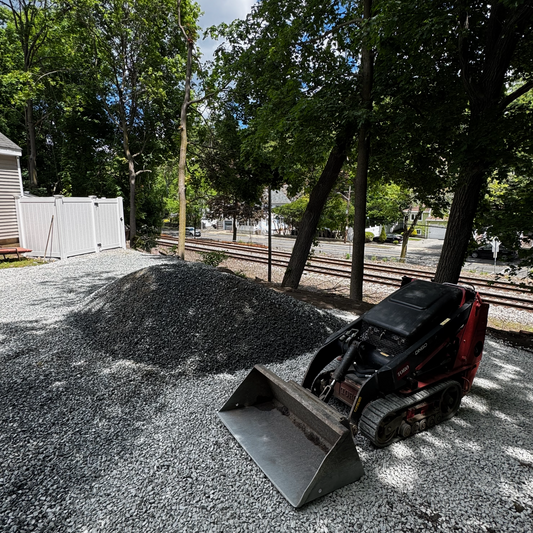
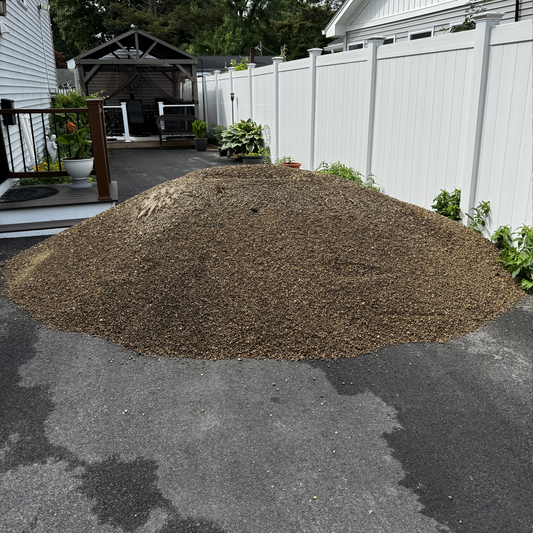
Three yards of material, and two loads. Loads are counted per line item, so base and top stone travel separately even though a truck holds six yards of either — $228 to $248 in delivery, not $114 to $124. One stone top and bottom is a single load. A 6-yard #610 delivery for a shed pad in Bellingham runs the same arithmetic.
Why does the edge matter more than the stone?
A gravel path has no binder. The only thing holding it in a line is the edge. Steel or aluminium restraint spiked every 12 to 18 inches is the durable answer; pressure-treated 2x6 rots in a decade; plastic edging heaves first. Set it before the top course. ICPI publishes the detailing gravel and paver walks share.
What will a walkway not fix?
If the route crosses ground that stays soft into June, gravel keeps vanishing into it. That is drainage — a swale beside the path or a pipe under it, not more stone. Past roughly a 5 percent grade, loose gravel walks downhill in every hard rain. Steps belong there.
What does delivery cost to North Attleborough?
Delivery is $100 per load inside 30 driving miles of our Dispatch Office in Dorchester, plus $4 a mile past 30. North Attleborough is about 36 miles out: $114 to $124 per load — 02761 is $114, 02760 is $124, Attleboro Falls $120. The ZIP checker returns your exact number. Stone caps at six yards a trip, curbside is the default drop, and on-property placement needs a signed waiver.
Can I skip the base and put stone straight on dirt?
It looks right for one season. Without a compacted base the stone works down into the subsoil and you re-top every spring.
Do I need landscape fabric?
Over the excavated subgrade, yes — it stops stone pumping into soft soil. Between the base and top course it does more harm than good.
What is the smallest order you deliver?
No minimum. But the fee is per load, so a single yard still carries $114 to $124.
Ready to order? Pick your stone in crushed stone or on the North Attleborough page, or text the path dimensions to (617) 286-2740 and we will run the yardage with you.