Why do most dry creek beds fail?
Because they were built as decoration and then asked to do drainage. Two faults cover nearly all of them: the channel is too narrow for the volume a roof produces, and there's no outlet, so it becomes a decorative puddle six feet from the foundation.
What makes a Natick yard particular?
Natick's lots are gentle suburban grade — enough fall to work with, rarely enough to be dramatic. On a flat parcel you have to be deliberate about where the water ends up. Subsoil runs to glacial till: dense, stony, slow to drain. Closer to Lake Cochituate there's more sand and infiltration is better. Check your parcel on the NRCS Web Soil Survey before assuming the bed will soak away — on till it won't.
How wide and deep should the channel be?
| Source | Width | Depth at centre |
|---|---|---|
| One downspout, small roof section | 18–24 in | 6 in |
| One downspout, main roof plane | 24–36 in | 6–9 in |
| Two downspouts joined, or slope sheet flow | 36–48 in | 9–12 in |
Widen by roughly half on the outside of any curve — that's where a narrow bed throws stone into the lawn.
How do I build it?
- Find the outlet first. Walk the route with a hose running before you dig. End at a lawn swale, a low area at least ten feet from the foundation, or a dry well — not the neighbour's property, not a street catch basin. See the EPA's stormwater guidance if you're moving real volume.
- Lay out the line with paint or a hose, two or three gentle bends. A straight channel looks like a trench.
- Excavate full width to centre depth, sides at about 2:1, holding ¼ inch of fall per foot away from the house. Check with a level on a long board, not by eye.
- Line it with non-woven filter fabric, seams overlapped six inches. Skip this and silt fills the voids in two seasons.
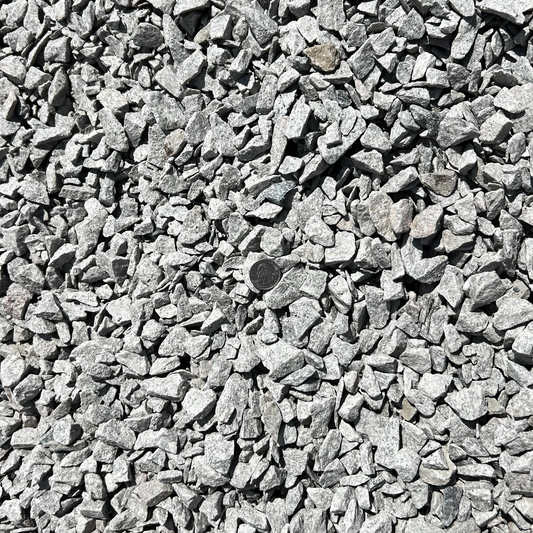
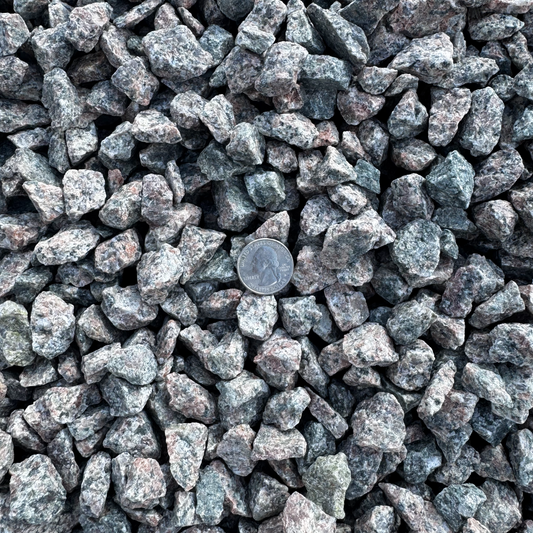
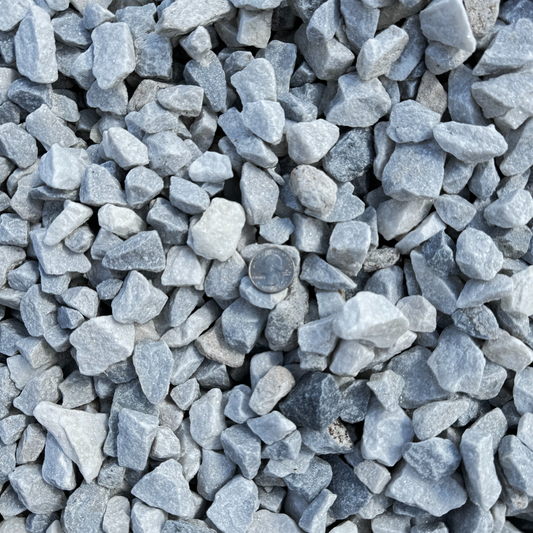
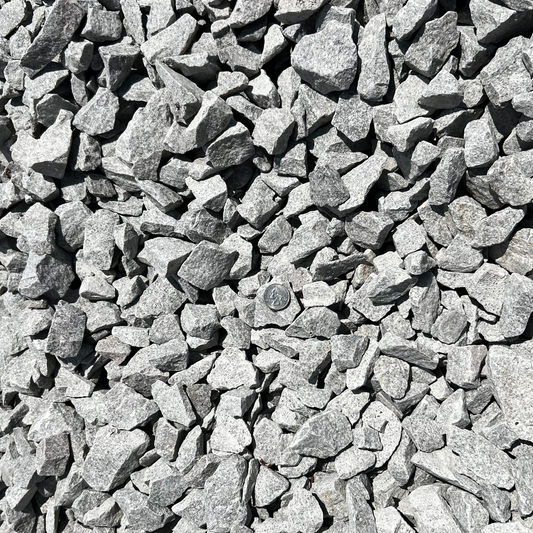
- Base layer: two to three inches of angular ¾" crushed stone.
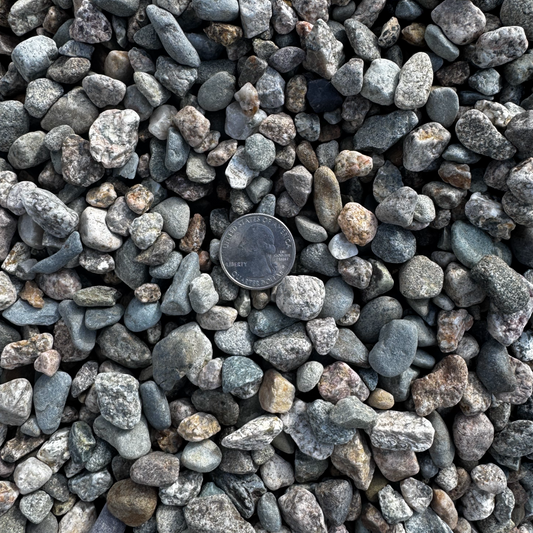
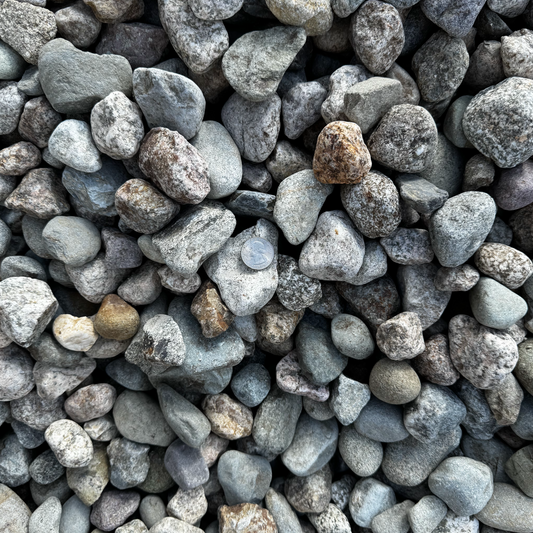
- Top layer: larger cobble along the centre and the outside of bends, smaller riverbed between and up the shoulders. Biggest stones at the discharge point and the outlet, which take the most energy.
- Test it. Hose at full volume for ten minutes. Wherever water leaves the channel, widen or raise the shoulder — before you plant alongside.
Which stone, and how much?
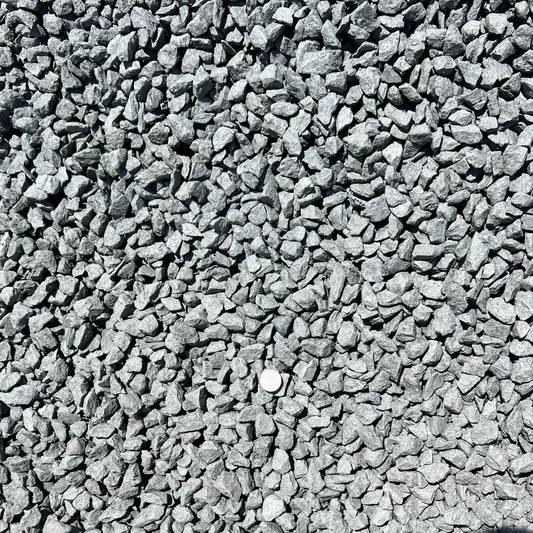
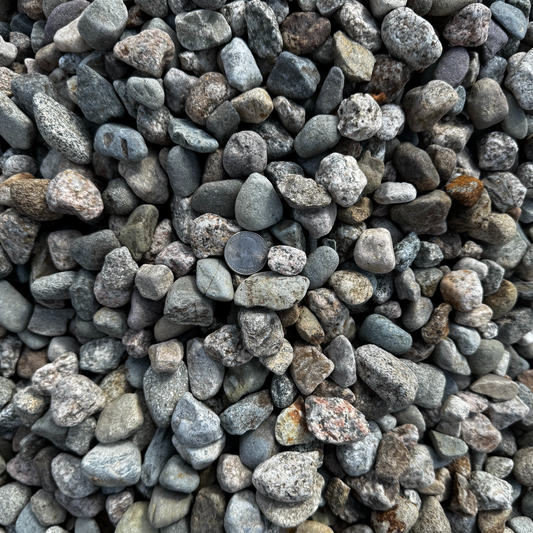
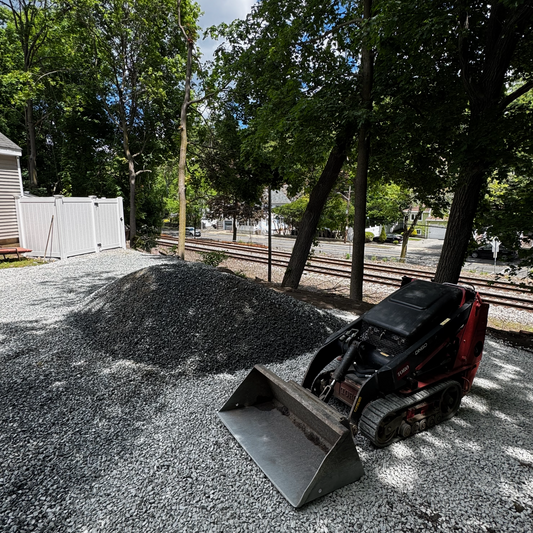
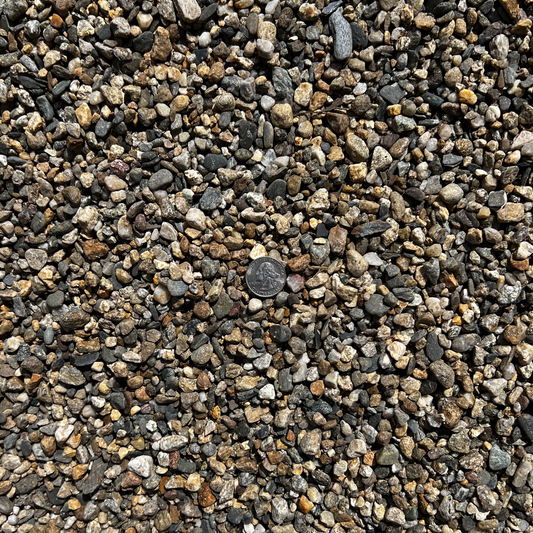
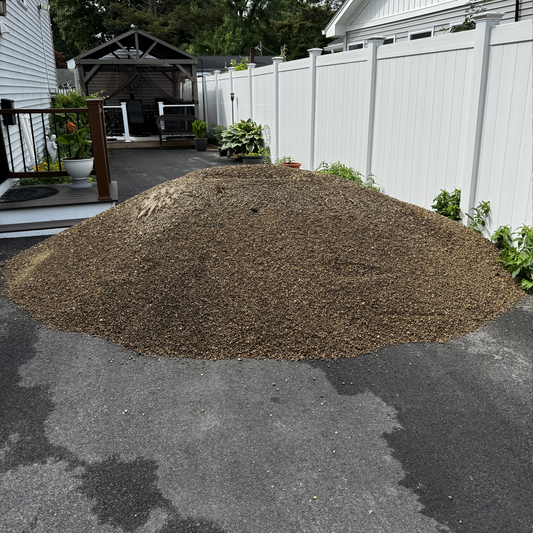
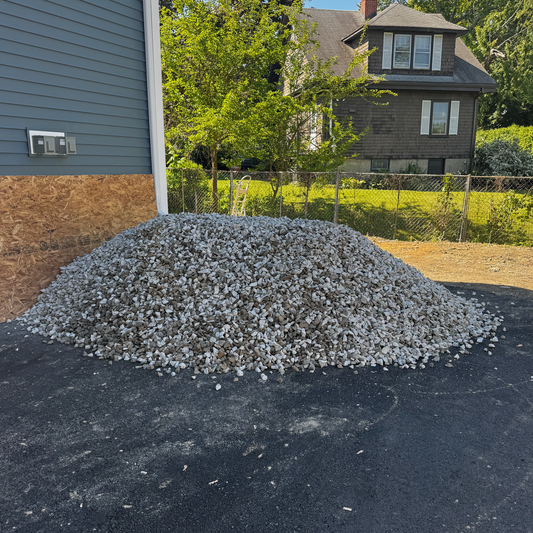
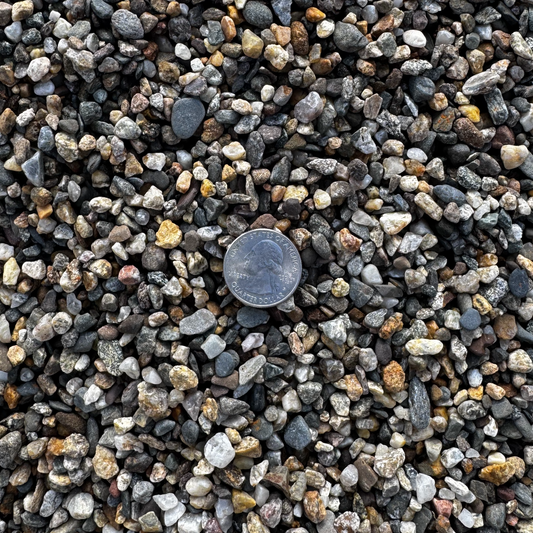
Three sizes, and mixing them is what makes it read as a streambed rather than a gravel stripe: angular Gray Granite ¾" at $79.50 a yard for the hidden base, Creek Stone 2"–3" at $115 for anchors, and Riverbed ⅜" (Pea Stone) at $97.50 for shoulders and fill.
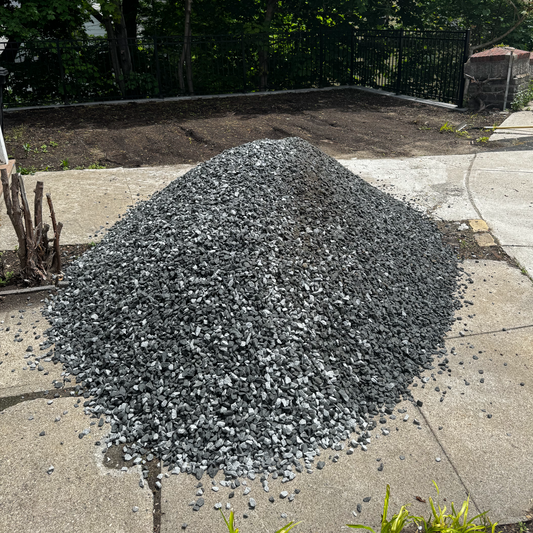
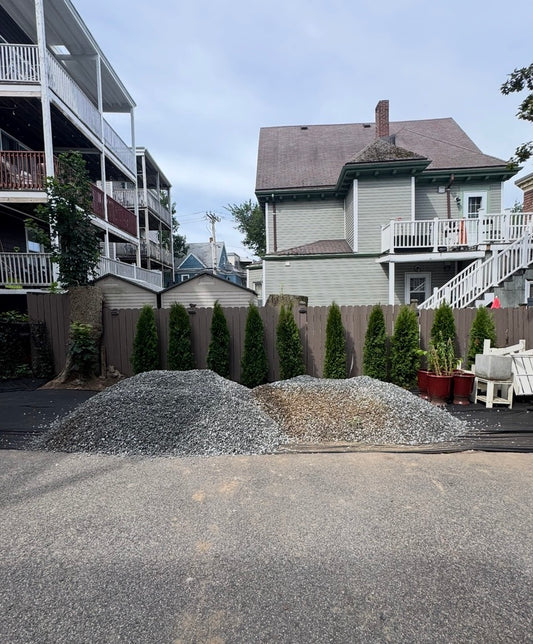
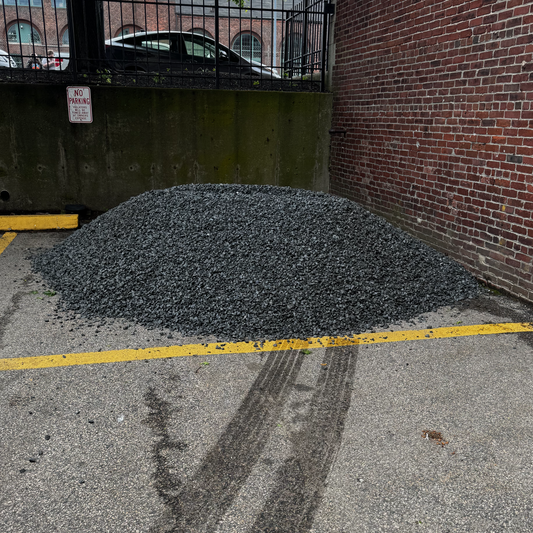
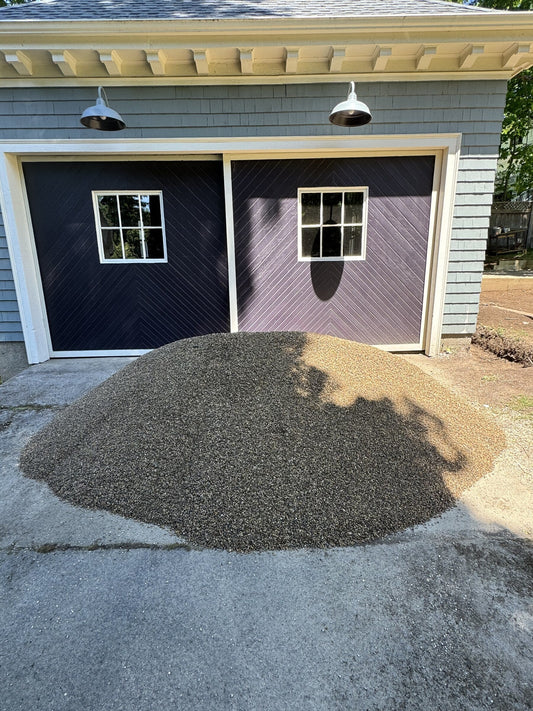
Volume comes from cubic yards = (square feet × depth in inches) ÷ 324. A 20-foot run at 3 feet wide is 60 square feet; at four inches average that's 0.74 yards — call it one, roughly a third base and two-thirds top. Stone ships 6 yards to a trip and the fee is per load, counted per line item, so three stone products is three trips and three fees.
Frequently asked questions
What does delivery to Natick cost?
Natick is about 23.6 driving miles from our Dispatch Office in Dorchester, inside the 30-mile zone, so $100 flat per load.
Do I need a permit?
Usually not for a surface bed on your own lot. If you're near a wetland, stream buffer or floodplain, call Natick's conservation office first.
What if my yard is dead flat?
A dry creek bed alone won't solve it — you need buried perforated pipe with real pitch, a dry well at the low end, or both. See the French drain and drainage materials.
Order from the decorative stone range or the Natick landscape supply collection, and enter your ZIP for the exact price. Contractors: see staging material on tight Middlesex County sites.