Quick Answer
Bridgewater yards get drought-resilient with five moves done before June 15: top-up mulch to a 2-inch depth, top-dress thin lawn with ¼" compost, switch irrigation to deep-and-infrequent (1.5 inches twice a week, not 0.4 inches daily), install a $5 rain gauge, and lower the mower deck one notch lower than April but no lower than 3.5 inches. Total cost on a typical 8,000 sq ft Bridgewater lot: under $300 in materials.
Why Bridgewater Lawns Struggle in Summer
Bridgewater sits on sandy-loam soil that drains fast and holds nutrients poorly compared to clay-heavier yards in Brookline or Newton. By July, a Bridgewater lawn that ran fine in May goes brown faster than its Boston-suburb neighbors. The fix isn't more water — it's more mulch, deeper roots, and smarter irrigation.
Five steps, done in the first two weeks of June.
Step 1: Top-Up Mulch to 2 Inches
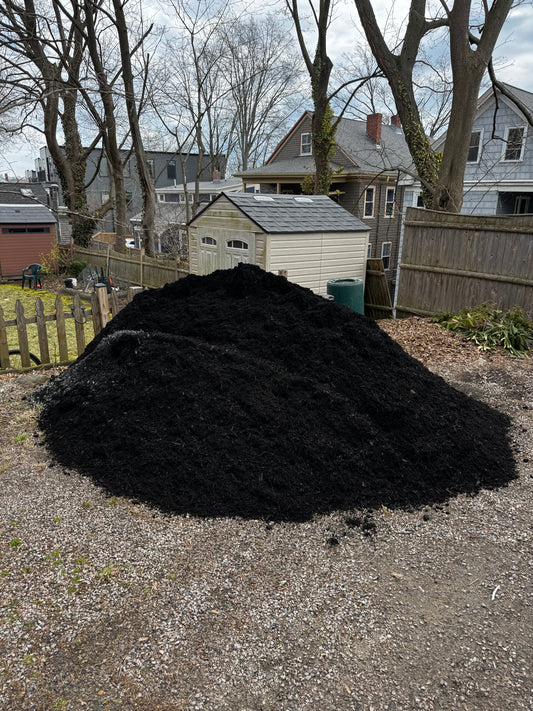
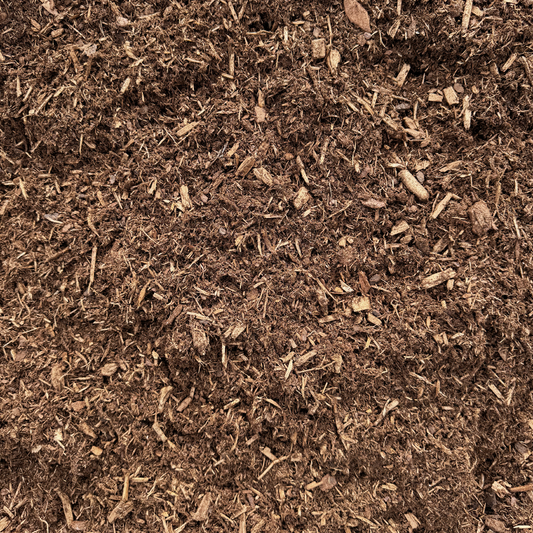
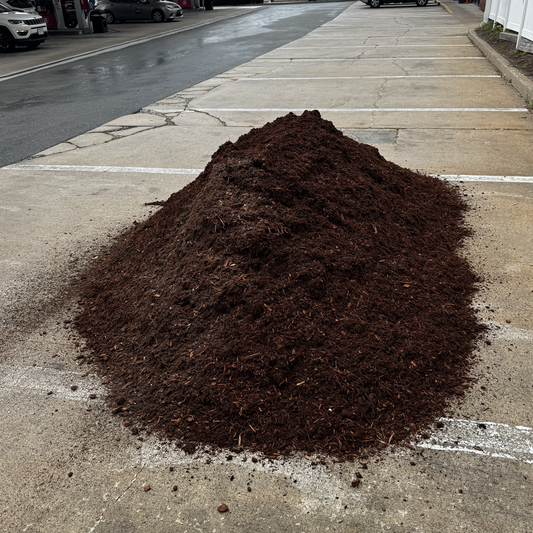
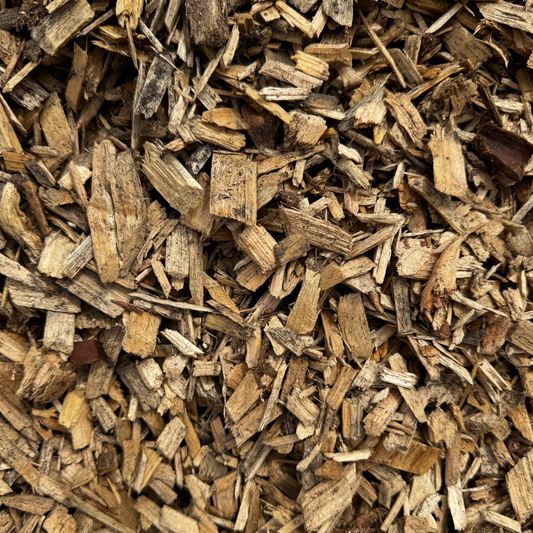
Mulch is the single biggest drought-prep lever. A 2-inch layer of hardwood or hemlock mulch over beds drops soil-surface evaporation by roughly 50% and keeps root-zone temperatures 8–12°F lower than bare soil in August. Most Bridgewater beds went down to 1–1.25 inches by late May after settling — top up now.
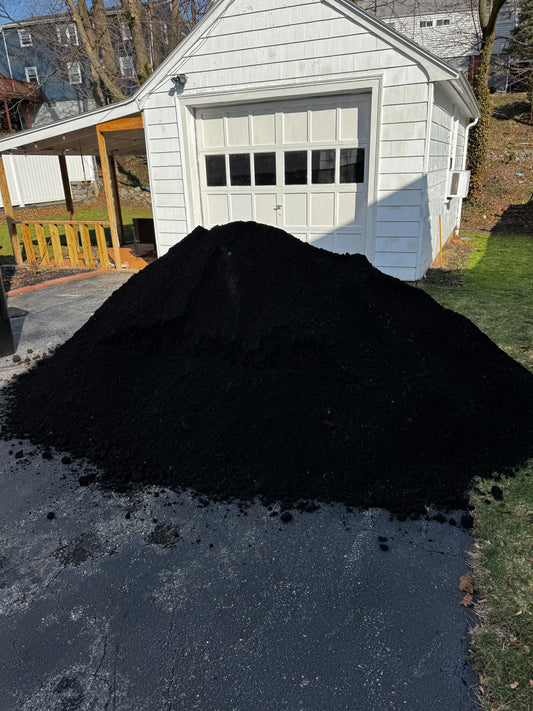
Yardage math: 1 cubic yard covers about 160 sq ft at 2 inches. For a typical 400-sq-ft Bridgewater foundation bed, you need roughly 2.5 cubic yards. Browse the mulch lineup — hemlock and hardwood are both fine for drought protection.
For deeper how-to on bed prep, see How to Refresh Mulch in a Melrose Bed in Mid-Summer — the technique transfers to Bridgewater.
Step 2: Top-Dress Thin Lawn with ¼" Compost
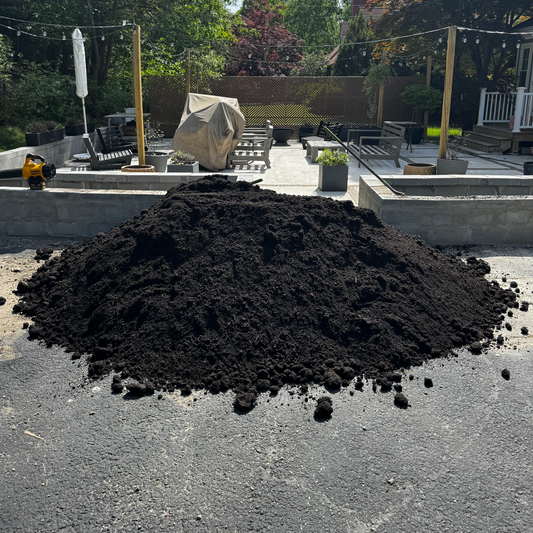
Bridgewater's sandy soils benefit from organic matter top-up every spring. A ¼-inch compost top-dress over a thin lawn area improves water-holding capacity by 30–40% and feeds soil biology that holds the lawn through summer.
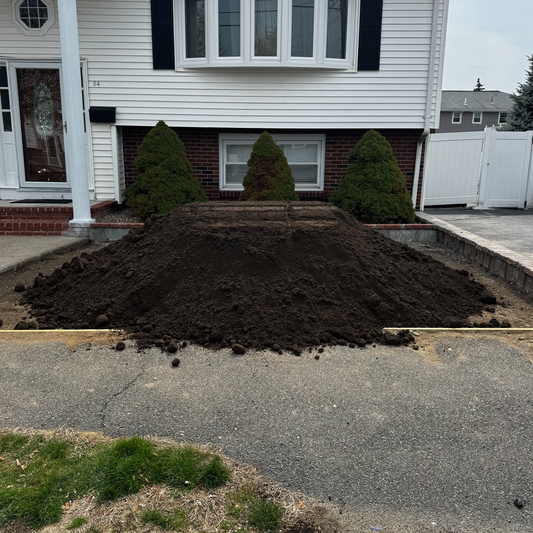
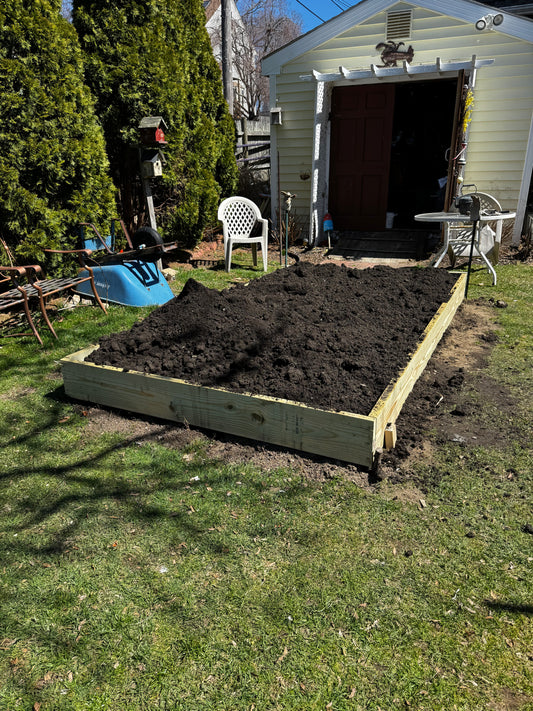
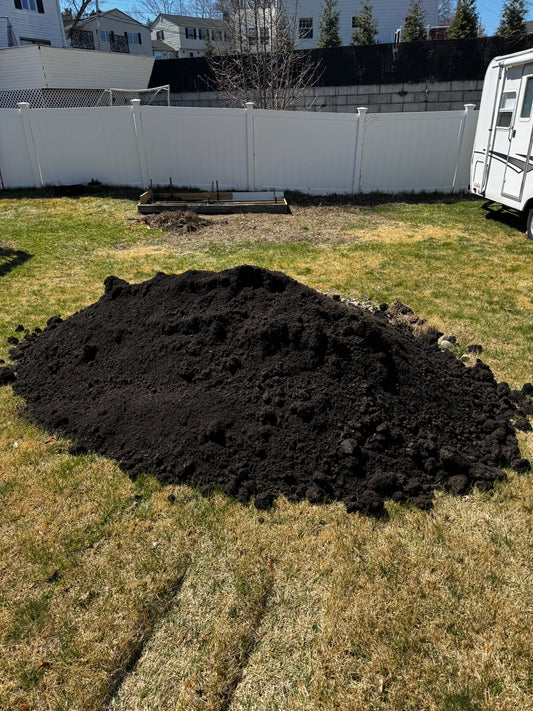
For an 8,000 sq ft lot with maybe 2,000 sq ft of thin lawn that needs help, plan 1.5 cubic yards of compost. Order through lawn leveling and repair.
Step 3: Switch Irrigation to Deep-and-Infrequent
Bridgewater homeowners default to short daily watering. Wrong move for sandy soil — the water never reaches the root zone. Switch to 1.5 inches per week, split into two long runs (Tuesday and Friday). Deep watering pushes roots down 4–6 inches, where they tap moisture that surface watering never reaches.
The USEPA WaterSense program has the science. For Bridgewater specifically, run rotor zones 35–40 minutes; spray zones 18–22 minutes. Audit your system first — see How to Audit a Sprinkler System Before Plymouth County's Summer Heat.
Step 4: Install a $5 Rain Gauge
The cheapest drought-prep tool. A simple rain gauge mounted to a fence post tells you how much rain fell in the last week — so you only run irrigation when actual rainfall came in under 1 inch. In a normal Bridgewater June, this saves 25–35% of irrigation runtime.
For setup specifics, see 5 Rain Gauge Setups for Norfolk County Yards — same engineering applies in Plymouth County.
Step 5: Raise the Mower Deck
Lower mowing height stresses cool-season grass in summer. The Bridgewater rule: never below 3.5 inches between June 1 and September 1. Taller grass shades its own root zone, holds soil moisture longer, and outcompetes crabgrass.
Drop one notch from your spring height (typically 3 inches) — but don't go shorter.
What You'll Need from Ottr
- Hemlock or hardwood mulch — 2.5 cubic yards typical for a Bridgewater foundation bed
- Compost — 1.5 cubic yards for thin lawn top-dress
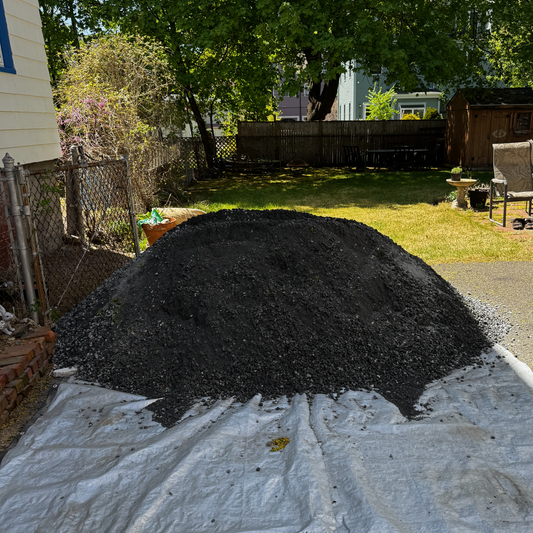
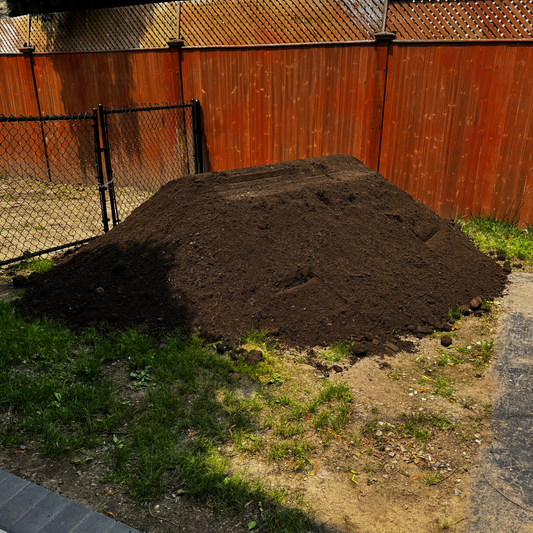
- Topsoil Loam ½" Screened — ½ cubic yard for any saucered turf around irrigation heads
Browse Bridgewater landscape supply for delivery routing, or browse the full lawn leveling and repair collection for the materials.
For the matching irrigation deep-dive, see 5 Deep-Watering Tips for West Roxbury Trees in June — the principles apply to lawns too.
The short version: top mulch, top-dress lawn, water deep, gauge rain, raise the deck. Five steps before June 15.