Is it better to water deeply once a week or a little every day?
If a plant has been in the ground more than a full growing season, its roots already occupy a decent volume of soil — water it deeply and infrequently. If it went in this spring, its roots are still confined to the root ball it arrived in, which is small, and in a heat wave that volume can go dry in a day. Water it frequently, in measured amounts.
Why does deep and infrequent work on established plants?
Roots grow where the water and air are. A light sprinkle every evening wets the top inch and nothing below it, so the root system has no reason to go deeper — it stays in the inch of soil that dries fastest and heats up most.
A deep soak wets soil 6 to 8 inches down. Roots follow it, and once they are there they draw from a much bigger reservoir that empties slowly, so the plant becomes less dependent on you, not more. Midday watering, meanwhile, loses a real share to evaporation and drift before it reaches soil at all — EPA WaterSense has the broader efficiency case.
How much is an inch of water, and how do I measure it?
An inch over one square foot is 0.623 gallons, so an inch over 1,000 square feet of lawn is roughly 623 gallons. You do not need a meter — use the tuna can method:
- Set three or four empty straight-sided cans — tuna or cat food tins are the right depth — around the sprinkler's pattern, some close in and some at the edge.
- Run the sprinkler and check every 15 minutes.
- When the cans average an inch, stop, and note how long it took. That is your weekly run time.
- Split it into two sessions if water runs off before it soaks in.
What about newly planted trees and shrubs?
New plantings are the genuine exception, and the reason is physical rather than horticultural. A nursery tree arrives with a root ball only as wide as its container or wire basket, often a lighter, more porous medium than the soil around it — so water in the surrounding backfill tends to wick away from the ball rather than into it. So water frequently, slowly, and directly over the root ball:
- Trees: 1 to 1½ gallons per inch of trunk caliper each watering. A 2-inch caliper tree wants 2 to 3 gallons; a 3-inch caliper tree 3 to 4½.
- Shrubs: roughly 1 to 2 gallons for a 3-gallon container plant, 2 to 3 for a 5-gallon.
- Frequency in heat: every 2 to 3 days through the first growing season, tapering toward weekly in year two.
Apply it slowly enough that it soaks in instead of running off. The ISA's tree care guidance covers a young tree's first three years, and the plant establishment and tree planting collection has the soil and mulch to go with it.
How do I check it worked, and when should I water?
Push a long screwdriver into the soil. If it slides in easily to 6 inches, you have wet soil to 6 inches; if it stops at 2, you have not watered enough no matter how long the sprinkler ran. For a new planting, test the root ball itself rather than the soil around it — a root ball can be bone dry while backfill three inches away is damp, and that is exactly how new trees die in July while the owner insists they watered. Water in the morning. Evening watering leaves foliage wet all night, which is how fungal disease gets a foothold.
Should I water a lawn that has already gone brown?
The unpopular answer: pick one strategy and commit. Cool-season lawns — fescue, bluegrass, ryegrass — go dormant in sustained heat, and brown is a survival response, not death. Your two legitimate choices are to keep it green with a genuine inch a week, or to let it go dormant and give about a half inch every two or three weeks purely to keep crowns alive. The worst option is the middle one: a light daily sprinkle that keeps the surface wet, roots shallow and disease pressure high without supplying enough to sustain growth.
What cuts watering permanently?
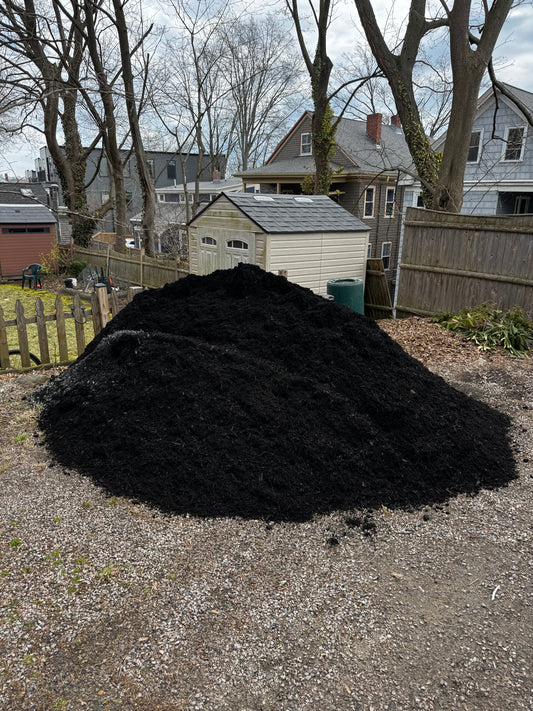
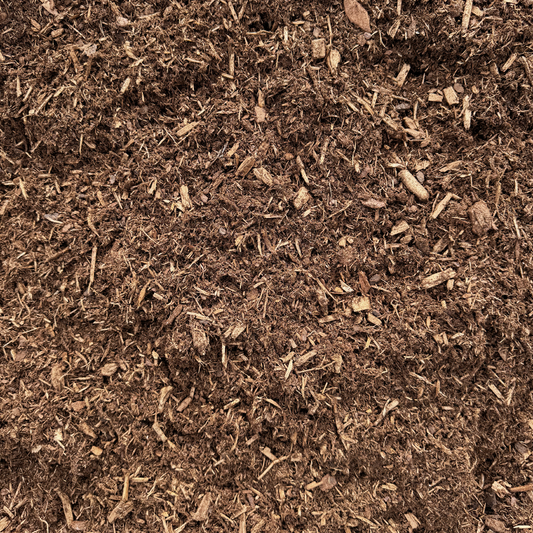
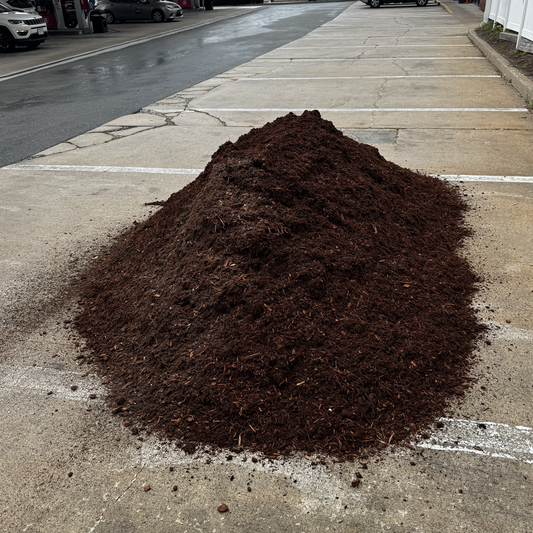
Mulch. Two to three inches over every bed sharply reduces evaporation and keeps root-zone temperature down. Pine Bark Mulch at $55 a yard holds position on slopes better than shredded products; the range is in the mulch collection.
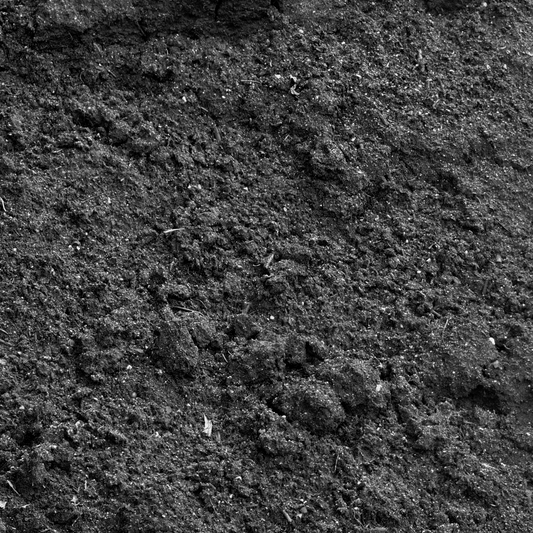
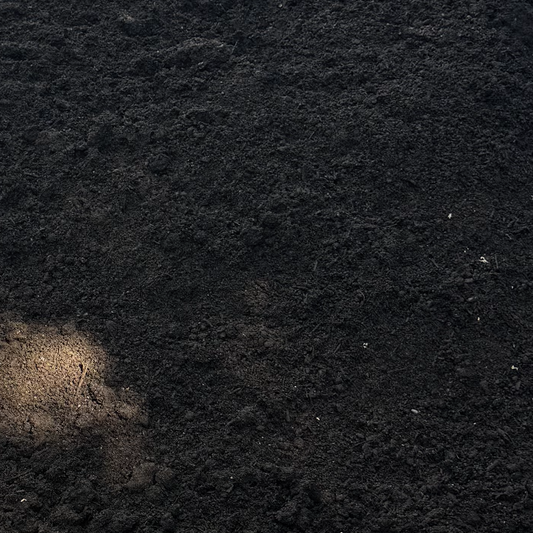
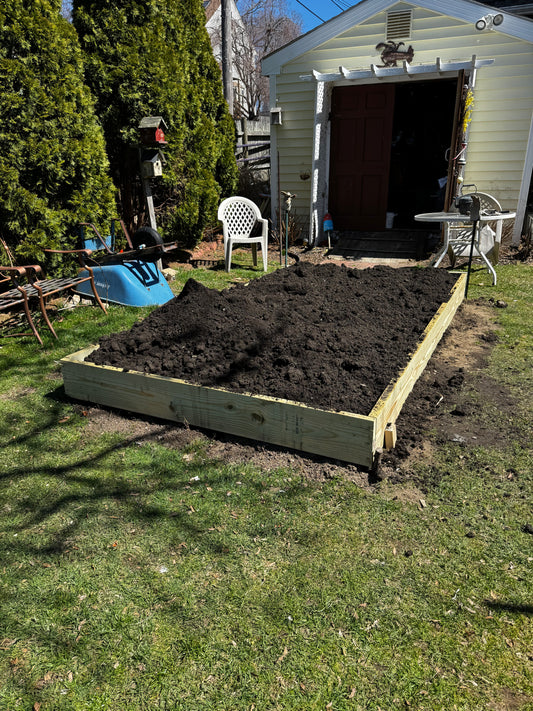
Organic matter. Sandy soil cannot hold water because there is nothing in it to hold water. Compost at $50 a yard, worked into the top few inches or top-dressed annually, raises water-holding capacity permanently. More in the soil and loam collection.
Common questions
How often should I water a lawn in a heat wave?
Once or twice a week, totalling about an inch, in the morning.
Can I water new trees too much?
Yes, in poorly drained soil — roots need air as well as water. If the root ball is still wet when you come back, skip that watering.
Is watering at midday bad?
Wasteful rather than harmful. But if a new planting is wilting at 2 p.m., water it.
Should I water before or after mulching?
Before. Mulch on dry soil sheds light rain.
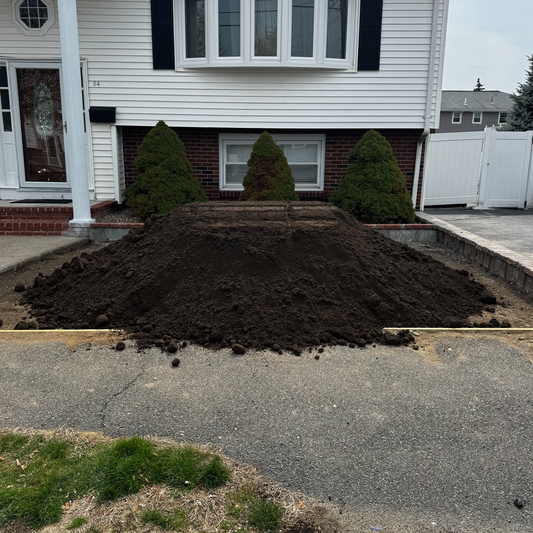
Order mulch, compost and planting soil by the cubic yard, delivered loose with no minimum order, or text your square footage to (617) 286-2740. Planning autumn planting? The late-summer project list covers what has to happen before Labor Day.