Quick Answer
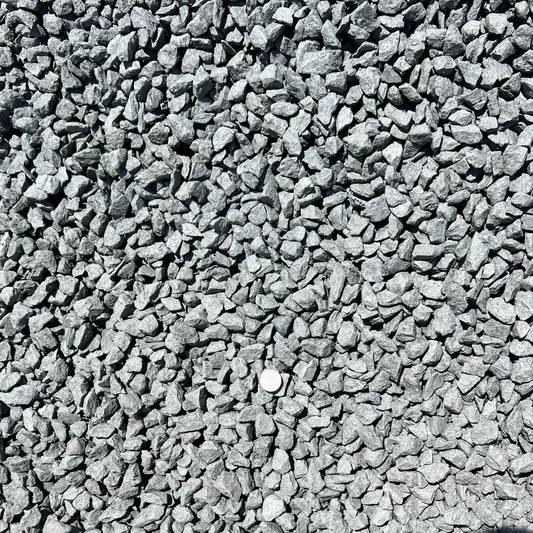
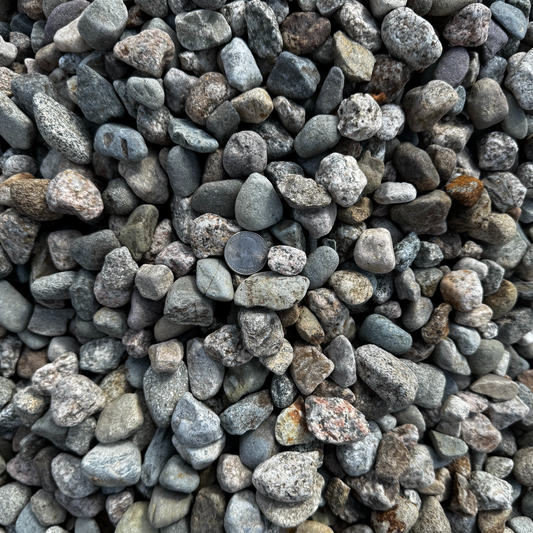
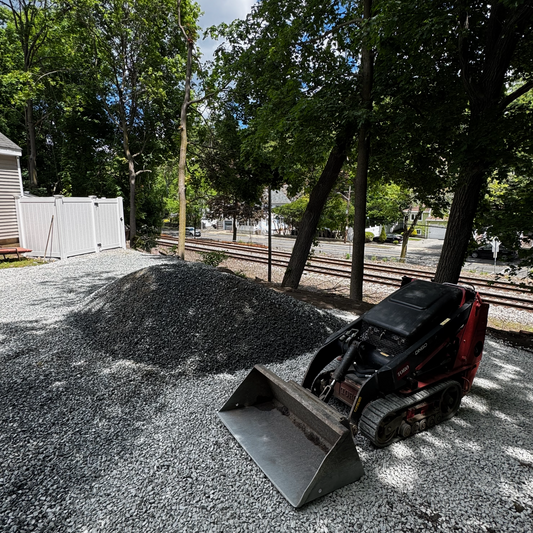
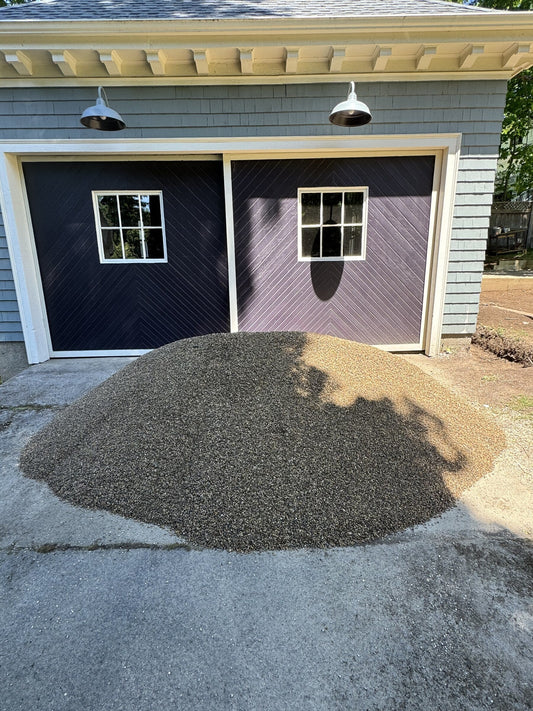
To calculate crushed stone tonnage for a Plymouth County project: (1) measure square footage, (2) convert depth from inches to feet, (3) multiply sq ft × depth ÷ 27 to get cubic yards, (4) multiply yards × 1.4 for tons, (5) add 10% for compaction and waste. A typical 12×16 patio at 4-inch base depth needs 2.5 cubic yards (3.5 tons) of Dense Pack ¾" to minus. The whole calculation takes 15 minutes with a tape measure and a calculator.
Why This Math Matters
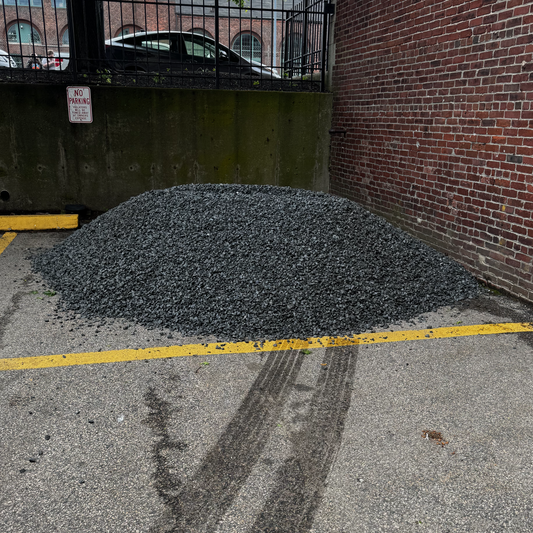
Plymouth County crushed-stone orders run from 1-yard French drain projects in Plymouth and Kingston up to 50-ton driveway rebuilds in Carver and Plympton. Buying too little stalls the job; buying too much wastes money on stone you store in the corner of the yard for two years.
The conversion math is the same whether you're a homeowner DIYing a patio base or a contractor sizing a driveway. Get it right once, save hours of fixes later.
Tools You'll Need
- 100-foot tape measure
- Calculator (phone calculator is fine)
- Project sketch with dimensions noted
- Notepad for the running math
Step 1 — Measure the Project Area
Get the project area in square feet. Length × width. For irregular shapes, break them into rectangles, calculate each, and add them.
Examples for typical Plymouth County projects:
- Patio (12 × 16): 192 sq ft
- Walkway (4 × 30): 120 sq ft
- Driveway apron (10 × 20): 200 sq ft
- French drain trench (1 × 40): 40 sq ft
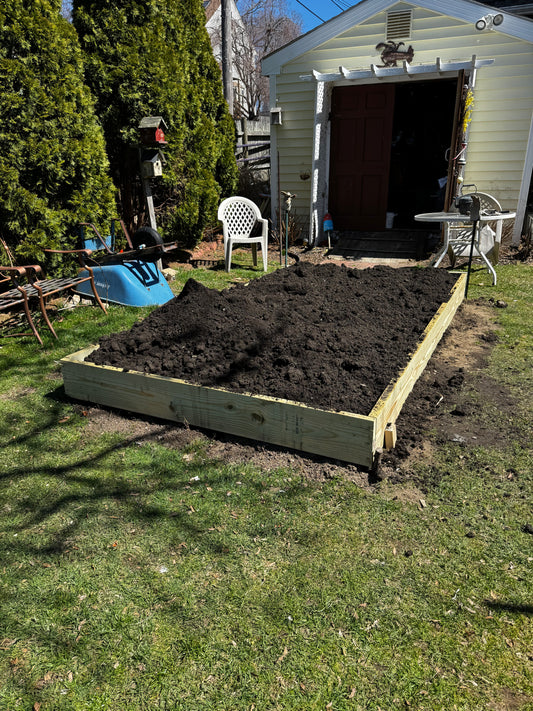
- Shed pad (10 × 12): 120 sq ft
For curves and irregular shapes, treat them as rectangles plus or minus the obvious slivers — the 10% waste factor at the end covers small inaccuracies.
Step 2 — Decide Depth in Feet
Crushed stone projects are specified in inches of depth. Convert to feet for the math:
- 2 inches = 0.167 feet (decorative stone over fabric)
- 3 inches = 0.250 feet (light pedestrian path base)
- 4 inches = 0.333 feet (residential patio base, ICPI minimum)
- 6 inches = 0.500 feet (heavy patio, walkway base)
- 8 inches = 0.667 feet (residential driveway base)
- 12 inches = 1.000 feet (commercial driveway, French drain)
For typical Plymouth County DIY: 4 inches base under a patio, 6–8 inches under a driveway, 12 inches in a French drain trench.
Step 3 — Calculate Cubic Yards
The formula:
Square feet × depth in feet ÷ 27 = cubic yards
(27 is cubic feet per cubic yard.)
Worked example: 192 sq ft patio × 0.333 ft depth = 64 cubic feet ÷ 27 = 2.37 cubic yards.
A 200 sq ft driveway apron × 0.667 ft depth = 133 cubic feet ÷ 27 = 4.94 cubic yards.
A 40 sq ft French drain trench × 1.000 ft depth = 40 cubic feet ÷ 27 = 1.48 cubic yards.
Step 4 — Convert Cubic Yards to Tons
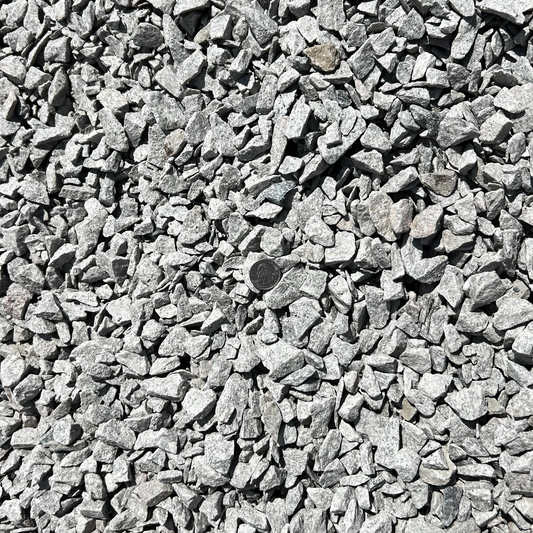
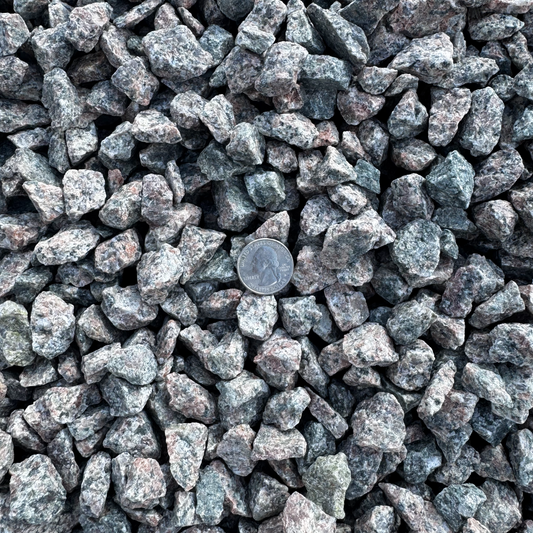
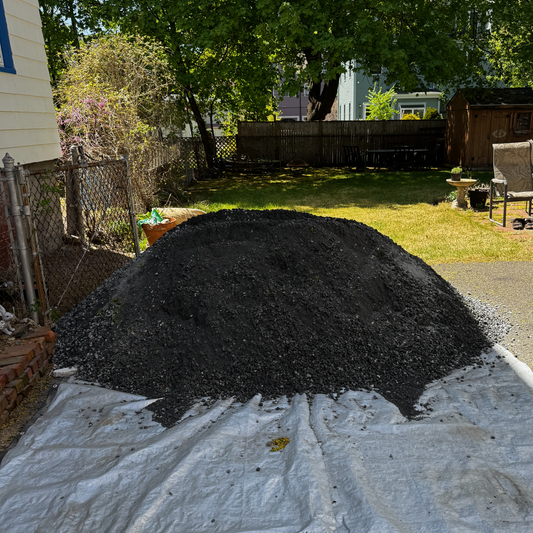
Crushed stone is sold by the cubic yard at most Plymouth County yards, but contractor quotes and trucking math often use tons. The conversion factor for Dense Pack ¾" to minus in Plymouth County is roughly 1.4 tons per cubic yard.
Worked examples:
- 2.37 yards × 1.4 = 3.32 tons
- 4.94 yards × 1.4 = 6.92 tons
- 1.48 yards × 1.4 = 2.07 tons
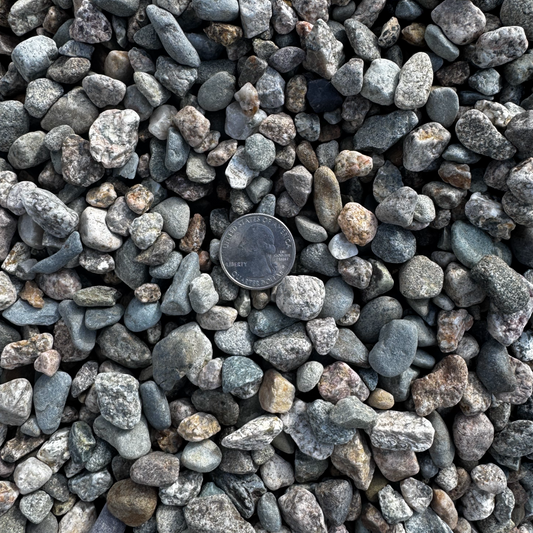
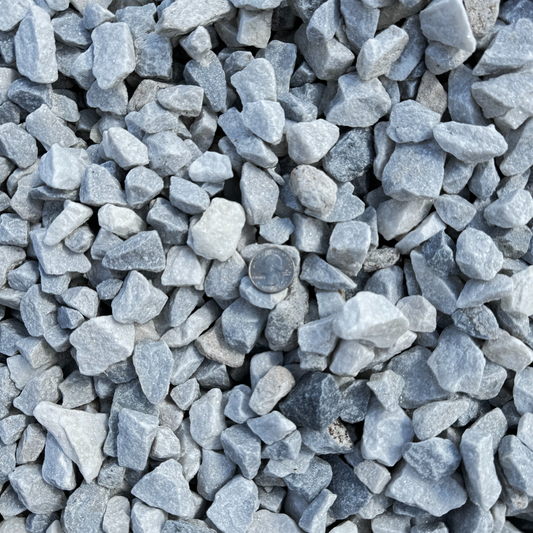
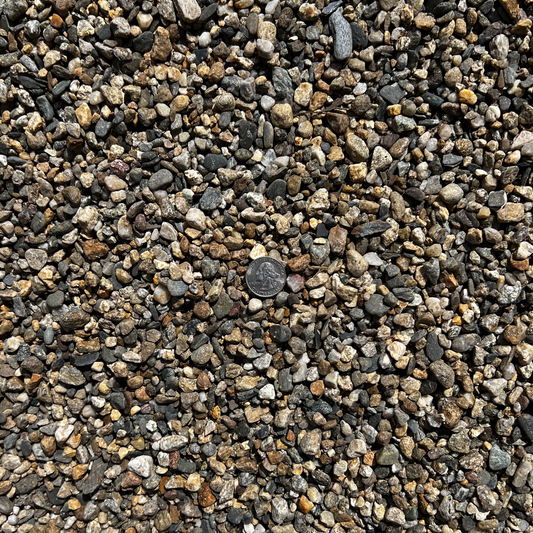
For looser decorative stone (Riverbed Rock, Mixed-Color Granite ¾"), the factor is closer to 1.3 tons per cubic yard. For heavier crushed concrete (Crushed Concrete 1" to minus), it's closer to 1.5 tons per cubic yard.
Browse the crushed stone collection for current per-yard rates on Dense Pack, Surge Stone, and Crushed Concrete. For the parallel Plymouth-specific delivery and trucking notes, see Plymouth landscape supply.
Step 5 — Add 10% for Compaction and Waste
Crushed stone compacts when installed — a loose 4-inch lift presses down to about 3.5 inches under a plate compactor. Add 10% to your calculated yardage to cover compaction plus inevitable spillage and edge waste.
Worked example: 2.37 yards calculated × 1.10 = 2.6 yards ordered.
For larger jobs (over 10 yards), the 10% factor still works. For very small jobs (under 1 yard), round up to the nearest half-yard — most suppliers don't deliver less than 1 yard anyway.
Step 6 — Place the Order with Three Numbers
When you call the supplier, have three numbers ready:
- Yardage (or tonnage)
- Material name (Dense Pack ¾" to minus, Surge Stone, Crushed Concrete, etc.)
- Delivery address (for trucking distance)
A 14-cubic-yard delivery truck handles up to 14 yards in one drop; larger orders come in multiple trips or via tri-axle truck. For neighbor context on patio layout that drives the tonnage need, see How to Prune Knockout Roses in a Quincy Front Yard (yes, the same homeowner planning a spring patio is also pruning Knockouts the same week). For mulch season opener math that uses the same conversion logic, see When Does Mulch Season Actually Start in Dorchester?. The 2026 follow-up on Plymouth County mulch pre-booking sits at Mulch Pre-Book in Plymouth County.
For the residential design standard that drives most base-depth specifications, the Interlocking Concrete Pavement Institute (ICPI) publishes the technical manual.
Quick Reference Card
| Project | Sq Ft | Depth | Cubic Yards | Tons (×1.4) |
|---|---|---|---|---|
| 12×16 patio | 192 | 4 in | 2.4 | 3.4 |
| 4×30 walkway | 120 | 4 in | 1.5 | 2.1 |
| 10×20 driveway | 200 | 8 in | 5.0 | 7.0 |
| 1×40 French drain | 40 | 12 in | 1.5 | 2.1 |
| 10×12 shed pad | 120 | 6 in | 2.3 | 3.2 |
All figures include a 10% compaction/waste allowance.