Cut a vertical trench edge four inches deep at the bed line, sloping the outside wall back toward the lawn. Work in the morning before the heat. Edge first, mulch second — the trench is what keeps mulch off the grass. Peabody is 21.1 miles from our Dispatch Office in Dorchester, so delivery is $100 flat per load.
Why cut edges before you mulch, not after?
A bed with no edge loses mulch every time it rains. It creeps onto the lawn, the mower throws it back unevenly, and by August the bed line has migrated. A four-inch trench is a physical wall. Edging also throws soil, and you do not want soil on top of fresh mulch.
How deep should a bed edge be?
Four inches deep, about four inches wide at the top. The bed side is cut vertically — that is the wall doing the work. The lawn side slopes back up so a mower wheel does not drop in and scalp the turf. The trench stays empty: it is a moat, not a place to put mulch.
One Peabody warning: much of the city sits on glacial till, and a half-moon edger will hit a cobble two inches down and stop cold. West Peabody's larger lots toward the Ipswich River are the stoniest. If the ground is baked, soak the line the evening before — dry till fights back, wet till cuts like butter.
How do you get a curve that doesn't look wobbly?
Lay a garden hose along the line you want and leave it in the sun twenty minutes. Warm hose relaxes into a fair curve instead of fighting you. Then walk out to the street and judge it from where people actually see the bed — from a passing car. Long arcs read as intentional; short scallops read as a mistake.
Trench edge or plastic edging?
| Cut trench edge | Plastic or steel edging | |
|---|---|---|
| Cost | Labour only | Material plus stakes |
| Time for 50 feet | About an hour | Two to three hours |
| After a winter | Reshapes with the ground | Plastic lifts and waves |
| Look | Disappears; clean mulch line | Visible black rim |
For most Peabody yards the trench wins. Manufactured edging earns its keep holding stone back from turf, not mulch.
How much mulch does a freshly edged bed need?
cubic yards = (square feet × depth in inches) ÷ 324
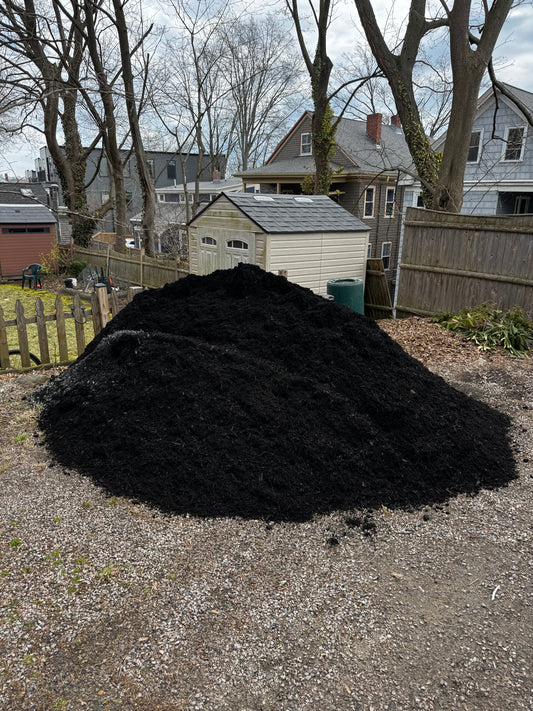
A 4-foot-wide bed along 25 feet of frontage is 100 square feet. At 3 inches that is 0.93 yards — order one. Refreshing an existing bed? Use 2 inches: 0.62 yards, and one yard covers about 160 square feet. Mulch caps at 10 yards per trip, no minimum order.
Peabody edging questions
When is the right time to re-cut edges?
Spring is ideal; late June works if you go early and water the line first. Once the soil is baked, edging tears rather than cuts and the wall crumbles within a week.
What do I do with the sod strip I pull out?
Shake the soil back into the bed and compost the turf. Do not bury the strips under mulch — they root back through.
Can you deliver to a tight street near Peabody Square?
Yes. Curbside is the default; tell us if frontage is narrow or parking needs holding. On-property drops require a signed liability waiver.
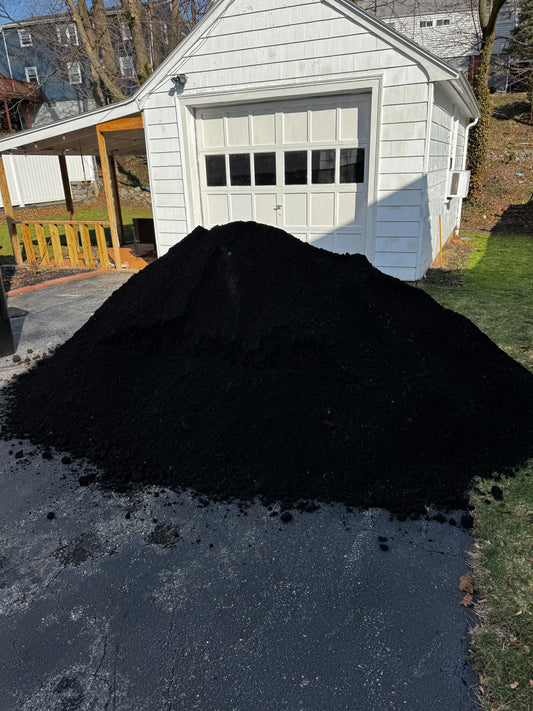
Order from bed refresh materials or browse all mulch by the cubic yard — Black Mulch at $58 for the sharpest edge contrast, Pine Bark at $55 if the bed slopes. Delivery is on our Peabody page; the UMass Extension landscape program covers maintenance timing.
Related reading: How Deep Should Mulch Be in Summer? The Two-Inch Rule, Revisited and End of June 2026: What Norfolk County Yards Need Heading Into July.